What Is A Downdraft Cooktop: Complete Guide

A downdraft cooktop pulls cooking smoke and steam downward through built-in vents instead of an overhead hood.
A downdraft cooktop combines a cooking surface with a built-in ventilation system. It is a smart option for kitchens without space for a range hood, but its airflow, installation needs, and cooking limits deserve careful review. This guide explains how a downdraft cooktop works, where it performs well, and what to check before buying one.
What Is a Downdraft Cooktop?
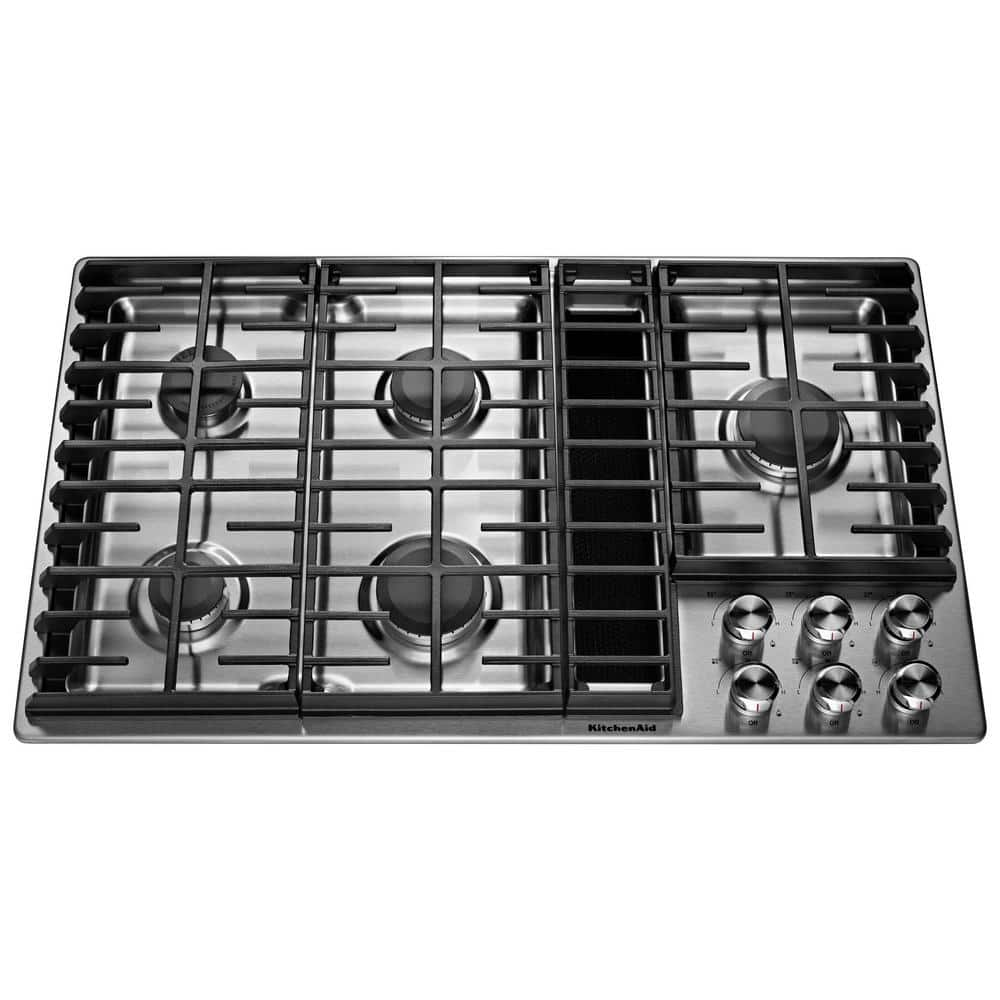
A downdraft cooktop is an electric, gas, or induction cooktop with a ventilation vent built into the cooking surface. Instead of sending smoke upward, the system pulls air downward through a filter and duct.
The vent may sit behind the burners or rise from the counter when needed. Some models use a fixed vent, while others have a retractable tower that disappears when not in use.
The main parts usually include:
• Cooking zones or burners
• A downdraft intake vent
• Grease filters
• A blower motor
• Ductwork or a recirculating air path
• Controls for heat and ventilation
Think of it as a cooktop and a small exhaust system working as one appliance. It saves wall space, but it must fight the natural rise of hot air. That design difference affects how well it removes smoke, steam, grease, and cooking odors.
How Does a Downdraft Cooktop Work?
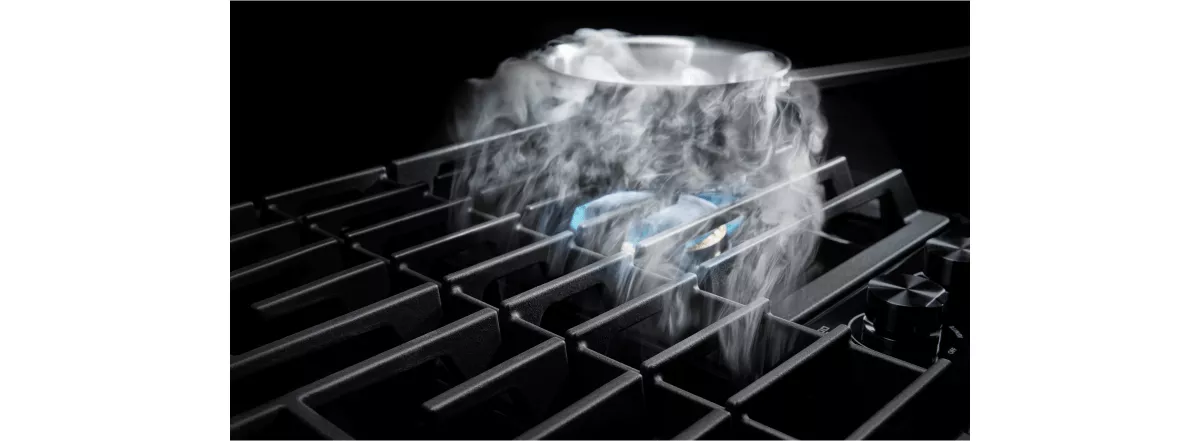
When you turn on the ventilation, a fan creates negative pressure near the cooking surface. This pulls air, smoke, and some steam into the intake vent.
In a ducted system, the air travels through a grease filter and then moves outdoors through ductwork. In a recirculating system, the air passes through filters and returns to the kitchen.
A downdraft cooktop works best when the pan is close to the vent. It may struggle with tall pots, strong boiling steam, or smoke that rises quickly before the fan captures it.
Ducted ventilation
A ducted downdraft cooktop sends air outside through a planned vent route. This setup usually provides stronger odor and moisture removal.
Duct design matters. Long runs, sharp bends, and narrow ducts can reduce airflow and increase noise. Always follow the manufacturer’s duct size and clearance requirements.
Recirculating ventilation
A recirculating downdraft cooktop filters the air and sends it back into the room. It can be easier to install, especially in apartments or kitchens where exterior venting is not possible.
However, recirculation does not remove moisture from the home. It also may not remove all cooking odors or very fine particles. Filter care becomes especially important with this type of system.
Types of Downdraft Cooktops
Downdraft cooktops come in several styles. The right type depends on your fuel preference, cooking habits, counter layout, and available ventilation route.
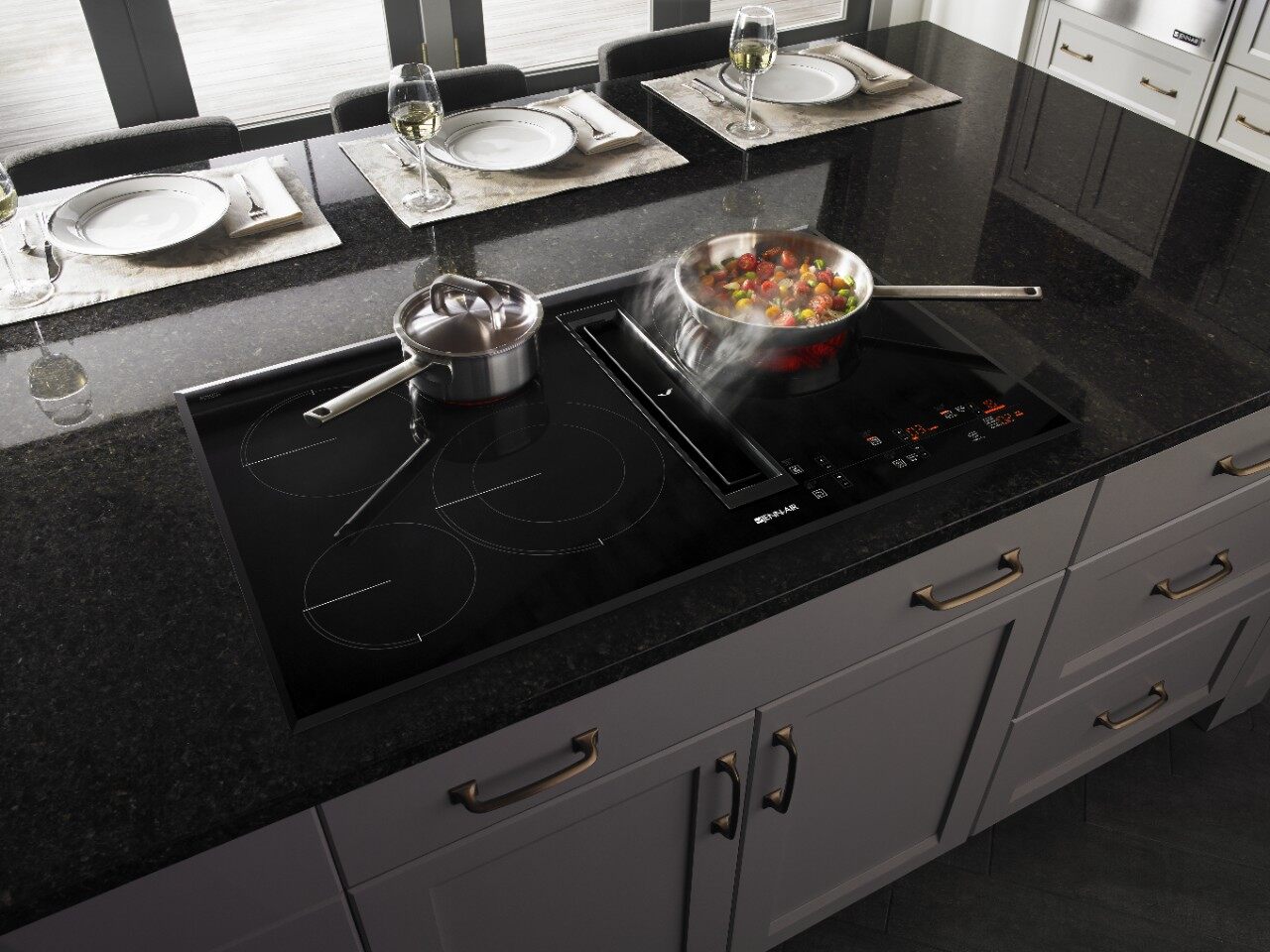
Electric downdraft cooktops
Electric models use radiant heating elements beneath a smooth glass surface. They are often easy to clean and provide steady heat.
The glass surface stays hot after the burner turns off. It also needs flat cookware for good contact and even heating.
Induction downdraft cooktops
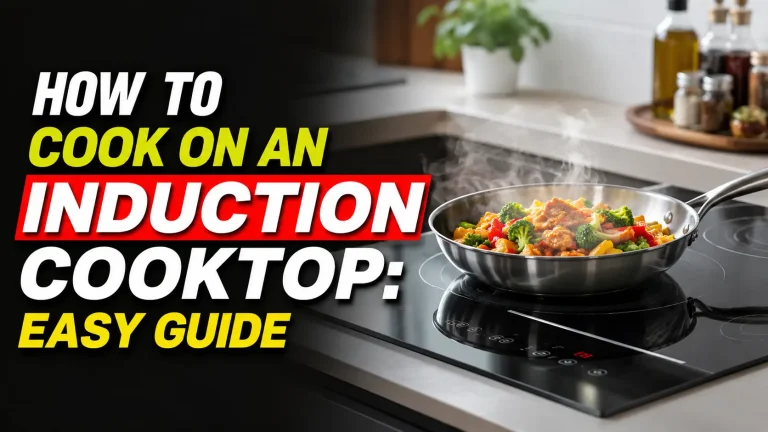
Induction models use magnetic energy to heat compatible cookware. They heat quickly, offer precise control, and keep the surrounding surface cooler than standard electric models.
You need magnetic cookware, such as cast iron or many stainless steel pans. A simple magnet test can help you check whether your current pots will work.
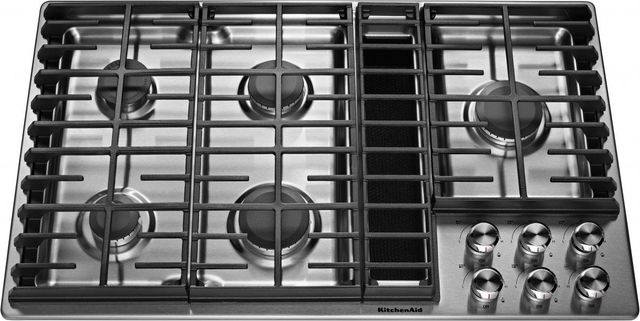
Gas downdraft cooktops
Gas models use open flames and often appeal to cooks who prefer visual heat control. They can work well for high heat, wok cooking, and fast temperature changes.
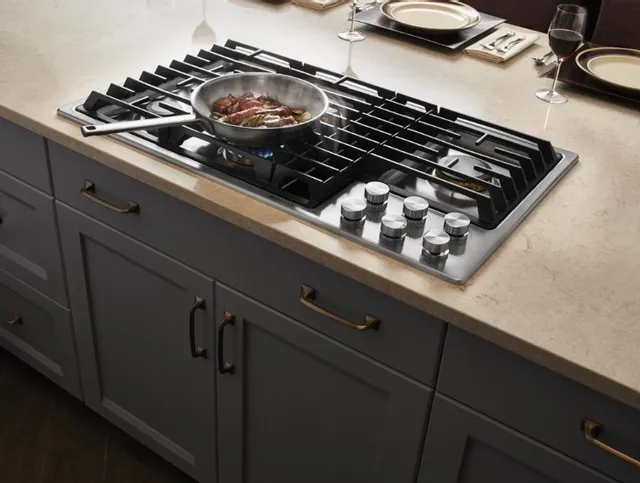
Gas flames can push heat and smoke away from the intake. For this reason, a downdraft cooktop may capture less smoke from gas cooking than a well-designed overhead hood.
Retractable downdraft systems
Some systems have a vent that rises several inches behind the cooktop. The vent lowers when you finish cooking, which keeps the counter line clean.
Retractable models can offer better capture than flat vents. Still, they need enough space behind the cooktop and may interfere with certain backsplashes or wall designs.
Benefits of a Downdraft Cooktop
A downdraft cooktop can solve real kitchen design problems. It is not perfect for every home, but several benefits make it attractive.
Clean visual design
Without a large hood above the cooktop, the kitchen can feel open and uncluttered. This look works well in islands, open-plan kitchens, and rooms with low ceilings.
The lack of an overhead hood also gives you a clearer view across the room. That can make a kitchen island feel more like furniture than a work station.
Saves wall and ceiling space
A downdraft cooktop may work where a hood is hard to install. This helps when cabinets, windows, shelves, or ceiling beams block the usual hood location.
It can also reduce the need to redesign upper cabinets. However, the appliance still needs space below or behind the counter for the blower and ducts.
Good for kitchen islands
An island cooktop can be difficult to pair with an overhead hood. A downdraft cooktop offers a less visually dominant choice.
This benefit is strongest when you cook light meals and want basic ventilation without a large hanging fixture above the island.
Easy access and cleaning
Many downdraft models have removable filters and smooth surfaces. Wiping spills soon after cooking can keep grease from hardening around the vent.
Induction and smooth electric surfaces are often simple to wipe. Gas grates and burner parts take more time to clean.
Flexible design options
You can find downdraft systems in electric, induction, and gas formats. Some models use touch controls, while others have knobs.
This range makes it easier to match the appliance to your cooking style and kitchen design.

Limitations of a Downdraft Cooktop
A downdraft cooktop has a clever design, but it cannot always match the performance of a strong overhead hood.
Smoke naturally rises
Hot air rises. A downdraft fan must pull that air down against its natural movement.
This is the main technical challenge. A downdraft cooktop may perform well with light steam and small amounts of smoke, but it can struggle with searing, frying, and high-heat cooking.
Tall cookware can block airflow
A stockpot, wok, or Dutch oven may sit higher than the vent. The cookware can block the path between the smoke and the intake.
If you often cook with tall pots, test the appliance in person or choose an overhead hood instead.
Moisture may remain indoors
A ducted system can remove some moisture outside. A recirculating system cannot fully remove the water vapor created by boiling pasta, simmering soup, or steaming vegetables.
Too much indoor moisture can contribute to condensation and indoor air quality problems. Use other ventilation, such as a nearby window or whole-home exhaust fan, when needed.
Noise can be noticeable
The blower may sound louder because it sits close to the cooking surface. Fan noise depends on the motor, duct layout, filter condition, and speed setting.
A poor duct route can make the system louder and less effective. Ask the installer about sound ratings and duct planning.
Installation can be complex
A downdraft cooktop may require a deep cabinet, special ductwork, electrical work, or gas connections. The vent path can also reduce storage space below the appliance.
Never assume an existing cabinet will fit. Compare the installation diagram with your actual counter and cabinet measurements.
Downdraft Cooktop vs. Range Hood
The best choice depends on how you cook and how much ventilation your kitchen needs.
| Feature | Downdraft cooktop | Overhead range hood |
|---|---|---|
| Air capture | Pulls air downward | Captures rising air |
| Kitchen appearance | Low profile and discreet | More visible |
| Island use | Often easier to design | May need ceiling support |
| Heavy frying | Usually less effective | Usually more effective |
| Moisture removal | Depends on ducting | Strong ducted models perform well |
| Installation | Needs space below or behind | Needs wall or ceiling support |
| Cooking view | Keeps sight lines open | May block some overhead view |
In practical use, an overhead hood is usually the stronger choice for frequent frying, grilling, wok cooking, and high-heat searing. A downdraft cooktop can be a good fit for light to moderate cooking and a clean, open design.
The best ventilation system is one that matches the cooking style, not just the room’s appearance. A beautiful appliance that leaves smoke in the kitchen will become frustrating over time.
Is a Downdraft Cooktop Good for Your Kitchen?
A downdraft cooktop may suit your home if several of these points apply:
• You want a cooktop on a kitchen island
• You dislike the look of an overhead hood
• You mainly simmer, sauté, boil, or prepare simple meals
• You have a suitable route for outdoor ducting
• You can accept less powerful smoke capture
• You have enough cabinet space for the blower and ducts
It may not be the best choice if you often deep-fry food, sear steaks, use a wok, or cook large meals for a crowd. Those tasks create more smoke, grease, and heat than many downdraft systems can manage.
Your home also matters. A small apartment with limited airflow may need stronger ventilation than a large, well-ventilated kitchen. Local building rules may also affect ducting, electrical circuits, gas connections, and clearances.
How to Choose a Downdraft Cooktop
Review the appliance as both a cooktop and a ventilation system. A strong burner or induction zone does not make up for weak air capture.
Check the ventilation method
Find out whether the system is ducted outdoors or designed for recirculation. Outdoor venting is usually better for removing moisture and odors.
If ducting is possible, ask about the full route. Do not judge performance by the fan motor alone.
Review airflow and noise ratings
Manufacturers may list airflow in cubic feet per minute, or CFM. A higher number does not always mean better real-world performance because duct length and bends affect the result.
Also check the sound rating. A fan that is powerful but too loud may not be used consistently.
Measure the installation space
Measure the countertop opening, cabinet depth, cabinet width, and space behind the cooktop. Check where the motor will sit and whether drawers must be moved.
Use the exact installation manual for the model. Product sizes and clearance rules vary.
Match the cooktop to your cookware
Induction requires magnetic cookware. Electric glass surfaces require flat pans. Gas cooktops need suitable ventilation and safe gas installation.
List the pans you use most often. This simple step can prevent an expensive mismatch.
Consider filter access
Filters should be easy to remove and clean. A filter hidden behind a difficult panel may be neglected.
Ask about replacement costs for charcoal filters if the system recirculates air. Filter care has a direct effect on airflow and odor control.
Choose controls you can use easily
Touch controls look clean, but they may respond poorly to wet fingers. Knobs can be easier to use while cooking, especially when your hands are greasy.
Try the controls in a showroom if possible. Small details often matter more after daily use.
Downdraft Cooktop Installation Tips
Professional installation is the safest choice, especially for gas, electrical, and ductwork connections. Incorrect installation can reduce performance or create safety risks.
Before installation, confirm these details:
-
Read the complete manufacturer installation guide.
-
Check the required electrical circuit and voltage.
-
Confirm gas line requirements for a gas model.
-
Plan the duct route with as few bends as possible.
-
Use the required duct size and approved materials.
-
Protect ducts from crushing, leaks, and sharp turns.
-
Confirm counter, cabinet, wall, and backsplash clearances.
-
Test the fan at every speed before the installer leaves.
-
Check that filters are installed correctly.
-
Ask whether local permits or inspections are required.
One mistake I often see in kitchen planning is choosing the cooktop before checking the cabinet layout. The appliance may fit the counter opening but leave no room for the blower or duct. Measure the hidden space first, not just the visible surface.
Cleaning and Maintaining a Downdraft Cooktop
Regular care helps a downdraft cooktop maintain airflow and reduce grease buildup. Turn off the appliance and allow hot parts to cool before cleaning.
Follow the appliance manual, but these general steps are useful:
• Wipe spills from the cooktop after it cools
• Remove and wash metal grease filters as directed
• Replace charcoal filters on the recommended schedule
• Clean around the intake vent
• Check for grease or food debris near the fan opening
• Avoid blocking the vent with cookware
• Do not spray liquid directly into controls or openings
• Use products approved for glass, stainless steel, or enamel surfaces
Do not run a dishwasher-safe filter in the dishwasher unless the manufacturer allows it. Some filters can discolor or lose their finish.
A blocked filter makes the motor work harder and can reduce airflow. If the fan becomes louder than usual, inspect the filters and duct path before assuming the motor has failed.
Personal Lessons From Using Downdraft Ventilation
The biggest lesson is to start the fan before smoke forms. Waiting until a pan is already smoking gives the system a harder job.
I also recommend placing the pan over the nearest vent area when possible. Small changes in pan position can improve capture, especially when sautéing or boiling.
Another common mistake is expecting a downdraft cooktop to act like a commercial hood. It is better viewed as targeted ventilation for everyday cooking. If your routine includes frequent bacon frying, wok cooking, or high-heat searing, plan extra ventilation.
For homes with recirculating models, I suggest using the fan during cooking and for several minutes afterward. This helps move lingering odors through the filter, although it will not remove indoor moisture as effectively as outdoor ducting.
Safety and Indoor Air Quality
Cooking produces more than visible smoke. It can release grease particles, steam, and combustion byproducts. Gas cooking can also produce nitrogen dioxide and carbon monoxide, so proper ventilation and working carbon monoxide alarms are important.
A downdraft cooktop does not replace every indoor air quality measure. Consider these practices:
• Use ducted ventilation when practical
• Run the fan during and after cooking
• Keep grease filters clean
• Use a carbon monoxide alarm near sleeping areas
• Avoid leaving gas burners running without a flame
• Open a window when extra airflow is needed
• Follow local fuel gas and electrical requirements
• Have gas appliances checked by a qualified professional
The exact ventilation needs depend on the appliance, kitchen size, fuel type, and local rules. For major remodeling, ask a qualified contractor or kitchen ventilation professional to review the plan.
Frequently Asked Questions About Downdraft Cooktops
What is a downdraft cooktop used for?
A downdraft cooktop is used for cooking and removing some smoke, steam, grease, and odors through a built-in vent. It is often chosen when an overhead hood is not practical or desired.
Does a downdraft cooktop need to vent outside?
Not always. Some models connect to outdoor ductwork, while others use filters and recirculate air indoors. Outdoor venting usually provides better moisture and odor removal.
Are downdraft cooktops effective?
They can be effective for light to moderate cooking when the cookware sits close to the intake. They may be less effective than overhead hoods for deep-frying, wok cooking, grilling, and heavy searing.
Can you use a downdraft cooktop with gas?
Yes, some downdraft cooktops use gas burners. Gas models need careful installation and may capture smoke less effectively because flames and hot air rise away from the downward vent.
Are downdraft cooktops hard to clean?
Cleaning is usually manageable if you wipe spills quickly and wash the filters on schedule. Gas grates may take more work, while smooth electric and induction surfaces are often easier to maintain.
Does a downdraft cooktop need special cabinets?
Often, yes. The blower and ductwork may occupy cabinet or drawer space. Always check the model’s installation guide before ordering cabinets or cutting the countertop.
Is induction better than gas for a downdraft cooktop?
Induction often works well with downdraft ventilation because it creates less surrounding heat than gas. However, the best option depends on your cookware, cooking habits, budget, and available electrical service.
Conclusion
A downdraft cooktop is a space-saving appliance that combines cooking with built-in downward ventilation. It offers a clean look and can work well in islands, open kitchens, and homes without room for a traditional hood.
Its main limits are smoke capture, tall cookware, moisture removal, noise, and installation space. Choose ducted ventilation when possible, measure the hidden cabinet area carefully, and match the cooktop to the way you cook.
Before buying, compare airflow, noise, filters, controls, cookware needs, and installation requirements. Explore manufacturer guides and speak with a qualified installer so you can choose a downdraft cooktop with confidence.