Where Is BK Cookware Made?Ultimae Guide 2026

Finding the perfect pan can feel endless. You want one that lasts, heats evenly, and does not break the bank. That search often leads people to BK Cookware. The pans look sharp and the price is fair. But one big question comes up before you buy.
Where is BK cookware made?
Here is the short answer: BK Cookware is a Dutch brand, but most production happens in China, with select enameled pieces made in Germany.
I’ve cooked a lot with my own BK carbon steel pan. I know why origin matters. You want to know if build quality matches the brand story. In this article I’ll explain where BK’s factories are, what that means for durability and safety, and whether BK lives up to the BK Cookware reviews you see online.
Ready to see if this Dutch brand belongs on your stove? Let’s dive in.

About the BK Cookware Brand
BK Cookware goes way back. The company began in 1851 when Hendrik Berk opened a coppersmith shop in Kampen, Netherlands. He made milk churns and simple pots for local homes and farms.
BK Cookware was founded in 1851 in the Netherlands and received a Royal designation from Queen Juliana in 1951.
BK built a reputation for quality over decades. In 1951 Queen Juliana awarded the company the “Royal” title. That honor signals trust and craftsmanship in the Netherlands.
BK also pushed innovation. They developed one of the first enameled steel Dutch ovens. These pots are lighter than cast iron but still sturdy. Today The Cookware Company owns BK. The brand blends Dutch design with modern manufacturing. You can see that in popular pieces like the BK carbon steel pan, which I use at home.

Where Is BK Cookware Made?
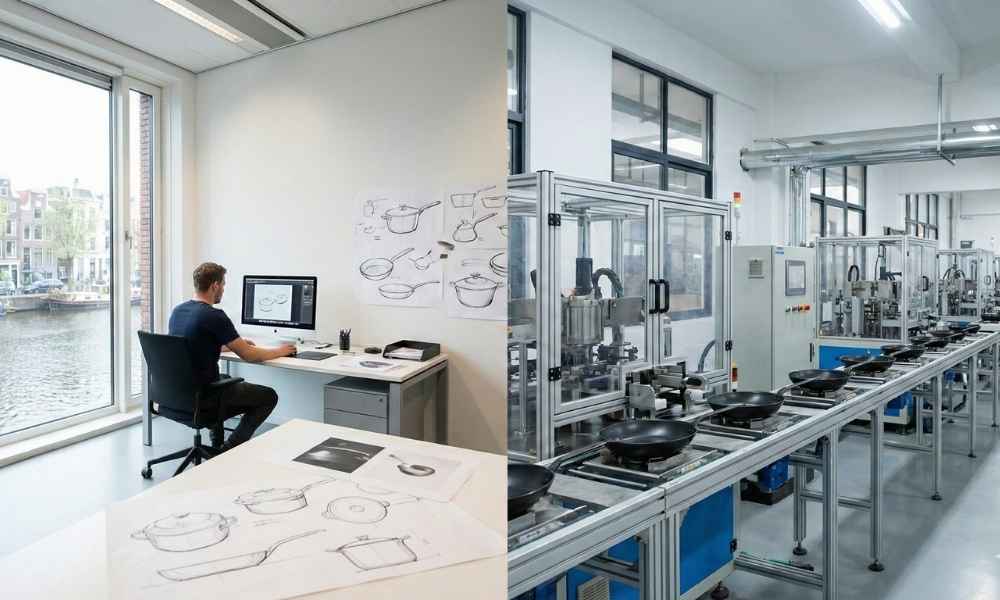
The phrase “Royal Dutch” can make people assume everything is made in the Netherlands. That’s not the full story. The brand identity and design come from the Netherlands. Most manufacturing is in Asia.
Manufacturing Countries
Most BK Cookware items, including many carbon steel pans, are made in China.
BK uses Chinese production to keep costs down. That is common in the cookware market. I checked the box on my pan. It clearly says “Made in China.”
Not everything is made there. Some of BK’s enameled Dutch ovens and select enameled items are produced in Germany. So you get a blend: Dutch design, Chinese manufacturing, and German enamel work on certain lines. That mix keeps prices reasonable while keeping some specialist production in Europe.
A quick tip: read the label. You may see “Designed in the Netherlands.” That’s about design and quality standards. The label on the bottom or box tells where it was actually made.
Where Is BK Cookware Designed & Headquartered?
It’s easy to confuse design location with manufacturing. For BK, the brand center remains in Europe while factories operate abroad.
BK Cookware is headquartered in the Netherlands, but its parent company, The Cookware Company, is based in Belgium.
BK’s main office sits in Wateringen, Netherlands. That team handles product design, development, and quality standards. They set the specs and testing criteria for every pot and pan.
The Cookware Company runs global operations from Belgium. They own factories in China and Germany. Ownership matters. When a brand owns its factories, it keeps better control of materials, processes, and final checks. That is more reassuring than a brand that just outsources to random factories.
Materials Used in BK Cookware
Where a pan is made is only part of the story. Materials and coatings matter. BK uses solid, practical materials known to perform well in home kitchens.
Carbon Steel
This is BK’s standout material. The BK Black Steel range uses pre-seasoned carbon steel. Carbon steel is lighter and quicker to heat than cast iron. It can take high heat. It also builds a natural nonstick layer as you use it. I like that mine responds fast and sears well.
Enameled Steel
BK helped popularize enameled steel Dutch ovens. These pots have a carbon steel core covered with a tough enamel coating branded as “GlazeGuard.” They are lighter than cast iron and resist chipping. For braises and roasts, they work like a dream without the heavy lift.
Ceramic Nonstick
BK’s ceramic nonstick pans make cleanup simple. They handle eggs and fish well. The brand avoids older, harmful chemicals and focuses on modern, safer coating tech. This helps buyers concerned about PTFE or PFAS.
Handles
BK often uses cast iron or forged handles on carbon steel pans. They are sturdy and provide balance. Note: these handles get hot under high heat. Keep a towel or silicone grip nearby.
Added Note — Recycled and Alloy Specs
BK typically uses high-carbon or low-alloy steels suitable for cookware. While the brand does not widely advertise recycled content, their steel grades are chosen to balance weight, heat response, and durability. If recycled material is important to you, check product pages or packaging for specific claims.
Is BK Cookware Safe?
Safety matters in every kitchen. You want cookware free from toxic chemicals and stable at high heat.
BK Cookware is safe to use and is free from PFOA and PFAS in its carbon steel and ceramic lines.
No Toxic Chemicals
A BK carbon steel pan has no synthetic coating that can flake off. It’s just steel and seasoning oil. That means no PFOA or PFAS in the carbon steel line. BK’s ceramic nonstick pans also avoid PFAS-based coatings. That’s a big plus for health-conscious cooks.
Oven Safety
These pans handle heat well. BK carbon steel skillets are oven-safe up to 600°F. You can sear on the stove and finish in the oven without worry. Enameled Dutch ovens are safe up to about 500°F. Still, check the product specs for each item.
Cleaning
Enameled pots are usually dishwasher-safe, but hand washing keeps the finish fresher. Carbon steel needs hand washing only. A dishwasher can strip the seasoning and cause rust. For carbon steel, use hot water and a brush, then dry and oil lightly.
Added Safety Tip — Food and Acid
When a pan is newly seasoned, acidic foods (tomatoes, vinegar) can strip the seasoning slightly. That’s normal. If you plan long stews with lots of acid, an enameled pot is a better choice. For quick sears and pan sauces, carbon steel is ideal.
Quality & Performance Based on Manufacturing Location
Seeing “Made in China” can cause hesitation. We’ve all had cheap imports fail. But cookware differs when a brand controls production closely.
BK Cookware offers high quality because its parent company owns the factories in China, allowing for strict control over every single pan.
Factory Ownership Matters
Many brands hire third-party factories. BK’s parent company owns the plants that make their products. That ownership gives them control over raw steel, coating processes, heat treatment, and quality checks. It means fewer surprises in the finished product.
Heat and Durability
My BK frying pan impressed me. It is not flimsy. The steel is thick and sits flat on the burner. It heats faster than my heavy cast iron and resists warping. That quick heat response is great for searing and stir-frying.
Does It Last?
Yes. My pan has taken a beating — metal spoons, high heat, daily use — and still performs well. “Made in China” kept the price down but did not reduce quality, because the company manages the production directly. You get pro-level performance at a lower cost.
Added Section — How BK Ensures Quality Control
BK implements standard checks like thickness tests, flatness checks, and coating adhesion tests. In owned factories, they can enforce these steps consistently. They also run sample batches and visual inspections before shipping. This combination of testing and ownership helps ensure consistent quality across production runs.

Pros and Cons of BK Cookware
No pan is perfect. I’ve owned a BK frying pan for a long time and know its strengths and quirks. Below is a clear view of what to expect.
The Pros
- Lightweight: BK carbon steel pans are much lighter than cast iron. They are easier to lift and flip.
- Affordable: Manufacturing in China keeps prices low. You get pro-level performance for a fraction of the cost of many French brands.
- Durable: These pans are tough. Use metal tools without fear of immediate damage.
- Fast Heating: The steel is thin but strong. It heats fast, which is great for searing and quick-cook techniques.
The Cons
- Not Made in the USA: If you buy only American-made goods, BK will not fit that rule.
- Needs Care: Carbon steel cannot go in the dishwasher. Hand wash and dry immediately to avoid rust.
- Hot Handles: Cast iron handles get very hot. Use a towel or a silicone grip when handling.
How BK Cookware Compares to Similar Brands
When shopping for carbon steel, you’ll likely compare BK to brands like Lodge, De Buyer, and Matfer Bourgeat. Below I explain the key differences so you can match a pan to your cooking style.
BK vs. Lodge (USA)
Lodge is the American classic. Their carbon steel pieces are made in the USA, often in Tennessee.
- The Difference: Lodge pans often have a rougher “pebble” surface, similar to cast iron. BK pans are smoother and lighter.
- The Verdict: If you want “Made in USA,” choose Lodge. If you want a smoother surface and a lighter pan for flipping veggies and stir-fry, BK is a strong pick.
BK vs. De Buyer (France)
De Buyer is a top French brand. Their “Mineral B” line is well known and made in France.
- The Difference: De Buyer pans are thicker and heavier, so they hold heat longer. They usually cost more and feel more solid.
- The Verdict: Choose De Buyer for heavy-duty searing and for cooks who want a very stable cooking surface. Choose BK for a daily driver that is lighter and quick to heat.
BK vs. Matfer Bourgeat (France)
Matfer is another French pro favorite. Their pans often have a welded handle, so there are no rivets inside the pan bowl.
- The Difference: Matfer is made in France and carries a premium price. The lack of rivets eases cleaning. BK uses rivets and feels a bit more traditional.
- The Verdict: Matfer is for the perfectionist chef who wants a pro-level tool. BK is for the home cook seeking strong performance at a lower price.
FAQs
Before you buy, you probably have a few quick questions. Here are the most common ones I get about BK Cookware.
Is BK cookware made in the USA?
No. BK is a Dutch brand, but most manufacturing is in China. Some enamel products are made in Germany. You will not find a “Made in USA” tag on BK lines.
Is BK cookware dishwasher safe?
It depends on the product.
- Carbon Steel: No. Never put carbon steel in the dishwasher. It strips seasoning and causes rust. Hand wash only.
- Enameled Dutch Ovens: Yes, they are usually dishwasher safe. But hand washing preserves the finish longer.
- Ceramic Nonstick: Yes in many cases, but check the packaging. Hand washing still helps coatings last longer.
Does BK cookware work on induction?
Yes. Carbon steel and enameled steel are magnetic, so they work on induction cooktops. If you’re unsure, use a magnet: if it sticks to the base, it will work on induction.
How long does BK cookware last?
With proper care, a BK carbon steel pan can last decades. It grows better with use. Ceramic nonstick pans will wear out after a few years with heavy daily use, like most nonstick cookware.
Is BK cookware worth the price?
Yes. In my view, BK is a great value. You get fast heating, solid searing, and durable materials for less than many French-made options like De Buyer. It’s a smart entry point for cooks who want pro-like results without a big expense.
Conclusion
We covered a lot. You asked, “Where is BK cookware made?” Now you know. The brand’s heart and design are Dutch. The majority of manufacturing takes place in China, with some enameled pieces made in Germany.
While BK cookware isn’t fully made in the USA or Europe, its manufacturing oversight, chosen materials, and price point make it a strong pick for everyday home cooks.
Does “Made in China” change how it cooks? In my experience, no. My BK carbon steel pan sears a steak as well as my pricier French skillet. The main difference is cost — I paid a lot less for the BK.
If “Made in USA” is a must, look at Lodge. If you want a lighter, smoother pan that’s kind on the wallet, BK is an excellent choice. It brings Royal Dutch heritage to your kitchen without the royal price tag.
BK Cookware vs Other Popular Cookware Brands
| Brand | Primary Manufacturing Location | Design / Headquarters | Main Materials Used | Nonstick Type | Made in USA? | Price Range |
|---|---|---|---|---|---|---|
| BK Cookware | China | USA / Europe | Aluminum, Stainless Steel | Ceramic / PTFE (PFOA-free) | ❌ No | Budget–Mid |
| All-Clad | USA | USA | Stainless Steel (bonded) | Stainless / PTFE | ✅ Yes (most lines) | Premium |
| Calphalon | China | USA | Hard-Anodized Aluminum | PTFE (PFOA-free) | ❌ No | Mid |
| GreenPan | China | Belgium | Aluminum | Ceramic Nonstick | ❌ No | Mid |
| Made In | USA / Italy / France | USA | Stainless Steel, Carbon Steel | Stainless / PTFE | ✅ Partial | Mid–High |
| T-fal | China | France | Aluminum | PTFE (Thermo-Spot) | ❌ No | Budget |