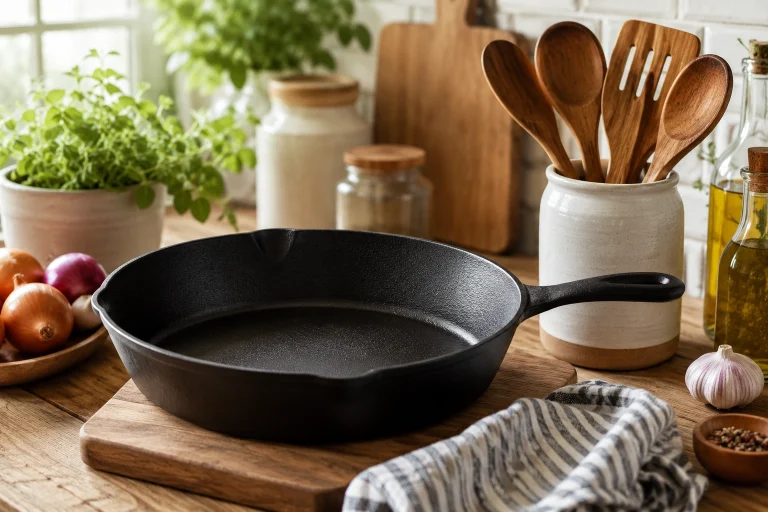
How to Care for Cast Iron Enamel Cookware: A Beginner’s Guide

I still remember buying my first enameled cast iron Dutch oven. It was heavy, beautifully bright on the outside, and felt like a massive kitchen upgrade. But almost right away, I had questions. Do I treat it like regular cast iron? Will it rust? How do I wash it without ruining that glossy finish? I have made a lot of stews, sourdough loaves, and Sunday sauces since then, and I have learned what actually matters for long-term care.
If you just brought home a new enameled skillet or pot, you are probably wondering the exact same things. Cast iron enamel cookware is a favorite for making soups, baking bread, braising short ribs, and slow-cooking stews. It holds heat perfectly and looks amazing sitting on the stove. But because it has a delicate glass coating over heavy iron, it requires a specific type of care that is simple once you know the rules.
The good news is that caring for it is actually much easier than maintaining bare cast iron. You do not have to season it, and you can cook acidic foods like tomato sauce without worry. In this guide, I will show you exactly how to clean, store, and protect your enameled cookware so it lasts for years in your everyday kitchen. I will also share the small tricks I use at home to keep mine looking new while cooking like a pro.
Quick Answer
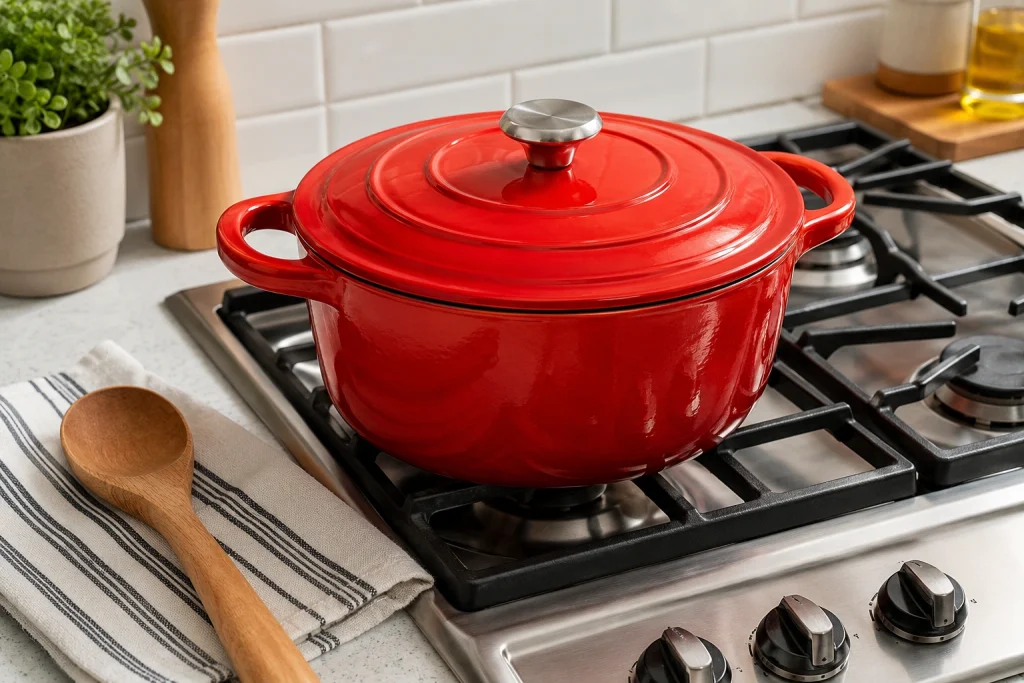
How do you care for cast iron enamel cookware? You should hand wash it using warm water, mild dish soap, and a soft sponge or nylon brush. Always let the cookware cool down completely before washing to prevent the glass enamel from cracking. Avoid using metal utensils, abrasive scouring pads, or harsh chemical cleaners, as these will scratch or dull the nonstick enamel finish. Dry the pot thoroughly with a towel before storing it to prevent any exposed iron rims from rusting.
Fast do’s and don’ts:
- Do cook on low to medium heat; preheat gently for even browning.
- Do add oil, butter, or liquid before the pan gets hot.
- Do use wood, silicone, or nylon tools.
- Do dry fully and leave the lid ajar for airflow in storage.
- Don’t shock a hot pot with cold water.
- Don’t slide pots on glass cooktops—lift instead.
- Don’t use metal scouring pads or bleach.
What Home Cooks Should Know About Cast Iron Enamel
Before we get into cleaning, it helps to understand what enameled cast iron actually is. Underneath the shiny, colorful surface, it is a heavy block of cast iron. But unlike traditional cast iron skillets, the metal is completely sealed inside a baked-on glass coating called enamel.
This glass coating changes everything about how you use and clean the pot. Here is what makes enameled cast iron different:
- No seasoning required: You never have to rub it with oil and bake it in the oven. The enamel is already sealed.
- Acid-friendly: You can simmer chili, tomato sauce, or wine-based stews all day. The acid will not eat away at a seasoning layer because the glass protects the iron.
- It is basically glass: Because the coating is glass, it can chip if you drop it or hit it with a metal spoon.
- It hates extreme temperature changes: If you put a freezing cold pot on a blazing hot stove, or run cold water into a screaming hot pan, the glass enamel can crack.
Extra context for buyers: Good enameled cast iron is heavy, induction-ready, and oven-safe (check your brand’s knob rating). It is also PTFE- and PFOA-free. Well-known makers include Le Creuset, Staub, and Lodge. Many offer strong warranties, which is helpful if you see a true enamel defect.
Kitchen Safety Note: Enameled cast iron pots are incredibly heavy, especially when filled with hot food or boiling liquids. Always use two hands and sturdy oven mitts when lifting them. The Consumer Product Safety Commission (CPSC) recommends keeping heavy, hot pots on back burners when possible to prevent accidental tips and severe kitchen burns.
Before Your First Cook: Quick Setup and Safety
New pot at home? Do this first:
- Wash with warm soapy water and dry well. This removes dust from shipping.
- Rub a drop of neutral oil on the rim if it is bare iron. This wards off rust.
- Preheat low and slow. Add oil only after the pot is warm. Then add food.
- Use a burner that matches the pot’s base. Flames should not lick the sides.
- Check your manual for oven and broiler limits. Some knobs have lower max temps.
Signs You Should Adjust Your Cookware Care Routine
Sometimes, we mistreat our cookware without even realizing it. Enamel is tough, but it will show signs of stress if you are using the wrong tools or cooking methods. If you notice any of the following issues, it is time to change how you clean and cook with your pot.
The most common warning sign is food constantly sticking to the bottom. Enameled cast iron is not perfectly nonstick like Teflon, but food should release fairly easily. If everything is sticking, you might be cooking on a heat setting that is too high, or you may have scrubbed away the smooth finish with harsh metal pads.
| The Problem | What It Usually Means | How to Fix It |
|---|---|---|
| Dull, cloudy interior finish | Micro-scratches from abrasive cleaners or metal tools. | Switch to wooden or silicone utensils and soft sponges. |
| Food sticks and burns quickly | Cooking heat is too high. Cast iron holds heat intensely. | Lower the stove heat. Never use high heat for normal cooking. |
| Tiny cracks in the enamel (crazing) | Thermal shock. The pan went from hot to cold too fast. | Always let the pan cool completely on the stove before washing. |
| Rust on the top rim | The pot was put away wet. The top edge is often bare iron. | Dry the pot entirely with a towel before storing. Rub a tiny drop of oil on the rim. |
If you see large chunks of enamel chipping off inside the cooking surface, stop using the pot. Exposed raw iron combined with broken glass edges is not food safe. Always check your manufacturer’s warranty, as many premium brands will replace pots with factory defects.
How to Clean Cast Iron Enamel Step by Step
Cleaning this cookware is simple if you follow a few basic rules. You do not need expensive specialty cleaners. Basic kitchen supplies will do the job perfectly.
Here is the safest and most effective way to clean your enameled cookware after a standard family meal:
- Let it cool completely. This is the most important step. Remove the pot from the heat and let it sit on a cool burner or a wooden cutting board until it is safe to touch bare-handed.
- Wipe out excess grease. Use a paper towel to wipe out leftover cooking oil or food scraps. Toss this in the trash so you do not clog your kitchen sink drain.
- Soak if necessary. If you have cooked-on food, fill the cooled pot with warm water and a few drops of mild dish soap. Let it sit for 15 to 20 minutes to soften the food.
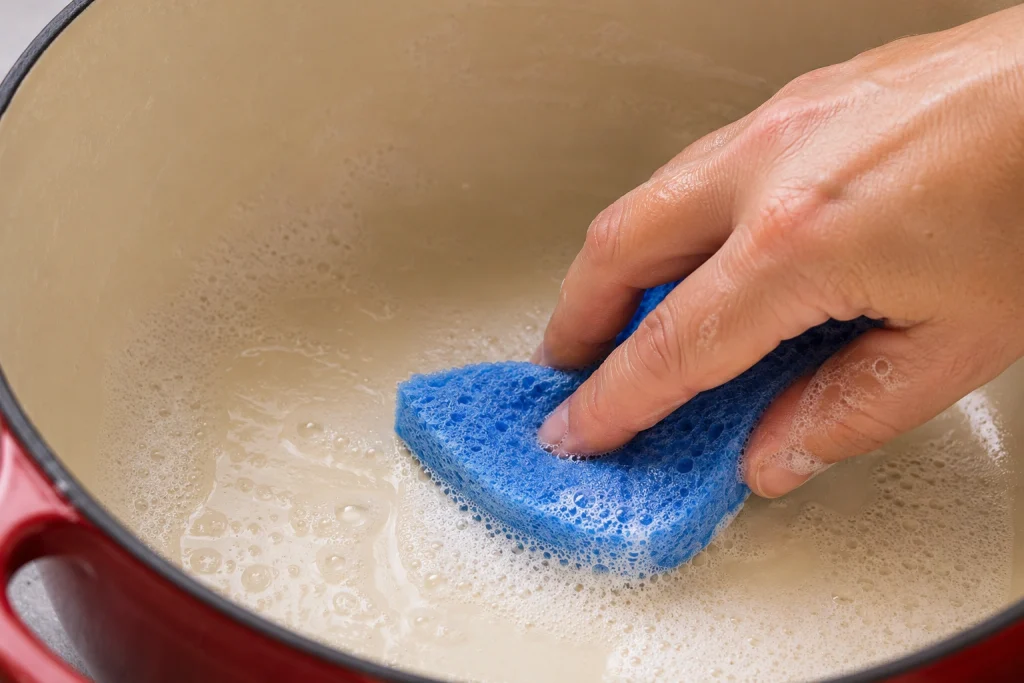
- Wash with a soft sponge. Use a non-scratch nylon sponge, a microfiber cloth, or a soft dish brush. Gently scrub the inside and outside of the pot in warm, soapy water.
- Rinse thoroughly. Rinse away all the soap with warm running water. According to general cleaning guidelines from the USDA Food Safety and Inspection Service (FSIS), plain soap and warm water are highly effective for cleaning food contact surfaces when used with proper friction.
- Dry immediately. Never let your enameled pot air dry. Use a clean, dry kitchen towel to wipe the entire pot, paying special attention to the rim where the lid sits.
Daniel’s Kitchen Tip: If your pot has stubborn burnt bits that will not come off with regular washing, do not reach for a scraper! Instead, fill the pot with an inch of water, add two tablespoons of baking soda, and simmer it on low heat for 10 minutes. The burnt food will easily lift away with a wooden spoon.
Deep-Cleaning Stains and Odors (Without Damaging Enamel)
For turmeric stains, tomato rings, or gentle discoloration, use a baking soda paste. Mix 3 parts baking soda with 1 part water. Spread it on the stain. Let it sit for 1–3 hours. Wipe with a soft cloth and rinse. To clear odors after fish or curry, fill the pot with warm water and add 1 tablespoon of baking soda. Soak 30 minutes, then wash as usual.
Avoid chlorine bleach and abrasive powders. They dull the glaze and can cause micro-scratches that increase sticking.
Common Mistakes to Avoid
Even though enameled cast iron is heavy and feels indestructible, the glass surface requires gentle handling. If you want your cookware comparisons to end with a pot that lasts for generations, avoid these common home cooking mistakes.
- Using metal utensils: Metal spatulas, forks, and whisks will leave gray scratch marks on your beautiful enamel. Over time, they can actually chip the glass. Always use wood, silicone, or heat-safe plastic.
- Putting it in the dishwasher: Many brands say their enameled pots are “dishwasher safe.” But the harsh detergents and high water pressure in dishwashers will dull the shiny enamel finish over time. Hand washing is always better.
- Heating an empty pot: Never put an empty enameled pot on a hot stove. Without food or liquid to absorb the heat, the enamel can overheat and crack. Always add oil, butter, or water before turning on the burner.
- Using high heat: Cast iron retains heat incredibly well. You rarely need to turn your stove above medium. High heat will almost guarantee burnt food and a horrible cleaning job later.
- Using bleach or harsh chemicals: Bleach will ruin the color and shine of your enamel. Stick to gentle dish soap, baking soda, and warm water.
Cooking Best Practices for Enameled Cast Iron
- Preheat gradually: Start on low, then move to medium. This prevents thermal shock and hotspots.
- Use enough fat: A thin film of oil helps food release and protects the enamel.
- Avoid aerosol sprays: Sprays can leave sticky residue. Pour oil instead.
- Match heat to task: Sear on medium to medium-high only when there is enough food or liquid in the pot to absorb heat.
- Stovetop compatibility: Safe for gas, electric, induction, and ceramic. On glass tops, lift—do not slide.
- Oven use: Most pots are oven-safe to high temps, but knobs may vary. Check your manual before roasting or broiling.
Practical Tips from Daniel
I have used my main enameled Dutch oven almost every week for the past five years. Over time, I have learned a few tricks that make storing and maintaining this cookware much easier for a normal household.
First, let’s talk about stains. If you cook a lot of curries, tomato sauces, or beans, the cream-colored interior of your pot will eventually turn slightly brown or yellow. This is completely normal and does not affect the cooking performance at all. It is a sign of a well-loved kitchen tool!
If the stains bother you, you can make a simple paste out of baking soda and water. Rub it gently over the stains with a soft cloth, let it sit for a few hours, and rinse it away. It works wonders without damaging the glass.
| Cleaning Tool | Is It Safe for Enamel? | Why? |
|---|---|---|
| Soft Sponge / Microfiber Cloth | Yes | Gentle on the glass finish; prevents micro-scratches. |
| Nylon Scrub Brush | Yes | Provides good scrubbing power without scratching. |
| Steel Wool | No | Will heavily scratch and permanently ruin the enamel. |
| Abrasive Cleanser Powders | No | Acts like sandpaper on the glossy glass coating. |
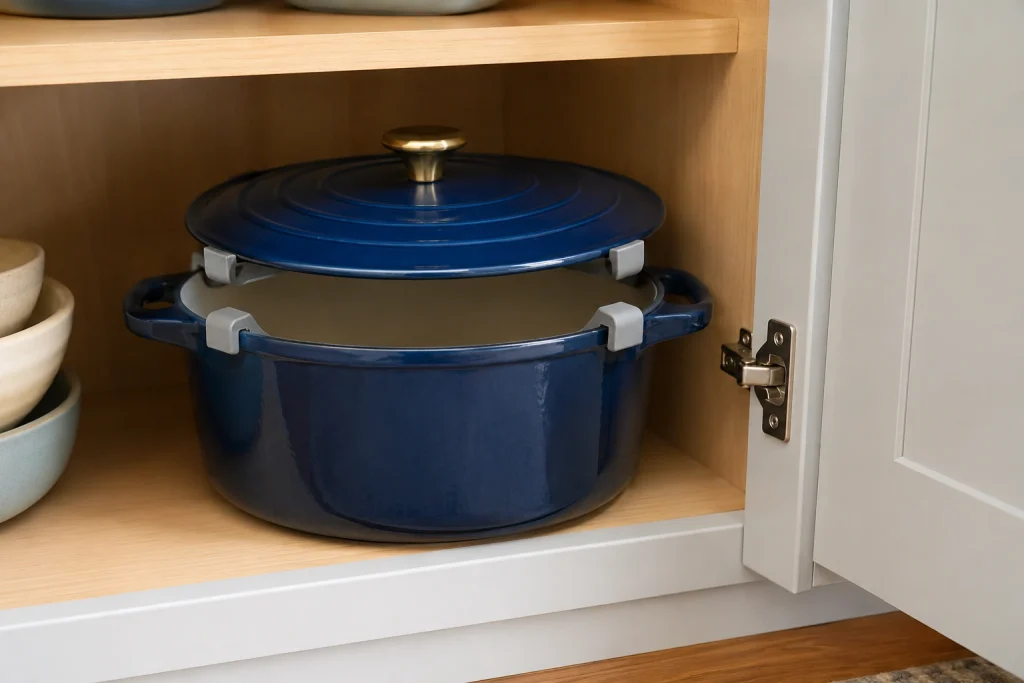
Second, think about how you store the pot. The lid is heavy. If you drop the lid onto the pot, it can chip the rim. When you buy a new enameled pot, it often comes with little rubber or plastic clips sitting on the rim. Keep those! When you put the pot away in your cabinet, place those clips back on the rim. They create a soft bumper between the heavy lid and the pot base, allowing air to circulate and preventing chips.Daniel’s Kitchen Tip: If you threw away the plastic clips that came with the pot, do not worry. You can fold a dry paper towel and lay it across the rim before putting the lid on for storage. It works just as well to protect the edges.
Smart Storage and Maintenance Checklist
- Dry fully. Then oil the bare rim lightly if needed.
- Store with the lid ajar or with a paper towel spacer to prevent odors.
- Use felt pan protectors if stacking with other cookware.
- Lift, do not slide, especially on glass shelves or cooktops.
- Inspect the rim and lid edge monthly for chips. Catch issues early.
Troubleshooting Sticky Foods
If eggs or fish stick, lower the heat and add a bit more fat. Let proteins sear undisturbed until a crust forms. Then they will naturally release. With enamel, patience beats prying.
Key Takeaways
- Cast iron enamel cookware is coated in glass and does not require seasoning like traditional cast iron.
- Always let the cookware cool completely before washing to avoid cracking the enamel with cold water.
- Stick to hand washing with mild soap, warm water, and non-scratch sponges.
- Use wooden or silicone cooking utensils to prevent scratching the cooking surface.
- Cook on low to medium heat. Cast iron holds heat well, and high heat will cause food to burn and stick.
- Dry the pot completely with a towel before storing to keep the raw iron rims from rusting.
Frequently Asked Questions
Do I need to season enameled cast iron?
No, you do not need to season enameled cast iron cookware. The cast iron core is completely sealed inside a baked glass enamel coating. This glass layer acts as a permanent barrier, meaning oil treatments and oven baking are unnecessary.
Can cast iron enamel go in the dishwasher?
While many manufacturers claim their enameled pots are dishwasher safe, it is highly recommended to wash them by hand. The harsh detergents and aggressive water pressure in a dishwasher can dull the glossy finish and cause the enamel to wear down faster over time.
How do I get burnt food off my enameled cast iron pot?
Do not use a metal scraper or steel wool. Instead, fill the pot with an inch of warm water, add two tablespoons of baking soda, and simmer the mixture on the stove over low heat for 10 to 15 minutes. The burnt food should soften and lift away easily with a wooden spoon.
Why is the enamel chipping on my cast iron pot?
Chipping usually happens due to physical impacts, like tapping a metal spoon on the rim or dropping the heavy lid. It can also happen from extreme temperature changes, known as thermal shock, which occurs if you put a hot pot into cold water.
Is it safe to use scratched enameled cast iron?
Light surface scratches or gentle staining are completely safe. However, if the enamel is deeply cracked or actively chipping away, exposing the raw black iron underneath, you should stop using it for cooking. Shards of glass enamel can mix into your food, which is unsafe.
Can I use enameled cast iron on a glass stovetop?
Yes, you can use enameled cast iron on a glass or ceramic stovetop, but you must be very careful. Never slide or drag the heavy pot across the glass, as it can cause deep scratches. Always lift the pot straight up and set it straight down gently.
Is enameled cast iron nonstick?
It is naturally slick but not like PTFE-coated pans. Use moderate heat and some fat for best release.
Can I marinate or store leftovers in the pot?
Yes, the enamel resists acid and odors. For the best fit in your fridge and to protect the lid seal, move leftovers to storage containers after cooling.
Can I use it on a grill or campfire?
Grills can create very high, uneven heat. Many brands do not recommend direct flame or campfire use for enamel. Check your manual first.
Are the bright enamel colors food safe?
Reputable brands test their glazes to meet safety standards. Buy from trusted makers and avoid chipped interiors.
Conclusion
Taking care of cast iron enamel cookware might seem intimidating at first, but it quickly becomes second nature. By avoiding metal utensils, skipping the dishwasher, and protecting the pot from sudden temperature changes, you are doing 90% of the work required to keep it in perfect shape.
These pots are an investment, but they are built to outlast almost everything else in your kitchen. Treat the glass coating with respect, keep your heat settings reasonable, and always take the time to hand wash and towel dry. The reward is a beautiful, reliable pot that makes cooking dinner feel just a little bit more special.
If you are looking to upgrade other parts of your kitchen setup now that your cookware care is under control, check out our guide to the best small kitchen appliances for everyday home cooks.