How to Organize Cast Iron Cookware in Your Kitchen

Hi, I’m Daniel Cross. If you cook at home, you probably love your cast iron skillet. It sears meat perfectly, bakes amazing cornbread, and can last for generations. But let’s be honest. Figuring out how to organize cast iron cookware is a huge headache for many of us.
Cast iron is heavy, bulky, and awkward to store. If you just toss these pans into a bottom cabinet, they become a tangled, heavy mess. Even worse, stacking them the wrong way can scratch away your hard-earned seasoning or damage your lighter pots and pans. I know how frustrating it is to dig through a messy cabinet just to pull out one heavy skillet.
The good news is that you can set up a safe, easy-to-use storage system in almost any kitchen. Whether you have a tiny apartment pantry or a large family kitchen, a few simple tweaks can protect your pans and save your back. Let me show you exactly how to store these heavy hitters safely and easily.
Quick Answer
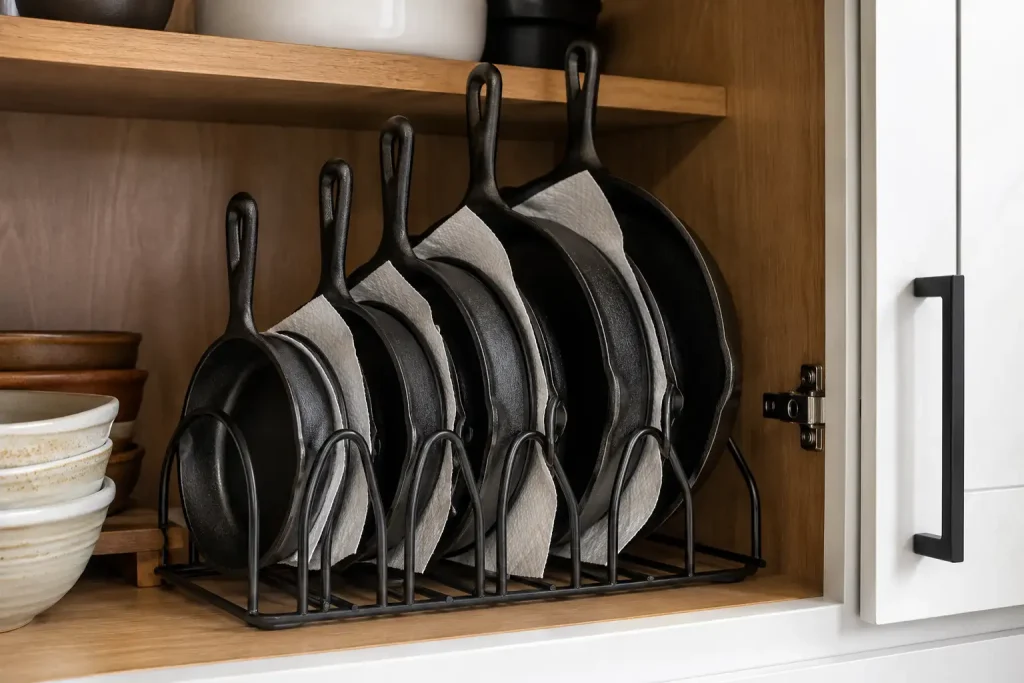
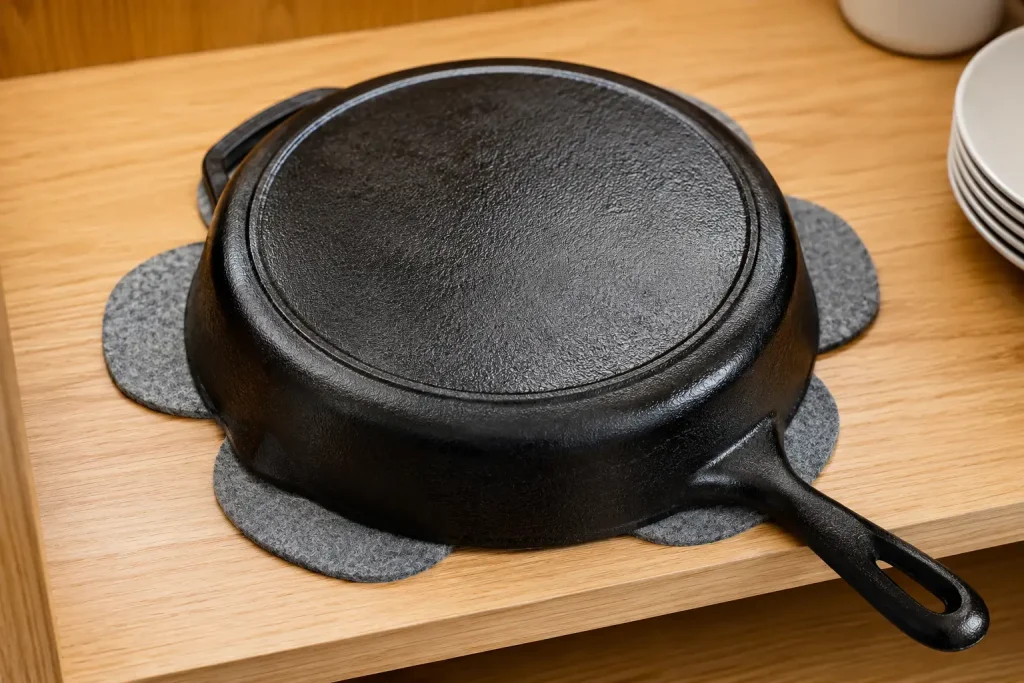
The best way to organize cast iron cookware is to store it in a cool, dry place where the heavy weight is fully supported. You can use a heavy-duty wire pan organizer to store skillets vertically, or you can stack them horizontally on strong bottom cabinet shelves. If you stack your cast iron pans, you must place a felt pan protector, a paper towel, or a paper plate between each pan to protect the nonstick seasoning and prevent rust. Never hang heavy cast iron pans on a wall unless the rack is mounted directly into solid wooden wall studs.
What Home Cooks Should Know About Organizing Cast Iron
Before you start rearranging your kitchen, you need to understand what makes cast iron different from regular stainless steel or nonstick cookware. Cast iron requires a slightly different approach to storage.
Here is what you need to keep in mind:
- Weight is your biggest enemy: A single 12-inch cast iron skillet can weigh up to eight pounds. A large Dutch oven can weigh over fifteen pounds. Your storage spot must be able to hold this weight without buckling.
- Moisture causes rust: Cast iron is made of raw iron that is sealed with baked-on cooking oil (called seasoning). If you store these pans in a damp place, or if you stack them while they are still wet, they will rust quickly.
- Metal-on-metal friction causes damage: When you drag a heavy cast iron pan across another cast iron pan, the metal scrapes away the seasoned coating. Over time, this leads to bare metal spots where food will stick and rust will form.
- Accessibility matters: Because these pans are so heavy, you should not store them in high upper cabinets. Pulling a heavy pan down from above your head is a major safety hazard.
Once you understand these basic rules, organizing your pans becomes much easier.
Signs You Should Adjust Your Storage Setup
How do you know if your current storage method is bad for your kitchen or your cookware? There are a few clear warning signs. If you see any of these, it is time to change how you organize cast iron cookware.
The most obvious sign is a bowing cabinet shelf. If your wooden or particleboard shelves are bending downward in the middle, they are overloaded. You need to move your heavy pans immediately before the shelf breaks.
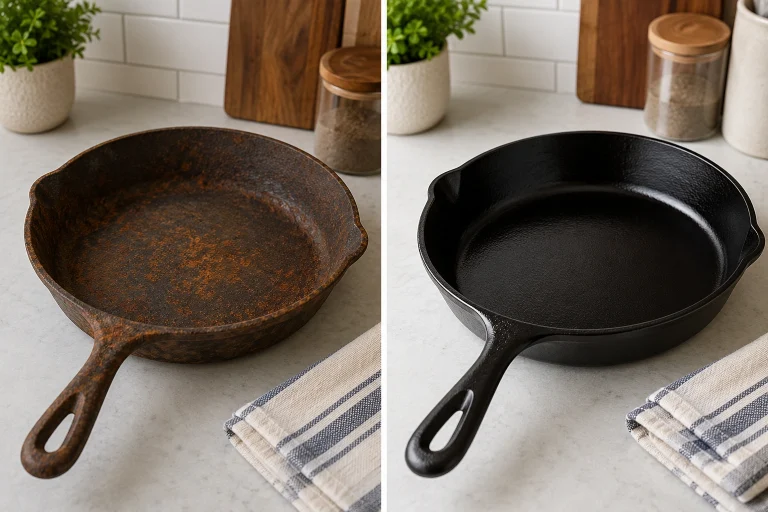
Another sign is rust. If you frequently find orange or brown rust rings on the bottom of your pans or on your cabinet shelves, moisture is getting trapped in your storage area. You also need to look at the inside of your skillets. If you see deep scratches or gray metal showing through the black seasoning, your stacking method is causing friction damage.
Here is a quick look at good versus bad storage habits.
| Storage Method | What It Means for Your Cookware | Safety & Care Result |
|---|---|---|
| Stacking bare metal on bare metal | Scratches the seasoning, traps trapped moisture, damages pan surfaces. | High chance of rust and sticking food. |
| Storing on high upper shelves | Makes heavy pans hard to reach and dangerous to pull down. | High dropping hazard. Not recommended. |
| Using felt or paper between pans | Creates a soft barrier and absorbs leftover trace moisture. | Protects seasoning and prevents rust. |
| Storing on bottom cabinet floors | Keeps heavy weight low to the ground on the strongest surface. | Safest method for heavy pots and pans. |
| Storing in a damp basement | Exposes raw iron to constant humidity and temperature swings. | Guaranteed to cause severe rust over time. |
How to Organize Cast Iron Cookware Step by Step
Ready to fix your cast iron clutter? Let’s walk through the safest, most practical way to set up your pans. You do not need expensive custom cabinets to do this right. You just need to be smart about weight and padding.
- Clean and dry your pans completely: Never put cast iron away wet. Wash your pan, dry it with a towel, and heat it on the stove on low for a few minutes to evaporate all hidden moisture. Rub a tiny drop of cooking oil over the inside, then let it cool completely.
- Choose a heavy-duty location: Pick a base cabinet that sits on the floor. The bottom floor of a base cabinet is the strongest point in your kitchen. Avoid flimsy adjustable shelves that sit on tiny plastic pegs.
- Decide on a racking system: If you have cabinet space, buy a heavy-duty metal pan organizer. These racks let you slide skillets into individual slots horizontally or vertically. This stops you from having to lift four pans just to get the bottom one.
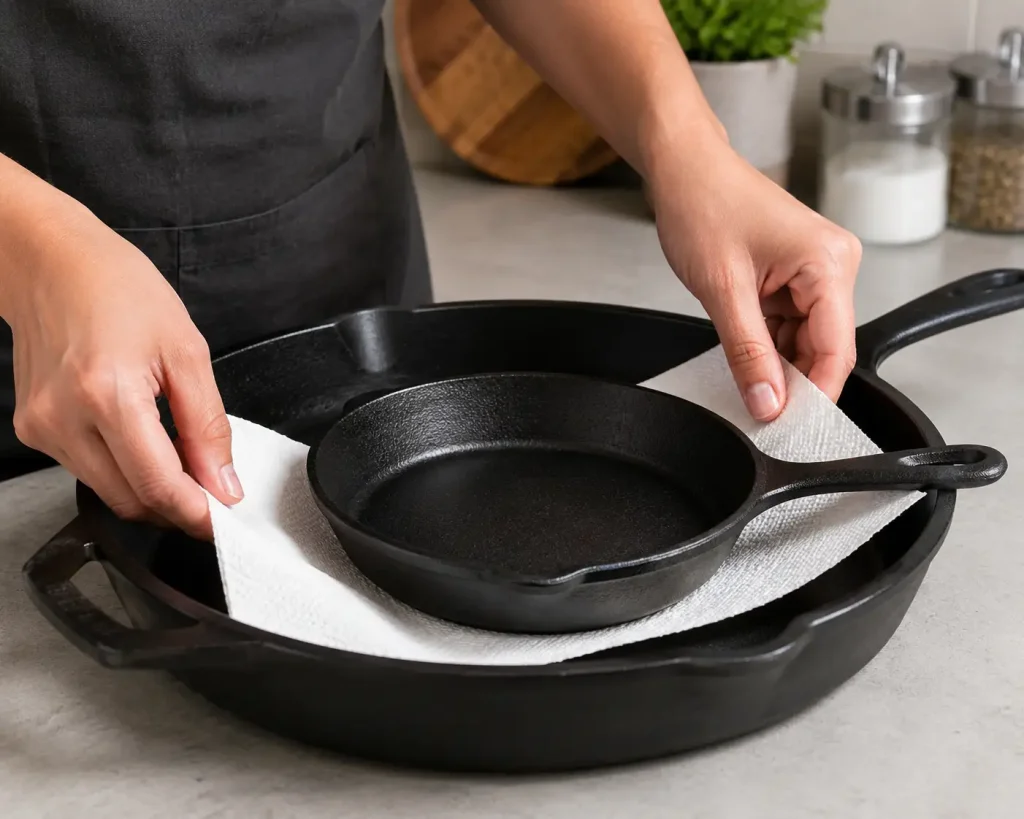
- Protect your pans if you must stack: If you do not have a rack and must stack your pans, you need a buffer. Place a felt pan protector, a dry paper towel, or a simple paper plate inside the bottom pan before nesting the smaller pan inside it.
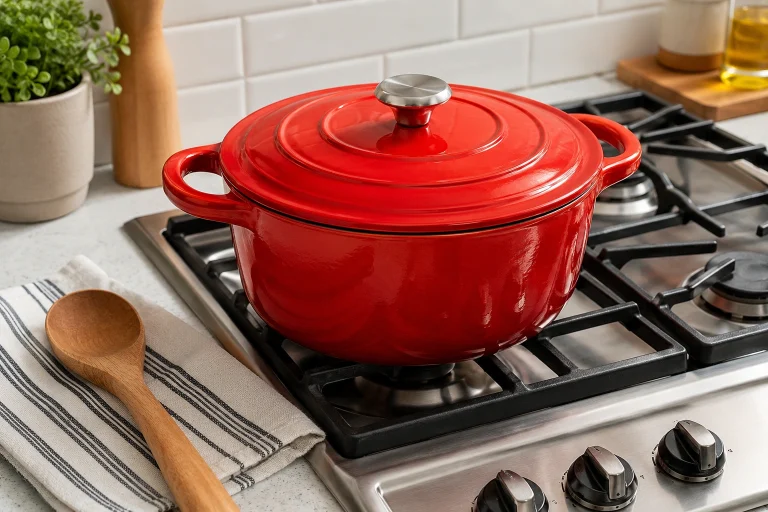
- Manage the lids separately: Heavy cast iron Dutch oven lids take up space. Store the lid upside down inside the pot to create a flat surface for stacking. Just remember to put a paper towel between the lid and the pot to allow airflow and stop scratches.
Kitchen Safety Note: Wall mounting heavy cast iron is popular, but it carries risks. Never hang cast iron on drywall using standard plastic anchors. You must use heavy-duty hardware driven directly into wooden wall studs. The Consumer Product Safety Commission (CPSC) frequently warns about falling household objects causing injuries. If you are not confident in finding wall studs or installing heavy-duty hardware, stick to storing your pans in bottom cabinets or consult a qualified professional.
Common Mistakes to Avoid
Even experienced home cooks make mistakes with cast iron. Avoid these common storage errors to keep your pans in great shape and your kitchen safe.
- Storing pans in the oven permanently: Storing pans in the oven is a popular space-saving trick. But it is very easy to forget they are in there, preheat your oven for baking, and accidentally burn yourself trying to remove a 400-degree skillet.
- Nesting glass lids under cast iron: Never put a fragile glass lid underneath a heavy cast iron skillet. The weight will easily shatter the glass.
- Storing food in cast iron in the fridge: Cast iron is for cooking, not long-term food storage. Leaving food in a cast iron pan in the refrigerator will pull the seasoning off, cause massive rust, and make your food taste like metal. Always transfer leftovers to proper food storage containers.
- Ignoring the bottom of the pan: People often oil the inside of the pan but forget the bottom. Make sure the outside bottom is dry and lightly oiled before storing, especially if you stack them.
Practical Tips from Daniel
Over the years, I have tried just about every kitchen organization trick out there. When it comes to cast iron, simple is almost always better.
Here is the thing. You do not need to buy expensive, specialized cast iron racks if you are on a budget. Heavy-duty office mail sorters or thick wooden cutting board racks can sometimes double as vertical skillet holders, as long as they are incredibly sturdy. Just test the weight before you trust them completely.
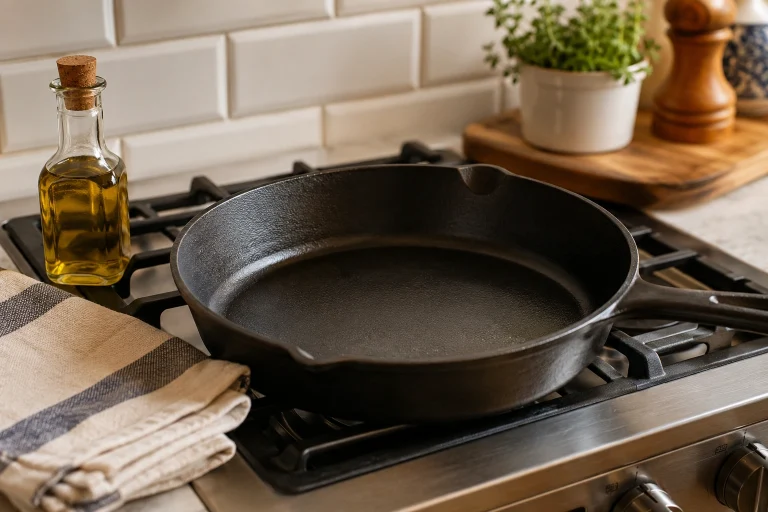
Daniel’s Kitchen Tip: Keep your most-used skillet right on the stovetop. If you use a 10-inch or 12-inch skillet every morning for eggs or bacon, there is no rule saying you have to put it away. As long as your stove is turned off and cool, leaving your daily driver on the back burner frees up valuable cabinet space and saves you heavy lifting.
I also highly recommend checking your pans every few months. Pull everything out of your storage cabinet, wipe down the shelves, and inspect your cast iron. If you spot tiny rust flecks forming, it means your storage area is too humid. Give the pans a quick scrub, re-season them, and consider moving them to a drier cabinet away from the dishwasher or sink, as these appliances generate steam.
Key Takeaways
- Always ensure cast iron is 100% bone-dry before storing it to prevent severe rust damage.
- Store heavy cast iron in bottom cabinets or on floors, never on weak upper shelves.
- Use a heavy-duty wire pan rack to store skillets vertically for easy access.
- If stacking pans, always place a paper towel, felt pad, or paper plate between them to prevent scratches.
- Avoid hanging heavy cast iron pans unless the mounting rack is secured deeply into wooden wall studs.
Frequently Asked Questions
Can you stack cast iron pans?
Yes, you can stack cast iron pans, but you should never stack them bare metal to bare metal. You must place a protective barrier, like a felt pan protector, a paper plate, or a folded paper towel, between each pan to prevent scratches and absorb trace moisture.
Where is the best place to store cast iron?
The best place to store cast iron is in a cool, dry bottom kitchen cabinet. Bottom cabinets provide the strongest support for the heavy weight of the pans and keep them away from high-humidity areas.
How do you store cast iron lids?
The safest way to store a cast iron lid is to flip it upside down and nest it inside its matching pot. Place a paper towel between the lid and the rim of the pot to protect the seasoning and allow for airflow.
Will hanging cast iron damage my walls?
Hanging cast iron can rip drywall down if it is not installed properly. To safely hang cast iron, your pot rack or hooks must be anchored directly into solid wooden wall studs to support the immense weight.
How do I keep my cast iron from rusting in storage?
To prevent rust, ensure the pan is completely dry and lightly oiled before storing it. Do not store pans under the sink or next to the dishwasher, as the steam and humidity will cause rust over time.
Conclusion
Figuring out how to organize cast iron cookware doesn’t have to be a frustrating chore. By understanding how heavy these pans are and why they need to be protected from moisture and friction, you can create a simple, safe storage spot. Whether you choose to stack them with paper towels on a strong bottom shelf or slide them into a heavy-duty vertical organizer, a little bit of planning goes a long way.
Take a few minutes today to check your current pan storage. If your shelves are bowing or your pans are clanking together, it is time to make a quick adjustment. Your back, your cabinets, and your beautifully seasoned skillets will thank you.
If you are looking to upgrade your kitchen setup further, you might want to check out our complete guide to the best small kitchen organization tools for more easy ways to tidy up your cooking space.