How to Clean and Season Cast Iron Cookware Without the Stress

Hi, I am Daniel Cross, and I am here to help you get the most out of your everyday kitchen tools. Today, we are tackling a topic that makes a lot of home cooks nervous. I am talking about cast iron. Many people buy a heavy, beautiful cast iron skillet, use it once, and then shove it into the back of a cabinet because they are scared of ruining it. They read confusing advice online about rust, flaking, and strange cleaning rules.
Here is the thing. Cast iron is one of the toughest, most forgiving materials in your kitchen. People have been using these pans over open campfires for over a hundred years. You are not going to destroy it in your home kitchen. Taking care of cast iron just requires a slightly different routine than washing a normal nonstick pan or a glass baking dish.
In this guide, I will show you exactly how to clean and season cast iron cookware. We will break down what seasoning actually is, how to wash your pan safely, and how to build up a slick, nonstick surface that will last for years. Let’s make this simple and practical so you can get back to cooking great meals for your family.
Quick Answer
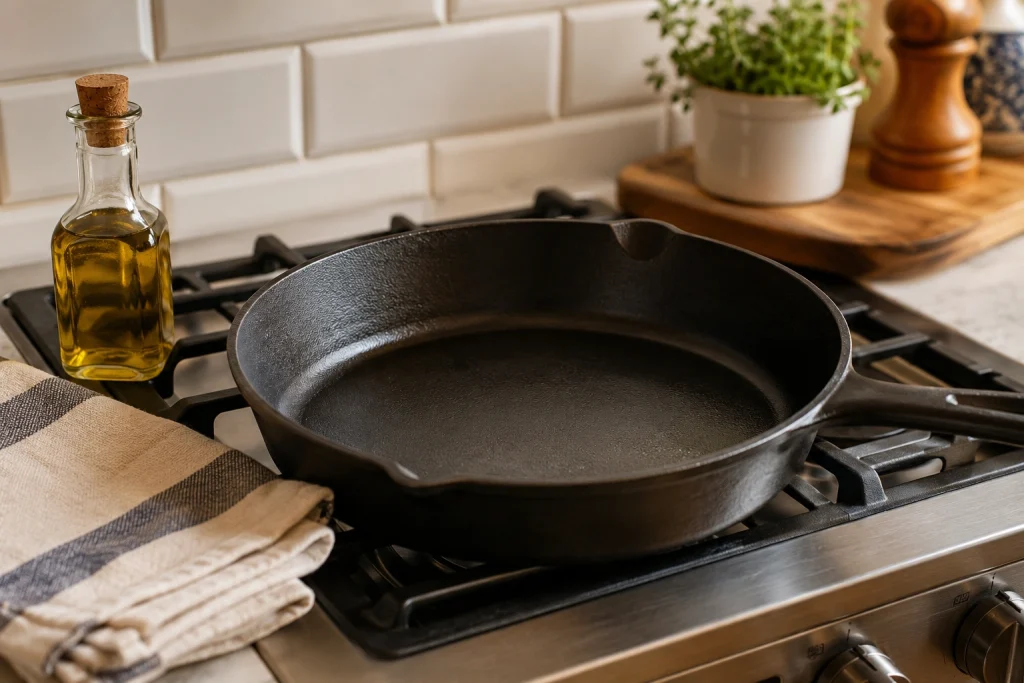
To clean and season cast iron cookware, wash the pan by hand using warm water, a sponge, and a few drops of mild dish soap if needed. Dry the pan completely right away using a towel and a few minutes of heat on the stovetop. Once the pan is dry and slightly warm, rub a very thin layer of neutral cooking oil over the entire inside surface. Finally, heat the pan on the stove until the oil just barely begins to smoke, let it cool, and store it in a dry place.
What Home Cooks Should Know About Cast Iron
Before we clean anything, let me explain what makes cast iron so special. When you buy a brand new pan, it usually comes dark and slightly shiny. That black coating is not paint, and it is not a chemical nonstick spray like Teflon. It is simply baked-on oil.
This baked-on oil is what we call “seasoning.” When liquid cooking oil is heated to a high temperature, it changes forms. It bonds to the metal and turns into a hard, slick, plastic-like shell. This process makes the pan naturally nonstick. It also protects the bare iron underneath from moisture in the air, which is what causes rust.
There are two types of seasoning you need to know about:
- Factory Seasoning: Most new cast iron cookware comes pre-seasoned from the factory. You can cook with it right out of the box. You do not need to do a massive baking project on day one.
- Maintenance Seasoning: Every time you cook with fat, and every time you rub a tiny bit of oil on the pan after washing it, you are adding to the seasoning. Over time, your pan gets better and better.
The good news is that seasoning is completely renewable. Even if you scrub a little too hard and scratch the seasoning, or if you accidentally let the pan rust, you can always clean it off and build the seasoning back up. The iron itself is almost indestructible.
What “seasoning” means (polymerization in plain English)
Seasoning happens when oil reaches its smoke point and begins to polymerize. That is a science term for oil molecules linking together and sticking to the skillet. Think of it like a thin, durable shell. Cooks often call this shell the patina. The more you use the pan, the stronger and smoother that patina gets. Brands like Lodge and Victoria pre-season new skillets, but your daily cooking is what makes them truly nonstick.
Cast iron vs. enameled cast iron vs. carbon steel
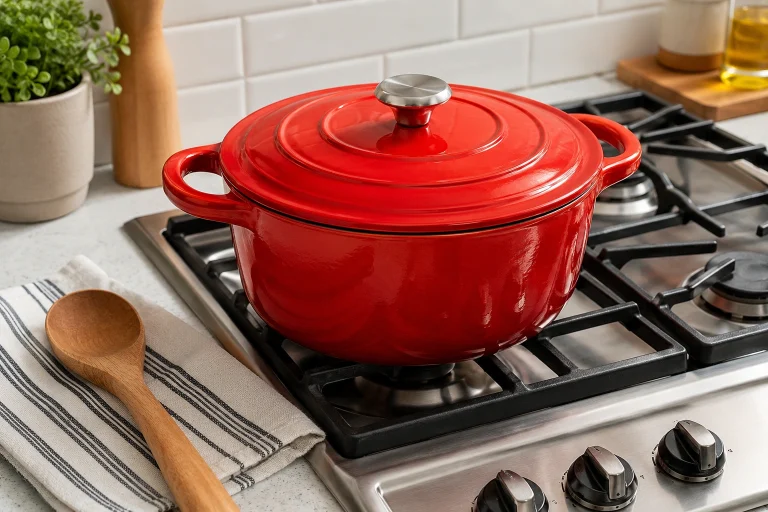
Plain cast iron needs seasoning and rewards you with a tough, high-heat surface. Enameled cast iron (like a Dutch oven with a glossy coating) does not need seasoning, but it does not like metal tools and rough scrubbing. Carbon steel pans act a lot like cast iron, but they are lighter and heat a bit faster. The care is similar: clean, dry, and oil.
Signs You Should Adjust Your Kitchen Cleaning Routine
Sometimes, your cast iron will tell you that it needs a little extra attention. If you pay attention to how the surface looks and feels, you can easily fix small problems before they turn into big ones.
Below is a handy table showing the differences between a healthy pan and a pan that needs some help. Remember, none of these problems mean your pan is ruined. They just mean you need to adjust your habits.
| What You See or Feel | What It Means | What You Should Do Next |
|---|---|---|
| Smooth, dark, and slightly glossy. | Perfect seasoning. The pan is healthy. | Keep cooking and cleaning normally. |
| Sticky or gummy to the touch. | Too much oil was left on the pan, or it wasn’t heated enough. | Bake the pan in a hot oven for an hour to finish baking the oil. |
| Dry, dull, gray patches. | The seasoning is wearing thin in that area. | Rub a thin layer of oil on the spot and heat it on the stove. |
| Small patches of orange or brown rust. | Moisture was left on the bare iron. | Scrub the rust off, dry completely, and re-season immediately. |
| Black flakes ending up in your food. | Old food buildup or thick seasoning is peeling off. | Scrub the pan well with a brush, rinse, and apply a fresh oil layer. |
How to Handle Routine Cast Iron Cleaning Step by Step
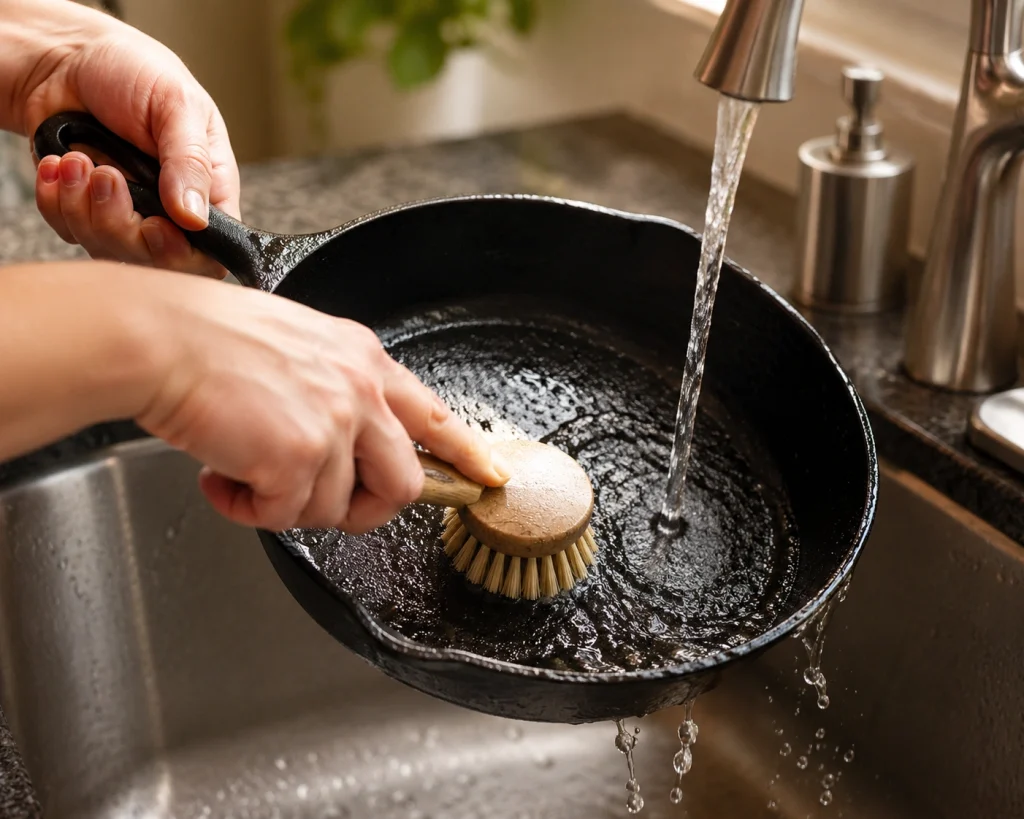
This is the simple method you should use after cooking a normal meal. You do not need to do a huge oven project every time you fry an egg or sear a chicken breast. Routine maintenance only takes about three minutes.
- Let the pan cool slightly: Never take a smoking hot pan and throw it directly under cold water. The extreme temperature change can warp or crack the heavy metal. Let it cool until it is safe to handle, but still warm.
- Scrape out leftover food: Use a wooden spoon, a plastic pan scraper, or a gentle chainmail scrubber to push leftover food bits into the trash.
- Wash gently with warm water: Put the pan in your sink and run warm water over it. Use a sponge or a bristle brush. If the pan is greasy, go ahead and use a few drops of mild dish soap. Modern dish soap is safe for your seasoning.
- Use salt for stubborn bits (Optional): If you have burnt-on food that will not budge, pour a handful of coarse kosher salt into the warm pan. Use a damp paper towel to scrub the salt around. The salt acts as a gentle abrasive that will not ruin your pan. Rinse it all out when you are done.
- Dry the pan instantly: This is the most important step. Wipe the pan down with a dry kitchen towel. Do not let it air dry on a drying rack.
- Heat to remove hidden moisture: Place the wiped pan on your stove over medium-low heat for two to three minutes. This evaporates any invisible water droplets hiding in the metal pores.
- Apply a micro-layer of oil: Turn off the burner. While the pan is still warm, pour about a half-teaspoon of neutral oil (like canola or grapeseed) into the pan. Use a paper towel to wipe the oil all over the inside.
- Wipe it completely dry: Take a clean, dry paper towel and try to wipe all the oil back out of the pan. It sounds crazy, but you only want the thinnest microscopic layer left behind. If the pan looks wet or pooled with oil, you have too much. Let it cool, and you are done!
Safe cleaning tools I trust
- Soft to medium bristle brush or non-scratch sponge for daily cleanup.
- Plastic scraper for stuck-on bits.
- Chainmail scrubber for heavy residue (use gently).
- Fine steel wool only when restoring or stripping rust.
Kitchen Safety Note: Cast iron retains heat for a very long time. The handle will get dangerously hot during stovetop or oven heating. Always keep thick oven mitts nearby, and never grab the handle with your bare hands after heating. The Consumer Product Safety Commission (CPSC) notes that contact with hot cookware is a leading cause of home burns. Protect your hands.
How to Restore and Oven-Season Cast Iron Step by Step
Sometimes, your pan needs a complete reset. If you bought a rusty pan at a garage sale, or if you accidentally left yours in a sink full of water, the stovetop method might not be enough. You will need to build up a brand new layer of seasoning in your oven.
- Scrub to the bare metal: Wash the pan intensely. If there is rust, use fine steel wool to scrub it completely away. You want to see smooth iron. Wash it with warm soapy water and dry it completely.
- Preheat your oven: Set your oven to 400 degrees Fahrenheit (or about 205 degrees Celsius).
- Oil the entire pan: Rub a very thin layer of neutral cooking oil all over the pan. This includes the inside, the outside, the handle, and the bottom.
- Buff the oil out: Just like routine cleaning, take a clean paper towel and buff the oil away until the pan looks almost dry.
- Bake upside down: Place a sheet of aluminum foil on the bottom rack of your oven to catch any drips. Place the cast iron pan upside down on the middle rack.
- Bake for one hour: Let the pan bake for exactly one hour. It might smoke a little bit, so turn on your kitchen exhaust fan or open a window.
- Let it cool in the oven: Turn the oven off and leave the door closed. Let the pan cool down slowly inside the oven for a few hours. Once it is cool, you have a fresh, hard layer of seasoning!
Pro tip: Build a tougher base layer
For a brand-new or fully stripped skillet, repeat the oil-and-bake step two to three times. Keep the coat whisper-thin each round. This creates a strong base that resists sticking and rust. If your chosen oil has a higher smoke point, you can season at 425–450°F (220–230°C) for an even harder layer.
Common Mistakes to Avoid
Cast iron is tough, but a few bad habits can make your kitchen life harder than it needs to be. Avoid these common traps:
- Putting it in the dishwasher: Never put cast iron in the dishwasher. The harsh detergents and long water cycles will strip your seasoning and cause immediate, heavy rust. Always wash by hand.
- Soaking it in the sink: Do not leave a cast iron pan sitting in a sink full of dirty dishwater overnight. Water is the enemy of raw iron.
- Leaving food in the pan overnight: Leaving food sitting at room temperature in a pan is unsafe. The U.S. government food safety guidelines remind us to move leftovers to the fridge within two hours to prevent harmful bacteria. Additionally, acidic foods left in the pan will eat away your seasoning. Move leftovers to proper storage containers.
- Using too much oil: When seasoning, more oil does not mean better seasoning. If you leave a thick layer of oil on the pan before heating, it will turn into a sticky, gummy mess.
- Using the wrong fat to season: Avoid using butter, bacon grease, or unrefined olive oil for your dedicated oven-seasoning process. These fats have lower smoke points or contain proteins that can turn rancid in storage. Stick to pure, refined cooking oils.
Extra pitfalls I see often
- Boiling water in the pan to “steam clean” it. This invites rust. Scrape and wash instead.
- Storing with a lid on. Trapped moisture can cause rust. Let air circulate.
- Cranking heat too high, too fast. Preheat gently for even searing and less sticking.
Practical Tips from Daniel
Over the years of maintaining my own kitchen gear, I have learned a few shortcuts that make dealing with heavy cookware much easier. Here is what I do in my own home.
Daniel’s Kitchen Tip: Cook fatty foods first. When you get a brand new cast iron skillet, do not try to cook delicate scrambled eggs on day one. Spend your first few weeks cooking things with a lot of fat. Fry bacon, sear steaks, or roast chicken thighs. These foods naturally release oils that help build your seasoning layer fast.
Daniel’s Kitchen Tip: Keep a dedicated scraper. I keep a small, cheap plastic pan scraper right next to my sink. It costs about two dollars, but it easily scrapes off melted cheese or burnt bits without scratching the metal. It saves my dish sponges from getting ruined by grease.

Daniel’s Kitchen Tip: Store with a paper towel. If you stack your pots and pans in a cabinet, lay a single dry paper towel inside the cast iron pan before putting another pot on top of it. The paper towel absorbs leftover moisture in the dark cabinet and prevents rust.
Daniel’s Kitchen Tip: Preheat with purpose
Give your skillet 5 minutes over medium heat before cooking. Add a drop of water. If it dances and vanishes, you are ready. This reduces sticking and gives you a better sear.
Daniel’s Kitchen Tip: Use the right tools
Metal spatulas are fine on seasoned cast iron. They help keep the surface smooth by knocking down carbonized bits. Avoid sharp scraping with knives.
Key Takeaways
- Seasoning is simply baked-on cooking oil that protects the iron and creates a nonstick surface.
- It is perfectly safe to use a little mild dish soap when washing cast iron.
- Water is the main cause of rust. Never soak your pan or let it air dry.
- Always heat your pan on the stove after washing to ensure it is completely bone dry.
- When applying oil, wipe it away like you made a mistake. You only want a microscopic layer left behind.
- If you mess up, you can always scrub the pan down and re-season it in the oven. It is rarely ruined forever.
Best Oils for Seasoning (and Why They Work)
Choose oils with a high smoke point and a neutral taste. Grapeseed, canola, sunflower, and standard vegetable oil all work well. They polymerize cleanly and resist rancidity. Flaxseed oil can build a hard layer, but it is more brittle and can flake if applied too thick. For daily wipe-downs, stick to whatever neutral oil you cook with most. Consistency matters more than brand.
Storage and Rust Prevention
Keep your cast iron dry and ventilated. If you live in a humid climate, add a paper towel or a sheet of parchment between stacked pans. Avoid storing a lid on the pan. If you must, leave it slightly ajar. After washing, always do a short stovetop dry and a whisper of oil. That tiny step blocks moisture and keeps the patina strong.
Frequently Asked Questions
Can I use soap on my cast iron skillet?
Yes, you can use mild dish soap. Decades ago, soaps contained harsh lye that would strip seasoning away. Modern dish soaps are gentle and will not hurt a well-seasoned pan. Just wash it quickly and dry it completely.
What is the best oil for seasoning cast iron?
The best oils have a high smoke point and a neutral flavor. Grapeseed oil, canola oil, and standard vegetable oil are all excellent and affordable choices. Avoid using butter, margarine, or extra virgin olive oil for the oven seasoning process.
How often do I need to oven-season my pan?
If you maintain your pan properly on the stovetop after every use, you rarely need to do a full oven seasoning. You only need the oven method if the pan becomes rusty, extremely dull, or if food starts sticking badly every time you cook.
What should I do if my cast iron gets rusty?
Do not panic. Scrub the rust spots vigorously with fine steel wool or a stiff brush until you see bare, gray metal. Wash the pan, dry it immediately, and then follow the oven seasoning steps to bake a fresh layer of oil onto the surface.
Why is my cast iron pan sticky after seasoning?
A sticky pan means that too much oil was left on the surface, or the pan was not heated long enough to bake the oil into a hard shell. To fix this, place the pan upside down in a 400-degree Fahrenheit oven for another hour to finish the baking process.
Can I use steel wool to clean my pan?
You should only use steel wool if you are trying to strip rust or ruinous old seasoning off the pan intentionally. For daily cleaning, steel wool is too abrasive and will scrape away the good seasoning you have built up. Stick to sponges or soft brushes for daily use.
Is it safe to cook acidic foods like tomatoes in cast iron?
It is safe to cook quick acidic meals, like a fast tomato sauce, in a well-seasoned pan. However, simmering highly acidic foods for hours can break down the seasoning layer and give your food a metallic taste. For long-simmering tomato sauces, use stainless steel or enameled cookware instead.
Can I use cast iron on induction or glass cooktops?
Yes. Cast iron works great on induction. On glass tops, lift the pan instead of sliding it to avoid scratches. Preheat gradually to prevent hot spots.
Black residue is coming off on my towel. Is that normal?
A little dark residue during early seasoning is normal. Keep cooking, cleaning, and applying micro-thin oil layers. It will stabilize and stop.
Conclusion
Taking care of cast iron cookware really does not have to be a stressful chore. Once you understand that water is the enemy and a little bit of heat and oil is the cure, the routine becomes second nature. Remember, these pans are built to outlast us all. Even if you make a mistake, leave it wet, or accidentally cause a rust spot, you can always buff it out and start over.
By washing it gently, drying it completely on the stove, and adding a tiny wipe of oil before you put it away, you will build a beautiful, naturally nonstick surface. Your breakfasts will slide right out, and your dinner meats will get the perfect sear. Do not be afraid to use your pan every single day.
If you are looking to upgrade your kitchen setup or want to see how cast iron compares to other materials, check out our guide on how to choose the best beginner cookware sets for your home. Happy cooking, and keep that iron seasoned!