How to Make Cast Iron Cookware: From Foundry to Kitchen

Hi, I’m Daniel Cross from EliteComparison.com. If you have ever held a heavy cast iron skillet in your hands, you might have wondered how to make cast iron cookware from scratch. It feels practically indestructible, heats evenly once warmed up, and can last for generations in a busy family kitchen. But how does a chunk of raw metal turn into an everyday cooking essential?
Many home cooks think making cast iron is a quick factory stamping process, or they confuse industrial iron pouring with seasoning a pan at home. The truth is that making cast iron cookware combines heavy industrial foundry work with simple kitchen preparation. While foundries use molten liquid metal and compressed sand molds to shape the pan, home cooks do their part by building up the protective oil seal that makes the surface smooth and cooking-ready.
In this guide, I will walk you through the whole journey. We will cover how cast iron cookware is made in a foundry, how factory seasoning works, and how you can prepare and care for your cast iron safely at home. Whether you are shopping for your very first pan or want to understand your trusted skillet better, here is everything you need to know.
Quick Answer
Cast iron cookware is made in industrial foundries by pouring molten iron into custom sand molds at temperatures above 2,500 degrees Fahrenheit. The mixture contains pig iron, recycled steel, and scrap iron melted together in a high-heat furnace. Once the liquid metal fills the sand pattern and cools, the sand mold is broken away, the pan is ground smooth, and a thin layer of food-safe vegetable oil is baked onto the surface to create a initial pre-seasoning. At home, you complete the process by baking thin coats of oil onto the metal to form a slick, durable cooking surface.
What Home Cooks Should Know About How Cast Iron Cookware Is Made
Understanding how your kitchen tools are manufactured helps you take far better care of them. Cast iron is not stamped or pressed from a flat metal sheet like cheap aluminum pans. Instead, it is a poured metal cookware item, which means liquid metal fills a hollow cavity and hardens into a single solid piece.
Let me explain what goes into the raw metal mixture before it ever reaches a mold:
- Pig Iron: Raw iron made in blast furnaces that gives the pan its heavy structure.
- Recycled Scrap Steel: Clean steel offcuts added to balance the carbon content and add strength.
- Recycled Cast Iron: Unused iron trimmings or repurposed iron pieces melted down again.
- Carbon and Silicon: Crucial minerals added to help the liquid metal pour smoothly and resist thermal cracking later.
Why do foundries use sand to shape liquid iron? Sand is cheap, holds its shape under pressure, and withstands extreme heat without melting. A damp mixture of fine sand, clay, and water is compressed tightly around a solid pan pattern to form top and bottom mold halves. When the pattern is removed, a empty cavity shaped exactly like a skillet remains inside.
Once poured, the liquid iron cools in minutes, taking on the solid form of the pan. This unique casting method gives cast iron cookware its signature weight, thick walls, and incredible heat retention that home cooks love for searing steaks, frying eggs, and baking cornbread.
Signs You Should Adjust Your Kitchen Choice, Tool, or Method
Not every cast iron skillet fits every home kitchen. Here’s the thing: knowing when a pan is damaged or mismatched to your stove saves you money, time, and cooking frustration down the road.
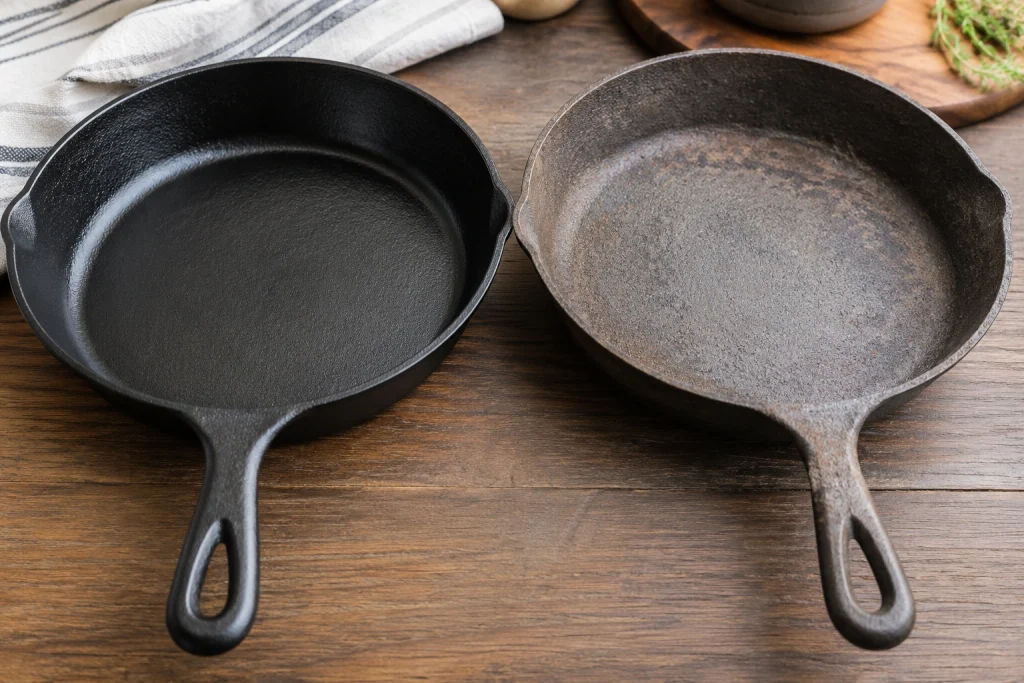
Before buying or cooking with a cast iron pan, watch out for these warning signs that mean you should change your tool or cooking method:
- Cracks or Hairline Fractures: Exposing a scorching hot pan to cold tap water causes thermal shock. Cracked cast iron cannot be fixed safely at home and should be replaced.
- Severe Warping or Wobbling: If the base of the pan bulges, it will not sit flat on glass electric stoves. This causes hot spots and can damage your cooktop.
- Deep Pitting or Flaking Rust: Light surface rust wipes away easily with steel wool, but deep holes in the metal trap food particles and harbor bacteria.
- Heavy Weight for Your Wrist: A 12-inch skillet can weigh over eight pounds empty. If lifting it feels unsafe, switch to an 8-inch skillet or look for a pan with a sturdy helper handle.
- Chipped Porcelain Enamel: If you use enamel-coated cast iron and notice chipped porcelain on the interior cooking surface, stop using it immediately. Chipped glass-like enamel can end up in your food. Always keep an eye on product safety alerts through the U.S. Consumer Product Safety Commission for recalled kitchenware.
| Cookware Type | How It Is Finished | Best Kitchen Use | Maintenance Needed |
|---|---|---|---|
| Traditional Raw Cast Iron | Baked vegetable oil seasoning | High-heat searing, frying, outdoor cooking, baking | Hand wash, quick drying, regular oil application |
| Enamel-Coated Cast Iron | Fired porcelain enamel shell | Acidic tomato sauces, soups, slow-simmered stews | Normal hand washing, no seasoning, careful against chipping |
| Machined Smooth Cast Iron | Polished smooth interior surface | Delicate foods, eggs, quick everyday sautéing | Standard oil seasoning with faster nonstick surface build-up |
How to Make Cast Iron Cookware Step by Step
Let’s look at the full step-by-step path cast iron takes, from glowing molten metal in an industrial foundry to a fully seasoned skillet in your kitchen.
Phase 1: The Industrial Foundry Process
- Creating the Sand Mold: High-pressure machines press fine green sand around a pan pattern, creating a cope (top half) and drag (bottom half) with a hollow skillet space inside.
- Melting the Raw Metal: Pig iron, steel scrap, and silicon heat up inside an induction furnace until completely liquid at roughly 2,500°F to 2,800°F.
- Pouring into the Molds: Automated ladles pour glowing orange liquid iron directly into the sand mold cavity.
- Cooling and Shakeout: The iron solidifies within minutes. A shaking table vibrates the mold violently to break off the sand, revealing the solid raw pan.
- Shot-Blasting and Trimming: The rough gray skillet is blasted with tiny metal beads to clear away remaining sand. Workers grind down rough edges and handles.
- Factory Pre-Seasoning: The pan gets sprayed with edible vegetable oil and passes through a commercial baking oven to lock in an initial dark protective coating.
Phase 2: Finishing the Surface in Your Home Kitchen
While foundries handle the metal creation, you complete the nonstick build-up in your own home. So what should you do when bringing a new pan home?
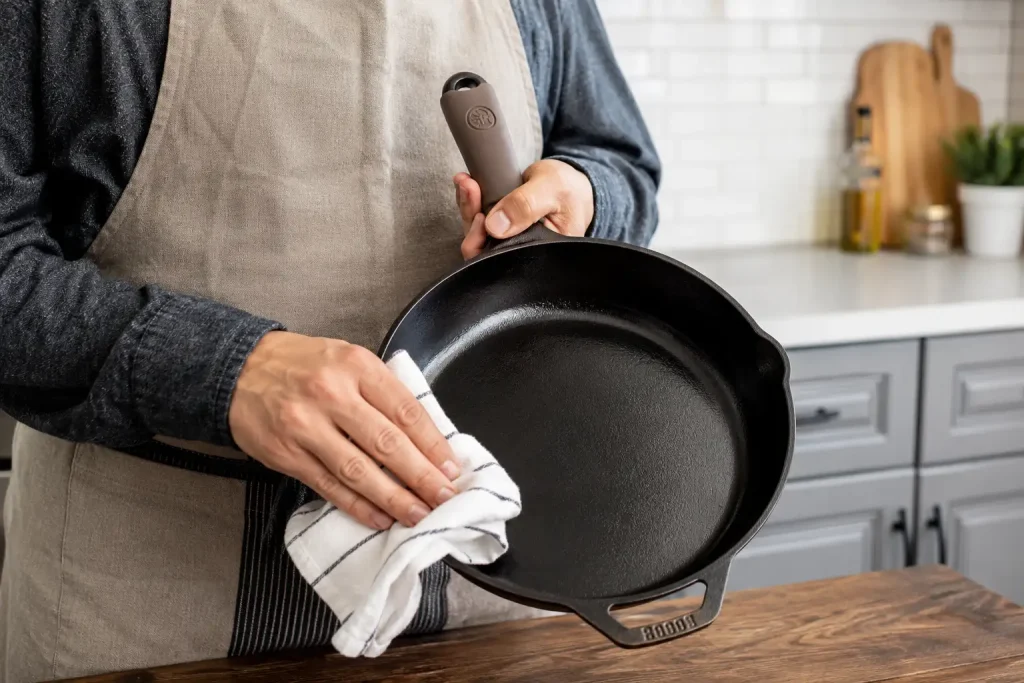
- Clean and Dry: Wash the pan with warm water and mild dish soap. Dry it completely using a clean towel. Never leave wet iron to air-dry on a rack.
- Apply a Micro-Thin Oil Coat: Put a few drops of high-smoke-point oil (like canola or grapeseed oil) onto the metal. Rub it over the whole pan with a paper towel, then wipe off almost all of it until the pan looks completely matte.
- Bake in the Oven: Put the pan upside down on the center oven rack. Place aluminum foil on the bottom rack to catch stray drips. Bake at 450°F to 500°F for one full hour.
- Let It Cool Slowly: Turn off the oven and leave the skillet inside until it is completely cool to the touch.
Common Mistakes to Avoid
Even experienced home cooks make simple mistakes when buying or handling cast iron cookware. Avoid these common traps to keep your kitchen running smoothly:
- Attempting DIY metal casting at home: Never try melting raw metal in backyard furnaces. Without professional equipment and safety gear, molten iron causes severe burns, fires, and dangerous gas buildup.
- Applying thick layers of oil: Slathering oil on your pan creates a sticky, gummy residue instead of a hard, slick seasoning layer.
- Soaking cast iron in a full sink: Leaving iron submerged in soapy water strips seasoning quickly and breeds bright orange surface rust.
- Rinsing hot pans under cold water: Sudden temperature drops warp or crack thick iron pans instantly.
- Forgetting heat-resistant oven mitts: Cast iron handles retain heat for a long time. Always use thick mitts or silicone grips to avoid painful hand burns.
- Running cast iron through the dishwasher: Dishwasher detergent and high steam ruin seasoning and turn your cookware rusty in a single cycle.
Practical Tips from Daniel
Daniel’s Kitchen Tip on Selecting Oil: Stick with basic, high-smoke-point oils like canola, grapeseed, or refined sunflower oil for seasoning. Extra virgin olive oil and unrefined butter burn at low heat, leaving a smoky, sticky coating on your pan instead of a durable seal.
Daniel’s Kitchen Tip on Dish Soap: Don’t panic if you use a drop of mild dish soap to clean grease off your pan! Modern dish liquid will not ruin your seasoning layer. Just stay away from harsh lye cleaners, chemical degreasers, or steel scouring pads during regular washing.
Daniel’s Kitchen Tip for Apartment Living: If your apartment lacks a high-powered range hood, season your pan on a mild afternoon with open windows. Alternatively, do quick stovetop touch-ups on medium heat after cooking rather than high-temp oven sessions.
| Issue | Why It Happens | Easy Kitchen Fix |
|---|---|---|
| Sticky or Gummy Surface | Too much oil applied or baked at low temps | Scrub with warm water, dry thoroughly, and bake at 450°F for 1 hour. |
| Orange Surface Rust | Exposed to moisture or left to air-dry | Scrub off rust with fine steel wool, dry, and apply a thin oil coat. |
| Flaking Black Flakes | Burnt food buildup or thick carbonized layers | Scrub away loose flakes with a stiff brush or chainmail pad, then re-season. |
| Food Sticking Constantly | Pan wasn’t preheated before adding oil and food | Preheat the dry pan on medium low for 3 to 5 minutes before adding oil. |
Key Takeaways
- Cast iron cookware is made in industrial foundries by pouring 2,500°F liquid iron into disposable sand molds.
- Factory pre-seasoning bakes vegetable oil into metal pores, but home cooks build the real nonstick surface over time.
- Never attempt home metal casting; leave raw iron melting to industrial foundries and focus on home care.
- Avoid thermal shock, dishwasher cycles, and water soaking to prevent rust and cracks.
- Thin coats of high-smoke-point oil baked at high heat produce the slickest, longest-lasting cooking surface.
Frequently Asked Questions
Can you make cast iron cookware at home?
No, you cannot safely cast raw molten iron at home without industrial foundry equipment, extreme heat sources reaching 2,500°F, and heavy safety gear. However, home cooks can easily finish, season, and restore raw or unseasoned cast iron skillets in a standard home kitchen oven.
What materials are used to make cast iron pans?
Cast iron cookware is made from a blend of pig iron, recycled steel, and scrap cast iron. Small amounts of carbon and silicon are added to help the liquid metal flow smoothly into sand molds and provide durability.
Why do foundries use sand molds for cast iron cookware?
Sand molds withstand extremely high molten metal temperatures without melting or breaking down. Compressed sand holds detailed pan shapes well, is inexpensive, and can be recycled after the cooled pan is removed.
What is the difference between factory-seasoned and raw cast iron?
Factory-seasoned cast iron comes pre-coated with a baked oil layer straight from the manufacturer so you can cook with it immediately. Raw cast iron has no oil coating, appears bright gray, and will rust quickly if you do not season it before use.
Is cast iron cookware safe for everyday family cooking?
Yes, cast iron cookware is safe, non-toxic, and free from synthetic chemical coatings when properly seasoned. According to guidance from official food safety resources like the USDA Food Safety and Inspection Service, maintaining clean, non-porous cookware surfaces helps prevent cross-contamination in home kitchens.
How do you know if a cast iron skillet is beyond repair?
A cast iron skillet is ruined if it has visible cracks, hairline fractures, severe warping on the bottom, or broken handles. Surface rust or flaking food residue can easily be scrubbed off and re-seasoned, so rust alone does not mean a pan is ruined.
Learning how cast iron cookware is made gives you a deeper appreciation for this timeless kitchen tool. From liquid metal poured in an industrial foundry to compressed sand molds, every step creates a piece of heavy cookware built to outlast almost any modern kitchen appliance.
While you won’t be melting iron in your backyard, you play a huge role in shaping how your pan cooks every day. By mastering basic maintenance, applying thin oil layers, and avoiding common cleanup traps, you can build a slick nonstick skillet that gets better every time you make dinner.
Ready to build out your ultimate kitchen setup? Check out our complete cookware care guide for step-by-step cleaning hacks, or browse our honest guides on the best small kitchen appliances to find the right gear for your home. For more consumer product insights and official appliance guidelines, you can also check buying regulations on the Federal Trade Commission website.