How to Clean Enameled Cast Iron Cookware: A Simple Guide for Home Cooks

Hi, I’m Daniel. If you are reading this, you probably just cooked a great meal in your favorite enameled cast iron Dutch oven or skillet. These pots are amazing for slow-cooking stews, baking crusty bread, and simmering rich sauces. But when dinner is over, you might be staring at a bottom covered in baked-on food, stubborn brown stains, or burnt oil. Do not panic. You did not ruin your pan.
Here is the thing. Enameled cast iron looks tough, but the surface is actually made of melted glass baked over heavy iron. That means it needs gentle care. You cannot scrub it like a cheap steel pan, and you definitely cannot treat it like raw, bare cast iron. Figuring out how to clean enameled cast iron cookware without scratching the shiny finish can feel a little stressful at first.
The good news is that cleaning these beautiful pots is incredibly simple once you know a few basic rules. You do not need expensive specialty cleaners or harsh chemicals. In this guide, I will show you my favorite, practical methods for lifting stuck food and removing tough stains safely, using simple things you already have in your kitchen.
Quick Answer
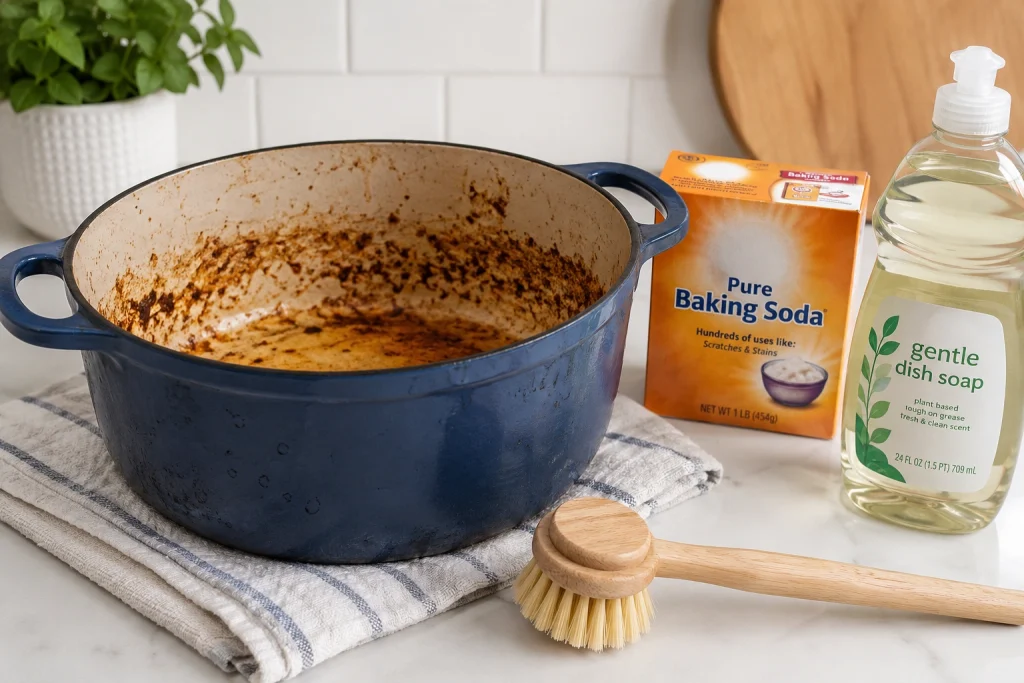
To clean enameled cast iron cookware daily, let the pot cool completely to room temperature first. Wash it in the sink with warm water, mild dish soap, and a soft non-scratch sponge. For stubborn stuck-on food or light stains, simmer a mixture of water and two tablespoons of baking soda on the stove for ten minutes, let it cool, and wipe the mess away. Never use steel wool, metal scrapers, or harsh abrasive cleaners, as these will permanently scratch the glass enamel finish.
What Home Cooks Should Know About Enameled Cast Iron
Before we start scrubbing, let me explain what you are actually cleaning. Many beginner cooks confuse bare cast iron with enameled cast iron. They are very different.
Bare cast iron is black, heavy, and needs to be rubbed with oil to create a nonstick “seasoning.” Enameled cast iron is heavy iron covered in a smooth, hard glass coating. The enamel is usually brightly colored on the outside and cream or black on the inside. Because it has this glass shell, it never needs seasoning, and it will never rust as long as the enamel is intact.
But that glass shell comes with a trade-off. It is brittle. It can chip if you drop it, and it can scratch if you scrub it with sharp metals. It can also crack from sudden temperature changes.
To keep your cookware safe, you need the right cleaning supplies. Here is a quick list of safe tools for your enameled pots:
- Soft sponges or microfiber cloths
- Nylon scrub brushes or wooden dish brushes
- Silicone pan scrapers for lifting food bits
- Basic liquid dish soap
- Baking soda for gentle stain removal
If you stick to these simple supplies, your enameled pots will easily last a lifetime. You do not need to overcomplicate your cleaning routine.
Signs You Should Adjust Your Cleaning Method
Sometimes, we fall into bad habits without realizing it. If you notice your enameled cast iron is not looking quite right, your cleaning routine might be the problem. It is better to catch these signs early before the damage becomes permanent.
One clear sign is a dull, cloudy finish on the inside of the pot. If the shiny cream interior looks matte and feels slightly rough, you might be using a cleaner that is too abrasive. Harsh scrubbing powders slowly sand away the smooth glass finish over time.
Another sign is small gray lines inside the pot. These often look like pencil marks. They happen when metal spoons, metal whisks, or metal spatulas scrape against the hard enamel. The metal is actually softer than the glass, so the utensil leaves a little bit of itself behind. You can usually clean these marks off, but it is a strong sign that you need to switch to wooden or silicone cooking tools.

To help you protect your investment, here is a quick breakdown of what is safe and what is dangerous for your enameled pots.
| Cleaning Tool or Method | Safety Level for Enamel | Why It Matters |
|---|---|---|
| Nylon Bristle Brush | Very Safe | Lifts food without scratching the glass surface. |
| Baking Soda Paste | Very Safe | Gently lifts stains and cuts grease naturally. |
| Standard Dishwasher | Unsafe (Long Term) | Harsh dishwasher detergents dull the shiny finish over time. |
| Steel Wool Pads | Unsafe (Never Use) | Will permanently scratch and ruin the smooth enamel coating. |
| Citrus-Based Cleaners | Use with Caution | Highly acidic cleaners can wear down the enamel gloss if left soaking. |
How to Clean Enameled Cast Iron Cookware Step by Step
Alright, let us talk about the safest, most effective way to clean your pot. Whether you just made a simple soup or severely scorched a batch of chili on the bottom, this step-by-step method will handle it.
- Let the pot cool completely. This is the most important step. Never put a hot enameled pot into a sink of cold water. The sudden temperature drop causes thermal shock. The iron shrinks faster than the glass, causing the enamel to crack or pop right off the iron base. Wait until the pot is cool to the touch.
- Do a basic soapy wash. Once cool, fill the pot with warm water and a few squirts of mild dish soap. Use a soft sponge or a nylon dish brush to wipe away any loose food and grease. For everyday cooking, this is often all you need to do.
- Use the boiling method for stuck food. If you have burned-on rice or stubborn crust that will not wipe away, do not try to chisel it off. Instead, fill the pot with a few inches of warm water and add two tablespoons of baking soda. Put the pot back on the stove and bring the water to a gentle simmer. Let it simmer for 10 to 15 minutes. The baking soda and heat will act like magic, loosening the burnt food from the bottom.
- Scrape and rinse. Turn off the heat and let the water cool down again. Take a wooden spoon or a silicone pan scraper and gently nudge the burnt food. It should peel right off without any heavy scrubbing. Dump the dirty water out and rinse the pot thoroughly.
- Treat tough stains with a paste. If the pan is clean but you still see brown or yellow staining on the cream enamel, mix a little baking soda with a few drops of water to make a thick paste. Rub this paste over the stains using a soft cloth or sponge. Let it sit for 20 minutes, then gently scrub in circles and rinse.
- Dry completely before storing. Always dry your cast iron thoroughly with a clean microfiber or cotton kitchen towel. Even though the enamel protects the iron, the very rim of the pot (where the lid sits) is often exposed raw iron. If you put the pot away wet, that rim can easily develop rust spots.
Common Mistakes to Avoid
Cleaning enameled cookware is easy, but people often make simple mistakes that lead to permanent damage. Let me share a few things you should avoid doing.
- Using harsh bleach. Never soak your enameled pots in bleach. It is highly corrosive. It will break down the shiny finish of the enamel and can even damage the iron underneath if there are micro-cracks. Stick to baking soda.
- Relying on the dishwasher. Many brands say their enameled cast iron is “dishwasher safe.” But here is the truth. Dishwasher detergents contain tiny abrasives. Over months and years, these abrasives act like sandpaper, turning a bright, shiny pot into a dull, cloudy mess. Hand washing is always the safest choice for longevity.
- Chipping the rim with metal spoons. When cooking, it is tempting to tap your spoon on the edge of the pot to knock food off. If you do this with a metal spoon, you can easily chip the enamel right off the rim.
- Ignoring the exterior. Drips of oil or sauce on the outside of the pot will bake onto the colored enamel the next time you use it. Always wipe down the outside and the bottom of the pot before you put it back on a hot stove.
For more details on avoiding dangerous cleaning habits at home, you can always check guidelines from the Consumer Product Safety Commission (CPSC) about safe kitchen product handling.
Practical Tips from Daniel
Daniel’s Kitchen Tip: If your pot has really deep, stubborn stains that baking soda cannot fix, try a specialized cookware cleanser. I like the powder called Bar Keepers Friend, but you must be careful. Use the version specifically made for cookware, use a tiny amount, rub very gently, and rinse immediately. Do not scrub hard, or you will scratch the enamel. Kitchen Organization Tip: When storing your enameled cast iron, do not just drop the heavy iron lid directly onto the pot. The metal-on-metal impact can chip the rim over time. Place a paper towel, a thin dishcloth, or the little rubber bumpers that came with the pot between the lid and the rim before putting it in the cabinet. Kitchen Safety Note: Never mix cleaning chemicals. If you tried cleaning your pot with a specialized chemical spray, do not add bleach, ammonia, or vinegar to the mix. Mixing household cleaners can create dangerous toxic gases. Always wash the pot thoroughly with plain water before trying a different cleaning method. Check resources like the Centers for Disease Control and Prevention (CDC) for more on safe kitchen sanitization practices.
Key Takeaways
- Never wash a hot enameled cast iron pot; always let it cool to room temperature to prevent the glass coating from cracking.
- Use soft sponges, nylon brushes, and warm soapy water for everyday cleaning. Avoid steel wool and harsh scraping tools completely.
- Remove burnt-on food by simmering water and baking soda on the stove for ten minutes to loosen the mess gently.
- Skip the dishwasher. Hand washing protects the shiny enamel finish from being dulled by harsh dishwasher detergents over time.
- Always dry the pot completely, especially around the exposed iron rim, to prevent hidden rust spots from forming.
Frequently Asked Questions
Can I use steel wool on enameled cast iron?
No, you should never use steel wool or metal scouring pads on enameled cast iron. The metal is too abrasive and will permanently scratch the smooth glass coating, making the pot dull and much harder to clean in the future.
Are enameled cast iron pots dishwasher safe?
While many manufacturers label them as dishwasher safe, it is highly recommended to hand wash them instead. Repeated cycles in the dishwasher use harsh detergents that will eventually wear down and dull the shiny enamel finish.
How do I get brown stains out of my enameled Dutch oven?
To remove brown stains, make a thick paste using baking soda and a little water. Rub the paste over the stained areas, let it sit for 20 to 30 minutes, and then scrub gently with a soft sponge before rinsing thoroughly.
Can I use Bar Keepers Friend on enameled cast iron?
Yes, but you must use it cautiously. Use the liquid or powder version formulated specifically for cookware. Apply a very small amount, rub gently with a soft, wet cloth, and rinse it off immediately to avoid dulling the enamel.
Why is food suddenly sticking to my enameled cast iron?
Food usually begins to stick if the pan is not heated properly before adding oil, or if the shiny enamel finish has been worn away by harsh scrubbing or dishwasher use over time. Always heat the pan gently on low-medium heat with a little oil before adding food.
How do I fix chipped enamel on my pot?
Unfortunately, chipped enamel cannot be repaired safely at home. If the chip is on the outside, the pot is usually still safe to use. If the chip is on the inside cooking surface, you should stop using it, as glass shards could get into your food.
Wrapping Up
Cleaning your enameled cast iron cookware does not have to be a frustrating chore. These pots are heavy, beautiful, and built to last generations, but they just need a little respect at the kitchen sink. By avoiding extreme temperature changes and skipping the heavy-duty scrapers, you keep that glassy surface smooth and stick-resistant.
Remember, patience is your best friend. A quick soak with some baking soda and warm water does most of the heavy lifting for you. You never need to scrub until your arms hurt. Let the heat and the baking soda do the hard work while you relax after your meal.
If you want to read more about organizing your space and finding the right gear for your cooking style, check out our guide on the best kitchen tool buying guides to make your meal prep even easier. Happy cooking, and keep that kitchen simple!