Is Titanium Cookware Safe? What You Need to Know

Is Titanium Cookware Safe?
I get asked this question a lot: “Is titanium cookware safe?” People see shiny pans labeled “titanium” and assume they are buying the safest option. I’ve used titanium pots for camping and titanium-coated pans at home. From my experience and from the science, titanium is a very safe option—but the details matter. How the pan is made, whether it’s pure titanium, coated, or a titanium-reinforced nonstick, changes the answer.
In this guide I’ll walk you through the facts, the research, and practical tips. I’ll show you what to look for when you buy titanium cookware, how to care for it, and when to replace it. My goal is to help families and home cooks make a confident choice about titanium pans and pots.
What Is Titanium Cookware?
Titanium cookware means kitchenware that uses titanium metal somewhere in its construction. Pure titanium is light and very strong. It’s used for medical implants and aircraft parts. In cookware, titanium appears in three main ways: as the main metal, as a coating, or as a particle mixed into a nonstick layer.
You’ll find three main types:
- Pure titanium cookware: Often used in lightweight camping pots and cups. Rare in home kitchens because of cost and cooking characteristics.
- Titanium-coated cookware: Aluminum or steel pans with a thin titanium layer applied by processes like PVD (Physical Vapor Deposition).
- Titanium-reinforced nonstick cookware: Nonstick coatings (PTFE or ceramic) that include titanium particles to boost hardness and durability.
Each type behaves differently. Pure titanium is inert and unlikely to leach metals. Coated and reinforced pans can be very safe, but only if their surface stays intact. That difference matters when you cook acidic foods or when you’re heating pans a lot.
Why Is Cookware Safety Important?
Cookware safety matters because cookware touches your food at high heat. Heat can cause metals or coatings to break down or leach into food. Unsafe materials may react with acidic foods or release fumes. When I shop for cookware, safety is as important as price and performance.
Titanium is marketed as non-reactive and hypoallergenic. That’s true for the metal itself. The safety question becomes more complex when you look at coatings, base metals, and nonstick chemistry.
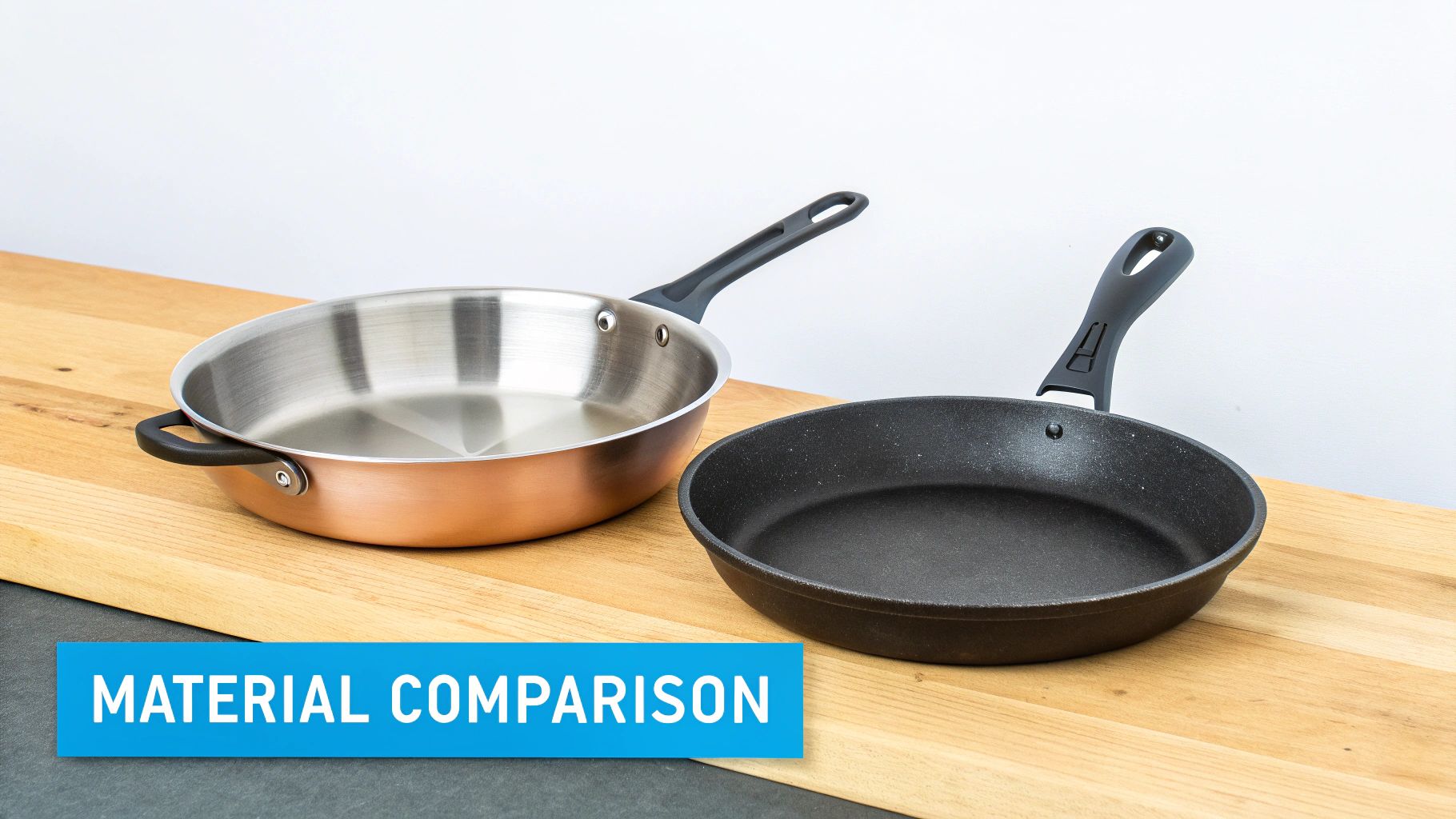
Titanium Vs Other Cookware Materials
A quick comparison helps when you decide what to buy. Below I keep the original table and add short notes to guide choices. The table shows common trade-offs: weight, reactivity, nonstick, durability, and safety concerns.
| Material | Weight | Reactivity | Nonstick | Durability | Safety Concerns |
|---|---|---|---|---|---|
| Titanium | Light | Non-reactive | Depends on coating | Very strong | Minimal (if pure/coated) |
| Stainless Steel | Medium | Mostly non-reactive | No | Strong | Nickel allergy |
| Aluminum | Light | Reactive | No | Soft | Leaching |
| Nonstick (PTFE/Teflon) | Medium | Non-reactive | Yes | Moderate | PTFE fumes, flaking |
| Ceramic | Medium | Non-reactive | Yes | Moderate | Chipping, lead (in old products) |
Notes: Titanium is lighter than stainless steel and safer than untreated aluminum for acidic foods. Nonstick performance depends on the coating. If you want even heating for sauces, stainless or aluminum (with a safe coating) often performs better than thin titanium alone.
How Titanium Cookware Is Made
Making titanium cookware changes how safe and durable it is. I’ll summarize the three common production methods, how they affect safety, and what to watch for.
Pure Titanium Cookware
Pure titanium pans are formed from the metal itself. They’re very light and tough. Campers favor them because they won’t rust and are easy to carry. Pure titanium is chemically inert. It won’t react with acidic foods like tomato sauce or vinegar. That makes pure titanium one of the safest cooking metals for health.
From personal use: pure titanium pans heat quickly and clean easily. They can develop hotspots, so I avoid delicate sauces in them. But for simple frying or boiling, they work well and feel reassuringly safe.
Titanium-coated Cookware
Most “titanium” pans use a thin titanium layer over aluminum or steel. Manufacturers often use PVD (Physical Vapor Deposition) or other coating methods to bond titanium to the base metal. The titanium layer adds hardness and protects the base metal.
Coated pans are safe if the coating remains intact. If the coating chips or wears through, the exposed base metal—often aluminum—could react with food. That’s why coating quality and thickness matter. In my experience, mid- to high-end brands with thicker PVD coatings last longer and handle utensils better.
Titanium-reinforced Nonstick Cookware
Some nonstick coatings include titanium particles to strengthen the surface. That doesn’t make the pan “titanium” in the metal sense. Instead, titanium improves abrasion resistance and reduces flaking.
The safety of these pans depends on the base nonstick chemistry. PTFE-based nonstick (Teflon) is stable at normal cooking temperatures but can emit fumes if heated above about 500°F (260°C). Titanium reinforcement helps durability, but it doesn’t change PTFE’s thermal limits or behavior.

Credit: www.amazon.com
Is Titanium Cookware Safe For Health?
Short answer: yes, titanium metal is one of the safest metals for cookware. It’s chemically stable and rarely causes allergic reactions. Below I break down reasons and caveats I want you to know.
- Non-reactive: Titanium resists acids and bases. It won’t change the taste of food or react with acidic ingredients.
- No leaching: Titanium does not leach into food in normal cooking. That’s different from uncoated aluminum, which can leach small amounts of aluminum salts into acidic dishes.
- Hypoallergenic: The metal is used in medical implants because most people don’t react to it.
These points are true for pure titanium. For coated and reinforced products, the surface chemistry matters more than the titanium content.
Pure Titanium
Pure titanium cookware is ultra-safe. Even if scratched, titanium itself won’t release harmful substances. Studies on titanium implants and devices show minimal toxicity in humans. That clinical use is a strong indicator of safety for food contact, too.
Titanium-coated
Titanium coatings protect the base metal. As long as the coating is intact, you get the non-reactive benefits of titanium. If the coating fails, safety depends on the base metal. For example, aluminum may be a concern for people with certain health conditions. That’s why I check the base material before buying a coated pan.
Titanium-reinforced Nonstick
With titanium-reinforced nonstick, the key safety question is the underlying nonstick chemistry. PTFE-based coatings are common. PTFE is safe under normal cooking conditions, but it can release fumes at high heat. Ceramic nonstick coatings avoid PTFE but can chip. Titanium particles help strength, but don’t change PTFE’s temperature limits or the chipping risk of ceramic.
Common Myths About Titanium Cookware
I want to bust a few myths I see often. These can mislead buyers.
- Titanium cookware is 100% titanium: False for most home pans. Many are coated or reinforced.
- Titanium cookware is naturally nonstick: Pure titanium is not nonstick; coatings create nonstick surfaces.
- Titanium cookware lasts forever: The metal is durable, but coatings wear out.
- Titanium cookware is always safe: Safety depends on coating integrity and base metal.
These myths feed buying mistakes. I always read labels and product specs before I buy.
Real-world Examples And Brands
Many known brands use titanium in different ways. Here’s what to know:
- T-fal Titanium Advanced: Titanium-reinforced nonstick. Durable, but check PTFE quality and heat limits.
- Snow Peak Titanium Cookware: Pure titanium sets for camping. Ultra-light and inert—my go-to for backpacking.
- Ballarini Granitium: Titanium-coated aluminum. Strong finish but watch for coating wear over years.
Note: Some products highlight “titanium” in marketing but use only small titanium amounts. Trust product specs and user reviews rather than marketing copy.
Titanium Cookware In Camping And Outdoor Cooking
Titanium cookware is a favorite for outdoors people. I carry a small titanium pot on long hikes. The advantage is clear: low weight and high strength.
Benefits for outdoor use:
- Light weight: Saves pack weight on multi-day trips.
- No reactivity: Good for cooking acidic meals without flavor change.
- Durability: Handles drops and rough handling on the trail.
- Quick heating: Heats fast, though watch for hotspots.
For outdoor cooking, pure titanium is usually the best choice. It cleans easily and won’t rust. If you cook directly over flames, titanium’s durability and low weight matter a lot.
Credit: www.titanedgetitanium.com
Cooking Performance: Titanium Vs Alternatives
Safety is key, but cooking performance also matters. Titanium heats fast but may not spread heat evenly. Below is the original table and a few practical tips on use.
| Material | Heat Distribution | Heat Retention | Ease of Cleaning | Weight |
|---|---|---|---|---|
| Titanium | Poor (hot spots) | Low | Easy | Very light |
| Stainless Steel | Good | Medium | Moderate | Medium |
| Aluminum | Excellent | Low | Easy | Light |
| Nonstick | Good | Medium | Very easy | Medium |
| Ceramic | Good | Medium | Easy | Medium |
Practical note: I use titanium for boiling, frying, and camping meals. For delicate sauces, baking, or searing large cuts, I prefer stainless steel or heavy-gauge aluminum because they give more even heat and better heat retention.
Are There Risks To Using Titanium Cookware?
Titanium is safe, but here are real risks to consider:
- Coating wear: If the titanium coating wears off, the base metal (often aluminum) can be exposed. That changes safety and cooking behavior.
- Nonstick issues: PTFE nonstick can release fumes if overheated. Titanium reinforcement increases durability but does not remove thermal limits.
- Hot spots: Thin pure titanium pans can heat unevenly and cause burnt food.
- Fake products: Some cheap pans claim to be titanium when they are not. Buy from trusted brands and read specs.
These are manageable risks. Proper care, sensible use, and choosing quality products reduce them a lot.
What Do Scientific Studies Say?
Research supports titanium’s safety in food contact use.
- Medical studies: Titanium has a strong safety record in implants and devices. That clinical use supports its stability and biocompatibility.
- Food contact safety: Tests show titanium does not leach into food at normal cooking temperatures.
- Nonstick coatings: Titanium-reinforced coatings are more abrasion-resistant, but the chemistry of the nonstick layer (PTFE vs. ceramic) determines thermal behavior.
A useful reference is the study from the National Institutes of Health, which found titanium to be inert and appropriate for food contact applications. Read it here: NIH Titanium Safety Study. I recommend checking product safety sheets and third-party tests when available.
Maintenance And Care Tips
Caring for titanium cookware prolongs life and keeps it safe. Here are practical steps I use at home and on the trail.
- Avoid metal utensils: Use wood, nylon, or silicone to prevent scratches that can wear coatings.
- Hand wash: Many titanium-coated pans are best washed by hand. Dishwashers can dull or damage coatings.
- Don’t overheat: Keep nonstick titanium pans below 500°F (260°C) to avoid damaging PTFE coatings or releasing fumes.
- Check for damage: If the coating is chipped or heavily scratched, replace the pan.
- Store properly: Use pan protectors or cloth between stacked pans to avoid abrasion.
Pure titanium tolerates tougher use. Coated and reinforced pans need the gentler routine above to stay safe and effective.
How To Choose Safe Titanium Cookware
Here’s a simple buying checklist I follow:
- Type: Decide if you want pure titanium (for weight and inertness) or titanium-coated/reinforced for better nonstick and lower cost.
- Brand reputation: Buy trusted brands with clear specs and third-party reviews.
- Coating thickness and method: Thicker PVD or multi-layer coatings last longer. Check product descriptions for coating details.
- Base metal: Know what lies under the coating. Stainless steel base is safer if the coating fails than bare aluminum.
- Nonstick safety: If choosing nonstick, prefer high-quality PTFE with clear temperature guidelines or reputable ceramic alternatives.
Common buyer mistakes to avoid:
- Choosing the cheapest pan with a very thin coating.
- Assuming the label “titanium” means the pan is pure titanium.
- Using metal utensils on coated surfaces.
Titanium Cookware And Allergies
Titanium is hypoallergenic. Many people with metal sensitivities tolerate titanium well. That’s why it’s used in dental and orthopedic implants. If you’re allergic to nickel (commonly found in stainless steel), titanium is a safer choice for cookware.
If you have severe metal allergies, I suggest consulting your physician. In most cases, switching to titanium or a high-quality ceramic is a low-risk move.
Credit: www.amazon.com
Environmental Impact
Titanium has a mixed environmental footprint. Mining and manufacturing are energy-intensive. But titanium cookware lasts a long time and can be recycled, which lowers its lifetime impact. In my view, buying durable cookware you keep for years is more eco-friendly than repeatedly replacing cheap pans.
- Durability: Long-lasting products reduce waste.
- Recyclability: Titanium can be recycled in many programs.
- Non-toxic: Titanium doesn’t release harmful chemicals at end-of-life like some coated products might.
Overall, a well-made titanium pan can be a responsible choice if you plan to use it long-term.
Price And Availability
Titanium cookware usually costs more than basic aluminum or stainless steel. Pure titanium sets and premium coated pans are priced higher. Expect to pay $60–$100+ for single pure titanium pieces and less for coated or reinforced pans.
You’ll find titanium cookware in outdoor stores (for pure titanium), kitchen specialty shops, and online marketplaces. Brands to consider include T-fal, Snow Peak, Ballarini, and other reputable manufacturers that list materials and coating details.
Pros And Cons Of Titanium Cookware
Here’s a compact summary I use when advising friends and family.
Pros
- Safe and non-reactive (especially pure titanium)
- Lightweight — ideal for camping and easy handling
- Durable — resistant to corrosion and many forms of wear
- Hypoallergenic — good for people with metal sensitivities
- Easy to clean — smooth surfaces and non-reactive metal
- Eco-friendly potential — long life and recyclability
Cons
- Expensive compared with basic cookware
- Coatings can wear over time
- Pure titanium can have uneven heating
- Nonstick coatings carry their own risks at high heat
- Not always 100% titanium — marketing can be confusing
Titanium Cookware Vs Stainless Steel And Ceramic
Comparing titanium, stainless steel, and ceramic helps you match a pan to your needs. I keep one of each in my kitchen for different tasks.
| Feature | Titanium | Stainless Steel | Ceramic |
|---|---|---|---|
| Safety | Very safe | Safe, nickel allergy risk | Safe, chips possible |
| Weight | Very light | Medium | Medium |
| Non-reactive | Yes | Yes | Yes |
| Durability | Excellent | Excellent | Moderate |
| Price | High | Medium | Medium |
My tip: use titanium when weight and hypoallergenic properties matter. Use stainless steel for searing and even cooking. Use ceramic nonstick when you want low-stick cooking without PTFE, but be prepared for possible chipping over years.
How Long Does Titanium Cookware Last?
Pure titanium cookware can last for decades if you don’t abuse it. Titanium-coated and titanium-reinforced pans typically last 5–10 years with good care. The coating is usually the weak point. Once the coating is gone, performance and some safety benefits decline.
Tips to increase lifespan:
- Use soft utensils to avoid scratching.
- Avoid extreme high heat on nonstick surfaces.
- Wash gently; avoid the dishwasher for coated pans.
- Stack with protectors to prevent abrasion.
If you treat pans well, the investment pays off.
Is Titanium Cookware Worth It?
Is it worth buying titanium cookware? It depends on what you value. If you want lightweight, hypoallergenic, and long-lasting cookware, titanium is a smart buy. If you need precise heat control for gourmet cooking, a heavy stainless steel or aluminum-core pan might serve you better.
I recommend titanium for families, allergy-prone cooks, and people who want durable pans that are easy to care for. For chefs and serious home cooks who sear and sauce a lot, I’d balance a titanium set with a few stainless steel pieces.
Frequently Asked Questions
Is Titanium Cookware Safe For Everyday Use?
Yes. Pure titanium is safe for daily use. Titanium-coated and titanium-reinforced pans are safe too, as long as their coating stays intact. Don’t overheat nonstick surfaces and replace pans if the coating is damaged.
Can Titanium Cookware Cause Allergies?
Titanium is hypoallergenic. It rarely causes skin or internal reactions. If you’re allergic to nickel in stainless steel, titanium is a good alternative.
Is Titanium Cookware Better Than Stainless Steel?
It depends. Titanium is lighter and better for people with metal allergies. Stainless steel distributes heat more evenly and is often cheaper. For general-purpose home cooking, many people keep both types.
How Long Does Titanium Cookware Last?
Pure titanium: decades. Titanium-coated or reinforced: 5–10 years with careful use. Replace pans when coatings are badly worn or the surface is damaged.
Does Titanium Cookware Have Nonstick Properties?
Pure titanium is not naturally nonstick. Nonstick depends on the coating (PTFE/Teflon or ceramic). Titanium-reinforced nonstick uses titanium to strengthen the surface, but the nonstick action comes from the coating chemistry.
How Can I Tell If My Pan Is Real Titanium?
Check the product specs and label. Real pure titanium cookware will list “100% titanium.” Coated pans should disclose the base metal and the coating method (PVD, e-coat, etc.). Look for third-party reviews or lab tests. If the seller’s details are vague, assume the product contains only a titanium layer or particles rather than full titanium construction.
When Should I Replace Titanium or Titanium-coated Pans?
Replace them if you see deep scratches, flaking, large chips in the coating, or if food starts sticking more than before. For nonstick pans, any visible surface damage is a sign to replace the pan for safety and performance reasons.
Titanium cookware offers a safe, durable, and user-friendly option for many kitchens. It stands out for allergy safety, light weight, and longevity. If you value those strengths, titanium is worth the investment. My advice: buy from reputable brands, read product specs carefully, and follow care guidelines to get the most from your pans.
Quick Buying Checklist (My Go-To)
- Confirm whether the pan is pure titanium, titanium-coated, or titanium-reinforced.
- Check the base metal (stainless steel is preferable under coatings).
- Look for PVD or multi-layer coating details and thickness.
- Read user reviews about long-term durability and real-world coating wear.
- Prefer brands that publish materials and safety data sheets.
With careful choices and proper care, titanium cookware can serve you well for years. I use it for what it does best—lightweight, safe, and durable cooking—while keeping other pans on hand for tasks that require heavier, more even heat.