How to Get Rust Off Cast Iron Cookware (and Keep It Away)

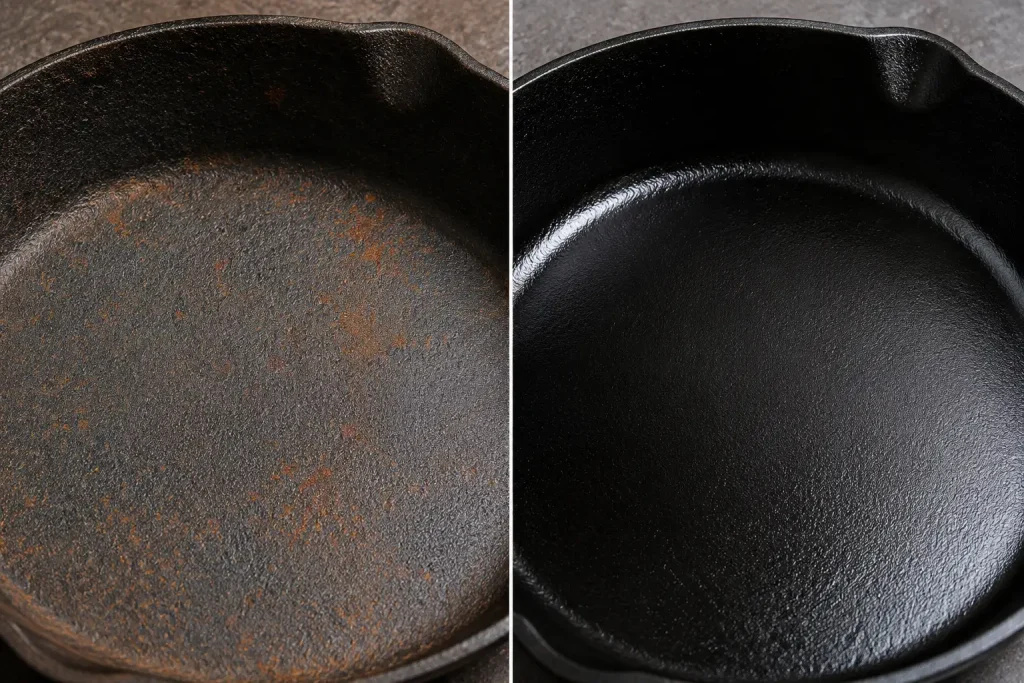
Hey there, I’m Daniel Cross. If you are staring at a crusty, orange-spotted skillet right now, take a deep breath. Learning how to get rust off cast iron cookware is a kitchen right of passage. I remember the first time I accidentally left my favorite pan in the sink overnight. The next morning, it looked ruined. I thought I had to throw it away.
Here is the thing. Cast iron is incredibly tough. Unless the metal is deeply damaged or cracked, you can almost always bring it back to life. You do not need to be a professional chef or a metal worker to fix it. You just need a few basic kitchen supplies, a little bit of elbow grease, and some patience.
In this guide, I will show you the easiest, safest way to clean up that rust, re-season your pan, and protect it for the future. We will cover exactly what you need to do, step by step, so you can get back to cooking great meals for your family.

Quick Answer
The fastest way to get rust off cast iron cookware is to scrub the rusty spots with fine steel wool until the raw, gray metal shows through. Wash the pan with warm water and mild dish soap to remove all the rust dust. Dry the pan completely by heating it on the stove for a few minutes. Finally, rub a very thin layer of cooking oil over the entire pan and bake it in the oven at 400 degrees Fahrenheit for one hour to rebuild the protective nonstick seasoning.
What Home Cooks Should Know About Cast Iron Rust
Before we start scrubbing, let me explain why your pan rusted in the first place. Cast iron is made of raw, porous metal. It relies on a baked-on layer of oil, called seasoning, to protect it from the air and water. When that seasoning breaks down, the raw iron is exposed. As soon as moisture hits raw iron, rust forms.
There are a few common reasons this happens in everyday American kitchens. Here are the most typical causes of rust:
- Air drying: Leaving the pan on the dish rack wet is the number one cause of rust.
- Soaking in the sink: Leaving cast iron underwater breaks down the seasoning fast.
- Cooking highly acidic foods: Simmering tomatoes or vinegar-heavy sauces for a long time can eat away at the protective oil layer.
- High humidity storage: Storing the pan in a damp basement or near a steamy stove without enough protective oil.
- Using the dishwasher: Dishwasher detergent is too harsh for cast iron and will strip it completely bare.
The good news is that surface rust is totally normal and safe to remove. According to guidelines on FoodSafety.gov, keeping your cooking surfaces clean, smooth, and free of deep cracks is important to prevent bacteria from hiding. By removing the rust and baking on a fresh layer of oil, you restore the pan to a safe, easy-to-clean condition.
Signs You Should Adjust Your Kitchen Choice, Tool, or Method
Not all rust is the same. Most of the time, you are just dealing with a thin layer of orange fuzz. But sometimes, the damage goes deeper. It helps to know when you can fix the pan yourself and when it might be time to replace it.
If you see severe peeling, deep holes in the metal, or cracks, the pan might not be safe to use. Weak spots can break when exposed to high heat on a gas stove or in the oven. Always inspect your cookware before you start a major cleaning project.
| What You See | What It Means | What You Should Do |
|---|---|---|
| Light orange spots on the surface. | Mild surface rust from recent moisture exposure. | Scrub with steel wool and re-season easily. |
| Flaky, black crust peeling off. | Old food and weak seasoning are flaking away. | Scrub firmly to remove loose bits, then re-season. |
| Deep, dark pits or holes in the metal. | Heavy, long-term rust damage (pitting). | May be too hard to clean. Consider replacing the pan. |
| A visible crack in the side or bottom. | Structural failure. The pan is unsafe to heat. | Stop using immediately. Discard the pan. |
How to Handle This Kitchen Topic Step by Step
Ready to save your skillet? Clear off your counter and gather your supplies. You will need fine steel wool, mild dish soap, a sponge, clean paper towels or a microfiber cloth, vegetable or canola oil, and oven mitts.Kitchen Safety Note: We will be heating the pan in the oven to a high temperature. Make sure your kitchen is well-ventilated, keep children and pets away from the hot oven door, and always use thick oven mitts. If you are unsure about your oven’s safety, check your official appliance manufacturer manual first.
- Scrub away the rust. Take your pan to the sink. Use a pad of fine steel wool and a little warm water to scrub the rusty areas. Rub firmly until all the orange rust is gone and you see smooth, bare metal.
- Wash with soap. Yes, you can use soap right now! Add a few drops of mild dish soap to a sponge and wash the entire pan. This removes the rust dust and leftover steel wool fibers. Rinse it well with warm water.
- Dry immediately and completely. Never let the pan air dry. Wipe it down with a towel, then place it on the stove over medium-low heat for 3 to 5 minutes. This evaporates any hidden moisture hiding in the metal pores.
- Apply the oil. Turn off the heat and let the pan cool just enough so you can handle it safely with oven mitts. Pour a tiny drop (about a half teaspoon) of neutral cooking oil, like canola or vegetable oil, into the pan. Use a paper towel to rub the oil all over the inside, outside, and handle.
- Wipe the oil off. This is the most important part. Take a clean paper towel and wipe as much oil out of the pan as you can. It should look dry, not wet or shiny. Too much oil leaves a sticky mess.
- Bake the pan. Preheat your oven to 400 degrees Fahrenheit. Place a sheet of aluminum foil on the bottom rack to catch drips. Place the cast iron pan upside down on the middle rack. Bake it for exactly one hour.
- Let it cool. Turn the oven off and leave the pan inside until it is completely cool. This bakes the oil into the iron, creating a tough, nonstick layer.
Common Mistakes to Avoid
Over the years, I have seen a lot of folks try to clean their cookware only to make things worse. Avoid these common traps to keep your kitchen running smoothly:
- Leaving too much oil on the pan: If your pan comes out of the oven feeling sticky or looking like it has thick syrup on it, you used too much oil. Always wipe it down until it looks dry before baking.
- Using the dishwasher: Never put cast iron in the dishwasher. The heavy water pressure and harsh chemicals will destroy the seasoning and cause instant rust.
- Ignoring the bottom of the pan: Moisture can easily rust the bottom and the handle. Make sure you scrub, dry, and oil every single part of the cast iron, not just the cooking surface.
- Using power tools to clean it: Some people suggest using wire drill brushes. Unless you know what you are doing, this can gouge and permanently damage the smooth surface of modern and vintage skillets.
- Fearing dish soap: It is a common myth that soap ruins cast iron. Mild dish soap will not strip a properly baked-on seasoning. It is perfectly fine for everyday cleaning.
Practical Tips from Daniel
After rescuing a few pans from thrift stores and damp basement boxes, I have picked up a few easy habits that keep cast iron looking perfect. These are my go-to kitchen tips.Daniel’s Kitchen Tip: The Paper Towel Storage Trick
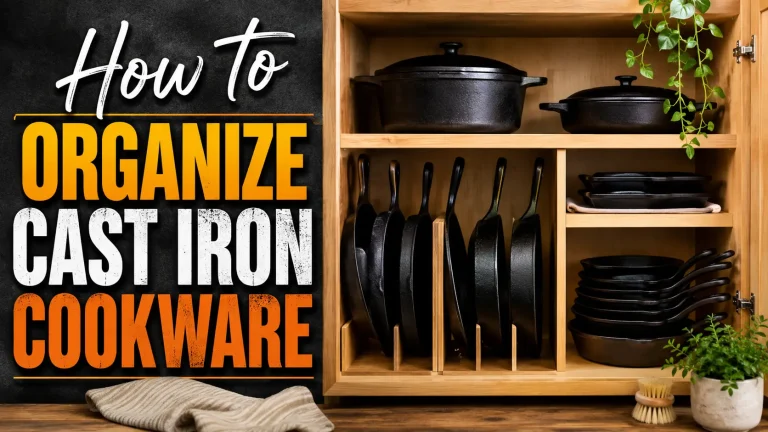
If you stack your pots and pans in a cabinet to save space, place a dry paper towel inside your cast iron skillet. The paper towel absorbs any leftover moisture in the air and stops the pans from scratching each other. It is a simple kitchen organization trick that prevents a lot of headaches.
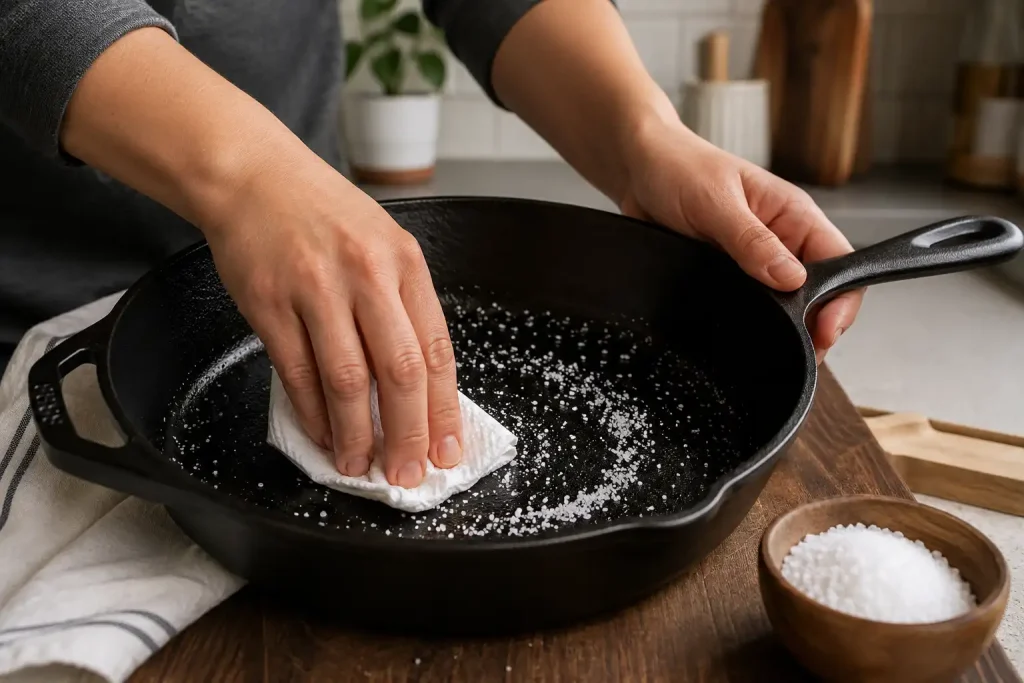
It is also helpful to know how to handle stubborn food. You do not always need steel wool. If you just have burnt food stuck to the pan, do not reach for the heavy scrubbers right away.Daniel’s Kitchen Tip: The Coarse Salt Scrub
If you have stuck-on bacon bits or burnt eggs but no rust, try this instead. Pour a handful of coarse kosher salt into the warm pan. Use a folded paper towel to scrub the salt around. The salt acts as a safe, natural abrasive that lifts food without scratching your hard-earned seasoning. Dump the dirty salt, rinse the pan, dry it on the stove, and rub a drop of oil on it.
Finally, respect the temperature of the metal. Cast iron heats up slowly and holds onto that heat for a long time. Sudden changes in temperature can cause real problems.
Warning: Never take a hot cast iron pan right off the stove and run it under cold water. This causes a reaction called thermal shock. The metal can literally crack in half, and hot water and steam can splash up and cause severe burns. The Consumer Product Safety Commission (CPSC) tracks kitchen accidents, and severe burns are incredibly common. Always let your cookware cool down naturally before washing it.
Key Takeaways
- Rust on cast iron is usually just surface damage caused by moisture and can be safely scrubbed away.
- Use fine steel wool to remove the rust until you see raw, gray metal.
- Always dry cast iron over low heat on the stove; never let it air dry.
- Re-season the pan by applying a very thin, almost dry layer of oil and baking it at 400 degrees Fahrenheit for one hour.
- Avoid the dishwasher, long soaking times, and leaving thick layers of oil on the pan.
Frequently Asked Questions
Can I use vinegar to remove rust from cast iron?
Yes, for very heavy rust, you can soak the pan in a mixture of half water and half white vinegar for up to one hour. Do not soak it longer, or the vinegar will start eating the raw iron. Wash and scrub it immediately after soaking.
Is a rusty cast iron skillet safe to use?
You should not cook food directly on active rust. However, once you scrub the rust away, wash the pan, and re-season it properly, the skillet is completely safe to use again.
Can I put my cast iron in the dishwasher?
No. Never put cast iron cookware in the dishwasher. The harsh detergents and long moisture exposure will strip the protective seasoning and cause severe rust very quickly.
What is the best oil for seasoning cast iron?
The best oils have high smoke points. Canola oil, vegetable oil, grapeseed oil, and melted shortening are practical, affordable choices for everyday home cooks. Avoid extra virgin olive oil or butter for the baking step, as they burn at lower temperatures.
How do I know if my cast iron is ruined?
Cast iron is only ruined if it has a visible crack through the metal, is warped so badly it will not sit flat, or has deep pitting (holes) that cannot be smoothed out. Simple surface rust is never a reason to throw it away.
Can I use baking soda on a rusty skillet?
Baking soda can help neutralize odors and act as a mild abrasive for stuck food, but it is not aggressive enough to remove heavy rust. Steel wool or a dedicated rust eraser works much better for actual rust removal.
Conclusion
Learning how to get rust off cast iron cookware might seem like a lot of work the first time you do it, but it actually becomes a very satisfying process. By taking the time to scrub away the damage and bake on a fresh layer of oil, you are protecting a kitchen tool that can literally last for generations. I hope these steps give you the confidence to rescue that forgotten skillet.
Remember, cooking at home is all about learning as you go. Do not stress if your pan isn’t perfectly black right away. The best way to build a great seasoning is simply to use the pan often. Cook some bacon, roast some vegetables, and keep it dry after washing. If you are looking to upgrade your kitchen further, check out our guide on the best everyday cookware sets to find the right tools for your family.