How to Restore Rusted Cast Iron Cookware: Easy Step-by-Step Guide 2026

Restoring rusted cast iron cookware can feel intimidating. Many people see orange patches and think the pan is ruined forever. But cast iron is much tougher than it looks. In fact, with a few simple steps, you can often bring even heavily rusted pans back to life.
This guide will help you understand why cast iron rusts, how to fix it, and how to keep your cookware in top shape for years. Whether you have a family heirloom or a yard sale find, you’ll learn everything you need to transform rusty cast iron into a kitchen hero.
Why Cast Iron Rusts And Why Restoration Matters
Cast iron is loved for its durability, even heating, and ability to last generations. But unlike stainless steel, it reacts with water and air. If you leave cast iron wet or store it in a humid place, rust will form. This is a natural process, called oxidation. Even a small scratch in the protective oil layer can expose the metal, starting the rust process.
Restoring rusted cast iron isn’t just about looks. Rust affects cooking performance, flavor, and safety. Over time, rust can eat away at the metal, making pans thinner and weaker. Removing rust and reseasoning the pan restores its non-stick surface and protects it from further damage. It also ensures your food tastes clean and fresh, without metallic flavors.
Assessing The Rust: Is Your Cast Iron Worth Saving?
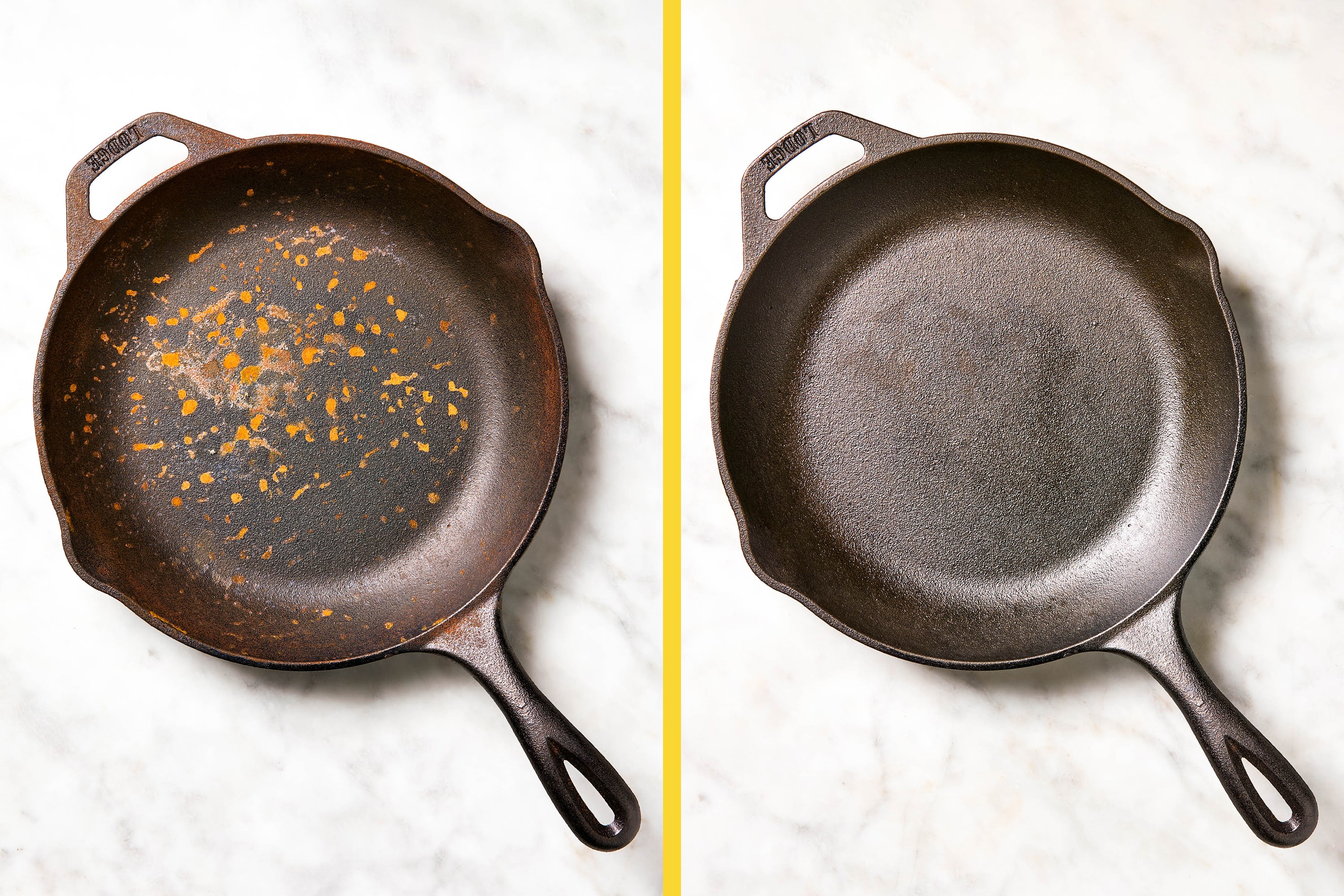
Before starting, check how bad the rust is. Most pans can be saved unless they’re cracked or deeply pitted. Here’s how to assess your cookware:
- Surface rust: This looks like orange or brown patches on the pan. Usually, it’s shallow and easy to remove.
- Heavy rust: Thick layers, sometimes flaking, can take more work. If you see large flakes or a rough surface, restoration will be tougher but possible.
- Deep pitting: Tiny holes or rough spots mean rust has eaten into the metal. Light pitting can be fixed, but deep pits can affect cooking.
- Cracks or holes: If the pan is cracked or has holes, it’s unsafe. Cast iron can’t be welded well, so it’s best to retire cracked pans.
If your pan has only rust but is otherwise solid, it’s a good candidate for restoration. Even old, neglected pans can often be saved.
Tools And Materials Needed For Restoration
Restoring rusted cast iron doesn’t require expensive tools. Most items are available at home or local stores. Here’s what you’ll need:
- Steel wool (grade #0 or #1): Removes rust gently.
- Wire brush: For heavy rust or large pans.
- Scrubbing pad: Non-metal pads help clean without scratching.
- Dish soap: Use mild, unscented soap.
- Towel: For drying.
- Vegetable oil or flaxseed oil: For seasoning.
- Aluminum foil: Optional, for scrubbing tough spots.
- Gloves: Protects your hands from rust and soap.
- Baking soda: Helps neutralize acidic residues.
For deep restoration, you might use a power drill with a wire brush attachment, but manual tools are usually enough for most pans.
Step-by-step Guide: Removing Rust From Cast Iron
Restoring cast iron takes patience, but the steps are simple. Here’s how to do it:
1. Wash And Dry The Pan
Start by washing the pan with dish soap and warm water. Normally, you don’t use soap on cast iron, but for restoration, it’s fine. This removes old oils, food residue, and loose rust. Scrub with a pad or brush. Rinse well and dry completely.
2. Scrub Off Rust
Use steel wool or a wire brush to scrub the rust. Apply steady pressure and move in circles. Focus on rusty spots first, but clean the whole surface to ensure even seasoning later. For tough areas, try aluminum foil or add a bit of baking soda.
If the pan is large or heavily rusted, work in sections. Don’t rush—scrubbing too fast can miss spots.
3. Rinse And Check Progress
Rinse the pan and check for rust. If you see orange patches, scrub again. Repeat until the surface looks like dull silver-gray iron. It’s okay if it’s not shiny—just make sure all rust is gone.
4. Dry Completely
Dry the pan with a towel, then place it on a stove or in an oven at low heat for a few minutes. This removes any hidden moisture. Water left behind can restart the rust process.
5. Apply Oil
Once dry, apply a thin layer of vegetable oil or flaxseed oil. Use a paper towel to spread the oil evenly. Don’t use too much—excess oil creates sticky spots.
6. Bake To Season
Place the oiled pan upside down in an oven at 450°F (230°C) for one hour. Put a sheet of foil underneath to catch drips. This process bonds the oil to the iron, creating a protective layer.
Let the pan cool in the oven. Once cool, check the surface. If it’s dry and dark, the seasoning is good. If it feels sticky, wipe off extra oil and bake again.
7. Repeat Seasoning
For best results, repeat the oil and baking step 2–3 times. Each layer builds up a stronger non-stick surface. Don’t rush—seasoning is the key to lasting cast iron.
Comparing Rust Removal Methods: Manual Vs. Chemical Vs. Electrolysis
There are several ways to remove rust. Most people use manual scrubbing, but there are other methods. Here’s a comparison:
| Method | Effectiveness | Safety | Cost | Best For |
|---|---|---|---|---|
| Manual Scrubbing | Good for light to moderate rust | Safe, simple | Low | Most home cooks |
| Chemical Rust Removers | Very effective, fast | Needs caution | Medium | Heavy rust, experienced users |
| Electrolysis | Excellent for severe rust | Requires knowledge | Medium | Collectors, advanced restoration |
Most beginners find manual scrubbing easiest and safest. Chemical rust removers, like Evapo-Rust, work quickly but must be washed off fully. Electrolysis uses electricity and water to remove rust and is best for advanced restorers.
Seasoning: The Secret To Protecting Cast Iron
Seasoning is the process of bonding oil to the iron surface. This creates a non-stick layer and prevents rust. Here’s how it works:
- Oil is applied to clean iron.
- The pan is heated, breaking down the oil.
- The oil polymerizes, forming a tough, black layer.
This layer is what gives cast iron its famous non-stick feel. Without seasoning, cast iron rusts easily and food sticks.
Choosing The Right Oil
Not all oils work the same. Here’s a quick comparison:
| Oil Type | Smoke Point | Seasoning Quality | Cost | Availability |
|---|---|---|---|---|
| Vegetable Oil | 400°F | Good | Low | Easy |
| Flaxseed Oil | 225°F | Excellent | Medium | Specialty stores |
| Canola Oil | 400°F | Good | Low | Easy |
| Lard | 370°F | Good | Low | Easy |
Flaxseed oil creates a hard, glassy layer but is more expensive. Vegetable oil and canola oil are popular and work well. Avoid olive oil, as it smokes at lower temperatures and doesn’t season as strongly.
Common Seasoning Mistakes
Many beginners make mistakes that cause sticky, uneven seasoning. Here are two non-obvious tips:
- Use very thin oil layers. Too much oil creates sticky spots. Always wipe off excess oil before baking.
- Let the pan cool slowly. Quick cooling can cause seasoning to crack. Let the pan cool inside the oven.
How Long Does Restoration Take?
Restoring rusted cast iron usually takes 2–4 hours, plus seasoning time. Here’s a typical timeline:
- Scrubbing and cleaning: 30–60 minutes
- Drying: 10–15 minutes
- First seasoning: 1 hour
- Cooling: 1 hour
- Repeat seasoning: 1–2 hours
If you repeat seasoning several times, it can take most of a day. But much of this is waiting, not active work.
Real-life Example: Restoring A Yard Sale Pan
Let’s look at a real example. Imagine you buy an old skillet at a yard sale. It’s covered in rust, with old food stuck on the bottom. Here’s how you restore it:
- Wash the pan with soap and water, scrubbing off loose dirt.
- Use steel wool to scrub off rust. It takes about 40 minutes.
- Rinse and dry the pan. The surface looks dull gray.
- Apply a thin layer of canola oil.
- Bake upside down at 450°F for one hour.
- Let cool, then repeat oil and baking.
- After three seasonings, the pan is black, shiny, and ready to cook.
This process works for most old pans. With patience, you can turn rusty finds into top-quality cookware.
Preventing Rust: Caring For Your Restored Cast Iron
Once your cast iron is restored, proper care keeps it rust-free. Here’s what you should do:
- Never soak cast iron. Water causes rust. Wash quickly and dry right away.
- Dry with heat. After washing, put the pan on a warm stove or in an oven to ensure all moisture is gone.
- Oil after use. Wipe a thin layer of oil on the pan after cleaning. This keeps the seasoning strong.
- Store in a dry place. Avoid humid cabinets or basements. If you live in a humid area, store pans with paper towels inside to absorb moisture.
- Use regularly. Cooking with cast iron builds up seasoning and protects the pan.
Common Mistakes That Lead To Rust
Many people make mistakes that cause their pans to rust again:
- Leaving pans wet: Always dry cast iron completely.
- Storing in humid areas: Store cast iron in a dry spot.
- Skipping seasoning: Regular seasoning keeps pans protected.
If you notice rust starting, act quickly. Scrub and reseason before the rust gets worse.
Comparing Cast Iron Restoration Vs. Buying New Cookware
Is it better to restore old cast iron or buy new? Let’s compare:
| Factor | Restored Cast Iron | New Cast Iron |
|---|---|---|
| Cost | Low (often free or cheap) | Medium to high |
| Quality | Often higher (older pans are smoother) | Good, but rougher surface |
| Durability | Excellent (can last decades) | Excellent |
| Sentimental Value | High (family or vintage) | Low |
| Effort Required | Medium (restoration needed) | None |
Restoring cast iron is more work, but it’s rewarding. Older pans, especially vintage brands like Griswold or Wagner, are prized for their smooth surfaces and even heating.
Credit: samarthyaclasses.com
Advanced Techniques: Electrolysis And Power Tools
For severe rust, advanced methods can help. Electrolysis is a process where you use electricity to remove rust. It requires a power source, washing soda, water, and a steel electrode. The pan is placed in the solution, and electricity pulls rust off the iron.
Power tools like drills with wire brush attachments can speed up rust removal. Always wear eye protection and go slowly to avoid damaging the pan.
These methods are best for collectors or those restoring many pans. For most home cooks, manual scrubbing is enough.
Practical Tips For Beginners
Restoring cast iron isn’t difficult, but a few practical tips make it easier:
- Work outside or in a well-ventilated area. Rust dust and oil smoke can irritate lungs.
- Wear gloves. Rust can stain skin and nails.
- Use old towels and rags. Restoration is messy.
- Don’t rush seasoning. Thin, even layers are better than thick, sticky ones.
- Cook fatty foods first. Bacon or fried chicken helps build seasoning.
One non-obvious insight: If your seasoning flakes, it’s usually from thick oil or quick cooling. Scrape off loose bits, wash, and reseason with thinner oil.

Credit: www.souschef.co.uk
Cast Iron Restoration Myths
There are many myths about cast iron. Here are a few clarified:
- Soap ruins cast iron: Not true. Soap can be used during restoration and for regular cleaning if you reseason afterward.
- All rust means the pan is ruined: Most rust is surface-level. Only deep cracks or holes ruin a pan.
- Seasoning takes weeks: You can season a pan in a few hours. Multiple layers help, but one strong bake is enough to start.
How Restoration Impacts Cooking Performance
Restored cast iron performs like new, sometimes better. Smooth, well-seasoned pans:
- Heat evenly. Cast iron holds heat, making it ideal for frying and baking.
- Resist sticking. Proper seasoning creates a nearly non-stick surface.
- Adds flavor. Many cooks say food tastes better in cast iron.
A restored pan can handle high temperatures, making it perfect for searing steaks or baking cornbread.

Credit: www.youtube.com
Eco-friendly And Economic Benefits
Restoring old cast iron is good for the environment and your wallet. Instead of buying new cookware, you reuse and recycle existing pans. Cast iron lasts for decades, so one restored pan can replace many cheap pots.
Cast iron is also free from chemicals found in non-stick coatings, making it safer for cooking. By restoring and using cast iron, you reduce waste and avoid exposure to synthetic materials.
Where To Find Rusted Cast Iron To Restore
If you don’t own cast iron yet, you can find rusty pans at:
- Garage sales
- Thrift stores
- Online marketplaces
- Family attics
Older pans often have better quality than new ones. Look for brands like Lodge, Griswold, and Wagner. Even pans with heavy rust can be restored.
When To Retire A Cast Iron Pan
Not all pans can be saved. If you see:
- Deep cracks
- Large holes
- Severe pitting
It’s time to retire the pan. Cooking with damaged cast iron can be dangerous, as cracks can break under heat. However, most pans with surface rust are safe to restore.
Frequently Asked Questions
How Often Should I Reseason My Cast Iron Pan?
For most cooks, reseasoning once every few months is enough. If food starts sticking or the pan looks dull, add a fresh oil layer and bake. Frequent cooking with oil-rich foods also builds up seasoning naturally.
Can I Use Cast Iron For Acidic Foods After Restoration?
Yes, but with caution. Acidic foods like tomatoes can strip seasoning if the layer is thin. After restoring and seasoning, cook fatty foods first. Once the seasoning is strong and dark, occasional acidic cooking is fine.
Is It Safe To Use Chemical Rust Removers?
Chemical rust removers like Evapo-Rust are safe when used correctly. Wash the pan thoroughly after treatment and season well. Always follow safety instructions and avoid skin contact.
Why Does My Pan’s Seasoning Look Patchy After Restoration?
Patchy seasoning is usually from uneven oil application or not scrubbing all rust off. Use thin oil layers and bake thoroughly. If needed, repeat the oil and baking steps. Over time, cooking with fats will smooth out the surface.
Can I Put Restored Cast Iron In The Dishwasher?
No. Dishwashers cause rust and strip seasoning. Always wash cast iron by hand, dry fully, and oil before storing.
Restoring rusted cast iron cookware is a rewarding process. With patience and the right steps, you can turn old, rusty pans into durable, non-stick kitchen tools. The satisfaction of cooking with a pan you brought back to life is hard to beat. Remember, cast iron lasts for generations—your restoration might become a family story. For more information on cast iron history and care, visit Wikipedia.