How to Fry Steak in Cast Iron Pan Like a Steakhouse Pro?

If you’ve ever wondered why restaurant steaks have a rich brown crust while yours comes out gray or uneven, the answer often comes down to technique—not expensive equipment. Learning how to fry steak in cast iron pan is one of the easiest ways to cook a flavorful steak at home without using a grill.
A cast iron pan holds heat exceptionally well, making it ideal for creating the deep sear that locks in flavor. Whether you’re cooking a ribeye, New York strip, or sirloin, using the right temperature, timing, and preparation can make a noticeable difference.
In this guide, you’ll learn how to fry steak in a cast iron pan step by step, avoid common mistakes, understand food safety, and know when to finish your steak in the oven for thicker cuts.
Quick Answer
To fry steak in a cast iron pan, let the steak come close to room temperature, pat it dry, season generously with salt and pepper, and cook it in a very hot cast iron skillet with a high-smoke-point oil. Sear each side for 2–4 minutes, baste with butter if desired, then rest the steak for 5–10 minutes before slicing.
Why Cast Iron Is the Best Pan for Steak
A cast iron skillet is one of the most reliable tools for cooking steak because it stores and distributes heat efficiently.
Benefits include:
- Excellent heat retention
- Better crust formation
- Even cooking
- Naturally durable cookware
- Works on most stovetops and ovens
Unlike thinner nonstick pans, cast iron doesn’t cool down quickly when the steak touches the surface. That steady heat helps create the flavorful Maillard reaction—the browning process responsible for steak’s rich crust.
Choosing the Right Steak
Almost any quality steak can be cooked in cast iron, but some cuts perform better than others.
| Steak Cut | Best For | Thickness |
|---|---|---|
| Ribeye | Rich flavor and tenderness | 1–1½ inches |
| New York Strip | Balanced flavor | 1–1½ inches |
| Filet Mignon | Extra tenderness | 1½–2 inches |
| Sirloin | Budget-friendly option | 1 inch |
| T-Bone | Large portions | 1½ inches |
Tip: Choose steaks at least 1 inch thick. Thin steaks cook too quickly and are easier to overcook.
Ingredients You’ll Need
- Steak
- Kosher salt
- Freshly ground black pepper
- High smoke point oil (avocado, canola, or grapeseed oil)
- Unsalted butter (optional)
- Garlic cloves
- Fresh rosemary or thyme (optional)
Step-by-Step: How to Fry Steak in Cast Iron Pan
Step 1: Bring the Steak Closer to Room Temperature
Remove the steak from the refrigerator about 30–40 minutes before cooking.
This helps it cook more evenly.
Do not leave raw meat out for extended periods. Follow safe food handling practices recommended by FoodSafety.gov to minimize food safety risks.
Step 2: Pat the Steak Dry
Moisture is the enemy of a great crust.
Use paper towels to remove as much surface moisture as possible before seasoning.
A dry surface browns much better.
Step 3: Season Generously
Season both sides with:
- Kosher salt
- Black pepper
For most steaks, simple seasoning lets the beef flavor shine.
Avoid adding sugary marinades before searing because they burn easily.
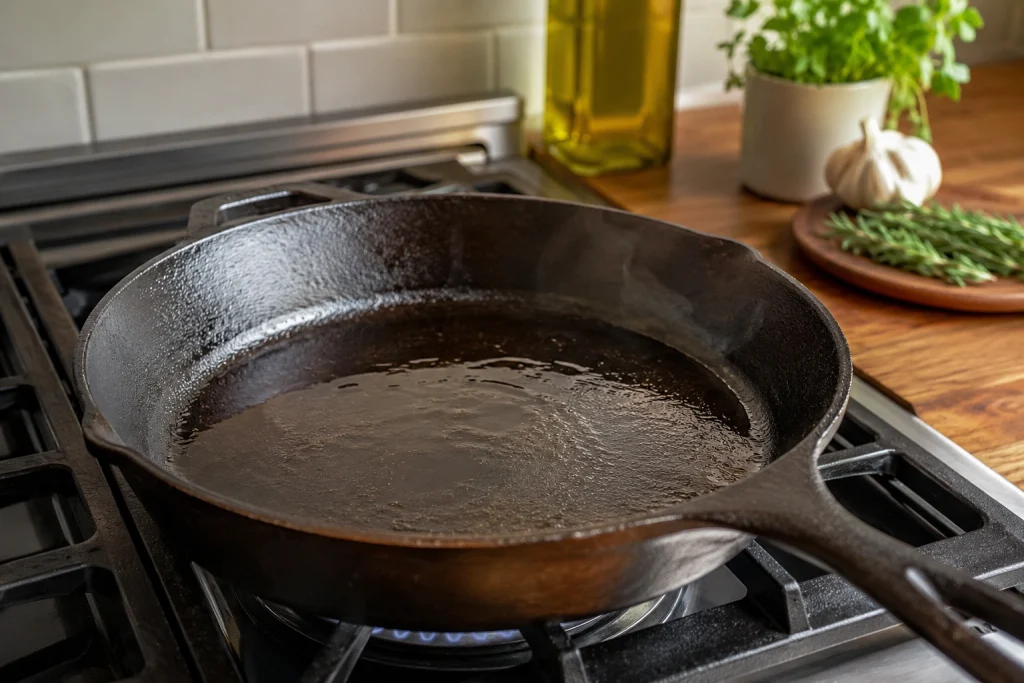
Step 4: Heat the Cast Iron Pan
Place the skillet over medium-high to high heat.
Allow it to heat for 4–6 minutes.
The pan should be very hot before adding oil.
Add just enough oil to lightly coat the bottom.
Do not overfill the pan with oil.
Step 5: Sear the First Side
Place the steak gently into the skillet.
You should immediately hear a strong sizzling sound.
Leave it alone.
Avoid moving or pressing the steak.
Approximate cooking times:
- Rare: 2 minutes
- Medium-rare: 3 minutes
- Medium: 4 minutes
These times vary depending on thickness.
Step 6: Flip Only Once
Turn the steak using tongs.
Cook the second side for another 2–4 minutes.
Frequent flipping prevents a strong crust from developing.
Step 7: Add Butter and Aromatics
Lower the heat slightly.
Add:
- Butter
- Garlic
- Fresh rosemary
- Thyme
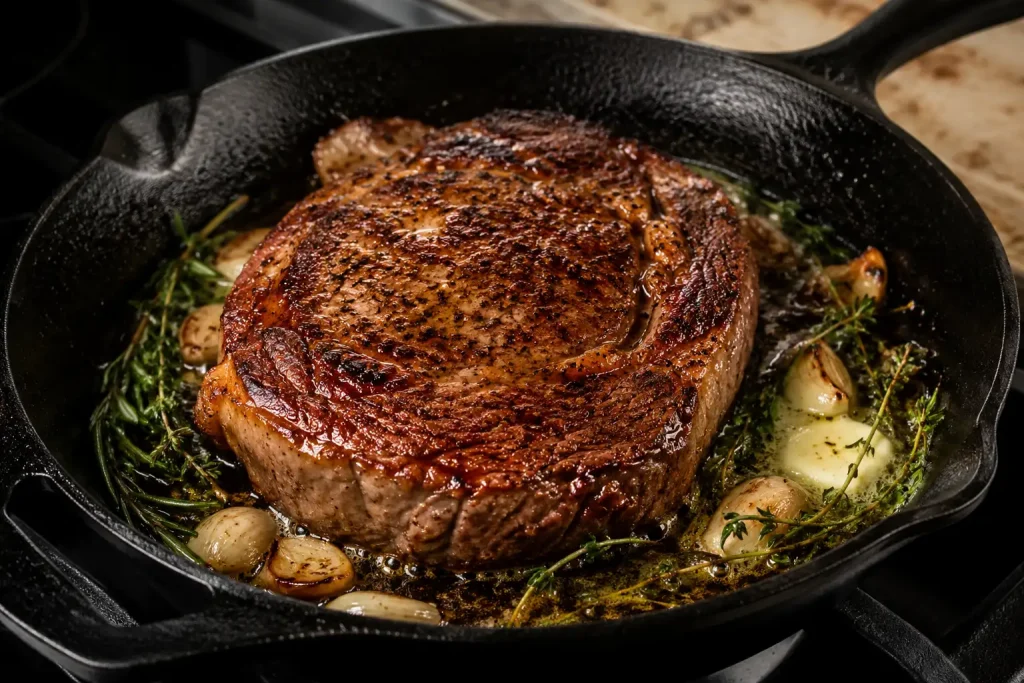
Tilt the pan carefully and spoon the melted butter over the steak for about one minute.
This adds richness and aroma without overpowering the meat.
Step 8: Check the Internal Temperature
The safest way to judge doneness is with an instant-read thermometer.
According to the USDA’s safe minimum internal temperature guidance, whole cuts of beef should reach at least 145°F (63°C) and rest for at least three minutes before serving.
| Doneness | Temperature |
|---|---|
| Rare | 120–125°F |
| Medium Rare | 130–135°F |
| Medium | 140–145°F |
| Medium Well | 150°F |
| Well Done | 160°F+ |
Remember that the steak’s temperature will continue to rise slightly while resting.
Step 9: Let the Steak Rest
Transfer the steak to a cutting board.
Rest for 5–10 minutes.
Resting allows juices to redistribute throughout the meat instead of spilling onto the plate.
Expert Tip
Expert Tip: For the best crust, avoid overcrowding the skillet. Cook one or two steaks at a time, depending on your pan size. Overcrowding lowers the pan’s temperature and creates steam instead of a flavorful sear.
Butter Basting: Is It Worth It?
Butter basting isn’t required, but it adds:
- Rich flavor
- Better browning
- Aromatic herbs
- Restaurant-style finish
If using butter, add it near the end of cooking to reduce the chance of burning.
Cast Iron vs Other Pans
| Feature | Cast Iron | Stainless Steel | Nonstick |
|---|---|---|---|
| Heat Retention | Excellent | Very Good | Fair |
| Searing Ability | Excellent | Very Good | Limited |
| Oven Safe | Usually Yes | Usually Yes | Depends on coating |
| Durability | Excellent | Excellent | Moderate |
| Best for Steak | ⭐⭐⭐⭐⭐ | ⭐⭐⭐⭐☆ | ⭐⭐☆☆☆ |
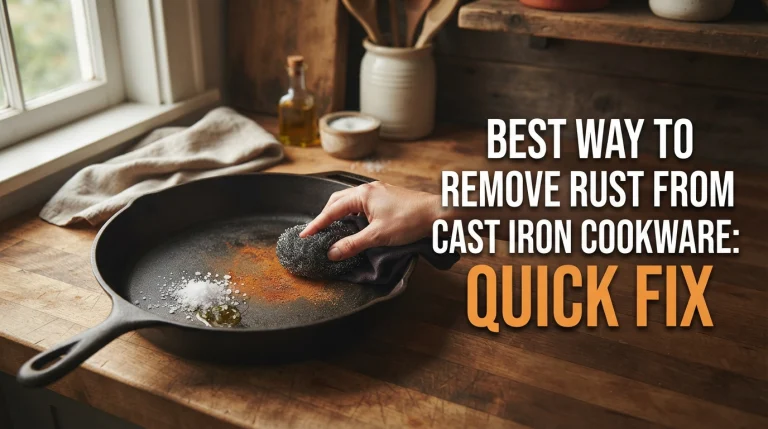
Cleaning Your Cast Iron After Cooking
Proper care helps your skillet last for decades.
After cooking:
- Let the pan cool slightly.
- Wash with warm water.
- Remove stuck food using a soft brush.
- Dry completely.
- Apply a thin layer of cooking oil.
Avoid soaking cast iron for long periods because moisture can lead to rust.
For more information on maintaining cast iron cookware, consult the Lodge Cast Iron care guide.
When to Call a Kitchen Professional
Cooking steak in a cast iron pan is a DIY-friendly kitchen task, but some situations call for professional help.
Consider contacting a qualified kitchen professional if:
- Your gas range has ignition or flame problems.
- You smell gas while cooking. Leave the area and contact your gas utility or a licensed gas technician immediately.
- Your cooktop has damaged electrical wiring or frequent power issues.
- Your range hood isn’t venting properly after installation.
- Your stovetop or oven requires complex repairs.
Never attempt gas or electrical repairs unless you are properly qualified.
Common Mistakes Kitchen Readers Should Avoid
- Cooking steak straight from the refrigerator.
- Skipping the resting period.
- Using a cold skillet.
- Moving the steak too often.
- Using too much oil.
- Crowding the pan.
- Forgetting to pat the steak dry.
- Cutting into the steak immediately after cooking.
- Guessing doneness instead of using a meat thermometer.
- Cooking over excessively high heat until butter burns.
FAQs
Can you fry steak in a cast iron pan without oil?
A small amount of high-smoke-point oil is recommended. It helps prevent sticking and promotes even browning.
How long should I fry steak in a cast iron pan?
Most 1-inch steaks cook for about 2–4 minutes per side, depending on the desired doneness and the pan’s heat.
Should I use butter or oil first?
Start with oil because it tolerates higher temperatures. Add butter near the end for flavor.
Why isn’t my steak getting a brown crust?
The pan may not be hot enough, the steak may be wet, or the pan may be overcrowded.
Do I need to finish thick steaks in the oven?
For steaks thicker than about 1½ inches, finishing them in the oven after searing can help cook the center more evenly.
Can I use frozen steak?
It’s best to thaw steak safely in the refrigerator before cooking. Proper thawing promotes more even cooking and better browning.
Why should I rest steak before slicing?
Resting allows the juices to redistribute, resulting in a more tender and flavorful steak.
Conclusion
Learning how to fry steak in cast iron pan is one of the most valuable cooking skills for any home cook. With a properly heated skillet, a dry and well-seasoned steak, and careful attention to timing, you can create a beautifully browned crust and a juicy interior without leaving your kitchen.
Remember the essentials: preheat the pan, avoid overcrowding, use a thermometer to check doneness, and always let the steak rest before serving. These simple steps can consistently deliver better results while helping you cook more confidently and safely.
At EliteComparison.com, Daniel Cross is committed to providing practical kitchen guidance that helps everyday cooks make informed decisions, improve their cooking techniques, and get the most value from their kitchen tools.