How Do You Clean Cast Iron Cookware: Quick Tips That Work

Clean cast iron with hot water, coarse salt, scrub, dry, and a light oil layer.
I’ve used cast iron for years in home kitchens and professional settings. I know how to clean cast iron cookware so it lasts decades. This guide explains step-by-step methods, fixes for rust and stuck food, re-seasoning tips, and mistakes to avoid. Read on to learn practical, proven ways to keep your pans nonstick and safe.

Why proper cleaning matters for cast iron cookware
Cast iron is simple metal with great heat. It needs care to stay nonstick and rust-free. Knowing how do you clean cast iron cookware keeps food tasting right. It also protects the pan’s seasoning and extends its life.
Benefits of proper cleaning
- Keeps seasoning intact for a natural nonstick surface.
- Prevents rust and pitting.
- Preserves flavor and food safety.
- Saves money by avoiding replacement.
Problems from poor cleaning
- Rust forms quickly on damp metal.
- Food sticks more when seasoning is damaged.
- Harsh cleaners strip seasoning and leave off-flavors.
Daily cleaning: quick, safe method
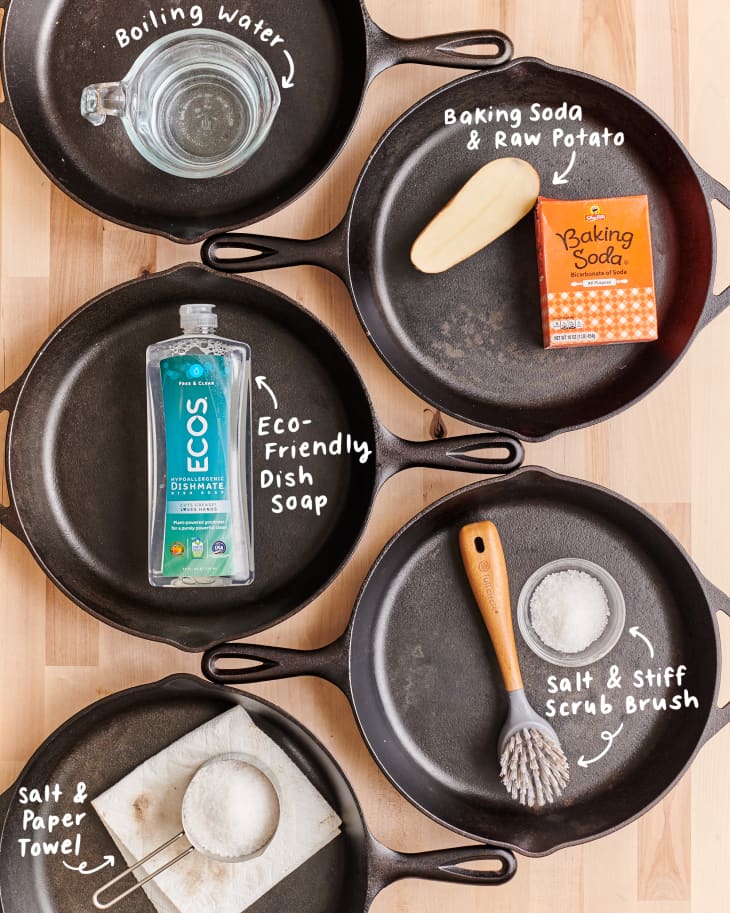
This is the routine most people will use. It answers how do you clean cast iron cookware after regular use.
Steps for daily cleaning
- Cool the pan slightly after cooking. Do not soak hot pans in cold water.
- Pour out excess oil or crumbs.
- Rinse with hot water. Use a soft scrub brush or nonmetal sponge.
- For stuck bits, pour a little hot water and boil it for a minute to loosen food.
- Dry the pan fully on the stove over low heat or with a towel.
- Rub a thin film of oil inside while warm. Wipe excess with a paper towel.
Tips for soap and dishwashers
- Mild soap can be used occasionally without ruining seasoning. Use sparingly.
- Never put cast iron in the dishwasher.
:max_bytes(150000):strip_icc()/__opt__aboutcom__coeus__resources__content_migration__serious_eats__seriouseats.com__images__2016__09__20160817-cast-iron-pan-vicky-wasik-1-2-5ca3f25cf17a4a6aa97f4a8c878c63b3.jpg)
Deep cleaning for stuck-on food and heavy residue
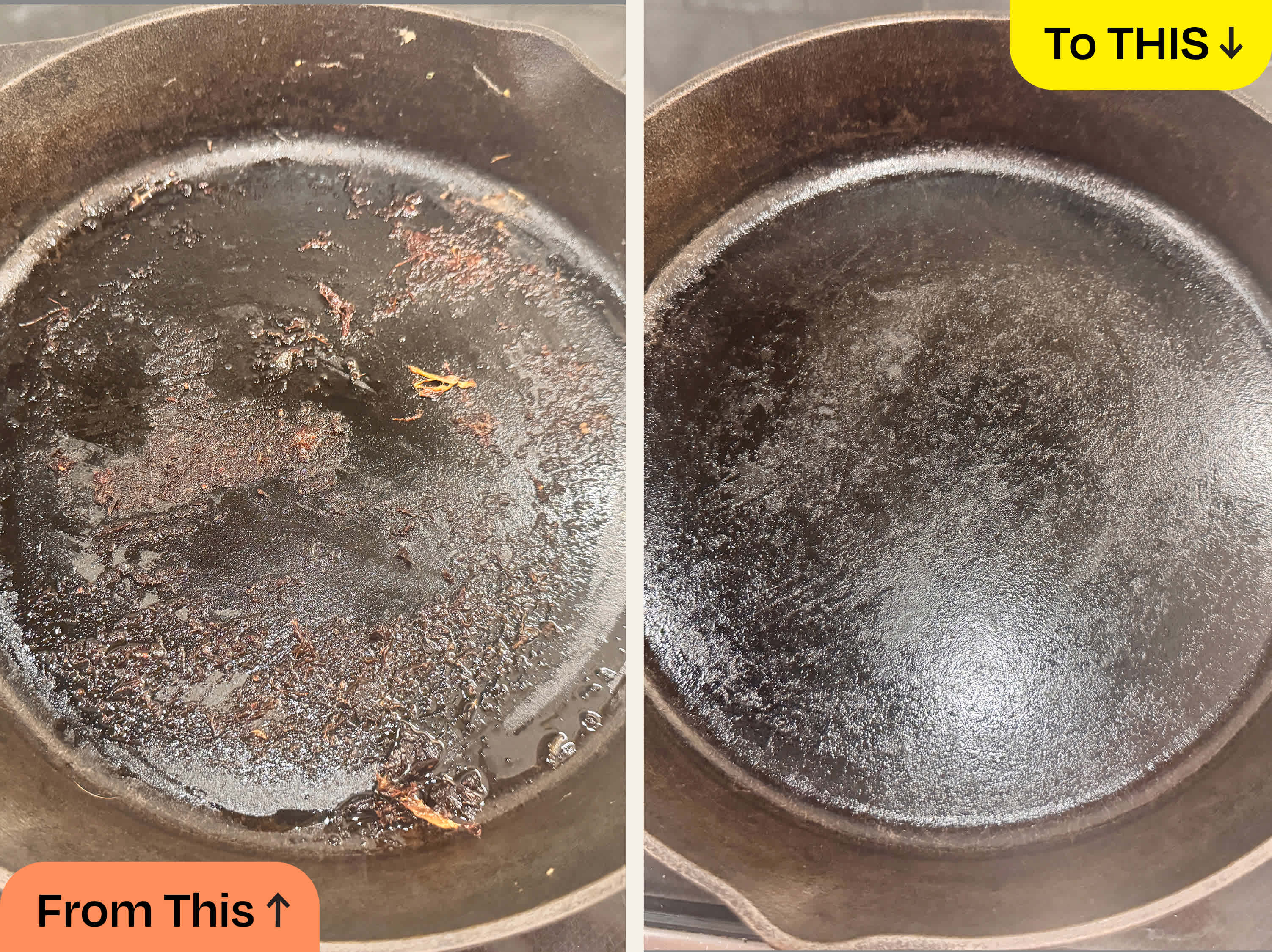
Sometimes daily cleaning won’t remove baked-on bits. This section shows how do you clean cast iron cookware when food won’t budge.
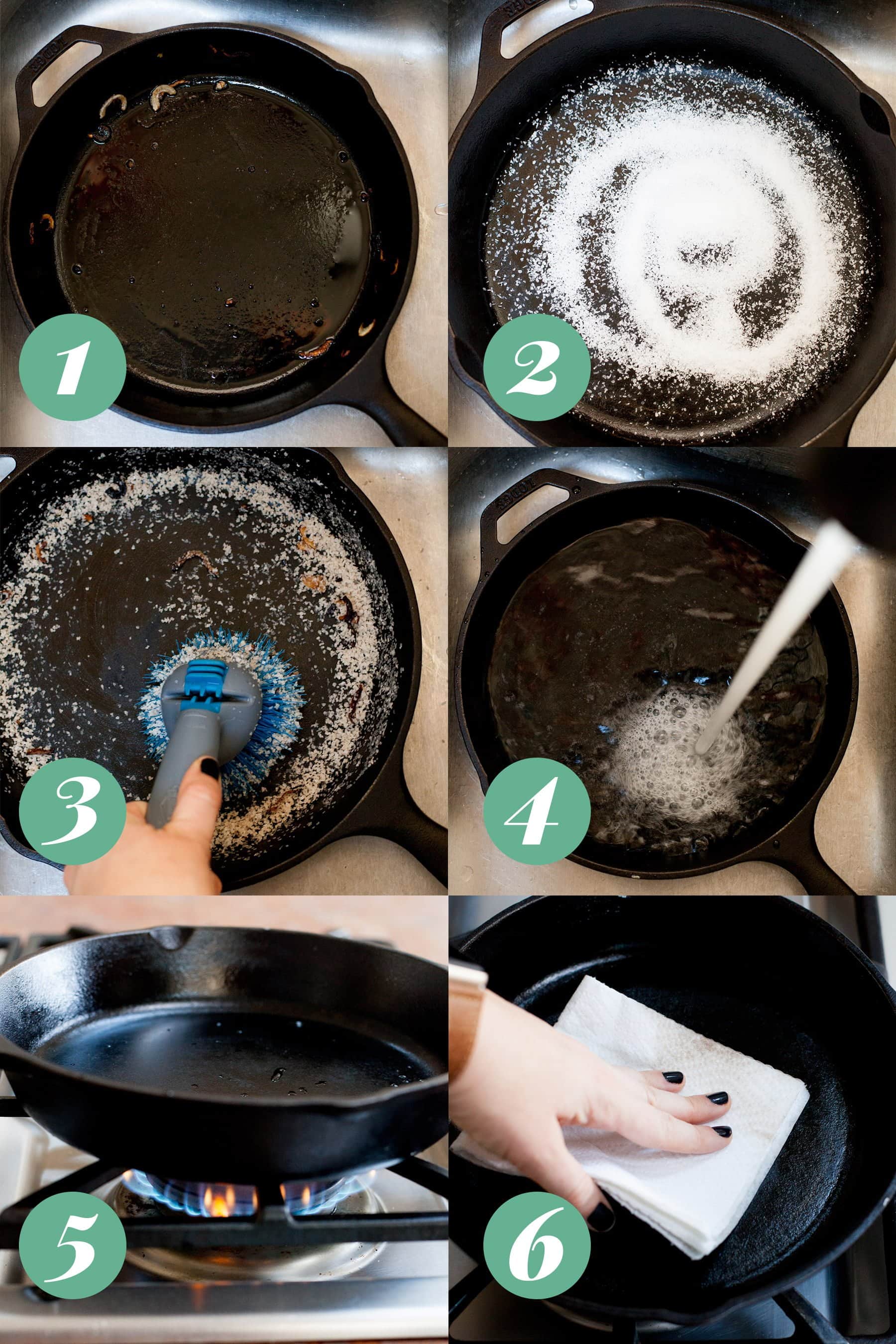
Method 1: Salt scrub
- Heat the pan a little.
- Sprinkle coarse kosher salt to cover the base.
- Scrub with a paper towel or firm cloth in circles.
- Rinse and dry, then oil.
Method 2: Boiling water and scraping
- Fill the pan with water and bring to a short boil on the stove.
- Use a wooden or plastic scraper to nudge off bits.
- Pour out water, dry, and oil.
Method 3: Chainmail or stiff brush
- Use a stainless chainmail scrubber or stiff nylon brush for tough jobs.
- Scrub with salt or just water.
- Rinse, dry, and re-oil.
When to avoid soap
- If seasoning looks strong, avoid daily soap. If you do use soap, re-oil afterward.

Removing rust and restoring cast iron cookware
Rust is fixable. This part explains how do you clean cast iron cookware that has rust or damaged seasoning.
Mild rust removal
– Scrub rust with steel wool or a heavy-duty pad until bare metal shows.
- Rinse and dry fully.
- Re-season right away.
Vinegar soak for heavy rust (use with caution)
- Mix equal parts white vinegar and water.
- Soak the pan no more than 1 to 4 hours. Check often.
- When rust is loose, scrub and rinse thoroughly.
- Neutralize with baking soda wash if desired.
- Dry and re-season immediately.
Re-seasoning after rust removal
- Apply a thin coat of high-smoke-point oil (flaxseed, grapeseed, or canola).
- Bake upside down at 450–500°F for 1 hour.
- Cool in the oven. Repeat 2–3 times for a stronger coating.
Safety note
- Avoid long vinegar soaks. They can eat away metal if left too long.

Re-seasoning and long-term maintenance
Seasoning is baked-on oil. It makes the surface smooth and nonstick. This section explains how do you clean cast iron cookware and keep seasoning healthy.
Simple re-seasoning steps
- Clean the pan and dry completely.
- Apply a very thin coat of oil inside and out.
- Place upside down in a preheated oven at 450–500°F.
- Put foil on the lower rack to catch drips.
- Bake for 1 hour, then let cool in oven.
- Repeat if surface is uneven.
Stovetop touch-ups
- After cooking, while pan is warm, rub a tiny amount of oil and wipe off excess.
- Heat for a minute to set the oil.
Best oils for seasoning
- Flaxseed oil creates a hard finish but needs care.
- Grapeseed, canola, and vegetable oils are stable and easy to use.
Storage tips
- Store dry and uncovered if possible.
- Place a paper towel inside to absorb moisture.
- Avoid stacking pans without protection to keep seasoning intact.
Common mistakes to avoid
Avoid these errors when you learn how do you clean cast iron cookware. They cause more harm than good.
- Putting cast iron in the dishwasher.
- Soaking pans for hours without drying right away.
- Using metal scouring pads that gouge the surface.
- Applying too much oil after cleaning. This leads to sticky buildup.
- Storing pans damp or with the lid sealed tight.

Troubleshooting and quick questions
Here are short, direct answers to frequent problems you may meet when learning how do you clean cast iron cookware.
How do I remove sticky residue after oiling?
- Heat the pan and wipe with a paper towel. If residue stays, scrub with salt and repeat seasoning.
Can I use soap on my seasoned pan?
- A small amount of mild soap is okay once in a while. Rinse, dry, and reapply a light coat of oil.
What to do if my pan smells bad?
- Clean with hot water and salt. Re-season. Strong smells may fade after a few uses.
Frequently Asked Questions of How Do You Clean Cast Iron Cookware
How often should I clean cast iron cookware?
Clean after every use. Quick rinses and light scrubs keep seasoning healthy. Deep cleans are only needed for heavy residue.
Will soap ruin my cast iron?
Soap does not ruin a well-seasoned pan if used sparingly. After soap, always dry and add a thin oil layer to protect seasoning.
Can I use a steel wool pad on cast iron?
Yes, for rust or very rough spots. After steel wool, re-season the pan to restore the protective layer.
How do I dry cast iron properly?
Dry on the stove over low heat or wipe with a towel then heat for a minute. Make sure no moisture remains to stop rust.
How do I re-season a pan after cleaning?
Apply a thin coat of oil, bake upside down at 450–500°F for one hour, let cool in the oven, and repeat if needed.
Is soaking in water ever ok?
Short soaks for loosening food are fine but avoid long soaks. Extended water contact causes rust and damage to seasoning.
How do I remove white spots after cooking acidic food?
White spots mean seasoning damage. Scrub gently, dry, and re-season with a thin oil coat baked in the oven.
Conclusion
Keeping cast iron clean is simple when you know the steps. Use hot water, salt, and gentle scrubbing for daily care. Fix rust with careful scrubbing or a short vinegar soak, then re-season. Practice these steps and your cast iron cookware will repay you with great heat, flavor, and decades of use. Try one cleaning tip this week and see the difference. Leave a comment about your cast iron wins or challenges and subscribe for more kitchen tips.