How to Clean Le Creuset Cast Iron Cookware Without Ruining It

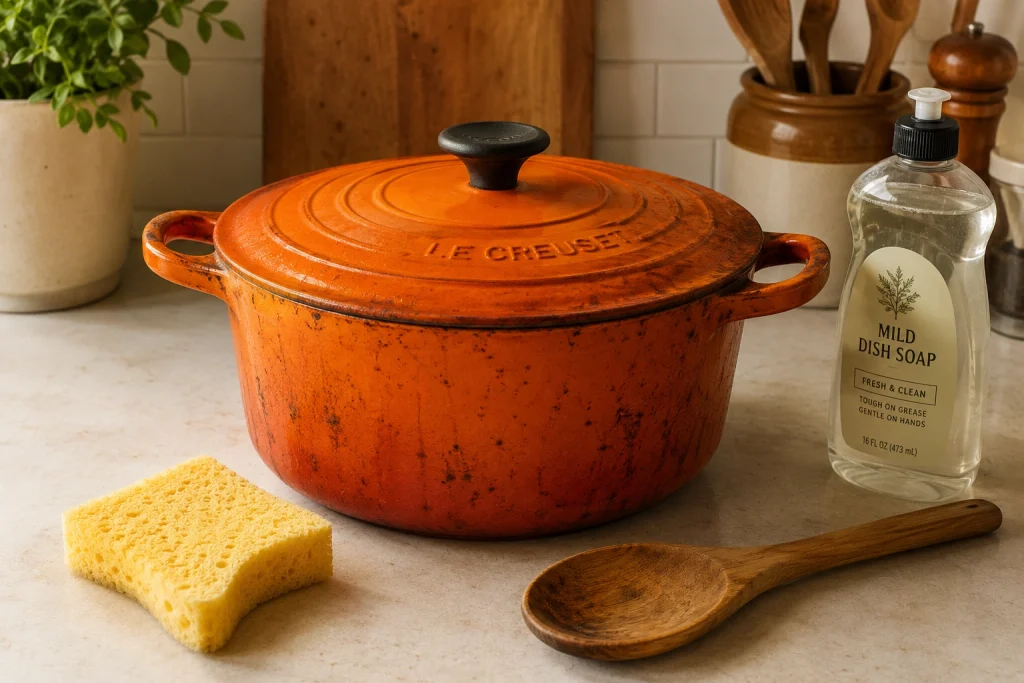
I remember the first time I cooked in a brand-new Le Creuset Dutch oven. I made a thick, hearty beef stew for my family. It tasted amazing. But when dinner was over, I looked at the bottom of the pot. There was a thick, brown, burned-on mess stuck to the bright shiny enamel. I panicked. I thought I had ruined a very expensive piece of cookware on my very first try.
If you are reading this, you might be looking at a dirty pot right now. Maybe you have some stubborn stuck-on food. Or maybe your favorite skillet has lost its shiny new look over time. Do not worry. Cleaning these beautiful pots and pans is actually very simple once you know the rules.
Today, we are going to look at exactly how to clean Le Creuset cast iron cookware. We will talk about everyday washing, how to handle really tough burnt-on food, and what mistakes you must avoid. Let me show you how to keep your cookware looking brand new for years to come.
Quick Answer
Let your Le Creuset cookware cool completely before washing it to avoid cracking the enamel. Wash the pot by hand using warm water, mild dish soap, and a soft nylon sponge. For stubborn, burnt-on food, fill the pot with warm water, add two tablespoons of baking soda, and simmer it gently on the stove for ten to fifteen minutes. Never use steel wool, metal scrapers, or harsh chemical cleaners, because these will permanently scratch and dull the glass enamel finish.
What Home Cooks Should Know About Enameled Cast Iron
Before you start scrubbing, you need to know what you are actually cleaning. Le Creuset cookware has a heavy cast iron core. But the outside and the cooking surface are covered in a hard layer of glass enamel. This is very different from a traditional, raw cast iron skillet.
Here are a few things every home cook should know about this material:
- No seasoning is needed: Raw cast iron needs to be rubbed with oil and baked to create a nonstick surface. You never need to do this with Le Creuset. The glass enamel is already sealed and ready to use.
- It is basically glass: The shiny interior surface is literally baked glass. It is very strong, but it can chip if you hit it with heavy metal tools. It can also scratch if you scrub it with hard metal sponges.
- Heat changes everything: Cast iron holds heat extremely well. You rarely need to use high heat on your stove. Cooking on high heat is the main reason food burns and sticks to the bottom of the pot.
- Sudden temperature changes are dangerous: Glass expands when it gets hot and shrinks when it gets cold. If you cool it down too fast, the glass will crack.
Signs You Should Adjust Your Kitchen Choice, Tool, or Method
Sometimes our cleaning habits cause slow damage over time. It is easy to make mistakes without realizing it. You need to watch your cookware for signs of stress. If you see these signs, you need to change your cleaning tools immediately.
If the shiny inside of your pot starts to look dull or cloudy, you are probably scrubbing too hard. You might be using a sponge that is too rough. If food suddenly starts sticking to the bottom every time you cook, the enamel finish might be damaged.
If you see a chip in the enamel on the inside cooking surface, you have a serious problem. Cooking with a chipped pot is not safe. The Consumer Product Safety Commission (CPSC) and other safety experts advise against using cookware that can flake glass or metal bits into your food. If the cooking surface is chipped, you should stop using it for food and contact the manufacturer about their warranty.
To help you protect your investment, I put together a simple list of safe and unsafe cleaning tools.
| Cleaning Tool | Is It Safe for Le Creuset? | Why or Why Not? |
|---|---|---|
| Soft Nylon Sponge | Yes | Gentle on the glass enamel finish. Will not scratch or dull the surface. |
| Microfiber Cloth | Yes | Perfect for wiping the outside and drying the pot without leaving streaks. |
| Silicone Scraper | Yes | Safe for scraping off soft food bits without scratching the glass. |
| Steel Wool | No | Will immediately scratch the glass enamel. Ruins the nonstick properties forever. |
| Stiff Bristle Brush | No | Hard plastic bristles can leave tiny micro-scratches over time. |
| Metal Spatulas | No | Can easily scratch or chip the bottom of the pot while cooking or scraping. |
How to Clean Le Creuset Cast Iron Cookware Step by Step
Here is the safest, most effective way to clean your enameled cast iron after a normal family dinner. This method uses basic items you already have in your kitchen.
- Let the pot cool completely. Never put a hot cast iron pot into a sink of cold water. This causes thermal shock. The sudden temperature change can make the iron warp and the glass enamel crack. Leave the pot on the stove until it is cool enough to touch with your bare hands.
- Give it a gentle soak. If there is loose food inside, fill the cooled pot with warm water. Let it sit for ten to twenty minutes. This softens sauces, gravies, and stews.
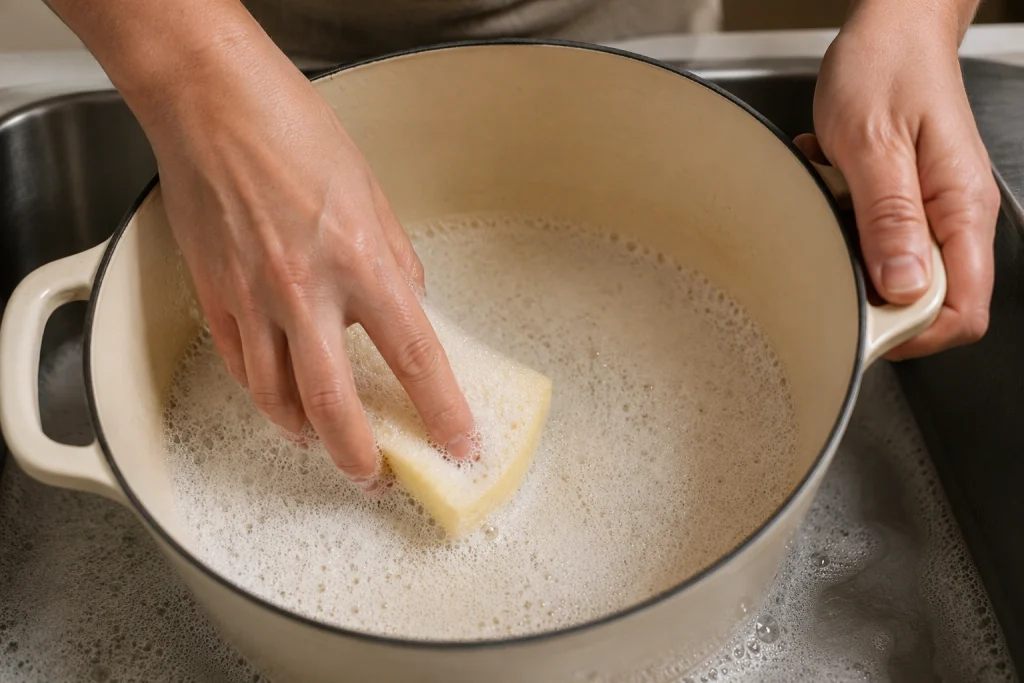
- Wash with mild soap. Empty the dirty water. Add a few drops of regular liquid dish soap. Use a soft nylon sponge to wipe the inside and outside of the pot. Do not press too hard. The food should wipe away easily.
- Tackle stuck food with a baking soda simmer. If you still have black or brown burnt food stuck to the bottom, do not scrub it. Fill the pot halfway with warm water. Add two tablespoons of baking soda. Put the pot on the stove and turn the heat to medium-low. Let the water gently simmer for ten to fifteen minutes. The baking soda will lift the burnt food off the bottom. Turn off the heat, let it cool, and wipe the food away with your sponge.
- Dry it thoroughly. Even though the iron is covered in enamel, the rim of the pot often has exposed raw iron. If you leave the pot wet, that rim can rust. Always dry your pot completely with a clean kitchen towel before putting it away.
Kitchen Safety Note: When simmering baking soda water on a gas stove, never leave the room. Keep the heat on medium-low. If the water boils over, it can extinguish the gas flame, which is a serious safety hazard in your home.
Common Mistakes to Avoid
Many home cooks ruin their expensive cookware simply because they do not know what harms the enamel. Avoid these common mistakes.
- Using harsh chemical cleaners. Never use bleach, oven cleaners, or heavy-duty citrus degreasers on your enameled cookware. These harsh chemicals will eat away the shiny finish and leave the pot dull and sticky.
- Relying on the dishwasher. You might see that Le Creuset says their pots are dishwasher safe. However, the harsh detergents and extremely hot water in a dishwasher will slowly dull the enamel over time. Washing by hand keeps the pot looking new much longer.
- Using high heat on the stove. Cast iron holds heat tightly. If you turn your burner to high, the pan gets too hot. Your food will burn instantly and stick to the enamel like glue. Always stick to low or medium heat.
- Banging spoons on the rim. It is a common habit to tap your wooden spoon on the edge of the pot to shake off extra food. Do not do this. The impact can easily chip the enamel off the rim.
Practical Tips from Daniel
Over the years, I have cleaned a lot of burnt pots. Here are a few practical tips I have learned in my own kitchen that will make your life much easier.
Daniel’s Kitchen Tip: Wood and Silicone Are Your Best Friends
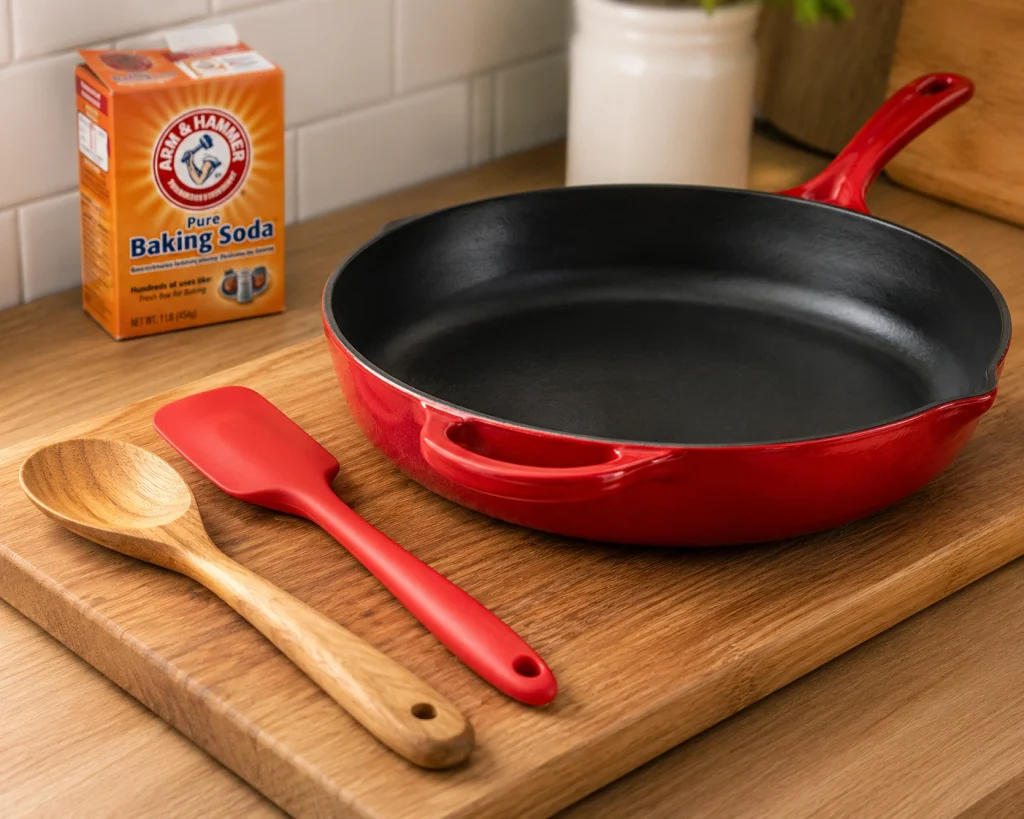
Throw your metal serving spoons back in the drawer. When you are cooking with enameled cast iron, only use wooden spoons or soft silicone spatulas. These materials will never scratch your pot. They also make cleaning easier because you will not have to scrub out tiny metal transfer marks.
Daniel’s Kitchen Tip: Keep Pan Protectors Handy
If you stack your heavy pots and skillets in a cabinet, they can easily scratch each other. I recommend using simple felt pan protectors. Just lay a soft piece of felt inside the pot before resting the lid on top, or before stacking another pan inside. It stops the heavy iron from chipping the glass edges.
Daniel’s Kitchen Tip: Don’t Stress About Patina on Black Enamel
Some Le Creuset skillets have a black satin interior instead of a light sand color. This black enamel will build up a brownish film over time. This is called a patina. It is perfectly normal and actually helps the pan become more nonstick. Do not scrub yourself crazy trying to remove it. Just wash it gently with soap and water and let the patina do its job.
Key Takeaways
- Always let your hot cast iron pot cool down to room temperature before you wash it to prevent the enamel from cracking.
- Wash by hand using mild dish soap, warm water, and a soft, non-scratch sponge.
- Never use steel wool, harsh scouring pads, or metal tools inside your pot.
- Lift burnt, stuck-on food easily by simmering water and baking soda on the stove for a few minutes.
- Dry your cookware completely with a towel to prevent rust on the exposed iron rims.
Frequently Asked Questions
Can I put my Le Creuset cookware in the dishwasher?
While the manufacturer states that many of their enameled cast iron pieces are dishwasher safe, it is not recommended for everyday cleaning. The harsh detergents and very hot water in a dishwasher will slowly wear away the shiny finish over time, leaving the pot looking dull. Hand washing is always the safest method.
How do I remove brown stains from the inside of my Dutch oven?
Light brown stains are normal and harmless. To remove them safely, mix baking soda with a little warm water to make a thick paste. Rub the paste gently over the stains using a soft sponge, let it sit for twenty minutes, and then rinse it away. Do not use bleach to remove stains.
Can I use Bar Keepers Friend on Le Creuset?
You can use the liquid, non-abrasive version of Bar Keepers Friend very gently, but you must be careful. The traditional powder version can be too gritty and might scratch the glass enamel if you scrub hard. Always check the official manufacturer care instructions before trying strong cleaners.
What should I do if the enamel chips on the inside?
If the enamel chips on the inside cooking surface, you must stop using the pot for cooking. Chipped glass can flake off into your food, which is a serious safety hazard. You should contact the manufacturer to see if your pot is covered under their lifetime warranty.
Do I need to oil or season my Le Creuset pan after washing it?
No, you do not need to season it. Unlike traditional raw cast iron, the entire surface of your pot is sealed with a glass enamel coating. Oil will not absorb into the glass. Just wash it, dry it thoroughly, and put it away.
Conclusion
Learning how to clean Le Creuset cast iron cookware is all about patience and using a gentle touch. These pots are famous for a reason. They cook food beautifully, they hold heat perfectly, and they can last for generations if you treat them right. The biggest secret is simply turning down the heat while you cook, and stepping away from the steel wool when it is time to clean up.
If you remember to let your pot cool down, rely on the magic of baking soda for tough messes, and wash everything by hand, your cookware will stay glossy and beautiful for decades. Remember, a little bit of staining on the inside just means the pot is well-loved and used to feed your family.
Now that your big Dutch oven is clean and ready to go, it might be a great time to review the tools you use inside it. Check out our practical guide to the best soft silicone kitchen utensils to make sure you never accidentally scratch your cookware again. Happy cooking!