How to Clean a Cast Iron Skillet With Salt: Easy Expert Tips 2026

Keeping a cast iron skillet in top shape is both an art and a science. Many people worry about ruining their skillet with water, soap, or the wrong cleaning tool. But there’s a trusted, time-tested method that doesn’t require fancy chemicals or equipment: cleaning your cast iron skillet with salt. This technique is simple, effective, and perfect for anyone who wants to preserve the unique qualities of cast iron cookware. In this guide, you’ll learn every detail you need to know to keep your skillet spotless and well-seasoned—using just salt and a few common kitchen items.
Why Salt Cleans Cast Iron So Well
Cast iron skillets are prized for their durability and the natural non-stick surface they develop over time, called seasoning. Many cooks fear soap or hard scrubbing will ruin that seasoning. I’ve used coarse salt for years because it cleans without stripping that thin, polymerized oil layer. Salt works as a gentle abrasive. It lifts stuck food and grease while leaving the hard-earned patina intact.
Soap can dissolve oils and remove seasoning if you scrub too hard. That thin seasoned layer is what makes a cast iron pan non-stick and rust-resistant. Salt removes residue but does not leave chemical residues. When used correctly, salt protects the seasoning while cleaning effectively.
What You’ll Need To Clean A Cast Iron Skillet With Salt
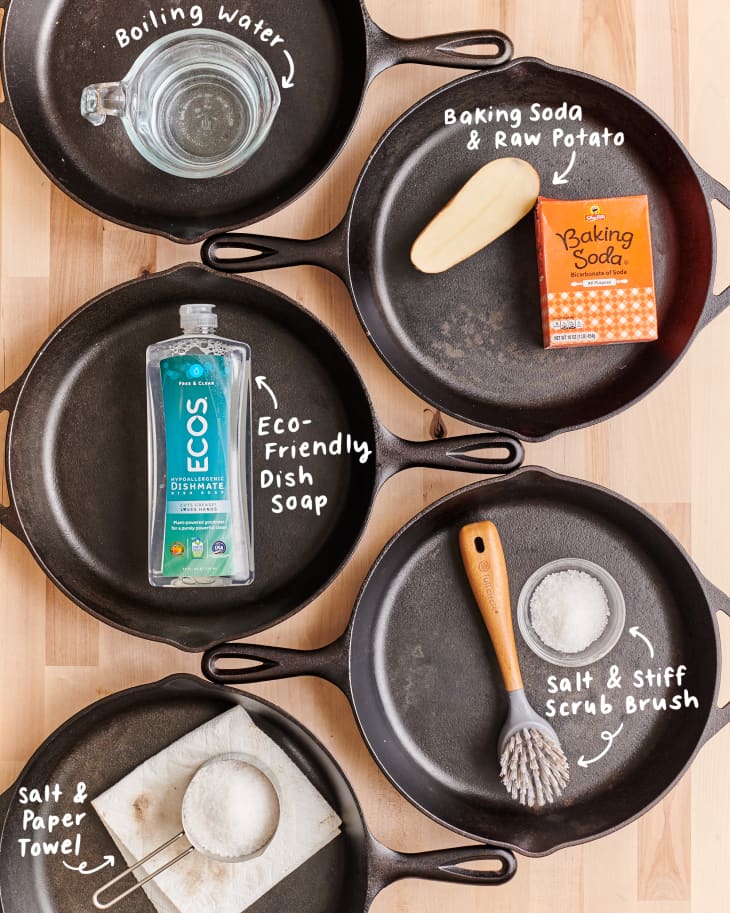
You don’t need fancy products to clean cast iron. Here’s what you should gather before you start:
- Coarse kosher salt (not fine table salt)
- A clean kitchen towel or paper towels
- A non-metal scrubber or a stiff brush (avoid steel wool)
- A small bowl or cup (for used salt)
- Cooking oil (for reseasoning, like vegetable, canola, or flaxseed oil)
- A stove or oven (to help dry and reseason the pan)
- Heat-resistant gloves (optional, for safety)
There are different brands of kosher salt, but Morton and Diamond Crystal are both trusted. For scrubbing, a Lodge Pan Scraper or a natural bristle brush works well. If you want to buy, the Lodge Pan Scraper is available on Amazon.
Credit: www.thekitchn.com
Tools I Recommend (compact list)
I keep a small kit near my stove: a jar of coarse kosher salt, a Lodge Pan Scraper, a stiff natural-bristle brush, and a few microfiber towels. These tools are cheap, last years, and make salt cleaning fast.
Step-by-step Guide: How To Clean A Cast Iron Skillet With Salt
Cleaning with salt is straightforward, but a few small steps make it work every time. I’ll walk you through what I do, with tips for safety and good results.
1. Let The Skillet Cool
Never add cold water or salt to a smoking hot skillet. Sudden temperature changes can warp or crack iron. Wait until the skillet is warm to the touch—not boiling hot—before you start.
2. Wipe Out Excess Grease
Use a paper towel or cloth to remove as much oil and loose food as you can. This lets the salt focus on stuck-on bits, not puddles of grease.
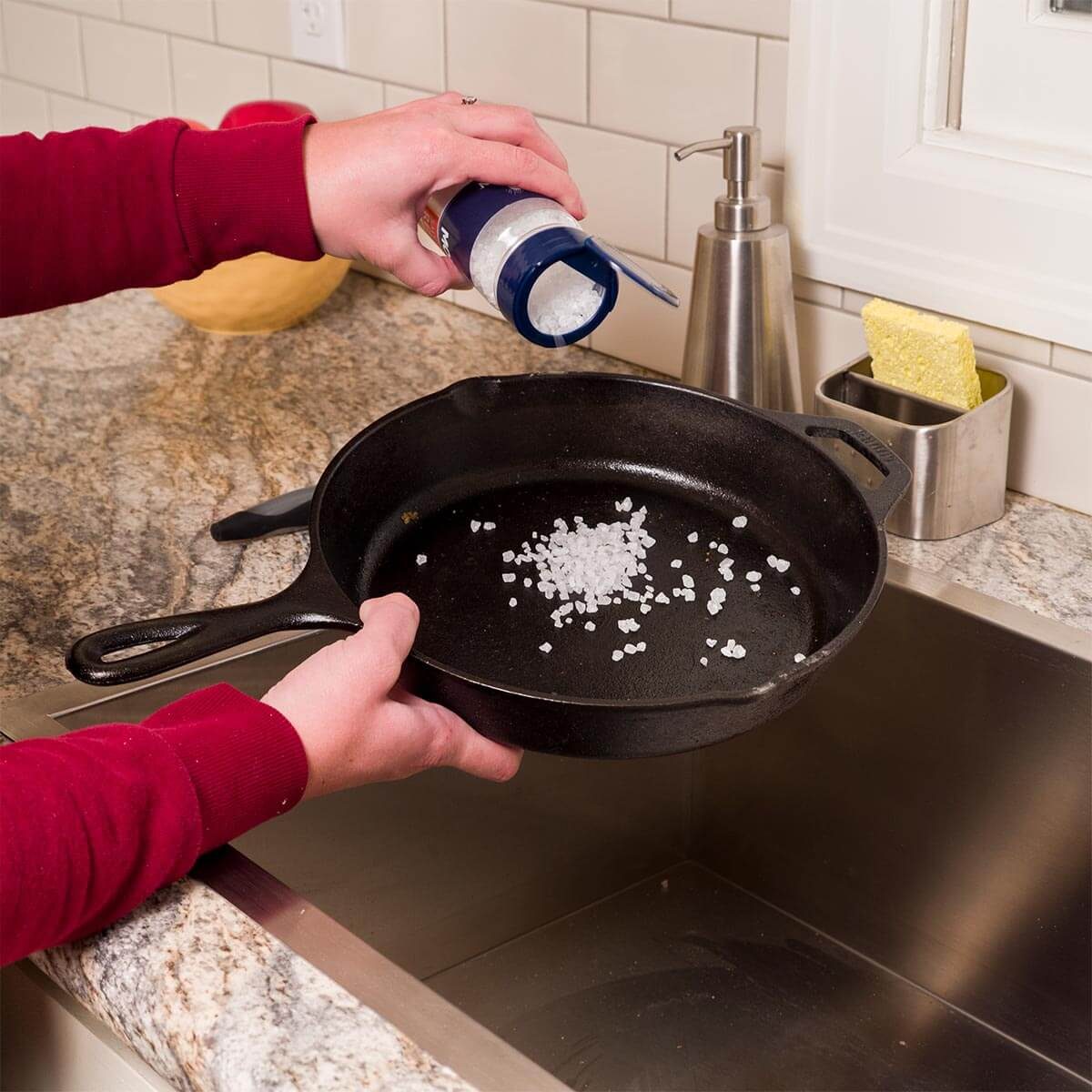
3. Sprinkle Coarse Salt Generously
Pour a layer of coarse kosher salt into the skillet. For a 10-inch pan, one to two tablespoons usually does it. The salt should form a visible abrasive layer across the bottom. Don’t use table salt—too fine and it won’t scrub well.
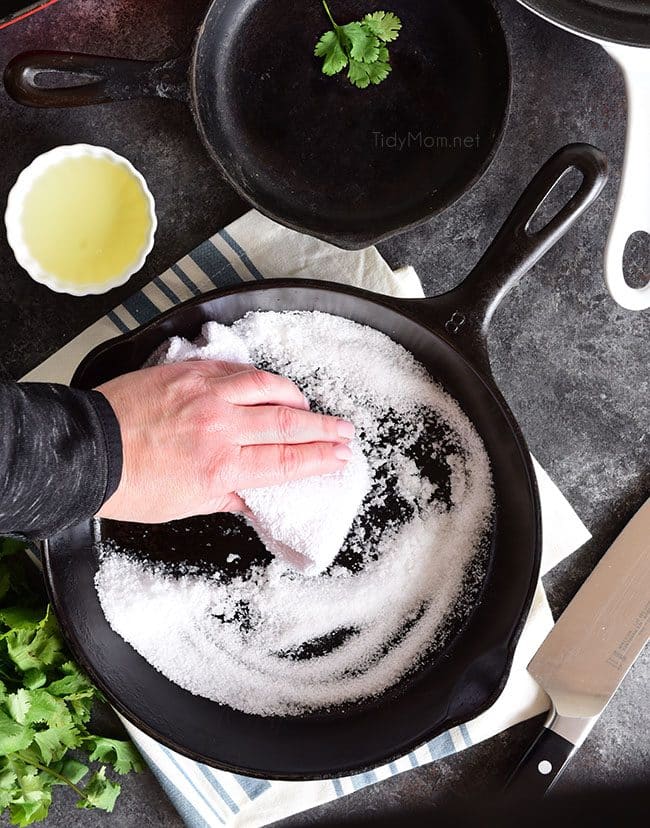
4. Scrub With A Brush Or Towel
Use a folded paper towel, a cloth, or a non-metal scrubber to rub the salt in small circles. Focus on stuck areas. The salt crystals act like tiny scrubbing stones and lift residue without removing seasoning. Apply steady, gentle pressure.
5. Discard Dirty Salt
The salt will turn brown as it collects drag and food bits. Tilt the skillet and scoop the dirty salt into a bowl or the trash. Do not rinse salt down the drain; it can concentrate and clog pipes over time.
6. Wipe And Check
Wipe the skillet with a clean towel. Check carefully for remaining residue. If you still see spots, repeat the salt scrub with fresh salt. A second quick scrub fixes most stubborn bits.
7. Light Rinse (optional)
Some cooks rinse with a splash of hot water. I only rinse if there’s still grit or for greasy residue. If you rinse, dry immediately and thoroughly. Water left behind causes rust.
8. Dry Thoroughly
Place the skillet on the stove over low heat for a few minutes. Heat drives out hidden moisture. Cast iron must be bone dry before storing or applying oil.
9. Reseason With Oil
While the skillet is warm, add a small amount of cooking oil—about a teaspoon. Use a paper towel to spread it thinly across the entire surface, inside and out. Buff off any excess so it looks barely shiny, not greasy. This keeps the pan protected and restores the non-stick feel.
10. Store Properly
Let the skillet cool completely before storing. If you stack cast iron, place a paper towel between pans to prevent scratches and to absorb moisture.
How Salt Cleaning Compares To Other Methods
You might wonder how salt compares to soap, steel wool, or baking soda. Here’s a straightforward comparison to help you pick the right method for the job.
| Cleaning Method | Removes Food | Protects Seasoning | Risk of Rust | Easy to Use |
|---|---|---|---|---|
| Salt Scrub | Excellent | Yes | Low | Yes |
| Soap & Water | Good | No | High if not dried | Yes |
| Steel Wool | Very High | No (removes seasoning) | High | No (damaging) |
| Baking Soda Paste | Moderate | Mostly | Low | Yes |
Salt cleaning stands out because it protects seasoning while removing residue. It balances effectiveness, ease, and low risk—especially for regular maintenance.
The Science Behind Seasoning And Salt Cleaning
Understanding seasoning explains why salt works so well. Seasoning is a layer of polymerized oil bonded to the iron at high heat. It forms a dark, hard surface that resists sticking and rust. When you scrub too hard or use strong detergents, that layer can break down.
Salt provides mechanical abrasion without chemical stripping. The crystals scour away food and carbonized bits. They don’t dissolve the oil film the way soap does. That makes salt ideal for regular cleaning while preserving the pan’s patina and non-stick properties.
When To Use Salt Cleaning
Not every mess needs a salt scrub. Here are examples of when salt cleaning is the best choice:
- After cooking sticky foods (eggs, cheese, fried potatoes)
- When you see black bits or burnt residue
- If the skillet smells of old food
- After frying fish or using strong spices
For light jobs—like bacon drippings—a simple wipe with a paper towel and a thin oil coat may be all you need. Save salt scrubs for the messier jobs.
How Often Should You Clean With Salt?
You don’t need salt after every use. Over-cleaning can wear down seasoning. For most home cooks:
- Use a salt cleaning after heavy, sticky, or burnt-on messes.
- For lighter cooking, just wipe out with a towel and apply fresh oil.
- Deep salt scrubbing once a week or every few uses is usually enough.
If food begins to stick more than usual, that’s a sign your pan needs a salt clean and a thin oil reseason.
Practical Tips For Best Results
Many people make small mistakes that affect skillet performance. Here are key tips I use every time:
- Don’t use regular table salt. Fine salt dissolves too quickly and won’t scrub effectively. Always use coarse kosher salt.
- Buff off all excess oil after reseasoning. Leftover oil can become sticky and attract dust.
Other tips:
- Use a towel dedicated to cast iron to avoid cross-contamination.
- Never soak your skillet in water, even after salt cleaning—soaking invites rust.
- Store in a dry place to prevent moisture buildup.
What To Avoid When Cleaning Cast Iron With Salt
Some mistakes can damage your skillet or make cleaning harder:
- Don’t use steel wool unless you intend to strip the seasoning and start over.
- Don’t use soap unless the skillet is very greasy and you plan to reseason afterward.
- Don’t put cast iron in the dishwasher. High heat and water cause rust and remove seasoning.
- Don’t skip drying—any residual water can create rust spots quickly.
Dealing With Rust And Stubborn Stains
If you notice orange spots or a rough texture, that’s rust. Light rust can often be removed with salt and oil. Here’s a simple routine I use:
- Sprinkle salt over the rusty area.
- Add a few drops of oil (vegetable or canola).
- Scrub with a paper towel or brush until rust lifts.
- Wipe clean, rinse briefly if needed, and dry thoroughly.
- Reseason the pan as usual.
For heavy rust or flaking, you may need steel wool and a full reseason. For black carbonized stains or sticky residue, heat the skillet gently to loosen the buildup before scrubbing again with salt.
Reseasoning: How And Why
If your skillet loses its non-stick feel or turns dull gray, it’s time to reseason. Salt cleaning prepares the surface, but baking on a thin layer of oil builds lasting seasoning.
- After cleaning and drying, rub a thin layer of oil all over the pan (inside and out).
- Place the skillet upside down in an oven preheated to 400°F (204°C) with foil underneath to catch drips.
- Bake for 1 hour, then let the pan cool inside the oven.
- Repeat if you want a deeper, more durable layer.
A well-seasoned pan looks shiny and black. It should not feel sticky or gummy. Proper reseasoning restores the pan’s natural non-stick surface and protects it from rust.
Choosing The Right Salt And Scrubber
Not all salts or scrubbers work the same. Here’s a quick comparison to help you choose:
| Salt Type | Texture | Effectiveness | Price (per lb) |
|---|---|---|---|
| Kosher Salt | Coarse | Excellent | $1.50 |
| Sea Salt | Coarse | Good | $2.00 |
| Table Salt | Fine | Poor | $0.60 |
For scrubbers, the Lodge Pan Scraper or a natural bristle brush are best. Avoid metal scrapers unless you are stripping the seasoning on purpose.
Credit: www.familyhandyman.com
Storing Your Cast Iron Skillet After Cleaning
How you store your skillet matters as much as how you clean it. Here are simple storage tips I follow:
- Make sure the skillet is completely dry.
- Place a paper towel or cloth between pans if stacking.
- Store in a cool, dry place—avoid under sinks or near the stove where steam collects.
- If your home is humid, lightly oil the skillet before storing to prevent rust.
Common Questions About Cast Iron Care
Beginners often have the same questions. Below are clear answers based on hands-on experience and basic science.
Is It Safe To Use Salt If My Skillet Has A Crack Or Chip?
If the skillet is cracked, salt cleaning won’t fix structural damage. Small chips are usually cosmetic and safe, but cracks that reach the cooking surface can spread with heat. In that case, replace the pan for safety.
Can I Use Flavored Or Iodized Salt?
Stick with plain, coarse kosher salt. Flavored salts can leave residues or scents. Iodized salt may add a metallic taste or chemical residue you don’t want on your cooking surface.
Do I Need To Heat The Skillet After Salt Cleaning?
Yes. Even without water, a short low-heat session removes any moisture and ensures the pan is completely dry. This step prevents rust before you store the skillet.
Credit: tidymom.net
How To Tell If Your Skillet Needs A Deep Clean
Sometimes salt cleaning is not enough. Signs you need a deep clean or a full reseason include:
- Sticky, gummy surface
- Large areas of rust
- Flaking black residue
- Food sticks even after oiling
For these problems, you may need to strip the skillet down to bare metal with steel wool or an oven cleaner and then build seasoning from scratch. That’s rare if you maintain the pan with salt and oil regularly.
How Salt Cleaning Fits Into A Full Cast Iron Care Routine
Salt cleaning is one part of a simple care routine. Here’s a practical schedule I follow:
- After each use: Wipe with a towel, and add a drop of oil if needed.
- Weekly: Salt scrub after sticky foods or when you notice buildup.
- Monthly: Deep clean and reseason if the pan looks dull or sticky.
Stick to this routine and your skillet can last decades. Cast iron improves with use—good maintenance keeps it performing at its best.
Recommended Amazon Product: Lodge Pan Scraper
If you want to make salt cleaning easier, the Lodge Pan Scraper is a great tool. It’s shaped to fit the curves of a cast iron skillet and is gentle on seasoning. You can find it on Amazon by searching for “Lodge Pan Scraper” or go directly to the product page.
Real-life Example: Cleaning An Egg-stained Skillet
Imagine you just made scrambled eggs and there’s a sticky layer on your skillet. Here’s what you do:
- Let the skillet cool until warm.
- Wipe out excess oil and egg bits with a towel.
- Sprinkle a thick layer of coarse kosher salt.
- Scrub in circles with a Lodge Pan Scraper.
- Discard the dirty salt.
- Wipe the skillet clean.
- Heat on the stove to dry.
- Rub a drop of oil, buff until shiny.
- Store after cooling.
This process works for most stuck-on foods and preserves the seasoning. I use it after breakfast most weekends and it keeps the pan smooth and fast to cook with.
When You Shouldn’t Use Salt Cleaning
There are rare cases when salt isn’t the answer:
- If your skillet is brand new and the surface is rough, you may need to build up seasoning first.
- For extremely burnt-on messes (carbonized food), you may need to use a little water or boil water in the pan before salt scrubbing.
- If you have allergies to certain oils, check your oil choice for reseasoning.
How Salt Cleaning Was Used Historically
Salt cleaning is not a new trick. Early American cooks and chefs used coarse salt to care for cast iron long before dish soap existed. The method survives because it works. Many modern professional kitchens—especially in French and Italian traditions—still use salt to clean heavy skillets. The main reason: it preserves the pan’s patina, the well-seasoned non-stick surface chefs rely on.
What Makes A Well-cleaned Skillet
After cleaning with salt, a well-cared-for skillet should look and feel:
- Smooth and black, not gray or rusty
- Slightly shiny from a thin oil layer
- Free of food bits or sticky spots
- No smell of old or burnt food
If your skillet matches this description, you’ve cleaned it well and preserved its seasoning.
Health And Safety Facts
Some people worry about bacteria when they skip soap. Properly used, cast iron is safe. High cooking heat kills most germs. Salt is a mild natural disinfectant too. For extra peace of mind, heat your skillet briefly before cooking—it sterilizes the surface.
Environmental Benefits Of Salt Cleaning
Salt cleaning is eco-friendly. You use less water. You avoid harsh chemicals. You produce less waste compared to disposable wipes or heavy-duty cleaners. This simple method reduces your kitchen’s environmental footprint while extending the life of your cookware.
What If You Accidentally Use Soap?
If you accidentally wash your skillet with soap, don’t panic. Rinse and dry thoroughly. Add a thin layer of oil. If the pan feels sticky or food starts to stick, reseason it in the oven. One soap wash won’t ruin a well-seasoned pan permanently.
How To Clean The Bottom And Sides
Don’t forget the outside of your skillet. Grease and baked-on food can collect on the sides and bottom. Use the same salt method there, then wipe and oil after drying. This keeps the whole pan protected and looking clean.
Quick Reference: Salt Cleaning Steps
For a fast reminder, here’s the process:
- Let skillet cool to warm.
- Wipe out oil and food.
- Sprinkle coarse salt.
- Scrub with towel or scraper.
- Discard dirty salt.
- Wipe clean.
- Heat to dry.
- Oil and buff.
- Store dry.
Resources For Further Learning
For deeper knowledge about cast iron history and care, the Cast Iron Collector website and the Wikipedia page on Cast Iron Cookware provide reliable information. Both are good for learning about vintage pans, seasoning techniques, and restoration tips.
Frequently Asked Questions
How Much Salt Should I Use For Cleaning?
One to two tablespoons of coarse kosher salt is enough for a 10-inch skillet. Use more for larger pans or stubborn messes.
Can I Use This Method For Enameled Cast Iron?
No. Enameled cast iron (like Le Creuset) is best cleaned with soap and water. Salt scrubbing can scratch the enamel finish.
What Is The Best Oil For Reseasoning After Cleaning?
Flaxseed oil, canola oil, or vegetable oil are all good choices. Use a high-smoke-point oil for the most durable seasoning. I prefer canola for everyday use and flaxseed when I want a very hard, polymerized layer.
Will Salt Cleaning Remove All Rust?
Salt works for light rust. Deep rust may need steel wool and a full reseason. Salt is best for maintenance, not heavy restoration.
Can I Use Salt Cleaning For Other Cookware?
Salt cleaning is mainly for raw cast iron. Don’t use it on nonstick pans or stainless steel, as the abrasive salt can scratch those surfaces.
Taking care of a cast iron skillet with salt is a simple skill that pays off for years. With routine salt cleaning, careful drying, and occasional reseasoning, your skillet will stay non-stick, rust-free, and ready for any meal you want to cook.
Troubleshooting & Extra Tips for Cast Iron Salt Cleaning
Quick fixes and advanced tips I use when routine salt cleaning doesn’t do the job:
- If food is badly carbonized: simmer water with a little dish soap for 5–10 minutes (if you plan to reseason), then salt-scrub when cool enough.
- To remove sticky oil: heat the pan slightly, then add salt and scrub; heat helps soften the residue for easier removal.
- For a glassy, hard seasoning layer: use flaxseed oil and bake at 400°F (204°C) for multiple thin coats.
- If you travel with cast iron or live in a humid climate: apply a very light oil coat before packing or storing.
- Keep a small jar of coarse kosher salt by the stove. It saves time and keeps your pan in regular shape.
These practical fixes address common issues quickly. They also extend the life of the seasoning and make daily cooking easier.