How To Tell If Your Cookware Will Work With Induction: Easy Test

If a magnet sticks firmly to the bottom, your cookware will usually work with induction.
Induction cooking is fast, efficient, and a little picky about cookware. That is why knowing how to tell if your cookware will work with induction can save you from wasted money, weak heating, and a lot of kitchen frustration. I have tested plenty of pots and pans over the years, and the pattern is always the same: the right metal matters more than the brand or the price tag.

What induction cooking actually needs
Induction cooking does not heat the cooktop surface the way gas or electric burners do. It uses a magnetic field to create heat directly in the pan itself. That means the cookware must contain a magnetic material in the base, or it will not respond properly.
In simple terms, the stove and the pan need to “talk” through magnetism. If they cannot connect, the pan stays cold or heats very weakly. This is why the question of how to tell if your cookware will work with induction is really about checking the metal, the base, and the pan’s construction.
Common induction-compatible materials include:
- Cast iron, which is naturally magnetic and usually works very well
- Magnetic stainless steel, which often works if the base contains enough iron
- Enameled cast iron, which still works because the cast iron core is magnetic
- Some induction-ready aluminum or copper pans, but only if they have a magnetic base layer
Materials that usually do not work include:
- Pure aluminum
- Pure copper
- Glass
- Ceramic
- Non-magnetic stainless steel
The easiest way to test your cookware
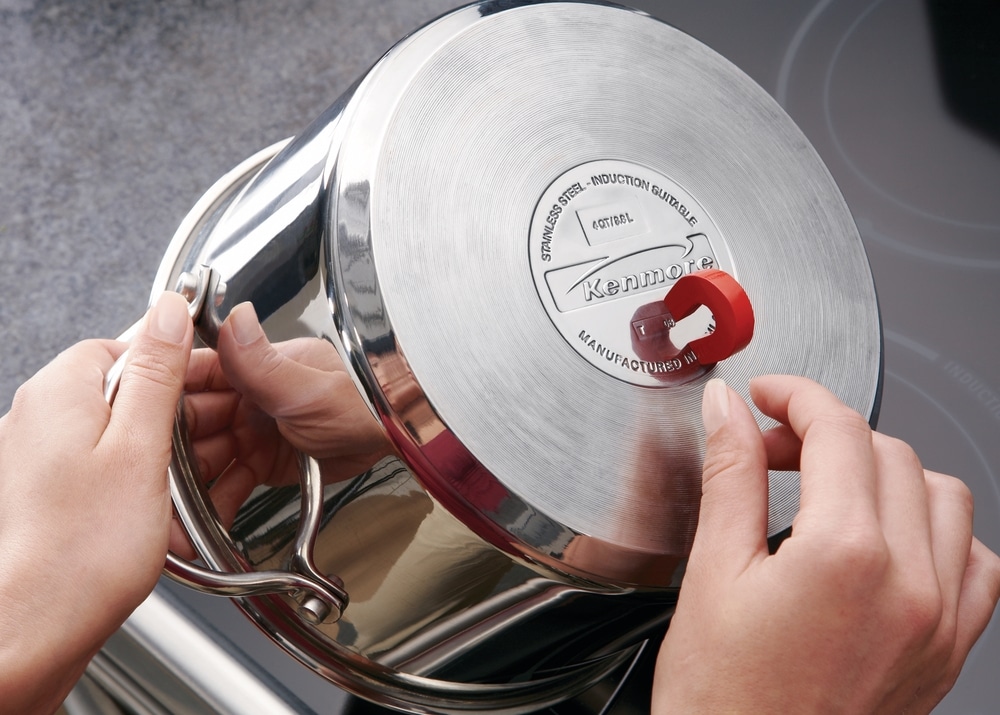
The fastest way to tell if your cookware will work with induction is the magnet test. Hold a refrigerator magnet to the bottom of the pan. If it sticks firmly, the pan will usually work on an induction cooktop.
A weak magnet pull can be a warning sign. It may still work, but sometimes only in the center or only at lower power levels. I have seen older stainless steel pans that passed the magnet test but still heated unevenly because the magnetic layer was thin or patchy.
Use this simple method:
- Place a magnet on the bottom of the pan.
- Check whether it snaps on firmly or slides off.
- Test several spots, not just one.
- If the magnet sticks well across most of the base, the pan is a good candidate for induction.
One mistake people make is testing only the side of the pan. The base is what matters most. A pan can look like stainless steel and still fail if the bottom is not magnetic enough.
How to read cookware labels and symbols
Many cookware brands now label products as induction compatible. Look for words like:
- Induction ready
- Induction compatible
- Suitable for all cooktops
- Works on induction
Some pans also have a coil-shaped symbol on the packaging or underside. That symbol is a strong clue, but I still like to verify with a magnet because labels can be confusing.
Be careful with vague claims such as “works on most stovetops.” That phrase does not always include induction. If the packaging is unclear, check the manufacturer’s product page or manual before buying.
What cookware materials usually work
Not all metals behave the same way on induction. Over time, I learned that material alone is not enough. Construction matters too.
Cast iron
Cast iron is one of the best options for induction. It is highly magnetic and usually heats evenly once it gets going. The downside is weight, which can make it harder to lift and clean.
Enameled cast iron
This works just like cast iron because the core is still iron. The enamel coating only affects the outside finish, not the magnetic properties. It is a great choice if you want easier cleanup.
Magnetic stainless steel
This is the most common surprise for shoppers. Some stainless steel pans work beautifully on induction, while others do nothing at all. The difference depends on the steel blend and whether the base includes magnetic layers.
Aluminum and copper with bonded bases
Pure aluminum and copper do not work on induction by themselves. But many modern pans use a bonded disk or layered base that includes a magnetic stainless steel plate. Those pans can work well if the bottom is engineered correctly.
Carbon steel
Carbon steel is usually induction friendly. It is magnetic, responsive, and popular with cooks who want quick heat changes. I often recommend it for people who want something lighter than cast iron but still strong on induction.
Why some stainless steel pans fail the test
Stainless steel is tricky because the name does not tell you enough. Some stainless steel contains enough iron to respond to a magnetic field, while other blends do not. In my experience, the biggest confusion comes from pans that look almost identical but behave very differently.
Here is what usually causes failure:
- The pan uses a non-magnetic stainless alloy
- The magnetic layer is too thin
- The base is too small for the cooktop’s burner zone
- The cookware is warped, which reduces contact and efficiency
A pan may technically work but still heat badly if the induction coil cannot “see” enough of the base. That is why how to tell if your cookware will work with induction is not just about passing a magnet test. It is also about performance.
Signs your cookware may work poorly even if it is compatible
Some cookware will activate an induction cooktop but still disappoint you. I have had pans that heated only in a tiny circle, while the edges stayed cool. That usually means the cookware is borderline compatible or poorly made.
Watch for these signs:
- The cooktop turns on, but heating is slow
- Only the center of the pan gets hot
- The pan makes unusual buzzing or vibrating sounds
- The surface heats unevenly
- The stove displays an error or shuts off
If you notice these issues, the cookware may be induction-capable in theory but not ideal in practice. Sometimes the fix is switching to a pan with a thicker magnetic base.
Best ways to check before buying new cookware
If you are shopping for new pans, do not rely on guesswork. I always tell people to check three things before buying.
- Look for an induction label on the box or product page
- Confirm the base material is magnetic or induction-ready
- Read reviews that mention real-world heating on induction cooktops
You can also look for a flat base that is wide enough for your burner. A warped or very small bottom can waste energy and cause uneven cooking. This matters a lot for larger pots, like stockpots and Dutch ovens.
If you already own a pan, the magnet test is still the quickest way to decide. If you are unsure, test it on the cooktop with a small amount of water. A strong induction pan should heat the water faster than you expect.
Practical tips from real kitchen use
The first time I switched to induction, I assumed all my old stainless steel pans would work. A few did, but several did not. The biggest lesson was that “stainless steel” is not a guarantee, and brand reputation does not always mean compatibility.
A few practical tips can save time and money:
- Test the whole base with a magnet, not just one spot
- Avoid pans with very rounded or bowed bottoms
- Choose cookware with a flat, heavy base for better contact
- If the pan is very lightweight, check whether it has a magnetic disc layer
- Keep an older proven induction pan as a backup for quick checks
Another lesson I learned is that induction works best when the pan size matches the burner size. A huge pot on a small burner may still work, but it often wastes energy and cooks unevenly.
Why induction compatibility matters for performance and safety
Knowing whether your cookware works with induction is not just about convenience. It affects cooking speed, energy use, and safety. Induction cooktops are efficient because they transfer energy directly into the pan, which means less wasted heat in the kitchen.
That brings real benefits:
- Faster boiling and heating
- Better temperature control
- Cooler kitchen surfaces
- Less wasted energy
- Lower risk of accidental burns from open flames
There are limits too. Some cookware that passes the magnet test may still underperform because of poor design. So it is smart to think about compatibility and quality together, not as separate issues.
Common mistakes to avoid
A lot of people get tripped up by the same few errors. I have seen them often enough to call them classic induction mistakes.
- Assuming all stainless steel is induction safe
- Checking only the rim instead of the base
- Buying cookware based on appearance alone
- Ignoring warped bottoms
- Trusting a label without testing the pan
The good news is that these mistakes are easy to avoid once you know what to look for. A magnet, a flat base, and a clear product label will solve most of the mystery.
Frequently Asked Questions
Can a pan work on induction if the magnet only sticks a little?
Yes, but it may not work well. Weak magnetic pull often means the pan is borderline compatible, which can lead to slow or uneven heating.
Does a nonstick coating affect induction compatibility?
No, the coating itself does not decide compatibility. What matters is the metal underneath the coating and whether it is magnetic.
Will cast aluminum work on induction?
Only if it has a magnetic induction base. Pure cast aluminum will not work by itself.
Can I use an induction adapter plate?
Yes, in many cases you can. An adapter plate lets non-induction cookware heat indirectly, but it is usually slower and less efficient than true induction-compatible cookware.
Why does my induction cooktop make noise with some pans?
That is usually normal. Buzzing or humming can happen when the magnetic field interacts with the pan, especially with thinner or layered cookware.
Conclusion
Learning how to tell if your cookware will work with induction comes down to a few simple checks: use a magnet, read the label, and look at the base construction. Cast iron, carbon steel, and magnetic stainless steel are usually safe bets, while pure aluminum, copper, glass, and ceramic usually are not.
If you are unsure about a pan you already own, test it before you assume it will work. A minute of checking now can save you from buying the wrong cookware later. Try the magnet test on a few of your favorite pots today, and if you want to go deeper, explore induction-friendly cookware guides or share your own test results in the comments.