How To Know If Cookware Is Suitable For Induction: Quick Test Guide

Cookware is induction-ready if it has a magnetic base and works with a simple magnet test.
If you have ever stood in your kitchen wondering why one pan heats up on an induction cooktop while another stays cold, you are not alone. Knowing how to know if cookware is suitable for induction is part science, part quick check, and part avoiding a costly mistake. I have tested plenty of pots and pans over the years, and the good news is that the answer is usually easy to confirm once you know what to look for.
:max_bytes(150000):strip_icc()/what-is-the-best-cookware-for-induction-cooktops-908920-ADD-FINAL-f6191a5ca3274837a72ec3205dfaced5.png)
What Makes Cookware Work on Induction?
Induction cooking is different from gas or electric heat. Instead of warming the burner first, it uses electromagnetic energy to heat the cookware itself. That means the pan must be made from a material that reacts to a magnetic field.
The key thing to understand is this: if the base of the pan is magnetic, it will usually work on an induction cooktop. Cast iron and many stainless steel pans are common examples. Copper, aluminum, and glass usually do not work unless they have a special magnetic layer on the bottom.
Here is the simple idea:
- The cooktop creates a magnetic field.
- The cookware converts that energy into heat.
- The food cooks because the pan gets hot fast.
This is why how to know if cookware is suitable for induction matters so much. A beautiful pan may look premium, but if the base is not magnetic, it will not heat properly.

The Easiest Ways to Check If Cookware Is Induction Compatible
You do not need special tools to figure this out. In most kitchens, I use a few fast checks before I ever plug in a new pan.
Use a magnet test
This is the most reliable home test. Place a refrigerator magnet on the bottom of the cookware.
- If the magnet sticks strongly, the cookware is likely induction compatible.
- If it barely sticks or slides off, the pan may not work well.
- If it does not stick at all, it is usually not suitable for induction.
I have found this test especially helpful with stainless steel pans. Some stainless steel is magnetic, and some is not. That small difference can decide whether the pan heats evenly or stays frustratingly cool.
Look for an induction symbol
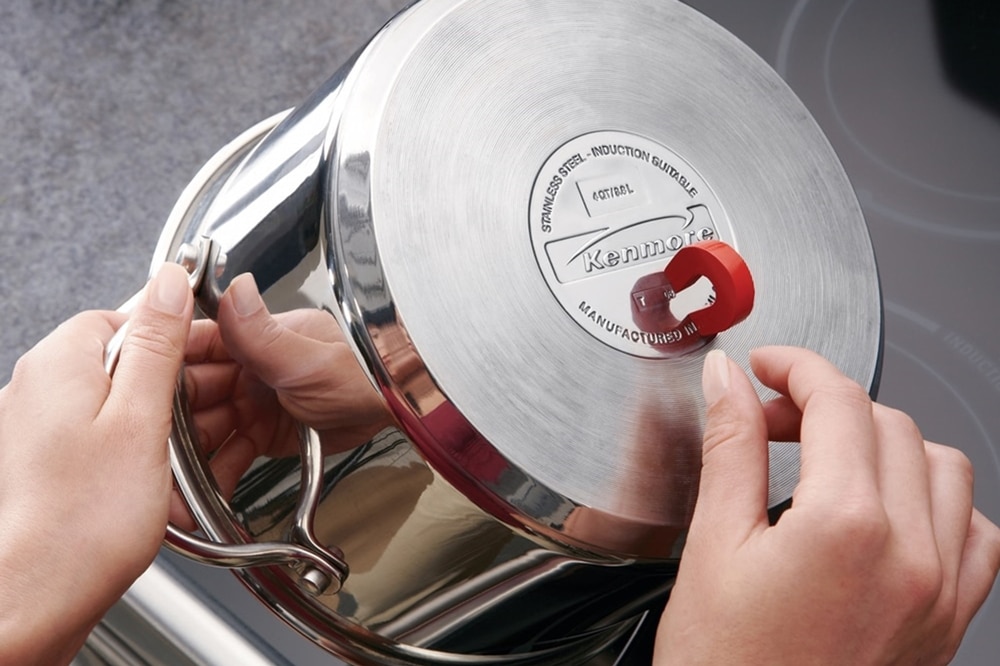
Many brands print a coil-like symbol on the box, bottom, or label. This symbol often looks like a small set of looping lines or a coil.
- Check the underside of the pan.
- Check product packaging.
- Check the manufacturer’s website if the label is unclear.
This is a helpful shortcut, but I never rely on it alone. Labels can be missing, faded, or misleading. The magnet test still gives you the clearest answer.
Check the material type
Some materials are naturally better for induction than others.
- Cast iron: almost always works
- Enamel-coated cast iron: usually works
- Magnetic stainless steel: often works
- Aluminum: usually does not work unless it has a magnetic base
- Copper: usually does not work unless it has a bonded magnetic layer
- Glass, ceramic, and stoneware: do not work unless specially designed for induction
When people ask how to know if cookware is suitable for induction, material type is often the first clue. It is not the only clue, but it narrows things down fast.
Test the pan on the cooktop
If you are still unsure, place the pan on the induction burner and turn it on.
- If the pan heats quickly, it is compatible.
- If the cooktop shows an error, the pan is likely not suitable.
- If the burner clicks but no heat develops, the pan may be too small or non-magnetic.
This is where size matters too. Some induction cooktops need cookware with a base large enough to cover the burner zone. A tiny saucepan may not activate the surface properly even if it is magnetic.
Common Cookware Materials and Whether They Work
Understanding material basics makes shopping much easier. It also helps you avoid buying a whole set that looks modern but does not work on your cooktop.
Cast iron
Cast iron is one of the best choices for induction. It is naturally magnetic and holds heat well. That makes it great for searing, frying, and slow cooking.
One thing I learned the hard way: cast iron can scratch glass induction surfaces if you drag it. Always lift it instead of sliding it.
Stainless steel
Stainless steel can be tricky because not all stainless steel is magnetic. Many high-quality pans use magnetic stainless steel or a layered base that works with induction.
A quick magnet test usually settles the question. If the magnet grabs firmly, you are in good shape.
Aluminum
Plain aluminum does not usually work on induction. It is not magnetic enough to interact with the cooktop. However, many aluminum pans now include a bonded stainless steel disc on the bottom, which makes them induction ready.
This is a common source of confusion, so always check the base, not just the side walls.
Copper
Pure copper cookware usually will not work on induction. Some copper pans have a magnetic stainless steel base, and those can work fine.
If you love the look of copper, check the product details carefully. Style alone does not tell the full story.
Nonstick cookware
Nonstick pans can be induction compatible if they have a magnetic base. The coating itself does not matter much. It is the core or bottom layer that counts.
This is one area where product descriptions matter a lot. A nonstick pan may be sold as induction safe, but only because of a hidden magnetic disc underneath.
Glass and ceramic
Most glass and ceramic cookware is not induction compatible. These materials do not react to magnets in the same way. Some special induction-ready designs exist, but they are the exception, not the rule.
If you are unsure, do the magnet test. It is simple and saves time.
How to Read Product Labels Without Getting Confused
Cookware labels can be a little slippery. They often use broad marketing language that sounds helpful but leaves out the part you actually need.
Look for phrases like:
- Induction compatible
- Induction ready
- Suitable for all cooktops
- Magnetic stainless steel base
Be careful with vague terms like:
- High performance
- Premium quality
- Multi-surface use
Those may sound good, but they do not always mean the pan works on induction. I have seen shoppers bring home “all-purpose” pans that worked on gas but failed on induction because the base was not magnetic.
A good rule is this: if the label does not clearly mention induction, test it with a magnet before you buy or cook.
Signs Your Cookware Is Not Right for Induction
Sometimes the cooktop gives away the answer right away. Other times the problem is more subtle.
Watch for these signs:
- The burner does not turn on.
- The cooktop shows an error code.
- The pan heats unevenly.
- The cooktop turns on and off in short bursts.
- The pan feels hot in spots but not across the base.
Uneven heating can happen when the pan is partly compatible but not built well for induction. Thin bases can warp over time, and warped cookware may stop making solid contact with the burner zone.
I once used an older pan that technically worked on induction, but the heat kept pulsing. The issue was the thin, uneven bottom. It taught me that “compatible” and “good on induction” are not always the same thing.
Best Practices for Buying Induction Cookware
If you are shopping for new pots and pans, the easiest path is to buy with induction in mind from the start. That saves a lot of guesswork later.
Use this checklist:
- Confirm the pan is labeled induction compatible.
- Use a magnet test if you can.
- Choose a flat, heavy base for better contact.
- Look for durable materials like magnetic stainless steel or cast iron.
- Make sure the size matches your burner zone.
For everyday cooking, I usually recommend cookware with a thick, flat base. It tends to heat more evenly and stays stable on the glass surface. Lightweight pans can work, but they often are less reliable over time.
Why Some Cookware Works Poorly Even If It Is Compatible
This is one of the most misunderstood parts of induction cooking. A pan can be technically suitable for induction and still perform badly.
Here are some reasons:
- The base is too thin.
- The pan is warped.
- The magnetic layer is uneven.
- The diameter is too small for the burner.
- The heat spreads poorly across the bottom.
In real use, this can mean hot spots, weak simmering, or slower heating than expected. I usually tell people not to stop at “Does it work?” but to ask “Does it work well?”
That small shift helps you avoid low-quality cookware that only passes the basic test.
Simple Care Tips to Protect Induction Cookware
Good cookware lasts longer when you treat it gently. This is especially true on induction, where the glass top and flat base both need care.
Helpful habits include:
- Lift pans instead of dragging them.
- Keep the bottom clean and dry.
- Avoid warped pans.
- Do not use abrasive scrubbers on coated bases.
- Match the pan size to the burner size.
If you use cast iron, be extra careful. It is excellent for induction, but it can scratch a cooktop if handled roughly. A little care goes a long way.

Frequently Asked Questions of How to Know If Cookware is Suitable for Induction
How do I know if my pan works on induction?
The easiest way is to use a magnet on the bottom of the pan. If the magnet sticks firmly, the pan will likely work on induction.
Can stainless steel cookware be used on induction?
Yes, many stainless steel pans work on induction, but not all of them do. The key is whether the base is magnetic, so a magnet test is the best check.
Does induction cookware need to be marked induction compatible?
Not always, but it helps. If there is no label, you can still test the pan with a magnet or try it on the cooktop.
Why does my induction cooktop not recognize my pan?
The pan may not be magnetic, may be too small, or may have a warped base. Sometimes the issue is simply that the cookware does not make full contact with the burner zone.
Can I use aluminum cookware on induction?
Plain aluminum cookware usually does not work on induction. Some aluminum pans have a magnetic base or bonded layer, and those can be used safely.
Is cast iron always suitable for induction?
Yes, cast iron is naturally magnetic and works very well on induction. Just handle it carefully because it can scratch the glass surface if dragged.
Conclusion
Knowing how to know if cookware is suitable for induction comes down to a few simple checks: magnet test, material type, product label, and real-world burner response. Once you understand those signs, choosing the right pan becomes much easier and far less frustrating.
The biggest lesson is this: do not judge cookware by looks alone. A pan can be sleek, expensive, and still fail on induction if the base is not magnetic. Take a minute to test what you already own, and you will save time, money, and a lot of kitchen hassle.
If you are shopping for new cookware, use these tips to make a smarter choice and get better results from your induction cooktop. Feel free to explore more kitchen guides, subscribe for practical cooking tips, or leave a comment with your own cookware questions.