How To Clean Stains From Enamel Cast Iron Cookware: Guide 2026

Use baking soda, gentle scrubbing, and soaking to lift most enamel cast iron stains.
I’ve cleaned dozens of pots and pans in home kitchens and small restaurants. I know how to clean stains from enamel cast iron cookware without damaging the finish. This guide explains safe steps, common mistakes, and pro tips. Read on to learn practical methods you can use today.
Common stains and why they happen
Enamel traps food and oil on its smooth glass-like surface. Over time, heat and acidic foods leave brown, black, or rainbow-hued marks. Burnt-on food leaves dark crusts. Tea, tomato sauce, and wine can cause stubborn discoloration. Knowing the stain type helps choose the best cleaning method.
Causes at a glance:
- Residue from high heat cooking.
- Mineral build-up from hard water.
- Acidic foods reacting with browned oil.
- Rust from chipped enamel exposing cast iron.
I once left a tomato sauce pot soaking too long and the inner walls darkened. A simple baking soda paste removed most of it. That lesson taught me to act fast and avoid metal scrubbers.
:max_bytes(150000):strip_icc()/RS_how-to-clean-le-creuset_Method-1-Step-2_preview-5ecc4235258844d9aa4e5402d6aa5cd6.jpg)
Basic daily cleaning for enamel cast iron
Clean right after the pan cools. Hot thermal shock can crack enamel. Use warm water and mild dish soap for daily cleaning. A soft sponge or nylon brush removes grease and light stains.
Steps:
- Rinse with warm water.
- Add mild dish soap and gently scrub with a sponge.
- Rinse and dry with a soft towel.
Do not soak overnight with salt or bleach. Those can harm the enamel over time. Regular care prevents heavy staining and keeps your cookware looking new.
How to clean stains from enamel cast iron cookware: removing burnt-on food
For stuck-on brown or black bits, use gentle abrasives and steam. This works well without harming the surface.
Method:
- Fill the pan with warm water to cover the stain.
- Bring water to a simmer for 10 minutes, then let cool.
- Drain and use a wooden spoon or nylon scraper to lift softened bits.
- Make a paste of baking soda and water. Apply to the stain and scrub gently.
Repeat soaking if needed. I use this on my oldest Dutch oven; it restored the interior without scratches. This routine handles most burned food stains safely.

Tackling stubborn discoloration and dark rings
Stubborn stains often need a stronger but still safe approach. Baking soda and white vinegar are reliable allies.
Steps:
- Sprinkle a generous layer of baking soda over the stain.
- Add a little warm water to form a paste.
- Let sit 15–30 minutes, then scrub gently with a nylon pad.
- For very stubborn spots, pour a cup of white vinegar, let fizz, then rinse and scrub.
If stains persist, repeat once. Avoid metal pads or steel wool—they can scratch enamel and cause chips that lead to rust.
Removing rust and chips safely
If the enamel chips and exposes cast iron, quick care prevents spread. Light surface rust can be cleaned. Deep pits need pro repair.
How to remove rust:
- Use a paste of baking soda and water. Rub with a soft brush.
- Rinse and dry thoroughly.
- Rub a thin layer of cooking oil on exposed cast iron to protect it.
If the chip is large or rust is severe, contact a cookware specialist. Do not try to re-enamel at home; that can trap toxins or fail quickly.

Natural home remedies that work
Many people prefer non-toxic cleaners. These work well for mild to medium stains.
Effective home remedies:
- Baking soda paste for gentle abrasion.
- White vinegar soak for mineral and tea stains.
- Bar Keepers Friend (citric acid or oxalic formulas) used sparingly on white enamel.
- Lemon juice and salt for light, fresh stains.
I favor baking soda and vinegar. They are cheap, safe, and usually do the job. Test any cleaner on the pan’s rim or bottom first.
:max_bytes(150000):strip_icc()/RS_how-to-clean-le-creuset_method-1-step-1_preview-12959497fada4b419a25f0fdaee0234b.jpg)
Tools and cleaners to avoid
Protect the enamel by avoiding harsh tools and chemicals. The wrong cleaner can ruin the finish.
Avoid:
- Steel wool or wire brushes.
- Chlorine bleach on the enamel surface.
- Oven cleaners with caustic agents.
- Abrasive powders used aggressively.
Use nylon pads, wooden or silicone scrapers, and soft cloths. Gentle tools do more to extend cookware life than strong chemicals.

Preventing future stains and keeping enamel bright
Prevention saves time and money. Small habits keep enamel cookware pristine.
Prevention tips:
- Heat slowly; avoid very high flames under empty enamel pots.
- Deglaze with water or wine right after cooking to lift bits.
- Dry and store with the lid off to avoid moisture build-up.
- Avoid cooking highly alkaline or salty foods at very high heat on bare enamel.
I now keep a wooden scraper near the stove. It lets me remove food fast before it hardens. That small habit cut staining in half.
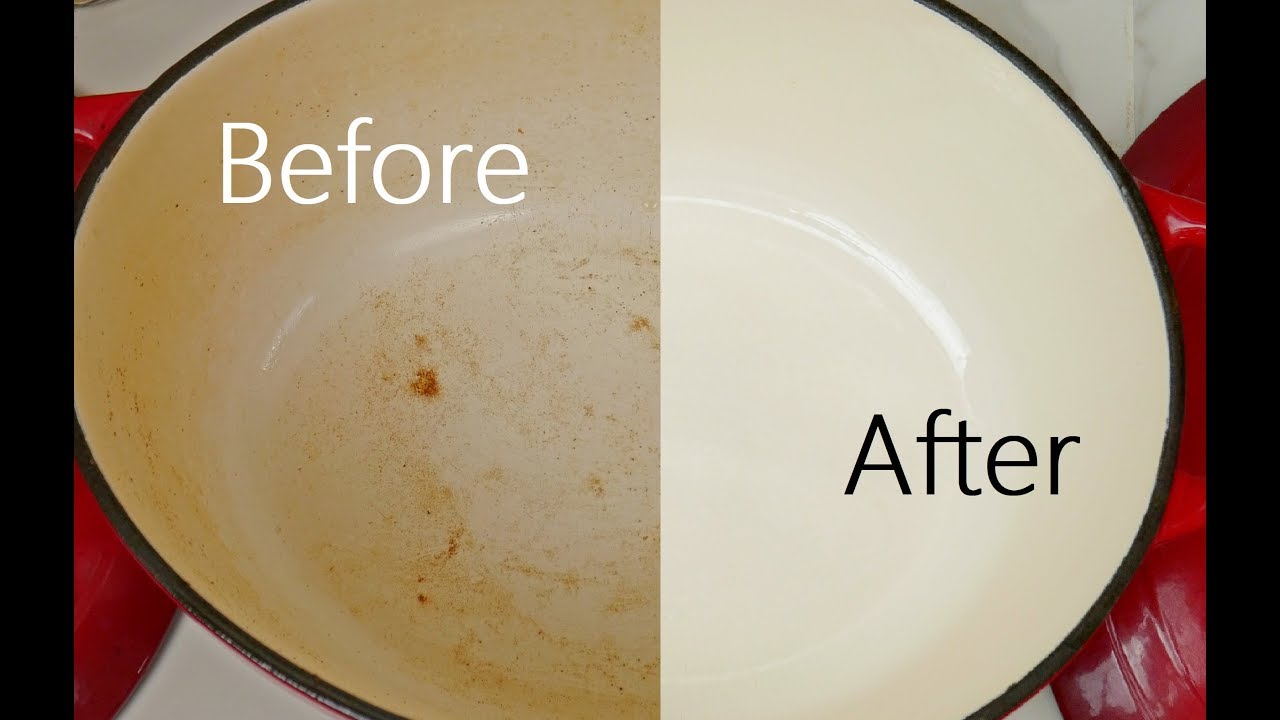
How to clean stains from enamel cast iron cookware: professional cleaning and repairs
Some stains and damage need expert help. Professional rehabbing can restore value.
When to seek pros:
- Large chips exposing core metal.
- Deep rust that won’t respond to home methods.
- Persistent stains after repeated safe treatments.
A pro can refinish or advise on repair options. This is worth it for heirloom pieces or high-end brands.
Frequently Asked Questions of How to Clean Stains from Enamel Cast Iron Cookware
How often should I deep clean enamel cast iron?
Deep clean when grime builds or after cooking sticky, sugary dishes. A monthly gentle scrub and paste treatment keeps stains from settling.
Can I use baking soda on all enamel cookware?
Yes. Baking soda is safe for most enamel and is mildly abrasive. Test a small spot first if you are unsure.
Will vinegar harm enamel cast iron?
Straight vinegar used long-term can dull enamel. Short soaks and rinses are fine and effective for mineral stains.
Is it safe to use a dishwasher for enamel cast iron?
Avoid the dishwasher for most enamel cast iron. High heat and harsh detergents can dull and chip the finish over time.
How do I remove rainbow-colored heat stains?
Rainbow stains often come from high heat or oil film. A baking soda paste and warm scrub usually remove them in a few cycles.
Can I re-season enamel cast iron like regular cast iron?
No. Enamel has a glass-like coating and does not need seasoning. Oiling exposed cast iron areas can prevent rust, but do not oil the glazed surface.
Conclusion
You can restore most pots and pans with gentle steps. Simple tools, baking soda, and smart soaking are your best friends when you learn how to clean stains from enamel cast iron cookware. Act fast on spills, avoid metal scrubbers, and keep daily care simple. Try one method today and see how your cookware responds. If you found this helpful, leave a comment, share your own tips, or subscribe for more kitchen care guides.