Is Rust on Cast Iron Dangerous? What You Need to Know

Is Rust On Cast Iron Dangerous?
===================================================
Cast iron cookware has been a kitchen favorite for centuries. I use it a lot. I love its durability and the way it cooks food evenly. But sometimes rust appears on a pan. You might ask: Is rust on cast iron dangerous? Can I still cook with it? Should I toss the pan? I’ll walk you through what rust means for your pan, your health, and your cooking. I’ll also share practical fixes I use at home.
What Is Rust And Why Does It Form On Cast Iron?
Rust is iron oxide. It forms when iron meets oxygen and water. Cast iron is mostly iron. So it rusts easily if it gets wet or loses its protective layer.
Even a few drops of water left after washing can start rust. Acidic foods like tomatoes or vinegar can wear the seasoning. A damaged seasoning layer leaves raw metal exposed. That lets rust form fast.
Rust can show up without obvious water. High humidity in the air is enough. If you live near the coast, salty air speeds rusting. Harsh cleaning—like metal scouring pads or strong detergent—can strip seasoning and invite rust. I learned this the hard way when I scrubbed a pan too aggressively.
If you are new to cast iron, do not underestimate how fast rust can form. A pan that looked fine one night can show orange spots the next morning.
Common Causes Of Rust On Cast Iron
- Moisture exposure: Leaving pans wet or not drying them well after washing.
- Poor seasoning: Cooking oils build a protective layer. Without it, the iron is exposed.
- Acidic foods: Tomatoes or vinegar can strip away seasoning and expose metal.
- Storage conditions: High humidity or storing pans with lids can trap moisture and cause rust.
Even a few drops can make a problem overnight. Water often hides under handles or rims. If you stack pans, moisture trapped between them can start rust. I store mine hanging to avoid that.
Is Rust On Cast Iron Always Visible?
Rust usually looks like orange-brown spots. It can also appear as dull gray patches. Sometimes it is just roughness you feel with your finger. Surface rust is common and usually easy to fix. Deep rust that flakes or makes the metal brittle is more serious.
Rust can hide under old grease or sticky seasoning layers. If the surface feels gummy, scrape gently. You may find rust beneath. When I restore thrift-store pans, I often find hidden rust in crevices and along rims.
Is Rust On Cast Iron Dangerous To Your Health?
Many people worry that cooking on a rusty skillet could be unsafe. The main question is whether rust itself is toxic or can harm you if it gets into food.
Scientific View: Is Iron Oxide Harmful?
Rust is iron oxide. The Centers for Disease Control and Prevention (CDC) and other health bodies say small amounts of iron oxide are not poisonous. If you accidentally eat a little rust, it will likely pass through your body without harm.
Your body needs iron. But iron oxide is not easily absorbed. Eating small rust flakes is usually not dangerous. Eating large amounts often is not a good idea. People with hemochromatosis (too much iron in the blood) should avoid extra iron from any source.
Some older studies show cooking in cast iron can add iron to food. That iron comes from normal seasoning and cooking, not from heavy rust. Rust is not a helpful source of dietary iron.
In rare cases, swallowing a lot of rust might upset the stomach. That is not common.
When Can Rust Be Dangerous?
- Large quantities: Eating lots of rust often can upset your stomach.
- Deep, flaky rust: Sharp flakes could scratch your mouth or throat.
- Contaminated pans: If a pan was exposed to chemicals, lead paint, or pesticides, rust may trap those toxins.
Old pans stored in barns or garages may have picked up harmful residues. If you are unsure about a pan’s history, clean it well. If the history is unknown or suspect, use the pan for decoration or non-food tasks instead.
What About Children And Pregnant Women?
Kids and pregnant people are more sensitive. For them, avoid cooking on a very rusty pan. Light surface rust poses very low risk, but it is safer to clean and re-season the pan first.
Another point for sensitive groups: small children may reject food with rust flakes due to taste or texture. Pregnant people should avoid unnecessary risks. When in doubt, restore the pan before use.
How Rust Affects Cooking Performance
Rust changes how a cast iron pan performs in the kitchen.
- Food sticking: Rust strips the seasoned layer. Food adheres more.
- Uneven heating: Deep rust can cause pits and uneven heat distribution.
- Flavor changes: Rust can add a metallic taste, especially to acidic dishes.
- Shorter pan life: Left alone, rust spreads and weakens the pan.
These problems make cooking harder and spoil recipes. If rust appears, fix it quickly. I once cooked eggs on a lightly rusty pan. The eggs stuck and had odd brown spots. After cleaning and re-seasoning, the pan worked like new.
A non-obvious point: a rusty patch can soak up oil. That creates spots that brown or burn unevenly. You may also see discoloration on baked goods like cornbread.
Comparing Rusty Vs Well-seasoned Cast Iron
Here is a quick look at how rusty and well-seasoned pans differ.
| Feature | Rusty Cast Iron | Well-Seasoned Cast Iron |
|---|---|---|
| Surface Texture | Rough, flaky, sometimes uneven | Smooth, glossy, even |
| Food Sticking | High chance | Low chance |
| Flavor Impact | Possible metallic taste | No metallic taste |
| Health Risk | Very low, unless ingested in large amounts | No risk |
| Durability | Can weaken over time | Lasts for decades |
A well-seasoned pan has a natural nonstick layer. That makes frying eggs or pancakes easy. Even a small rust spot can make food tear or burn. That is why I check my pans before use.
Cleaning And Removing Rust From Cast Iron
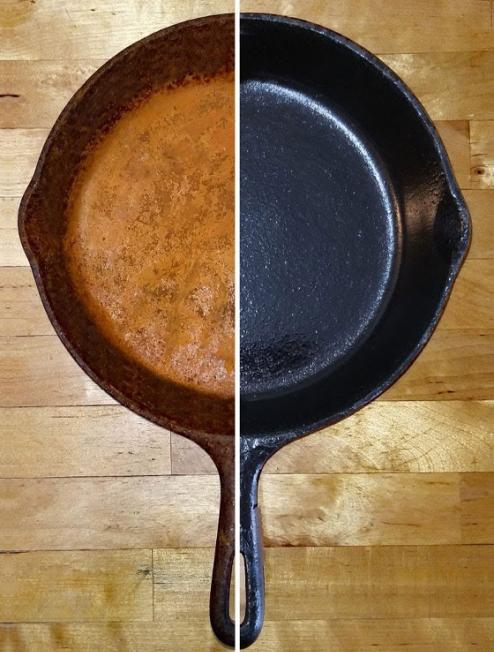
Find rust? Don’t panic. Most rust is easy to remove. Below are step-by-step guides I use myself.
How To Remove Surface Rust
- Scrub the pan: Use steel wool or a stiff brush to remove loose rust. Start with the least aggressive tool that works.
- Wash thoroughly: Rinse with warm water. Mild soap is okay if you need it. Rinse well.
- Dry completely: Wipe with a towel. Then heat on the stove or in the oven for a few minutes to evaporate any left water.
- Re-season: Rub a thin layer of oil (vegetable, canola, or flaxseed). Bake at 400°F (200°C) for 1 hour. Cool in the oven.
For stubborn spots, sprinkle coarse salt and scrub with a damp cloth. Salt is abrasive but gentle. If you lack steel wool, a halved potato plus salt can work in a pinch.
How To Remove Deep Rust
Deep rust needs more work. Here is a safe method I use for older pans.
- Soak in vinegar: Mix equal parts white vinegar and water. Soak 1–2 hours. Do not soak longer—vinegar can damage iron.
- Scrub hard: Use steel wool or a wire brush to remove loosened rust.
- Rinse and dry: Remove all vinegar and water. Dry thoroughly.
- Repeat if needed: For heavy rust, repeat the soak and scrub a few times.
- Re-season immediately: Dry, oil, and bake the pan after cleaning.
A non-obvious tip: Check the pan often during a vinegar soak. If you see bubbling or black residue, rinse and scrub right away. Over-soaking can roughen the surface. Always season as soon as the pan is clean.
Common Cleaning Mistakes
- Leaving water on the pan: Dry fully after washing.
- Using harsh chemicals: Avoid bleach and strong acids.
- Not seasoning after cleaning: Always oil the pan to protect it.
- Soaking too long in vinegar: This can harm the iron.
Another mistake: putting a hot, wet pan into a cabinet or stacking it. That traps steam and breeds rust. Let pans cool and dry before storing.
What If Rust Keeps Returning?
If rust keeps coming back, inspect how you wash and store pans.
- Store in a dry place: Avoid humid kitchens or damp cupboards.
- Do not stack pans with lids: Lids trap moisture.
- Re-season regularly: Wipe a thin layer of oil after each use.
In humid climates, I keep silica gel packs or a small cloth bag of rice in the cupboard. They absorb moisture and help stop rust.
Can You Cook With Rusty Cast Iron?
Many ask, “Is it safe to cook with a rusty pan?” The short answer: it depends on how much rust there is.
When It’s Safe
- Light surface rust: After cleaning and re-seasoning, you can cook safely.
- No flakes or deep pits: If rust is only surface-level and scrubbed off, the pan is fine to use.
When It’s Not Safe
- Heavy rust: Thick flakes or deep rust need restoration before use.
- Structural damage: If the pan is cracked or brittle, replace it.
Real Example
A home cook found orange spots after storing a skillet wet. She scrubbed the spots, re-seasoned, and used the pan safely. Food tasted normal. The pan looked good again. This is the typical case for most cooks.
Another example: a family bought an old yard-sale pan with thick rust and rough edges. They soaked it, scrubbed hard, then did three rounds of seasoning. The pan was restored. They fried chicken in it and loved the result.
How Much Rust Is Too Much?
Not all rust is equal. Use this simple guide.
| Rust Level | Appearance | Safe to Cook? | Recommended Action |
|---|---|---|---|
| Light surface rust | Small orange spots | Yes, after cleaning | Scrub and re-season |
| Moderate rust | Large patches, roughness | No, until restored | Soak, scrub, re-season |
| Deep rust | Flakes, pits, holes | No | Restore or replace |
| Structural damage | Cracked, brittle | No | Replace pan |
If unsure, try the “egg test.” Fry an egg with oil. If it sticks badly or has brown spots, the pan needs more work before regular use.
Preventing Rust On Cast Iron
Prevention beats repair. Here are practical steps I follow to keep pans rust-free.
- Dry after washing: Wipe dry and heat briefly to remove all moisture.
- Oil regularly: After each use, rub a thin layer of oil on the pan.
- Avoid soaking: Never leave cast iron in water.
- Cook often: Regular use builds seasoning and protects the pan.
- Store wisely: Keep pans in a dry spot. Hang them if you can.
- Avoid acidic foods: Limit long cooking of tomatoes or vinegar-heavy dishes in a thinly seasoned pan.
- Use gentle tools: Avoid metal scouring pads unless removing rust.
Non-obvious Insights
- Humidity matters: High kitchen humidity raises rust risk. Use moisture absorbers or silica gel packs in cupboards.
- Salt cleaning: For mild rust, scrub with coarse salt and oil. It is less abrasive than steel wool and very effective.
If you must stack pans, put a paper towel or cloth between them. It absorbs moisture and prevents scratches.
What If Your Cast Iron Is Old And Rusty?
Old pans with years of rust are often worth saving. Cast iron is strong. Most old pans can be restored with time and elbow grease.
Restoration Process
- Check for cracks: A cracked pan is not safe to use.
- Remove all rust: Use vinegar soaks, scrubbing, and repeat if needed.
- Season multiple times: Older pans may need several rounds of oiling and baking.
- Test cooking: Fry an egg. If it sticks, add another seasoning layer.
Restoring old cast iron can be very rewarding. Many collectors prize old pans for their thickness and heat retention. For very stubborn rust, some people use electrolysis or sandblasting at a machine shop. These advanced methods work well. Always re-season thoroughly after deep cleaning.
Cast Iron Vs Other Cookware: Rust Risk
Cast iron rusts more than stainless steel or nonstick pans. Here is a quick comparison.
| Cookware Type | Rust Risk | Care Required | Durability |
|---|---|---|---|
| Cast Iron | High | High | Very High |
| Stainless Steel | Low | Medium | High |
| Nonstick | Very Low | Low | Medium |
| Ceramic | Low | Low | Medium |
Cast iron needs more care but rewards you with great heat retention and flavor. Stainless steel may stain but rarely rusts. Nonstick pans are easy but wear out faster. With care, cast iron can outlast them all.
Credit: www.reddit.com
Practical Tips For Everyday Cast Iron Use
Use these simple habits to keep your pan in top shape.
- Use paper towels: After oiling, wipe off excess oil with a paper towel to avoid sticky build-up.
- Heat before storing: Heat the pan briefly after oiling to help oil bond to the metal.
- Cook fatty foods first: Bacon or sausage helps build seasoning fast.
- Avoid sudden temperature changes: Never drop a hot pan into cold water. It can crack.
- Don’t panic about small rust spots: Light rust is common. Clean and re-season, and your pan will be fine.
If you use a pan for both sweet and savory dishes, consider keeping two. One for savory (meats) and one for baking or sweet items. This avoids flavor transfer and helps each pan build a stable seasoning.
Relevant Amazon Products For Cast Iron Care
These tools and products can help you care for or restore cast iron.
- Lodge Seasoning Spray: Quick way to oil a pan after use.
- Steel Wool Pads: Use stainless steel wool pads for rust removal.
- Lodge Cast Iron Skillet: A reliable replacement if your pan is beyond saving.
- Cast Iron Scrubber: Stainless steel chainmail scrubbers clean without ruining seasoning.
- Moisture Absorber Bags: Keep in cupboards to prevent rust.
Search Amazon for Lodge, Utopia Kitchen, and Simple Houseware for trusted options. A cast iron cleaning kit can be a smart buy. Kits often include a scrubber, scraper, seasoning oil, and cloth.

Credit: www.yahoo.com
Expert Opinions And Research
Most experts agree rust on cast iron is not dangerous if you remove it and re-season the pan. The Wikipedia Cast Iron Cookware page notes rust is common but fixable. A well-seasoned pan is safe and healthy to use.
Some studies show cooking in cast iron can raise iron levels in food. That helps people with iron deficiency. But excess rust does not give useful iron. Professional chefs value cast iron for heat retention and flavor. They advise regular seasoning and quick cleaning.
Home cooks often worry more than needed. Small mistakes are easy to fix. Cast iron is forgiving if you follow simple care steps. I restore pans often. With time, you learn the small details that keep a pan in top form.
Frequently Asked Questions
Is It Safe To Eat Food Cooked In A Rusty Cast Iron Pan?
Light rust is not dangerous. Remove rust and re-season the pan before cooking. Large or deep rust can cause minor issues like stomach upset. Clean and restore the pan for safe use.
Can Rust Cause Poisoning Or Serious Health Problems?
Iron oxide (rust) is not poisonous in small amounts. Eating large quantities regularly could cause discomfort. For most people, occasional contact with rust is harmless.
How Can I Quickly Remove Rust From My Cast Iron Pan?
Scrub with steel wool or a stiff brush, rinse, dry, and re-season. For deeper rust, soak in a vinegar-water mix, scrub, and repeat. Always dry and season after cleaning.
What’s The Best Way To Prevent Rust On Cast Iron?
Dry your pan after each wash. Oil it often. Avoid soaking in water. Store in a dry place. Use the pan often—cooking builds seasoning and protects the surface.
Should I Replace My Cast Iron Pan If It Has Rust?
Replace only if the pan has deep rust, cracks, or structural damage. Light or moderate rust can usually be cleaned and restored. Cast iron can last for generations with good care.
Credit: www.lodgecastiron.com
Final Thoughts
Rust on cast iron is common. It is rarely dangerous. Most rust cleans off easily. With a little work you can restore the pan. A well-seasoned cast iron skillet is safe and useful. Keep your pan dry. Oil it often. Clean rust quickly and re-season. With this care, cast iron will serve you for years.
If you are new to cast iron, do not be discouraged by a little rust. Restoring a pan teaches you useful skills. Each time you re-season, your pan gets better. Cast iron is one of the most forgiving and rewarding tools in my kitchen.
Enjoy your cooking journey!