How to Clean a Rusty Cast Iron Skillet: Easy Restoration Guide 2026

I love cooking with cast iron skillets. They last for decades, heat evenly, and add a depth of flavor you don’t get from other pans. But if you own one, you’ve probably seen rust at least once. Maybe you left it wet, didn’t dry the rim, or stacked it in a slightly damp place. Suddenly the pan looks orange and rough instead of shiny and black. Don’t panic—rusty cast iron is almost never ruined. With the right approach, you can remove the rust, restore the surface, and get the pan back to performing even better than before.
In this practical, step-by-step guide I’ll show you how I clean a rusty cast iron skillet. I’ll cover tools, tested methods, common mistakes to avoid, and how to keep your skillet rust-free for years. Even if you’re new to cast iron, you’ll find clear, simple instructions that work.
Understanding Rust On Cast Iron
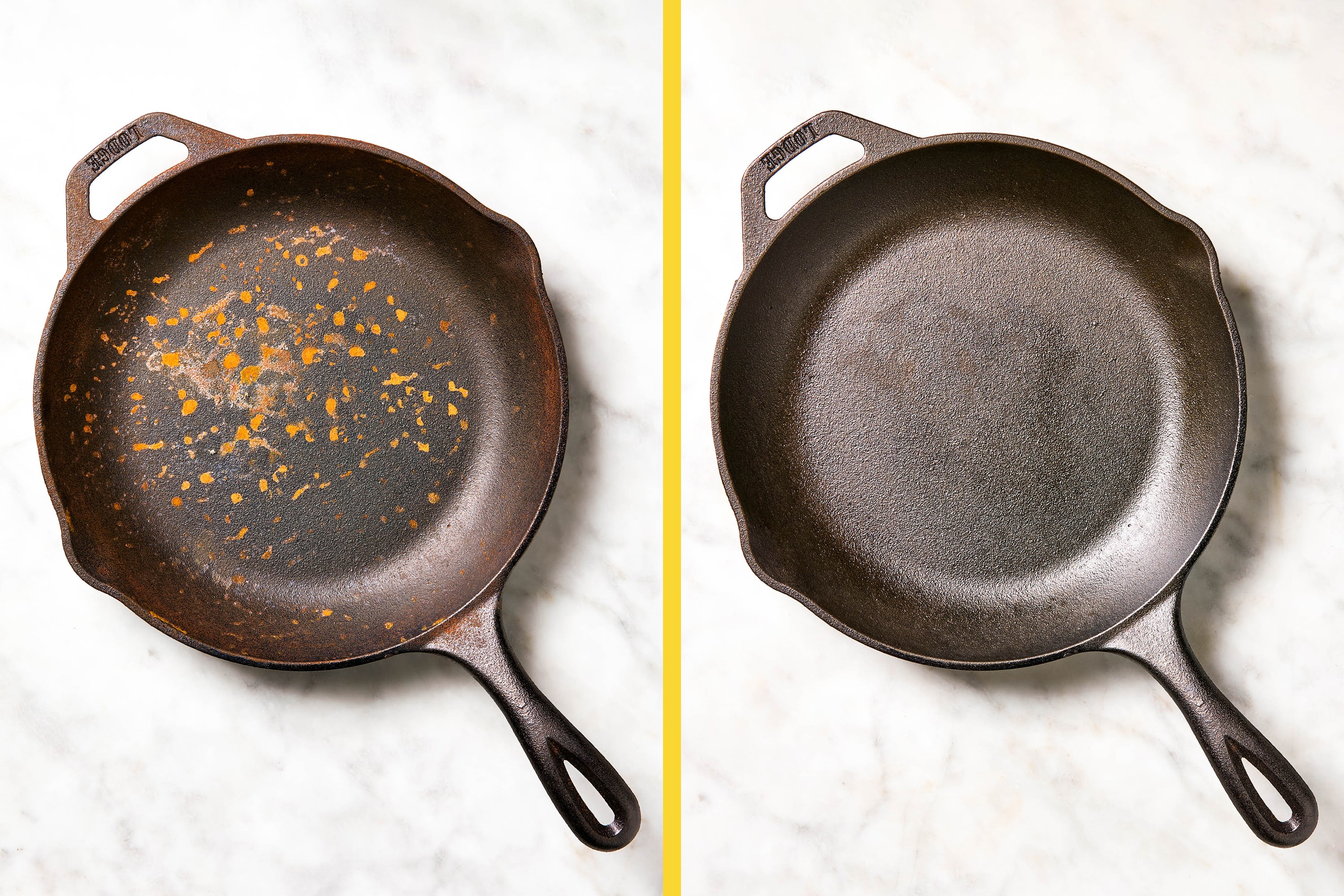
Rust forms when iron meets water and oxygen. Cast iron is durable but porous. That porosity lets moisture sit in tiny pits and seams. Leave the pan wet or store it somewhere humid and rust starts to grow. Sometimes you get a few small orange spots. Other times the whole surface turns rough and orange-brown.
A little rust is common, especially on pans you use often. If you ignore it, rust can deepen and damage the metal. That’s why it’s best to deal with rust as soon as you spot it.
Many people assume a rusty pan is ruined. It isn’t. Cast iron is tough. Even heavily rusted skillets—found in thrift stores or at yard sales—can come back to life with the right cleaning and re-seasoning.
Tools And Supplies You’ll Need
Cleaning a rusty skillet takes a few tools and common supplies. I keep these on hand and they cover almost every level of rust:
- Steel wool or a stiff scrub brush
- Mild dish soap (optional for heavy rust)
- Coarse salt (like kosher salt)
- Clean towels or paper towels
- Cooking oil (vegetable, flaxseed, or grapeseed oil)
- Aluminum foil (for tough spots)
- Baking soda (to neutralize acid and remove odors)
- Gloves (to protect your hands)
- Plastic scraper (optional, for thick rust or flaky seasoning)
Some people use white vinegar for heavy rust. Vinegar is helpful but must be used carefully—don’t soak too long. Avoid harsh chemicals like oven cleaner or strong acids; they can pit the iron or remove metal.
If you want to buy reliable tools, consider these from Amazon:
- Lodge Cast Iron Scrub Brush: Durable, shaped to fit the pan and easy to grip.
- Bar Keepers Friend Cleanser: Gentle powder that lifts rust and stains without aggressive acids.
- Lodge Seasoning Spray: Pure oil spray for quick, even seasoning after cleaning.
Safety and protective tips
Wear gloves when you use steel wool or chemical cleaners. If you’re sanding or using strong cleaners, work in a well-ventilated area. Protect countertops with towels and dispose of rusty residues responsibly. If you have old paint or unknown coatings on an antique pan, be cautious—burning paint or using aggressive chemicals can release fumes. When in doubt, research the pan’s history before using extreme methods.
How Bad Is The Rust? Assessing The Damage
Take a close look at your skillet. The amount of rust tells you which method to use. I check every surface: the cooking area, the sides, the bottom, and the handle.
| Rust Level | Appearance | Recommended Action |
|---|---|---|
| Light | Small orange spots or thin film | Scrub with salt, mild brush |
| Moderate | Patchy, rough, covers much of surface | Steel wool, soap, salt scrub |
| Heavy | Thick, flaky rust, dark orange-brown | Vinegar soak, heavy scrubbing, possible re-seasoning |
If you see deep pits or holes, the pan may be damaged beyond safe use. Most surface rust, though, can be removed and the pan restored.
Step-by-step: Cleaning A Rusty Cast Iron Skillet
Below is my tested process. Follow each step and you’ll restore the pan’s surface and protect it from future rust.
Step 1: Wash Away Loose Dirt And Rust
Start with warm water. Rinse the skillet and use a stiff brush or non-scratch pad to remove loose dirt and stuck food. You can use a little mild dish soap at this point. Soap won’t ruin the pan if you plan to re-season.
For small orange spots, try a salt scrub. Sprinkle coarse salt on the rusty areas and rub with a damp towel or brush. Salt is a gentle abrasive and works well on light rust.
Step 2: Remove Rust With Steel Wool
If rust remains, use steel wool. I prefer medium or fine grades (#00 or #0000). Rub in a circular motion. Press enough to remove rust but avoid gouging the metal.
No steel wool? A metal scouring pad or crumpled aluminum foil works. Scrub all areas—don’t forget the rim, handle, and bottom. Rust often hides where people don’t look.
Step 3: Tackle Heavy Rust With Vinegar Soak
For heavy, flaky rust, soak the skillet in a 1:1 solution of white vinegar and water. Use a container large enough to cover the pan. Check the pan every 30–60 minutes. Total soak time usually ranges from 1 to 8 hours. Do not soak longer—vinegar can start to dissolve iron and cause pitting.
After soaking, scrub with steel wool or a brush. Rinse immediately to stop the vinegar action. I like to sprinkle baking soda afterward to neutralize any leftover acid and remove odors.
Step 4: Rinse And Dry Thoroughly
Rinse away salt, vinegar, and debris with warm water. Dry the skillet with a clean towel. Then heat it on the stove over low heat or in the oven for a few minutes to remove hidden moisture. Cast iron must be fully dry. Any trapped water will invite rust to return.
Step 5: Apply Oil And Re-season
After cleaning, the pan will look dull and gray. That’s normal—seasoning was removed with the rust. To protect the metal, apply a thin layer of cooking oil (vegetable, canola, grapeseed, or flaxseed). Use a paper towel to spread oil over the inside, outside, handle, and bottom.
Wipe off any excess. The pan should look evenly shiny but not drippy. Too much oil causes a sticky surface.
Step 6: Bake To Build Seasoning
Place the oiled skillet upside-down in an oven preheated to 450°F (232°C). Put foil on the lower rack to catch drips. Bake for 1 hour. This high heat polymerizes the oil so it bonds to the iron and forms a hard, non-stick layer.
Let the skillet cool inside the oven. It’s ready to use, but seasoning improves with use. Cook fatty foods—like bacon or roasted potatoes—on your first few uses to help build the seasoning faster.
Credit: www.thekitchn.com
How To Avoid Common Mistakes
Some cleaning habits can harm your skillet or make rust return sooner. Avoid these mistakes:
- Don’t leave it wet. Dry immediately and heat briefly to remove hidden moisture.
- Don’t use harsh chemicals. Oven cleaner or strong acids can ruin the iron.
- Don’t soak in vinegar too long. Over-soaking causes pitting and weakens metal.
- Don’t skip seasoning. Bare iron rusts quickly without a protective layer.
- Don’t store with the lid on. Trapped moisture leads to new rust.
Non-obvious insight: Many people forget the skillet’s bottom and handle. Check and season all sides, not just the cooking surface.
How To Keep Your Cast Iron Rust-free
Prevention beats repair. Here’s a routine I follow to keep pans rust-free:
Dry Immediately After Washing
After washing—even if it’s just with water—dry the pan now. Wipe it, then place it on the stove over low heat for a few minutes. This clears hidden droplets from pores and seams.
Oil Lightly After Each Use
After drying, wipe a very thin layer of oil over the pan. You don’t need much—just enough to leave a faint sheen. This protects the metal from air and humidity.
Store In A Dry Place
Pick a dry shelf or cabinet. Avoid damp basements or under-sink storage. If you stack pans, put a paper towel between them to absorb any moisture.
Use Often
Regular use helps the seasoning build and prevents rust. The more you cook in cast iron, the better the non-stick finish becomes.
Avoid Acidic Foods At First
Tomato sauce, citrus, and vinegar-based foods can eat at a fragile seasoning. Wait until your pan has a few good seasoning layers before cooking very acidic dishes.
Non-obvious insight: If you live in a humid climate, store a small silica gel packet or a bit of dry rice inside the skillet when not in use. These absorb moisture and reduce the chance of rust.

Credit: www.youtube.com
Best Products For Cleaning And Caring For Cast Iron
Tools make the job easier. These products are popular with cast iron fans:
- Lodge Cast Iron Scrub Brush: Stiff-bristled, designed for cast iron. Removes stuck food and light rust without major damage.
- Bar Keepers Friend Cleanser & Polish: A gentle powder that lifts stains and light rust from metal.
- Lodge Seasoning Spray: Canola oil spray that gives a quick, even coat for post-cleaning seasoning.
- Chainmail Scrubber: Made from stainless steel rings, this cleans tough residues while preserving seasoning.
These tools are affordable and long-lasting. They help me keep pans in top shape with minimal fuss.
How Cast Iron Compares To Other Cookware In Rust Resistance
Wondering why cast iron seems to rust more than other pans? Here’s a short comparison:
| Cookware Type | Rust Resistance | Special Care Needed? |
|---|---|---|
| Cast Iron | Low (if unseasoned or wet) | Yes, must be dried and oiled |
| Stainless Steel | High | No, but may discolor |
| Enamel-Coated Iron | Very High (unless chipped) | No, unless coating is damaged |
| Aluminum | Does not rust, but can corrode | Occasional deep cleaning |
Cast iron gives unique heat retention and flavor, but it does need regular care to avoid rust.
Removing Rust From Cast Iron: Myths Vs. Facts
There’s a lot of advice online. Here are some common myths and the real facts I use when cleaning pans:
Myth: Never Use Soap On Cast Iron
Fact: Mild dish soap is fine, especially when you’re removing rust or old seasoning. It won’t harm the iron if you re-season afterward. Avoid harsh, strongly scented detergents or prolonged exposure to strong cleaners.
Myth: Rusty Pans Are Unsafe
Fact: Small amounts of rust are not usually dangerous. Rust is iron oxide—tiny amounts won’t poison you. Remove visible rust and re-season the pan. If rust has produced holes or deep pitting, retire the pan.
Myth: All Rust Must Be Removed
Fact: Remove as much rust as you can. After seasoning, tiny stains or color changes rarely affect cooking. The seasoning layers will cover small imperfections.
Myth: You Need Expensive Products
Fact: Most rust removal can be done with household items: salt, oil, vinegar, and baking soda. Special products help but aren’t required.
Pro tip: For more on the chemistry of rust and iron cookware, see Wikipedia’s cast iron cookware page.
How To Restore An Old, Neglected Skillet
Sometimes you find a skillet that looks hopeless—thick rust, black gunk, or even old paint. Restoring those pans takes time. I’ve revived several; patience and the right steps are key.
Remove Old Seasoning And Gunk
If the pan has sticky, built-up seasoning, you can use an oven’s self-cleaning cycle (only if the manufacturer says it’s safe). Another method is to heat the pan hot on a grill to burn off grease and old seasoning. This leaves bare iron to work with.
Remove Rust
Use the vinegar soak and scrubbing process described earlier. You may need to repeat soaking and scrubbing several times for heavy rust. Be patient and inspect the pan after each round.
Smooth The Surface
If the skillet feels rough after rust removal, use fine sandpaper (220 grit or higher) to gently smooth the surface. Work lightly—don’t remove too much metal. After sanding, wash, dry, and re-season.
Re-season Multiple Times
Old pans benefit from two or three seasoning cycles. Apply a thin coat of oil, bake at 450°F for an hour, cool, and repeat. Each pass adds a new polymerized layer and improves non-stick performance.
Troubleshooting: Common Problems And Solutions
Even careful work can run into issues. Here’s how I solve common problems:
Skillet Feels Sticky After Seasoning
Sticky seasoning means too much oil. Scrub lightly with coarse salt, wipe clean, and re-bake at a higher temperature for 30–60 minutes to cure off excess oil.
Black Flakes Come Off When Cooking
That’s peeling seasoning. Strip loose layers by scrubbing, then rebuild with several light seasoning cycles. Avoid applying heavy coats of oil at once.
Surface Feels Rough
A rough feel after rust removal is normal. Cooking and seasoning will smooth it over time. For faster smoothing, use fine sandpaper and then re-season.
New Rust Appears Quickly
Check that you dried the pan completely and applied a thin oil layer. Also inspect your storage spot—humidity can be the culprit. Add silica gel or a paper towel in the pan when storing.
The Science Behind Seasoning
Seasoning protects cast iron and gives it a non-stick surface. When oil is heated on iron, it goes through polymerization. The oil molecules change and bond to the metal, forming a hard, black layer called the seasoning layer.
Seasoning builds up gradually. Each time you cook with oil, you add another thin layer. That’s why well-used skillets often outperform new ones. When you remove rust, you remove seasoning too. That’s why re-seasoning is a crucial last step after cleaning.

Credit: www.souschef.co.uk
When To Replace A Cast Iron Skillet
Most rusty skillets can be saved. But sometimes a pan is beyond repair. Replace the skillet if you see:
- Large holes or cracks in the metal
- Deep pits that trap food and bacteria
- Warped or broken handle
If a pan shows these signs, it’s safer to buy a new one. A well-cared-for cast iron pan, though, can last for generations.
Quick Reference: Cleaning Steps Overview
Here’s the process in short form for easy reference:
| Step | What to Do | Tip |
|---|---|---|
| 1 | Wash and scrub with brush/salt | Use mild soap if needed |
| 2 | Scrub with steel wool | Cover all surfaces |
| 3 | Soak in vinegar for heavy rust | Don’t over-soak |
| 4 | Rinse and dry completely | Heat on stove to finish drying |
| 5 | Oil and re-season in oven | Bake at 450°F for 1 hour |
Keep this summary handy the next time you need to clean a rusty skillet.
Frequently Asked Questions
What Oil Is Best For Seasoning Cast Iron?
Good choices are vegetable oil, canola oil, and flaxseed oil. They have high smoke points needed to polymerize. Flaxseed oil can give a hard, glossy finish but costs more. Canola and vegetable oil are cheap and reliable. I often use grapeseed or canola for quick re-seasoning.
Can You Use Dish Soap On Cast Iron?
Yes. Mild dish soap is okay when you’re cleaning rust or old seasoning. Rinse well and re-season afterward. Avoid strong detergents or prolonged soaking in soapy water.
How Do You Fix A Sticky Cast Iron Surface?
Sticky seasoning means excess oil. Heat the skillet upside-down in the oven at 450°F for 30–60 minutes to cure off extra oil. Wipe clean and repeat if needed. Use very thin layers of oil for each seasoning cycle.
Is A Little Rust Dangerous?
Small amounts of rust are not usually dangerous. It’s mostly iron oxide, which is not harmful in tiny amounts. Still, remove visible rust and re-season to keep the pan safe and enjoyable to use.
How Do You Store Cast Iron Skillets To Prevent Rust?
Store in a dry place with a paper towel or cloth inside to absorb moisture. Don’t put a wet lid on top. In humid climates, add a silica gel packet or a small cup of dry rice inside the pan to reduce moisture. I also oil my pans lightly before long-term storage.
Cleaning a rusty cast iron skillet may feel like a big task, but it’s doable and rewarding. With the right tools and a bit of time, you can bring a pan back from near ruin. Care for it, and it will reward you with years—or decades—of excellent cooking. Whether you’re restoring a family heirloom or rescuing a thrift store find, these steps give you everything you need to bring your cast iron back to life.