Can You Season Cast Iron With Canola Oil? Expert Guide 2026

Can You Season Cast Iron With Canola Oil
If you love cooking with cast iron pans, you already know seasoning makes a huge difference. Seasoning creates a smooth, non-stick surface and protects the pan from rust. Many people ask: Can you season cast iron with canola oil? I use canola myself sometimes, so I’ll explain the science, share pros and cons, compare canola to other oils, and give a step-by-step method you can trust. By the end, you’ll know when canola is a good choice and how to get the best results.
What Is Cast Iron Seasoning?
Seasoning is not about adding spices. On cookware, seasoning means building a protective coating on the metal. You do this by heating oil on the pan. The oil changes chemically and bonds to the iron. This process is called polymerization. The result is a hard, dark patina that reduces sticking and blocks moisture.
A well-seasoned cast iron pan has:
- A shiny, black patina (finish)
- A smooth, almost non-stick surface
- Protection against rust and moisture
Without seasoning, cast iron rusts quickly and food sticks. Good seasoning takes time but pays off for decades.
How Does Seasoning Work?
When you rub a thin layer of oil on cast iron and heat it, the oil’s molecules change. Heat and oxygen cause the oil to polymerize. The oil becomes a hard, plastic-like film that sticks to the metal. Each cook adds tiny layers. Over time, those layers build a durable surface.
Polymerization happens best with oils that have unsaturated fats. Those fats react with heat and oxygen and form a strong bond. The right temperature and a thin, even coat are essential for a good result.
Why The Right Oil Matters
Not all oils give the same result. Some make a hard, smooth finish. Others turn sticky or flake off. An oil’s smoke point, fat makeup, and purity matter. They affect how well the oil polymerizes and how the finish holds up.
Common goals when choosing an oil:
- Easy to find and affordable
- High smoke point (to avoid burning during seasoning)
- Produces a hard, durable layer
- Neutral flavor and little odor
Canola oil is popular because it is cheap and common. It also has a fairly high smoke point. Still, you may wonder if it beats other options for long-term durability.
What Is Canola Oil?
Canola oil comes from the seed of the canola plant. It is a type of rapeseed selected for food use. The oil is light in color and mild in flavor. In the U.S., canola is one of the most used cooking oils.
Key features of canola oil:
- Smoke point: About 400°F (204°C)
- Mostly unsaturated fats (roughly 62% monounsaturated, 32% polyunsaturated)
- Mild, neutral flavor
- Inexpensive and easy to find
Because of these traits, many cooks use canola for frying, baking, and grilling. But how does it perform when building seasoning on cast iron?
Credit: www.reddit.com
Can You Season Cast Iron With Canola Oil?
Short answer: Yesrecommend it. Canola’s smoke point and its mix of unsaturated fats make it a solid option for polymerization and a reliable non-stick layer.
Like any choice, canola has trade-offs. Below I break them down so you can decide based on your needs.
Pros Of Using Canola Oil
- Affordable and accessible: Canola is in nearly every grocery store. It is budget-friendly, which helps if you need to season large or multiple pans.
- High smoke point: At around 400°F (204°C), canola can stand the high heat needed to polymerize without burning quickly.
- Neutral flavor: It leaves little to no scent or taste on your pan.
- Versatile: Works on new pans, older pans, and for touch-ups.
Cons Of Using Canola Oil
- Can turn sticky: If you apply too much or don’t wipe well, the surface can feel tacky.
- Less durable than some oils: Compared to flaxseed or high-oleic oils, the finish may not be as hard or long-lasting.
- Can break down with heavy use: With very frequent washing or acidic cooking, canola layers may need more frequent touch-ups.
The Science: Why Canola Oil Works
Canola oil has a high share of unsaturated fats. These fats more readily react with heat and oxygen. That reaction creates the polymerized coating we want. The oil’s smoke point is high enough for proper seasoning if you use the right oven temperature and a thin coat.
Canola does contain polyunsaturated fats. Those can make the final layer slightly softer than oils richer in monounsaturated fats. Still, with proper technique you can build a solid, even patina.
Here’s a simple comparison of common oils used for seasoning:
| Oil | Smoke Point (°F) | Fat Type | Seasoning Durability |
|---|---|---|---|
| Canola | 400 | Mono & Polyunsaturated | Good |
| Flaxseed | 225 | Polyunsaturated | Very hard, can flake |
| Grapeseed | 420 | Polyunsaturated | Hard, smooth |
| Vegetable | 400-450 | Varied | Good |
| Lard/Animal fat | 370-400 | Saturated | Classic, but can go rancid |
Step-by-step: How To Season Cast Iron With Canola Oil
If you pick canola, the method matters more than the brand. I have used canola for both factory-style seasoning and quick touch-ups. The key is very thin layers and high heat. Follow these steps for a clean finish.
What You’ll Need
- Clean, dry cast iron pan
- Canola oil (regular, not “light” or “blended”)
- Paper towels or a lint-free cloth
- Oven (or stovetop if oven is not available)
- Gloves or tongs (for handling hot pans)
- Aluminum foil (optional—place on lower rack to catch drips)
Instructions
- Clean the pan: Wash with mild soap and warm water. Remove rust, old layers, and food residue. Dry completely. Moisture causes rust and prevents bonding.
- Apply oil: Pour about a teaspoon of canola into the pan. Use a paper towel to buff a very thin, even layer across the inside, outside, and handle.
- Wipe off excess: This is crucial. Buff until the pan looks almost dry. Thick films cause sticky spots later.
- Heat the pan: Put the pan upside down in a preheated oven at 450°F (232°C). Place foil on the rack below to catch any drips.
- Bake for 1 hour: Let the oil polymerize fully. Good kitchen ventilation helps with any smoke or smell.
- Cool in the oven: Turn off the oven and let the pan cool inside. Cooling slowly helps avoid hot spots or warping.
- Repeat if needed: For a stronger finish, repeat steps 2–6 two or three times. Thin layers build the best patina.
Thin layers and high heat make the biggest difference. Don’t rush. If you follow this, expect a smooth, dark finish that improves with use.
Quick Tip
If the pan feels sticky after seasoning, bake it again at 450°F for 30–60 minutes. Sticky means some oil did not fully polymerize.
How Canola Oil Compares To Other Oils
Many oils work for seasoning. Results vary by oil type and technique. Below I offer short notes from my experience and from common practice.
Flaxseed Oil
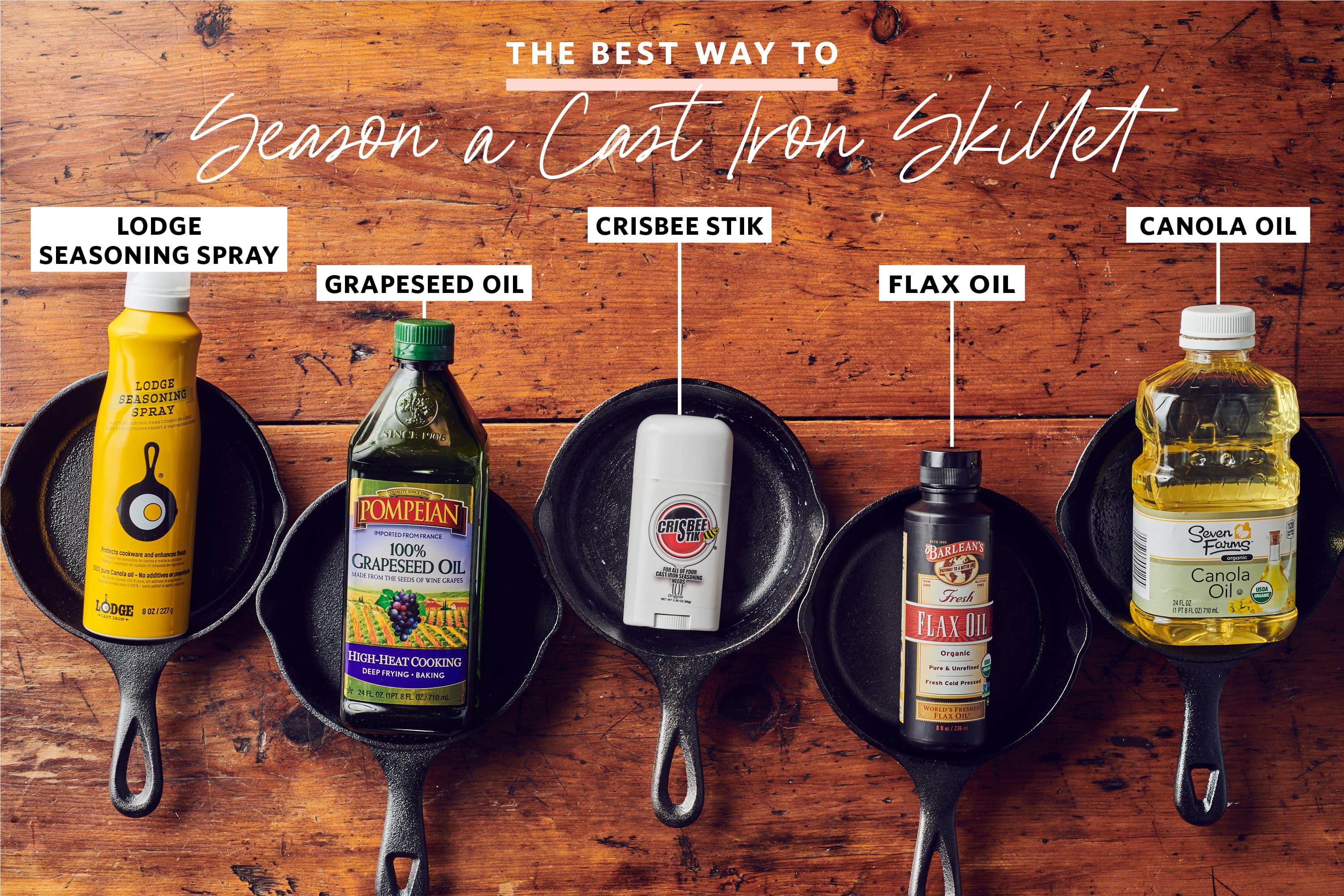
Flaxseed oil is often called the “best” for seasoning. It can form a very hard, durable finish. But it has a low smoke point and flakes if misapplied. It also costs more and can go rancid quickly. Use it only if you follow strict thin-layer steps.
Grapeseed Oil
Grapeseed has a high smoke point and makes a hard, smooth coating. It’s similar to canola but sometimes gives a slightly tougher finish. It costs more, though, and may not be available everywhere.
Vegetable Oil
Vegetable oil is a common, low-cost option. It often contains canola or soybean oil. It behaves much like canola for seasoning. It’s a practical choice for most cooks.
Animal Fats (lard, Bacon Grease)
Lard and bacon fat were traditional choices. They build a classic patina and work well. But they can go rancid if you store pans in humid places. The flavor can be strong if you use bacon grease.
Olive Oil
Olive oil has a low smoke point. It can burn during seasoning and leave sticky, uneven spots. I don’t recommend olive oil for full seasoning jobs.
Summary Table
A quick comparison can help you choose the best oil for your needs.
| Oil Type | Availability | Price | Best For | Drawbacks |
|---|---|---|---|---|
| Canola | Very High | Low | General seasoning | Can get sticky if too thick |
| Flaxseed | Medium | High | Super-hard finish | Can flake, expensive |
| Grapeseed | Medium | Medium | Hard, smooth finish | Price |
| Lard/Bacon Grease | Medium | Low | Classic taste | Can go rancid |
| Vegetable | Very High | Low | General seasoning | Varies by blend |
Common Mistakes When Seasoning With Canola Oil
Even though canola works, a few mistakes ruin the result. Avoid these common pitfalls:
- Using too much oil: Always wipe until the pan looks almost dry.
- Not heating hot enough: Seasoning at 350°F is too low for canola. Aim for 450°F.
- Skipping cleaning: Dirt, rust, or old layers stop the new coat from bonding well.
- Uneven coating: Avoid puddles or thick spots.
- Rushing between coats: Let each layer cool before adding another.
- Storing pan damp: Even a well-seasoned pan will rust if stored wet.
How Long Does Canola-seasoned Cast Iron Last?
A well-seasoned pan can last decades. With canola, layers may need touch-ups more often than with some other oils. Touch-ups vary by use. You may re-season every few months if you:
- Use soap often
- Cook acidic foods (like tomato sauce)
- Scrub with abrasive pads
- Store in humid environments
Regular cooking with a little oil helps maintain and build the patina. If the finish dulls or becomes sticky, re-season.
Credit: www.thekitchn.com
Canola Oil For Daily Cooking Vs. Seasoning
People sometimes worry about canola being processed. For daily cooking, it’s fine. It works well for frying and baking. For seasoning, remember most oil either bonds to the pan or burns off. Only a thin polymer layer remains.
You can use one oil for cooking and another for seasoning if you prefer. Many cooks do this. I often cook with canola and use a neutral oil for touch-ups.
Does Canola Oil Affect The Taste Of Food?
Canola’s neutral flavor is an advantage. When you season correctly, you should not taste canola in pancakes, eggs, or stir fry. If you do, it likely means too much oil was left on the pan or the oil did not fully polymerize. Re-bake the pan at high heat to finish the process.
Credit: www.thekitchn.com
When Should You Not Use Canola Oil?
Canola is a good all-purpose choice, but you may choose another oil in these cases:
- If you want a super-hard, glossy finish (flaxseed or grapeseed may be better)
- If you want to avoid processed oils for personal or health reasons
- If you have a canola allergy (rare, but possible)
Otherwise, canola is safe and effective for most cooks. I use it when I want a quick, reliable seasoning without extra cost.
Tips For Better Results With Canola Oil
- Use the thinnest layer possible: More is not better. Thick layers become sticky.
- Season at high heat: 450°F (232°C) works well for canola oil.
- Repeat multiple times: Three thin coats usually beat one thick coat.
- Use good ventilation: Seasoning can create smoke or mild odors.
- Maintain seasoning: Cook with a little oil regularly and avoid long soaks in water.
Real-world Examples
Many big cast iron brands, like Lodge, use vegetable oil blends similar to canola for factory seasoning. That shows canola-like oils are trusted at scale.
In my kitchen, I restored an old skillet with canola. After cleaning and three coats at 450°F, it looked black and smooth. Eggs slid right off. With weekly use, the pan kept improving.
What If Your Seasoning Fails?
Even with care, seasoning sometimes goes wrong. Here’s what to do:
- Sticky surface: Bake at 450°F for another 30–60 minutes to finish polymerization.
- Patchy or flaking: Scrub away loose bits, clean well, then start the seasoning steps again.
- Rust: Remove rust with steel wool or a wire brush, dry, then re-season immediately.
Most failures come from too much oil or not enough heat. Fix those and the finish will improve quickly.
Environmental And Health Aspects
Canola is plant-based and generally safe. Most canola on shelves is refined and may be GMO. The FDA approves it. If you want to avoid GMOs, buy organic or non-GMO labeled oil.
From a nutrition view, canola is low in saturated fat and contains omega-3s. For seasoning, nutrition matters less because most of the oil either bonds or burns off.
If you want a greener option, choose organic canola or another plant oil with a favorable footprint.
Recommended Amazon Products
If you want to season your cast iron with canola oil, here are some top-rated products on Amazon:
- Wesson Canola Oil – Trusted brand, available in various sizes.
- 365 by Whole Foods Market Canola Oil – Organic option for those who prefer non-GMO.
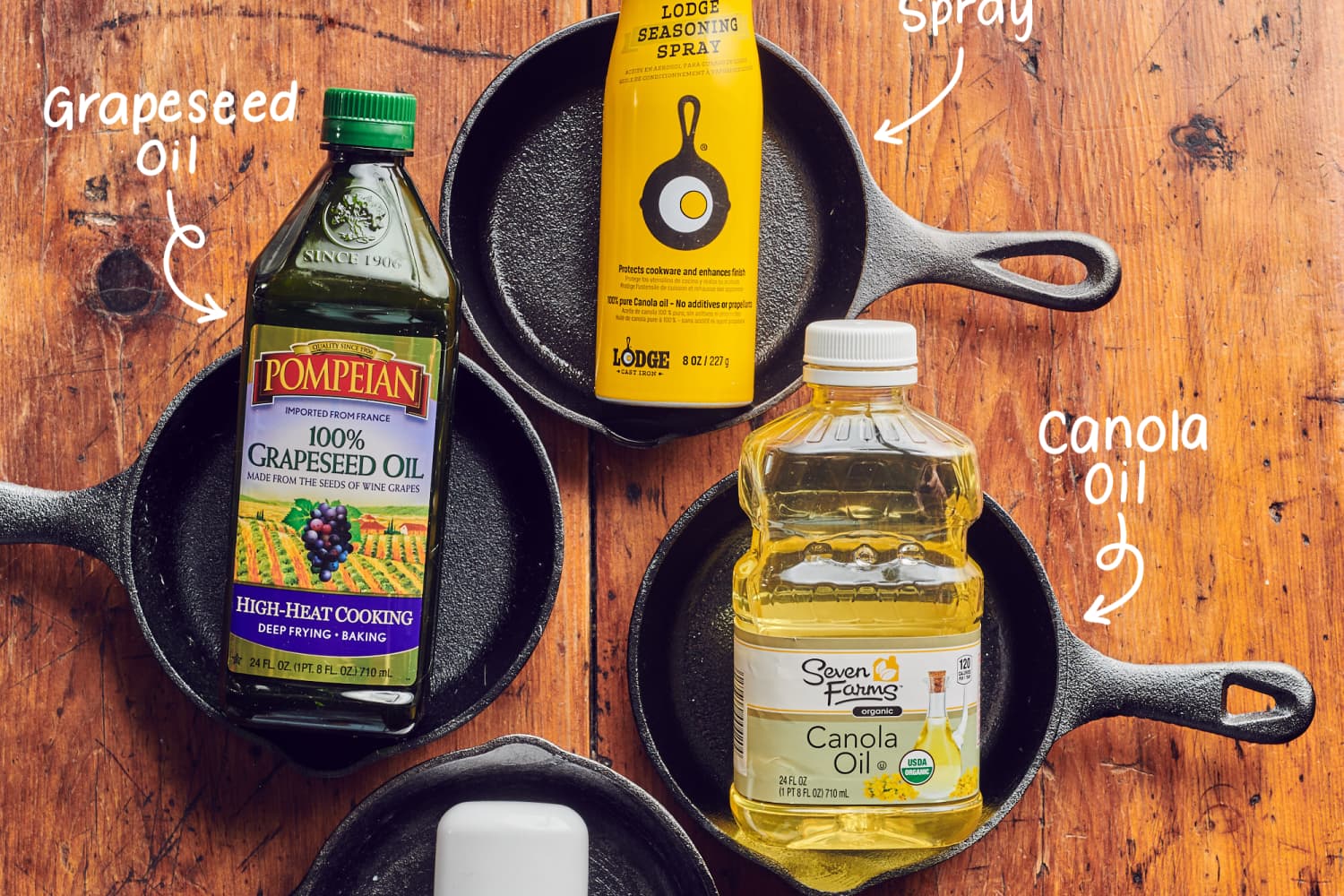
- Lodge Seasoning Spray – Easy-to-use spray made from canola oil for convenient application.
You can also find cast iron seasoning kits that include oil and cleaning tools.
How To Care For Your Seasoned Cast Iron
After seasoning, care is simple and quick:
- Wash with warm water (avoid soap for daily cleaning when possible).
- Dry immediately with a towel or dry on low heat.
- Wipe a small drop of canola oil after each use for extra protection.
- Store in a dry place with airflow. Avoid stacking damp pans.
If food sticks, rub coarse salt and a paper towel to scrub. Do not use the dishwasher. It strips seasoning fast.
Seasoning Frequency
How often to re-season with canola depends on use. Heavy use or frequent cleaning may need re-seasoning every few months. Light use might need touch-ups once or twice a year.
Signs your pan needs re-seasoning:
- Food sticks more than usual
- Finish looks dull or gray
- Rust spots appear
Regular maintenance keeps your pan ready for generation after generation.
Myths And Misunderstandings
Some cooks think only animal fat or flaxseed work. In reality, most unsaturated oils—including canola—work well if you use the right method. Technique is more important than brand.
Another myth is that seasoning adds a thick, greasy layer. Good seasoning is very thin and bonded to the metal. It is not a loose, greasy film.
Helpful Resources
For more tips on cast iron care and seasoning oils, check out the Cast Iron Cookware Wikipedia page. It gives useful background and links to further reading.
Frequently Asked Questions
Can You Use Canola Oil For Both Seasoning And Cooking?
Yes. Canola oil works well for both. It has a high smoke point for frying and makes good seasoning layers if you apply them thinly. Many home cooks use one oil for both tasks.
Why Did My Cast Iron Turn Sticky After Using Canola Oil?
Sticky seasoning usually means too much oil or not enough heat. Wipe off excess oil next time. Re-bake the pan at 450°F for an hour to finish polymerization.
How Often Should I Re-season With Canola Oil?
It depends on use. Most pans need re-seasoning every few months with frequent washing or acidic cooking. Light use may only need touch-ups once or twice a year.
Is Canola Oil Safe For Seasoning If I Have Allergies?
Allergies to canola are rare. If you have one, choose another oil like grapeseed or vegetable oil. Always read labels in case of cross-contamination.
What’s The Best Way To Store A Canola-seasoned Cast Iron Pan?
Store in a dry place with good airflow. After washing, dry completely and wipe a thin coat of canola oil to prevent rust. If you stack pans, place a paper towel between them to absorb moisture.
A well-seasoned cast iron pan is one of the most useful tools in any kitchen. With canola oil, you can build a smooth, non-stick finish that stands up to daily cooking. Remember: thin layers, high heat, and regular care are the keys. With the right technique, your cast iron will last a lifetime.
With the right technique, your cast iron will last a lifetime.