How Long Should Calphalon Cookware Last: Expected Lifespan

Calphalon cookware can last about 3 to 10 years, depending on the type, heat, care, and how often you use it in a U.S. kitchen. Some stainless steel Calphalon pans may last for decades. Nonstick pans usually have a shorter service life, even when they are well cared for.
There is no single lifespan for every Calphalon product. A daily-use nonstick skillet may wear out in a few years, while a stainless steel stockpot may remain useful for much longer.
The best measure is not age alone. Check the cooking surface, coating, handles, base, and overall safety.

Typical Calphalon Cookware Lifespan by Type
The material and coating have the greatest effect on how long Calphalon cookware lasts.
| Calphalon cookware type | Typical useful life | Main factor |
|---|---|---|
| Nonstick cookware | 3–5 years | Coating wear and heat exposure |
| Hard-anodized nonstick cookware | 4–8 years | Coating care and cooking frequency |
| Stainless steel cookware | 10–25+ years | Warping, handles, and corrosion |
| Ceramic-coated cookware | 2–5 years | Loss of easy-release performance |
| Enameled cookware | 5–15+ years | Chips, cracks, and surface damage |
These ranges are practical estimates, not promises from Calphalon. The company does not publish one guaranteed service life for every pan and pot.
A nonstick pan used every day may wear sooner than a pan used once a week. A stainless steel pot used gently may outlast several generations of nonstick cookware.
Why nonstick cookware wears faster
A nonstick coating sits on top of the pan. It can lose its release quality before the pan body becomes damaged.
High heat, metal tools, abrasive cleaners, dishwasher cycles, and sudden temperature changes can speed up this process. The pan may still look usable, but food may begin to stick more often.
Why stainless steel lasts longer
Stainless steel does not depend on a soft surface coating. It can tolerate more heat and more types of utensils.
It may still develop stains, scratches, discoloration, or a warped base. These issues often affect appearance or heating rather than making the pan unusable.
What Affects the Life of Calphalon Cookware?
The biggest lifespan factors are heat, tools, cleaning, storage, and use.
Heat
Excessive heat is one of the fastest ways to damage nonstick cookware. High heat can weaken the coating and may cause food residue to bake onto the surface.
Use low to medium heat for most nonstick cooking. Preheat the pan briefly, then add oil or food. Do not leave an empty nonstick pan over a hot burner.
Follow the exact oven temperature listed for your Calphalon model. Handles, lids, coatings, and bonded parts may have different limits.
Cooking tools
Use wood, silicone, or other utensils approved for nonstick cookware. Avoid sharp metal edges, forks, knives, and tools that can scrape the surface.
A small surface mark may not end the pan’s life at once. Many deep scratches, flakes, or exposed areas are a reason to replace it.
Cleaning
Let cookware cool before washing it. A hot pan placed under cold water can experience thermal shock, which may contribute to warping.
Wash nonstick cookware with warm water, mild dish soap, and a soft sponge. Avoid steel wool, scouring powder, and rough scrub pads unless the care instructions for your exact model allow them.
Dishwasher use varies by Calphalon line. Even when a pan is labeled dishwasher-safe, repeated dishwasher cycles may shorten the cosmetic and functional life of some cookware. Hand washing is usually the gentler choice for nonstick surfaces.
Storage
Do not toss pans into a cabinet where they can strike one another. Stack them with a soft cloth, pan protector, or clean towel between surfaces.
Hanging cookware can help prevent scratches. Keep lids from rubbing against the cooking surface.
Frequency of use
Daily cooking creates more heating, cooling, washing, and handling cycles. A pan used several times each week will normally show wear before one used only for occasional meals.
This does not mean heavy use is unsafe or improper. It means frequent use makes regular inspection more important.
How to Tell When Calphalon Cookware Needs Replacing
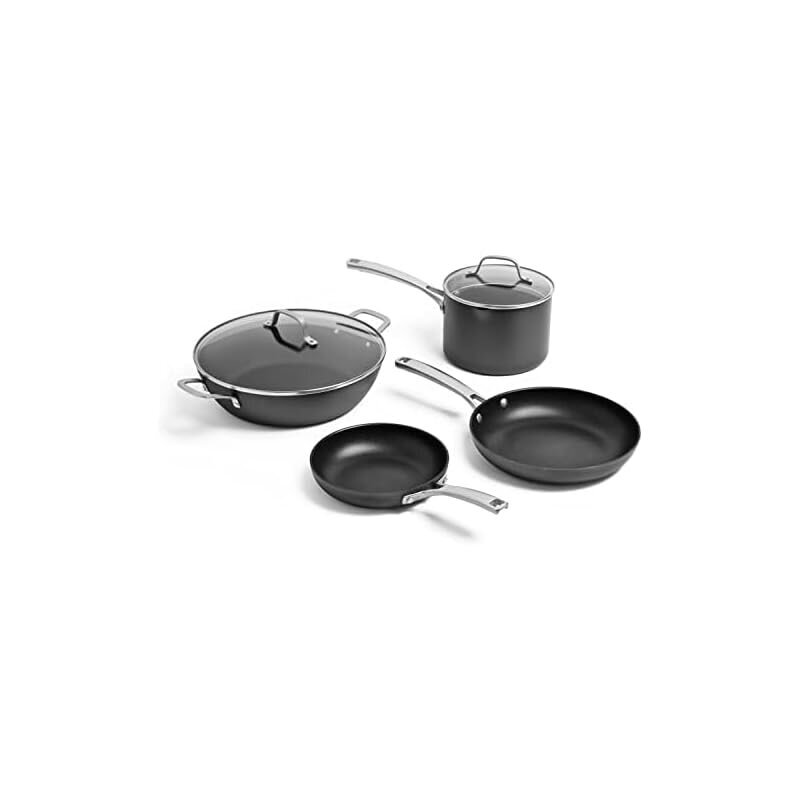
Replace a Calphalon pan when the cooking surface is damaged, the pan no longer heats evenly, or a structural part becomes unsafe.
Look for these signs:
- Flaking, peeling, or bubbling nonstick coating
- Deep scratches across the cooking surface
- Food sticking badly despite proper cleaning and moderate heat
- A base that rocks on a flat surface
- A loose, cracked, or badly damaged handle
- A lid that no longer fits safely
- Cracks in a ceramic or enamel surface
- Severe corrosion or pitting
- Smoke or a strong odor during normal use
- A pan that has become visibly warped
A few light scratches do not always mean immediate failure. The key question is whether the surface is stable and whether the pan still cooks safely.
Is scratched nonstick cookware safe?
Calphalon’s care and warranty guidance should control for the exact product. As a general safety rule, replace nonstick cookware when the coating is peeling, flaking, or shedding into food.
Do not scrape off loose coating. Do not sand the surface. Do not try to repair a damaged cooking coating with paint, spray, or another household product.
If you see only a light mark, stop using metal utensils and watch the area. If the mark grows or the coating lifts, retire the pan.
Is discoloration a reason to replace a pan?
Usually, discoloration alone is not a reason to replace stainless steel cookware. Heat tint, rainbow marks, and dull areas are common.
Discoloration on nonstick cookware may also be cosmetic. However, a rough, blistered, or peeling surface is different. Replace the pan if the coating has changed texture or begins to come away.
Is a warped pan still usable?
A slightly uneven pan may still cook, but it can heat unevenly and wobble on the burner. A warped pan is more likely to move when you stir or turn food.
If the pan rocks, has a visible gap on a flat surface, or no longer sits securely on the cooktop, replacement is the safer choice.

How to Make Calphalon Cookware Last Longer
You can often extend the life of Calphalon cookware with a few simple habits.
For nonstick pans
- Use low or medium heat for routine cooking.
- Avoid preheating an empty pan for a long time.
- Use silicone, wood, or soft plastic utensils.
- Wash by hand with mild soap when practical.
- Let the pan cool before washing.
- Do not cut food inside the pan.
- Store pans with protection between them.
- Keep cooking sprays to a minimum if they leave a sticky film.
- Follow the oven limit for the exact model.
- Replace the pan if the coating peels or flakes.
Cooking sprays can leave residue that builds up on some nonstick surfaces. Oil, butter, or another cooking fat may be easier to remove, but use only the amount your recipe needs.
For stainless steel pans
Stainless steel needs a different care routine.
- Preheat gradually.
- Add oil after the pan is warm, but not smoking.
- Let food form a crust before trying to move it.
- Soak stuck-on food instead of scraping hard.
- Use a stainless steel cleaner only if the product instructions allow it.
- Dry the pan after washing to reduce water spots.
- Avoid rapid temperature changes.
Stainless steel can handle more cleaning force than nonstick cookware, but repeated abuse can still scratch the surface or damage the finish.
For glass lids and handles
Inspect lids and handles from time to time. A loose screw may be repairable if the model supports replacement hardware.
Do not use cookware with a cracked glass lid. Do not continue using a pan if its handle becomes loose and cannot be secured.
Calphalon product lines differ. Check the model number and the care instructions before using a lid in the oven or placing a handle near a broiler.

Calphalon Warranty and Product Replacement
A warranty can help with a manufacturing defect, but it is not the same as a promise that cookware will last for a certain number of years.
Calphalon warranty terms vary by product line, material, purchase date, and region. Some cookware has limited warranty coverage, while normal wear may be excluded.
Normal wear can include:
- Loss of nonstick performance
- Minor scratches
- Cosmetic discoloration
- Stains
- Damage from misuse
- Damage from overheating
- Damage from abrasive cleaning
- Damage from commercial or improper use
Before making a warranty claim, gather:
- The exact product name or model
- Proof of purchase, if available
- Purchase date
- Photos of the damage
- A clear description of how the pan was used
- The retailer and location where you bought it
Use the official Calphalon warranty page or contact Calphalon customer support for the current terms. Do not rely on a warranty summary from an online marketplace, an old package, or a third-party seller.
A warranty claim may help when a handle fails or a pan shows an unusual manufacturing problem. It usually will not restore an old nonstick surface that has reached the end of its normal working life.

Should You Repair or Replace Calphalon Cookware?
Repair may make sense for a loose handle or missing small hardware. Replacement is usually better for damaged cooking surfaces, badly warped pans, and cracked lids.
Repair may be reasonable when:
- The pan body is flat.
- The cooking surface is intact.
- The handle is loose but not cracked.
- The manufacturer offers suitable replacement parts.
- The repair does not involve repainting or recoating the cooking surface.
Replacement is usually better when:
- The nonstick coating peels or flakes.
- The pan has a deep dent.
- The base rocks on the stove.
- A handle is cracked or cannot stay tight.
- A glass lid is cracked.
- The cooking surface has deep pits or corrosion.
- The pan produces smoke during normal use.
Do not attempt to recoat a nonstick pan at home. Household coatings are not a safe substitute for a factory-applied cooking surface.
For a pan with a small handle problem, check Calphalon support before discarding it. A replacement part may be available for some models, but compatibility must be confirmed.

How Long Should You Keep Calphalon Nonstick Cookware?
Keep Calphalon nonstick cookware as long as the coating remains smooth, stable, and useful. For many homes, that means roughly 3 to 5 years with regular use.
A well-maintained hard-anodized nonstick pan may last longer, often around 4 to 8 years. These are not fixed deadlines. A pan used daily on high heat may last less than three years, while a lightly used pan may remain serviceable beyond five years.
Replace it sooner if:
- Food sticks across most of the surface.
- The coating is lifting.
- You see flakes in food.
- The surface feels rough or blistered.
- The pan is warped.
- The handle is unsafe.
Do not keep a pan only because it has not reached a certain age. Condition matters more than the calendar.
How Long Should Calphalon Stainless Steel Cookware Last?
Calphalon stainless steel cookware can last 10 to 25 years or more with normal home use. Some pieces may last much longer because stainless steel has no nonstick coating to wear away.
The most common reasons to replace stainless steel cookware are structural:
- A badly warped base
- A broken or unsafe handle
- A cracked lid
- Severe corrosion
- A damaged bonded base
- A pan that no longer sits safely on the cooktop
Stains and rainbow marks usually do not mean the pan has failed. Clean the surface according to the product instructions and inspect it for cracks, pits, and loose parts.
If you want the longest service life, stainless steel is usually a better choice for high-heat tasks and cookware that you hope to keep for many years. Nonstick is often more convenient for eggs, pancakes, and delicate foods, but it normally needs earlier replacement.
Common Mistakes That Shorten Cookware Life
Several habits can damage Calphalon cookware faster than normal use.
Using high heat for every meal
High heat is not needed for most cooking. It can burn food, increase sticking, and damage nonstick coatings.
Heating an empty nonstick pan
An empty pan can heat very quickly. Add food or fat soon after preheating, and never leave the pan unattended.
Using metal tools
A metal spatula may seem harmless, but sharp edges can score a nonstick surface. Use a soft tool instead.
Washing a hot pan in cold water
This rapid temperature change can contribute to warping. Allow the pan to cool first.
Stacking pans without protection
Repeated contact can create scratches. Use a cloth or pan protector between stacked pieces.
Assuming every Calphalon line has the same care rules
Calphalon has produced several cookware lines with different materials, coatings, handles, lids, and oven limits. The instructions for one product may not apply to another.
Find the model name or number on the packaging, receipt, product base, or original manual. Then follow the instructions for that exact item.
Frequently Asked Questions
Can Calphalon cookware last 20 years?
Yes, some stainless steel Calphalon cookware can last 20 years or more with proper care. A nonstick pan is less likely to last that long because its coating can lose performance much sooner.
Does Calphalon cookware need to be replaced after five years?
No. Five years is not a universal replacement deadline. Replace cookware when it becomes unsafe, damaged, badly warped, or no longer performs well.
Can I put Calphalon nonstick cookware in the dishwasher?
Some Calphalon products may be labeled dishwasher-safe, but the exact rule depends on the line and model. Check the product instructions. Hand washing is often gentler and may help preserve the finish.
Can I use metal utensils with Calphalon cookware?
Avoid metal utensils on nonstick and ceramic-coated cookware unless the exact product instructions clearly allow them. Wood and silicone tools are safer choices.
Does peeling nonstick coating mean I should throw the pan away?
Yes. If the coating is peeling, flaking, or shedding, stop using the pan and replace it or contact Calphalon about warranty coverage.
Is Calphalon cookware worth replacing with stainless steel?
Stainless steel may be a better long-term choice for high heat and long service life. Nonstick may still be useful for delicate foods and easy cleanup. Many kitchens use both types for different tasks.
Final Answer: How Long Does Calphalon Cookware Last?
Calphalon cookware usually lasts 3 to 10 years, depending on its material and care. Nonstick cookware often lasts about 3 to 5 years, while hard-anodized nonstick cookware may last 4 to 8 years. Stainless steel pieces can last 10 to 25 years or longer.
Inspect the surface and structure rather than relying only on age. Use moderate heat, soft utensils, gentle cleaning, and protected storage. If the coating peels, the pan warps, or a handle becomes unsafe, replace the cookware or check the official Calphalon warranty for your exact model.
The next practical step is simple: find the model name, inspect the cooking surface and handles, and compare the condition with the care and warranty instructions for that product.