How Long Does Caraway Cookware Last: Lifespan And Care Guide

Caraway cookware usually lasts about one to three years of regular use before its ceramic nonstick coating may begin to lose performance. With low to medium heat, gentle utensils, hand washing, and proper storage, some pieces can remain useful for several years. Heavy heat, metal tools, dishwasher cycles, and rough stacking can shorten that time.
The pan body may last much longer than the coating. In many cases, the ceramic surface wears out first while the aluminum body remains intact. Caraway does not promise one fixed service life because use, care, heat, and storage all affect durability.
This guide focuses on Caraway cookware sold and used in the United States. It explains what lasts, what causes wear, how to tell when a pan is near the end of its useful life, and whether it is worth replacing.

What Determines How Long Caraway Cookware Lasts?
The ceramic coating, not the metal body, usually sets the practical lifespan of Caraway cookware. Caraway pans use an aluminum body with a ceramic nonstick cooking surface. Aluminum can remain sound for many years, but the coating can lose its release, become stained, or develop visible wear sooner.
Four factors have the greatest effect:
- Heat: High heat can break down nonstick performance.
- Utensils: Metal tools can scratch or chip the coating.
- Cleaning: Harsh scrubbing and dishwasher use can speed up wear.
- Storage: Stacking pans without protection can cause surface scratches.
Caraway’s care and cleaning guidance recommends hand washing and using low to medium heat. The company also advises using wood, silicone, or plastic utensils rather than metal tools.
The coating and the pan body have different lifespans
A pan can be physically intact but no longer work well as a nonstick pan. For example, the handle may remain firm and the base may sit flat, but eggs may begin to stick across the cooking surface.
This difference matters when deciding whether a pan is “worn out.” A small stain does not always mean the pan is unsafe or unusable. A peeling, flaking, or deeply damaged coating is a stronger reason to stop using it.
A realistic lifespan range
There is no widely accepted, Caraway-specific laboratory test that predicts an exact number of years in a home kitchen. The following ranges are practical estimates, not guarantees:
| Use pattern | Likely coating life | What usually causes the result |
|---|---|---|
| Light use, careful hand washing | 3–5 years or more | Low heat and limited abrasion |
| Regular daily use | About 1–3 years | Repeated heating, cooking, and washing |
| Heavy daily use | About 1–2 years | More heat cycles and frequent cleaning |
| High heat or rough use | Less than 1 year is possible | Coating stress, scratches, or loss of release |
These ranges describe expected nonstick performance, not the guaranteed life of the metal pan. Some users may get longer service. Others may see problems much sooner.

How Long Does Caraway Ceramic Nonstick Coating Last?
Caraway’s ceramic nonstick coating often performs best during the first period of use. Over time, the surface may become less slippery even when it looks clean and intact. This change is normal for many ceramic-coated pans.
Ceramic nonstick coatings do not work in exactly the same way as traditional PTFE coatings. Their performance depends on a thin surface layer that can lose release through heat, residue, abrasion, and repeated cooking cycles.
Signs that the coating is wearing down
Watch for these changes:
- Food sticks in spots that used to release easily.
- Eggs or pancakes need more oil than before.
- The surface looks dull rather than smooth.
- Brown or gray areas remain after normal cleaning.
- Small scratches become visible.
- Food begins to stick around the center or sides of the pan.
- The coating starts to blister, chip, or peel.
A change in food release is often the first practical sign. Staining alone does not prove that the coating has failed.
When reduced nonstick performance may have another cause
Food can stick because of residue, not only because of coating wear. Oils can form a thin baked-on film after repeated heating. That film may make the surface feel rough and reduce release.
Before replacing the pan, wash it by hand with warm water, mild dish soap, and a soft sponge. Do not use steel wool or abrasive powder. If the pan still sticks after careful cleaning and normal heat, the coating may be near the end of its useful life.
Does ceramic cookware lose its nonstick ability faster?
Ceramic nonstick cookware can lose its easy-release performance faster than many people expect, especially under high heat. The word “ceramic” does not mean the surface is solid ceramic or immune to wear. It describes the type of coating used on the cooking surface.
The practical lesson is simple: treat Caraway cookware as a low-to-medium-heat pan. Do not use high heat to preheat an empty pan, sear for long periods, or burn off stuck food.

How to Make Caraway Cookware Last Longer
The best way to extend Caraway cookware life is to reduce heat and abrasion. Gentle use protects the coating more effectively than trying to restore it after damage occurs.
1. Use low to medium heat
Start on low or medium heat and increase it only when needed. Ceramic cookware often heats quickly, so high heat may be unnecessary.
Avoid leaving an empty pan over a hot burner. An empty pan can heat very fast, which may stress the coating and cause smoke or discoloration.
For gas stoves, keep the flame under the base. Flames that rise along the sides can heat the walls and handles more than intended.
2. Choose safe utensils
Use:
- Silicone utensils
- Wood utensils
- Nylon or other heat-safe plastic utensils
Avoid metal spatulas, forks, whisks, and knives. A single deep scratch can create a weak spot that grows with repeated use.
Do not cut food inside the pan. Move food to a cutting board before slicing it.
3. Wash by hand
Let the pan cool before washing it. Placing a very hot pan under cold water can create thermal shock and may contribute to warping.
Use warm water, mild dish soap, and a soft sponge. If food is stuck, soak the pan rather than scraping hard.
Caraway’s product care guidance recommends hand washing. Even when a product listing or user report suggests that a pan survived the dishwasher, repeated dishwasher exposure can still increase heat, detergent, and abrasion stress.
4. Store pans with space between them
If you stack Caraway pans, place a soft pan protector, towel, or other suitable barrier between pieces. Do not slide one pan across another.
Keep lids from striking the cooking surface. Store them in a way that prevents hard contact with the pan interior.
5. Use enough fat for delicate foods
Ceramic nonstick cookware still benefits from a small amount of oil or butter. A little fat can improve release and reduce the need to scrape the pan.
Avoid cooking sprays that contain propellants or additives that may leave a sticky film. If you use spray oil, apply it lightly and clean the pan soon after cooking.
What Can Damage Caraway Cookware?
Most early damage comes from a few avoidable habits. The pan may look fine at first, but repeated stress can gradually reduce its nonstick performance.
High heat
High heat is one of the biggest risks. It can discolor the surface, burn oil onto the coating, and reduce food release.
Use a different pan for tasks that need intense heat, such as long searing or very high-temperature cooking. A stainless steel or cast-iron pan is often better suited to those jobs.
Dishwasher cleaning
Caraway recommends hand washing its cookware. Dishwasher detergent, strong water pressure, high heat, and contact with other items can wear the surface faster.
One dishwasher cycle may not visibly damage a pan. The concern is repeated exposure over time.
Metal tools
Metal utensils can leave scratches that are hard to see. Even shallow scratches may become more noticeable after many heating and washing cycles.
A scratched surface should not be polished or sanded. Abrasive repair attempts can remove more coating.
Cooking acidic or sugary foods for long periods
Tomato sauce, vinegar-based foods, and sugary mixtures are not automatically forbidden, but long cooking times can leave residue and stain the surface. Sugary food can also burn quickly if the heat is too high.
Use moderate heat and clean the pan soon after it cools. Do not leave thick sauces to dry onto the surface.
Thermal shock
Do not move a hot pan directly into cold water. Allow it to cool first.
Thermal shock can contribute to warping. A warped pan may heat unevenly or rock on the cooktop.

Is Caraway Cookware Safe to Use When It Is Scratched?
A minor surface mark does not automatically mean immediate danger, but a scratched or damaged nonstick pan may no longer perform properly. If the surface is peeling, flaking, blistering, or shedding visible material, stop using that piece and contact Caraway for guidance.
Do not scrape, sand, or repair the coating at home. Do not use a damaged pan for high-heat cooking.
Caraway describes its cookware as made without PFAS, PFOA, PTFE, lead, and cadmium on its product pages. Product claims can change by model and date, so check the current information for the exact item you own.
Replace the pan if you see these conditions
Replace or stop using the cookware if:
- The coating is peeling or flaking.
- Food-contact areas have deep scratches.
- The pan is badly warped.
- The base no longer sits safely on the cooktop.
- The handle is loose or damaged.
- The pan gives off unusual smoke during normal use.
- You can see exposed or damaged material across the cooking surface.
A stain, slight loss of shine, or isolated discoloration may not require immediate replacement. The key distinction is between cosmetic change and structural or surface damage.
Can you keep using a pan that simply sticks?
If the surface is intact and the pan only sticks more than it once did, you may still use it for low-heat cooking with oil. However, the pan has likely lost much of its original nonstick benefit.
Do not keep using it if sticking is accompanied by peeling, chips, deep scratches, or loose hardware.
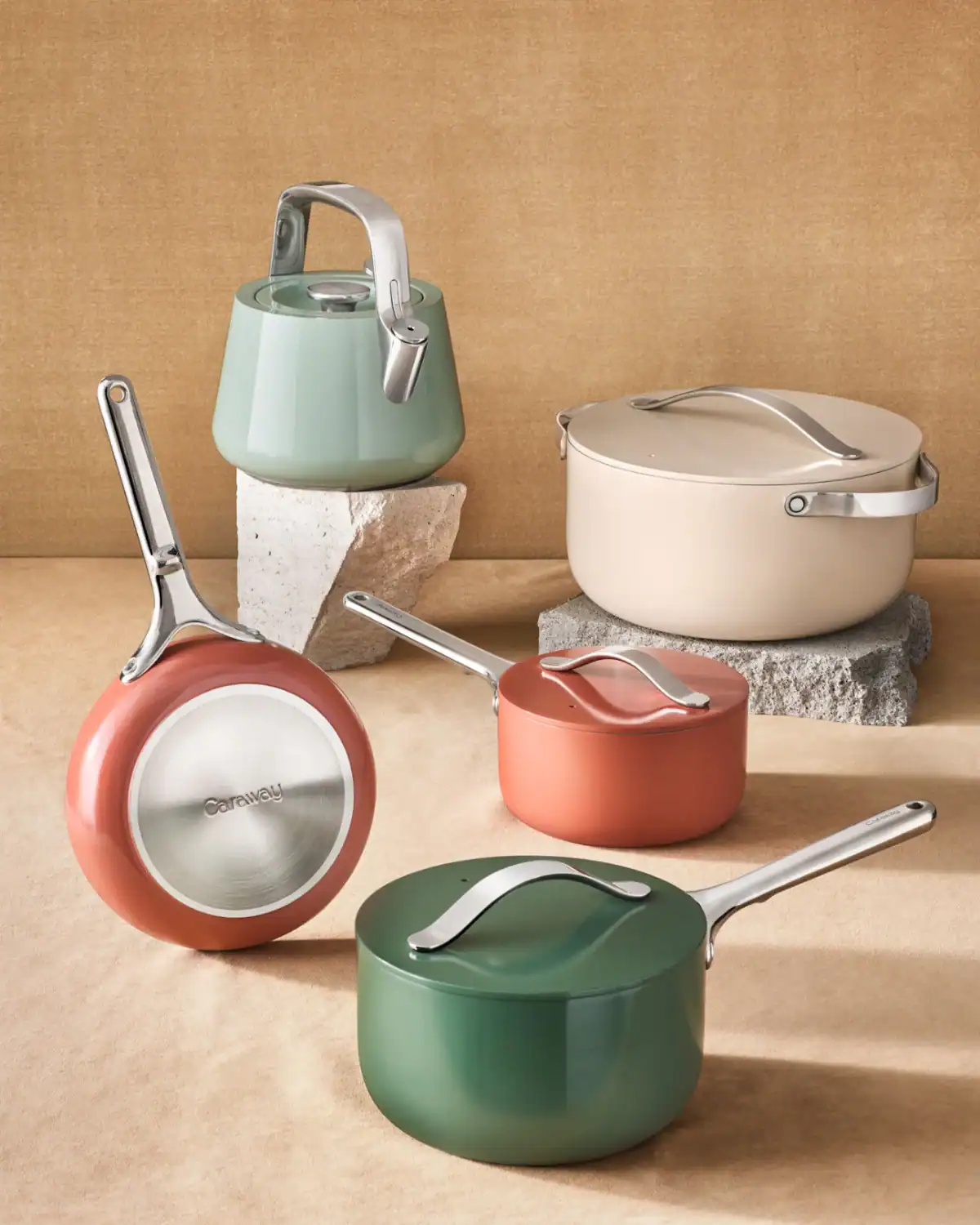
Caraway Cookware Warranty and Replacement Options
Caraway’s warranty terms may vary by product, purchase date, and region. Check the current Caraway warranty information and keep your order confirmation.
A warranty does not usually cover normal wear from cooking, scratches from metal utensils, dishwasher damage, misuse, or ordinary loss of nonstick performance. The exact exclusions depend on the warranty terms that apply to your purchase.
Before contacting customer service, gather:
- Your order number
- The purchase date
- The product name
- Clear photos of the damage
- A short description of how the pan was used and cleaned
Do not throw away the cookware before Caraway responds if you may file a claim. The company may ask for photographs or other details.
Is replacing one pan better than buying a full set?
Replacing one piece often makes more sense when only one pan has worn out. A full set may be reasonable if several pieces have similar wear or if you need different sizes.
Compare the cost of the replacement with the cost of a durable alternative. If you frequently cook at high heat, stainless steel, carbon steel, or cast iron may last longer because those materials do not rely on a ceramic nonstick coating.

Caraway Cookware vs. Other Pan Types for Longevity
Caraway is convenient for low-stick cooking, but it is not the most durable option for every cooking method. Each pan type trades easy release for heat tolerance, maintenance, or longevity.
| Pan type | Nonstick performance | Heat tolerance | Typical durability | Best fit |
|---|---|---|---|---|
| Caraway ceramic nonstick | Very good when new | Moderate | Coating may wear in 1–3 years with daily use | Eggs, vegetables, gentle cooking |
| PTFE nonstick | Very good when new | Moderate | Coating wears over time | Low-heat, easy-release foods |
| Stainless steel | Requires technique | High | Often many years | Searing, sauces, general use |
| Cast iron | Improves with seasoning | Very high | Decades with care | Searing, baking, high heat |
| Carbon steel | Improves with seasoning | High | Many years | Stir-frying, searing, high heat |
These are broad comparisons, not fixed guarantees. A well-maintained pan may last much longer than the typical range, while rough use can shorten any coating’s life.
A practical two-pan approach
Many home cooks get better value by using nonstick cookware for delicate foods and stainless steel or cast iron for high-heat work.
Use Caraway for:
- Eggs
- Pancakes
- Fish
- Vegetables
- Rice
- Low- to medium-heat meals
Use stainless steel, carbon steel, or cast iron for:
- High-heat searing
- Steak
- Blackening
- Broiling
- Long, high-temperature cooking
This division reduces the stress placed on the ceramic coating.

How to Tell Whether Your Caraway Pan Needs Replacing
Use this quick check:
- Inspect the cooking surface. Look for peeling, chips, deep scratches, or blisters.
- Check the base. Set the pan on a flat surface. It should not rock.
- Check the handle. It should feel firm and stable.
- Test normal cooking. Use low to medium heat and a small amount of oil.
- Clean it gently. Wash by hand and see whether residue comes off.
- Decide based on function and damage. Sticking alone may mean reduced performance; peeling or structural damage means replacement.
Do not judge the pan only by its color. Ceramic coatings can discolor while remaining usable. Performance and physical condition matter more than appearance.
Example decision guide
| Condition | Continue using? | Action |
|---|---|---|
| Light stains, no sticking | Yes | Keep using gentle care |
| More sticking but no visible damage | Usually, with caution | Use low heat and oil; consider replacement |
| Small superficial mark | Possibly | Avoid metal tools and monitor it |
| Deep scratches in the food-contact area | No preferred | Replace the pan |
| Peeling, flaking, or blistering | No | Stop using and contact Caraway |
| Loose handle or badly warped base | No | Stop using and replace |
Frequently Asked Questions
Does Caraway cookware last longer than traditional nonstick cookware?
Not necessarily. Caraway’s ceramic surface may offer good release at first, but its useful nonstick life still depends on heat, cleaning, and utensil use. Neither ceramic nor traditional nonstick cookware has one guaranteed lifespan for every kitchen.
Can Caraway pans go in the oven?
Caraway lists oven-safety limits for its products, but the limit can vary by piece and component. Check the instructions for your exact pan, lid, and handle before using it in an oven. Do not assume that the lid has the same heat limit as the pan.
Can Caraway cookware go in the dishwasher?
Caraway recommends hand washing. Hand washing is the better choice if you want to protect the ceramic coating and extend its useful life.
Why is my new Caraway pan sticking?
Common causes include high heat, too little cooking fat, residue from oil buildup, or preheating the pan for too long. Clean it gently, use low to medium heat, and add a small amount of oil before cooking delicate food.
Can I use cooking spray on Caraway cookware?
A light amount of suitable oil is usually a better choice. Some cooking sprays can leave a sticky residue when heated repeatedly. If you use spray oil, avoid heavy application and clean the pan after it cools.
Does Caraway cookware work on an induction cooktop?
Caraway states that its cookware is compatible with induction, gas, electric, and many other cooktops. Confirm compatibility for the specific product, especially if you own an older or specialty item.
Key Takeaways
- Caraway cookware commonly provides about one to three years of regular nonstick performance.
- Careful users may get three to five years or more, while rough or high-heat use can shorten the life to less than one year.
- The ceramic coating usually wears out before the aluminum body.
- Low to medium heat, soft utensils, hand washing, and protected storage help extend service life.
- Replace a pan if the coating peels, flakes, blisters, or has deep scratches.
- Use stainless steel, carbon steel, or cast iron for frequent high-heat cooking.
Conclusion
Caraway cookware can last for several years when used as a low- to medium-heat pan and cleaned by hand. For daily use, a realistic planning range is about one to three years of strong nonstick performance, not a guaranteed expiration date.
The best next step is to inspect your pan’s surface, base, and handle. If it only has stains, gentle cleaning may help. If it has deep scratches, peeling, warping, or loose parts, replace it or contact Caraway under the warranty terms that apply to your purchase.