How Good Is Bergner Cookware: Honest Review

Bergner cookware can be a good budget choice for many U.S. kitchens, but its quality depends heavily on the exact collection, material, and seller. Some Bergner pots and pans use useful features such as induction-ready bases, stainless steel bodies, or nonstick coatings. Others may be lighter and less durable than mid-range cookware from brands with stronger U.S. support.
The short answer: Bergner cookware is often suitable for everyday home cooking when the price is low and the pan has clear specifications. It is less attractive if you want a long warranty, easy replacement parts, heavy construction, or proven long-term performance.
This guide looks at Bergner cookware by material, cooking performance, safety, durability, value, and after-sale support. Since Bergner sells many collections, always judge the exact model rather than the brand name alone.
Bergner Cookware: Quick Verdict
Bergner cookware offers reasonable value when you choose the right line and use it with care. Its main strengths are broad product variety, modern designs, and often affordable prices. Its main limits are uneven product specifications, uncertain U.S. warranty coverage, and the fact that some lines may be made for different markets.
| Area | General assessment |
|---|---|
| Everyday cooking | Good for basic home use |
| Nonstick cooking | Useful when treated gently |
| Stainless steel cookware | Can be solid, but construction varies |
| Induction use | Model-specific; verify before buying |
| Durability | Fair to good, depending on weight and coating |
| Dishwasher use | Must be checked for the exact model |
| U.S. warranty support | May be less clear than major U.S. brands |
| Best buyer | A careful shopper seeking affordable cookware |
| Poor fit | A buyer wanting guaranteed lifetime support |
Bergner is not one single cookware design. A thin aluminum nonstick frying pan behaves very differently from a multi-layer stainless steel saucepan. The material, base design, handle attachment, coating, and care instructions matter more than the logo.
Overall rating by cookware type
These are practical category assessments, not laboratory scores:
- Nonstick frying pans: Good for eggs, pancakes, fish, and low-fat cooking when used at low to medium heat.
- Stainless steel pans: Potentially good for searing and sauces, but results depend on thickness and heat control.
- Stockpots and saucepans: Often useful for boiling, soups, pasta, and batch cooking.
- Cookware sets: Convenient, but check whether every piece is genuinely useful and whether the set includes lids or utensils you need.
- Induction cookware: Acceptable only when the product listing clearly says it works with induction.
What Is Bergner Cookware?
Bergner is a cookware and housewares brand associated with the Bergner Group, an international consumer-goods company. The brand has sold cookware in several markets, including products made from aluminum, stainless steel, and coated materials.
The key point for U.S. shoppers is that product names and specifications can differ by seller and region. A pan sold through a U.S. marketplace may not have the same handle, coating, lid, or warranty as a similarly named pan sold elsewhere.
A product page should identify:
- The main construction material
- The interior coating, if any
- The pan diameter
– The base or layer design - Compatible stovetops
- Oven temperature limits
- Dishwasher guidance
- Included lids or accessories
- Warranty terms
- The seller responsible for returns
If a listing only says “premium quality” or “nonstick technology” without explaining the construction, treat that as a warning sign. Marketing words do not tell you how evenly the pan heats or how long its coating may last.
How Well Does Bergner Cookware Perform?
Bergner cookware can perform well for routine meals, but performance varies more between collections than many shoppers expect.
Heat distribution
A pan with a thick base usually spreads heat better than a very light pan. Better heat spread can reduce hot spots, burnt sauces, and uneven browning.
Some Bergner pans use an aluminum body or aluminum base. Aluminum transfers heat well, but a thin pan can still develop hot spots. Stainless steel alone heats less evenly, so many stainless pans use an aluminum or other conductive core.
Look for phrases such as:
- Encapsulated base
- Aluminum core
- Tri-ply or multi-layer construction
- Full induction base
- Thick forged aluminum
These terms are useful only when the product page explains what they mean. “Three-layer coating” does not necessarily mean three-layer metal construction. Do not confuse the two.
Nonstick performance
Bergner nonstick pans may work well at first for foods such as:
- Eggs
- Crepes
- Pancakes
- Delicate fish
- Grilled cheese
- Vegetables cooked with little oil
Nonstick performance depends on the coating, cooking temperature, utensils, cleaning method, and frequency of use. Even a good coating will wear faster if it is overheated, scratched, or cleaned with harsh abrasives.
A nonstick pan is a convenience tool, not usually a lifetime pan. For many households, the better value is to buy one good nonstick skillet and use stainless steel or cast iron for high-heat work.
Stainless steel performance
Bergner stainless steel cookware may suit searing, browning, pan sauces, and boiling. Stainless steel is more resistant to scratches than a coated pan and can last much longer when the pan has a sound base and sturdy handles.
Stainless steel does require technique:
- Preheat the pan over medium heat.
- Add oil after the pan is warm.
- Add dry food.
- Let the food form a crust before trying to move it.
- Lower the heat if oil smokes.
Food that sticks is not always proof of poor cookware. Cold food, excess moisture, or high heat can cause sticking in almost any stainless steel pan.
Saucepan and stockpot performance
Bergner saucepans and stockpots are generally suited to water-based cooking. They can work well for pasta, rice, soup, oatmeal, and steamed food when the lid fits well and the handles stay comfortable.
For a stockpot, weight matters less than it does for a skillet. Still, an extremely thin pot may scorch thick foods such as:
- Chili
- Tomato sauce
- Custard
- Rice pudding
- Reduced sauces
A thicker base helps, but you should still stir thick foods and use moderate heat.
Bergner Cookware Materials Explained
The material tells you what a Bergner pan is best at and what care it needs. It also affects the pan’s likely service life.
Aluminum
Aluminum heats quickly and keeps cookware relatively light. It is common in affordable nonstick pans.
Its limits include:
- It can warp if heated empty or cooled suddenly.
- Bare aluminum may react with some acidic foods.
- Thin aluminum may create hot spots.
- It may not work on induction unless it has a magnetic base.
A coated aluminum pan is often a practical choice for low- and medium-heat cooking.
Stainless steel
Stainless steel resists rust and does not rely on a coating for its cooking surface. It is a strong option for people who want a pan that can handle regular use and metal utensils, provided the manufacturer allows them.
Its limits include:
- Food may stick without proper preheating.
- The handles and base can become hot.
- Thin stainless steel may heat unevenly.
- Burn marks may need extra cleaning.
The phrase “stainless steel” does not prove that the entire pan has a thick stainless body. Check the product details.
Nonstick coatings
Nonstick coatings reduce sticking and make cleanup easier. Most modern nonstick cookware uses a fluoropolymer coating, often called PTFE, while some products use ceramic-based coatings.
The U.S. Food and Drug Administration states that approved nonstick coatings used on cookware have a very small amount of the coating available to migrate into food when used as intended. The safety concern is mainly overheating an empty coated pan, not ordinary low- or medium-heat cooking.
Use these habits:
- Do not preheat an empty nonstick pan for a long time.
- Avoid very high heat unless the manual allows it.
- Use wood, silicone, or plastic utensils.
- Replace the pan if the surface is badly peeling or flaking.
- Ventilate the room during cooking.
- Keep pet birds away from kitchen fumes.
Ceramic-coated cookware
“Ceramic nonstick” can describe several products. Some pans have a ceramic-derived coating over metal, while others may be marketed with broad ceramic language.
Ceramic-style coatings can lose their easy-release performance sooner than shoppers expect. Gentle heat, hand washing, and soft utensils can help. Always check the exact care guide rather than assuming that a ceramic label means the pan is solid ceramic.
Is Bergner Cookware Safe?
Bergner cookware can be safe when the exact product is used within its stated limits. Safety depends on heat, coating condition, stovetop type, oven use, and cleaning.
Nonstick safety
Do not use a coated pan at extreme heat. Never leave an empty nonstick pan on a hot burner. If a pan begins to smoke, turn off the heat and move it away from the burner once it is safe to do so.
A damaged coating does not automatically mean the pan is dangerous, but a badly worn surface is no longer performing as intended. Replace it if the coating is peeling, deeply scratched, or coming off in flakes.
Oven safety
Do not assume that a stovetop pan is oven-safe. The coating, lid, handle, and handle attachment may each have separate limits.
Before using Bergner cookware in an oven, confirm:
- The maximum oven temperature
- Whether the lid can go into the oven
- Whether the handle contains plastic or silicone
- Whether the pan is safe under a broiler
- Whether the temperature limit applies with or without a lid
If no oven limit appears in the manual or product listing, avoid oven use.
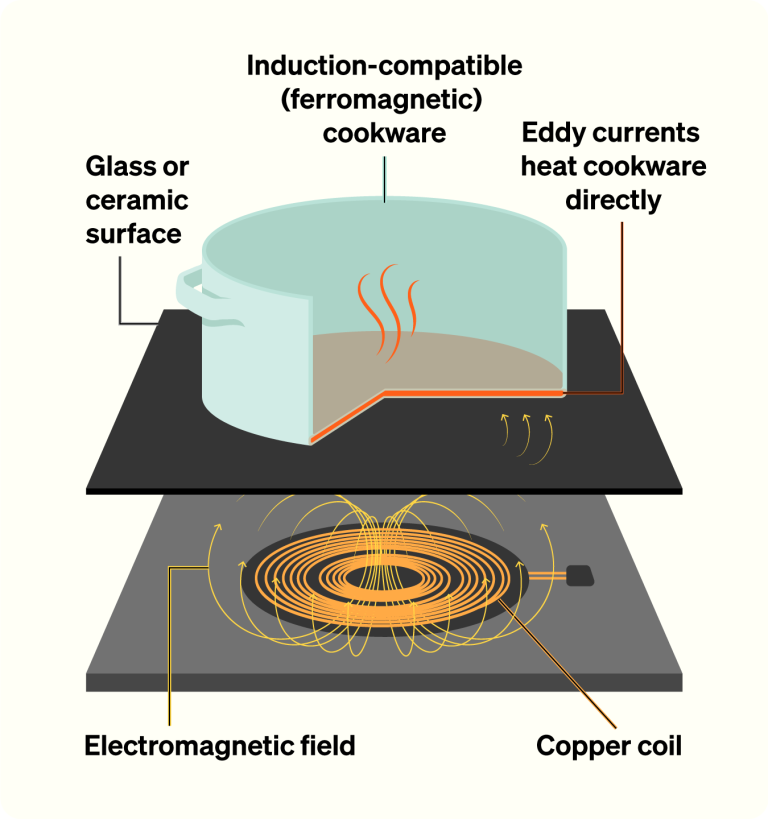
Induction safety
A magnet test can help. Place a magnet on the bottom of the pan. If it sticks firmly, the pan may work on induction. This is only a basic check; the manufacturer’s compatibility statement is better.
Do not use a pan on induction simply because it says “metal.” Aluminum and some stainless steel pans are not magnetic.
Stovetop and handle safety
Pan handles can become hot, especially over gas burners or when the handle sits close to the flame. Keep handles turned inward but not over another hot burner.
Do not move a hot pan by its lid handle unless the design clearly supports it. Use oven mitts when the manual permits oven use and when the cookware feels hot.
How Durable Is Bergner Cookware?
Bergner cookware can last for years, but durability is not uniform across the brand. Stainless steel pieces usually have a longer useful life than coated pans because they do not depend on a surface coating remaining intact.
The main durability factors are:
Pan thickness
Heavier cookware often resists warping better than very light cookware. Weight alone is not proof of quality, but an extremely light skillet may be more vulnerable to hot spots and distortion.
Base construction
A flat, stable base matters for both gas and electric stoves. On induction, a flat base also helps the pan maintain good contact with the cooking surface.
Handle attachment
Riveted handles often provide a strong connection, but they can collect food around the rivets. Welded handles are easier to clean but vary in strength. Screwed handles may loosen over time but can sometimes be tightened.
Before buying, look closely at product photos and the care manual.
Coating life
Nonstick cookware is a wear item. Its life may be shortened by:
- High heat
- Metal utensils
- Stacking without protection
- Dishwasher use
- Abrasive sponges
- Cooking spray residue
- Sudden temperature changes
A typical coated pan should not be judged by the same durability standard as an uncoated stainless steel pan.
Is Bergner Cookware Good for Induction?
Some Bergner cookware is made for induction, but not all Bergner cookware is induction-compatible.
The product listing should clearly name induction as a compatible stovetop. A label such as “gas, electric, and ceramic” does not always include induction.
For an induction-ready Bergner pan, check for:
- A magnetic stainless steel base
- A flat bottom
- An explicit induction symbol or statement
- A recommended minimum burner size
- A warranty that covers the intended stovetop
If the pan makes buzzing sounds, heats in a small ring, or does not heat evenly, stop using it until compatibility is confirmed. Some noise is normal with induction, but poor contact or an unsuitable base can cause weak results.
Is Bergner Cookware Dishwasher-Safe?
Some Bergner cookware may be dishwasher-safe, but dishwasher safety does not mean the dishwasher is the best care choice.
Repeated dishwasher cycles can:
- Fade exterior finishes
- Dull polished metal
- Loosen handles
- Damage nonstick coatings over time
- Leave mineral marks
- Cause aluminum to discolor
Hand washing with warm water, mild soap, and a soft sponge is usually the safer routine for nonstick cookware. Stainless steel pieces may tolerate the dishwasher better, but follow the exact manual.
Never put hot cookware directly into cold water. Let it cool first. Sudden temperature changes can warp a pan or damage a coating.
Bergner Cookware Compared With Other Options
The best alternative depends on what you value. A cheap nonstick pan may be better for eggs than an expensive stainless steel pan, while stainless steel may be better for long-term use.
| Cookware type | Main benefit | Main drawback | Best use |
|---|---|---|---|
| Bergner nonstick | Easy food release and cleanup | Coating can wear | Eggs and delicate foods |
| Bergner stainless steel | Durable cooking surface | Needs heat control | Searing and sauces |
| Cast iron | Strong heat retention | Heavy and needs seasoning | Searing and high heat |
| Carbon steel | High heat and lighter weight than cast iron | Needs seasoning | Stir-fry and searing |
| Premium multi-ply stainless steel | Even heat and long service life | Higher price | Frequent cooking |
| Ceramic-coated cookware | Easy release at first | Performance may decline | Low- to medium-heat cooking |
Bergner is most competitive against other budget and mid-budget cookware. It may not offer the same documented construction, warranty, or replacement support as established premium brands.
That does not make Bergner a poor choice. It means the price should reflect the product’s limits.
How to Choose a Good Bergner Pan
Use this checklist before buying a Bergner cookware piece in the United States:
- Identify the material. Is it aluminum, stainless steel, cast aluminum, or coated metal?
- Check the cooking surface. Look for clear information about the coating type.
- Confirm stovetop compatibility. Do not assume induction works.
- Check the oven limit. Include the lid and handle in this check.
- Look for a flat base. A warped or rounded base can cook poorly.
- Assess the handle. It should feel secure and give your hand enough space.
- Read the care instructions. Dishwasher and utensil rules affect service life.
- Review the seller’s return policy. This matters if the pan arrives warped or damaged.
- Check warranty language. Confirm who handles claims in the U.S.
- Compare the full price. Include shipping, replacement lids, and return costs.
When a Bergner set makes sense
A set may be useful if you need several pieces at once and the sizes match your cooking habits. Before buying, count the useful pieces rather than the total number of items.
A set with three pans, three lids, and two utensils may be advertised as an eight-piece set. That does not mean it offers eight full cookware pieces.
When one pan is better
Buying one Bergner skillet may be wiser than buying a large set if:
- You are replacing a worn pan.
- You already own serviceable pots.
- You want to test the brand first.
- You need a specific induction or oven-safe model.
- Storage space is limited.
Common Problems With Bergner Cookware
Food sticks to the nonstick pan
Possible causes include high heat, a worn coating, cooking spray buildup, or using the pan before it is clean.
Wash the pan with mild soap and a soft sponge. If food still sticks across most of the surface, the coating may be worn out.
The pan has hot spots
A thin base, an oversized burner, or a burner set too high can create hot spots. Match the burner to the pan base and lower the heat.
If the pan is visibly warped, replace it. A warped pan may heat unevenly and become unstable.
Stainless steel looks discolored
Blue, brown, or rainbow marks often come from heat. They may be reduced with a stainless steel cleaner or a mild paste of baking soda and water.
Avoid aggressive scrubbing on polished surfaces. Discoloration is usually cosmetic, but pitting or deep corrosion is a reason to stop using the pan.
The lid rattles
A small amount of movement may be normal, especially when steam builds. A loose or cracked lid can be unsafe. Replace it through the seller or manufacturer if a matching part is available.
Do not use a damaged glass lid at high heat.
The coating is peeling
Stop using the pan if the coating is badly peeling or flaking. Do not scrape the surface in an attempt to restore it. A replacement is the practical solution.
How to Care for Bergner Cookware
Good care can extend the useful life of Bergner cookware:
- Use low or medium heat for coated pans.
- Preheat stainless steel gradually.
- Avoid heating an empty coated pan.
- Use silicone, wood, or plastic tools on nonstick surfaces.
- Let cookware cool before washing.
- Dry stainless steel after washing to reduce water spots.
- Do not stack pans without a soft separator.
- Avoid aerosol cooking sprays on nonstick surfaces.
- Follow the maker’s oven and dishwasher limits.
- Store lids so they do not strike the pan surface.
Do not use a nonstick pan as a high-heat searing tool. Keep a stainless steel, cast iron, or carbon steel pan for that job.
Key Takeaways
- Bergner cookware can be good value for everyday cooking.
- Quality varies by collection and model.
- Nonstick Bergner pans are best for low- and medium-heat foods.
- Stainless steel models may last longer but need better heat control.
- Not every Bergner pan works on induction.
- Confirm oven limits, coating details, care rules, and U.S. warranty terms before buying.
- A single well-chosen pan may be a better purchase than a large set.
- Replace cookware with badly peeling coatings, severe warping, or damaged lids.
Frequently Asked Questions
Is Bergner a reliable cookware brand?
Bergner can be reliable for basic home cooking, but reliability varies by product line. A well-built stainless steel pan may last much longer than a lightweight coated skillet. Check the exact construction, seller, and warranty before deciding.
Is Bergner cookware made in the United States?
Bergner is an international brand, and cookware may be produced outside the United States. The country of origin should appear on the package or product listing. Do not assume that a U.S. seller means the cookware was made in the United States.
Does Bergner cookware contain Teflon?
Some Bergner nonstick cookware may use a PTFE-type fluoropolymer coating, while other products may use ceramic-style coatings. “Teflon” is a specific brand name, so check the exact product description or contact the manufacturer rather than guessing from the word “nonstick.”
Can Bergner cookware go in the oven?
Some models may be oven-safe, but the temperature limit depends on the pan, coating, handle, and lid. Use the manufacturer’s manual or product listing. If no oven limit is provided, do not use the pan in an oven.
Can I use metal utensils with Bergner cookware?
Use metal utensils only when the product instructions allow them. For coated Bergner pans, silicone, wood, or plastic utensils are the safer choice. Stainless steel cookware is generally more tolerant of metal tools.
How long does Bergner nonstick cookware last?
There is no single life span for every Bergner pan. Heat, cleaning, utensils, storage, and frequency of use all matter. Replace the pan when the coating is badly scratched, peeling, or no longer releases food normally.
Is Bergner cookware worth buying?
Bergner cookware is worth considering when the price is competitive, the specifications are clear, and the seller offers a practical return policy. It is a weaker choice when the listing hides the material, omits induction or oven limits, or provides no clear U.S. support.
Research and Source Notes
This article treats manufacturer specifications as product documentation, not independent proof of performance. Bergner sells multiple cookware collections, so claims about a single pan should not be applied to every Bergner product.
For a purchase decision, compare the exact listing with:
- Bergner Group
- U.S. Food and Drug Administration: Questions and Answers on Food Contact Materials
- U.S. Consumer Product Safety Commission
Check the current product manual, country of origin, seller warranty, return terms, and care instructions before buying.
Conclusion
Bergner cookware is neither automatically excellent nor automatically poor. It is a varied product range, and the exact pan matters most.
For a U.S. buyer, Bergner is a reasonable budget option for everyday meals when the pan has clear material details, suitable stovetop compatibility, a sound base, and a dependable return policy. Choose stainless steel for longer service and high-heat work. Choose nonstick for easy release, but use it gently and expect eventual replacement.
The safest next step is simple: select the exact Bergner model, then verify its coating, induction compatibility, oven limit, care rules, and U.S. warranty before placing an order.