How To Know If Cookware Is Induction Ready: Quick Guide

Most induction-ready cookware has a magnetic base that sticks to a magnet and heats efficiently on induction cooktops.
If you’ve ever stood in your kitchen wondering why one pan works beautifully while another stays cold on an induction stove, you’re not alone. Knowing how to know if cookware is induction ready saves time, money, and a lot of cooking frustration. In this guide, I’ll walk you through the same checks I use when testing cookware, plus a few practical tricks, limitations, and real-world tips that make the answer easy to spot.
What induction ready cookware really means
Induction cooking works differently from gas or electric heat. Instead of warming the cooktop surface first, the stove creates a magnetic field that directly heats the pan. That means the cookware itself has to respond to magnetism.
In simple terms, cookware is induction ready if its base contains ferromagnetic material, like cast iron or magnetic stainless steel. If the pan cannot interact with the magnetic field, it will not heat properly on an induction surface.
Common induction ready materials include:
• Cast iron, which is naturally magnetic and usually works very well
• Enameled cast iron, which also works because of the iron base
• Magnetic stainless steel, especially some 18/0 stainless blends
• Carbon steel, which is a strong performer on induction
• Some cookware with a special bonded magnetic base
I’ve seen many shoppers assume “stainless steel” automatically means induction ready. That’s one of the biggest mistakes. Some stainless steel pans work great, but others are basically decorative on induction unless the base has the right metal core.
How to know if cookware is induction ready
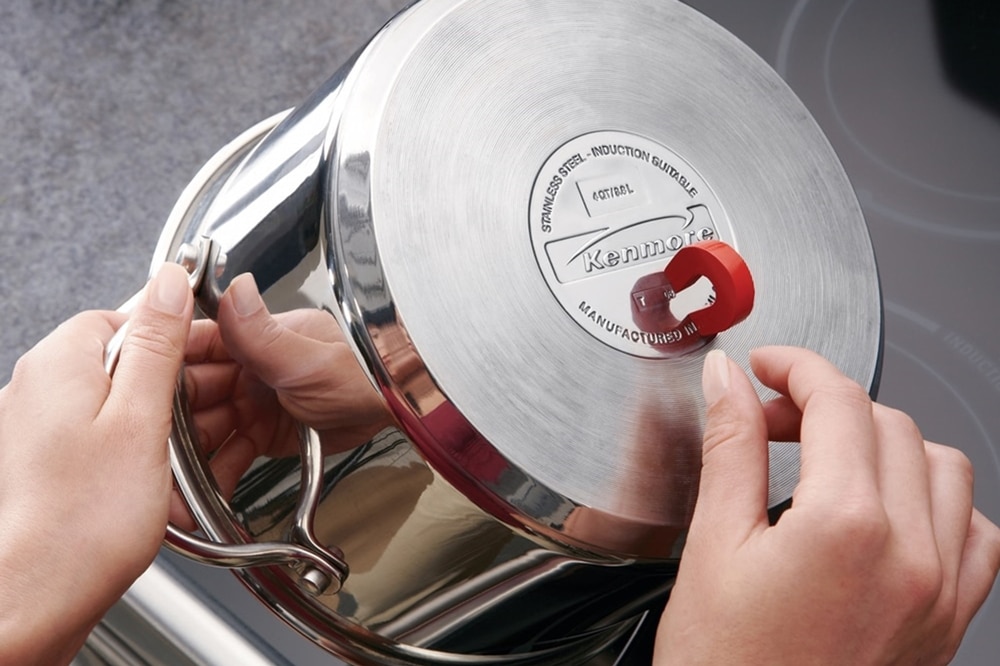
The easiest way to know if cookware is induction ready is to check whether a magnet sticks firmly to the bottom. If the magnet grabs the base well, the pan will usually work on induction.
Here are the most reliable ways to check:
• Magnet test: Place a fridge magnet on the bottom of the pan. If it sticks strongly, the cookware is likely induction ready.
• Product labeling: Look for words like induction compatible, induction ready, or induction safe on the packaging or product page.
• Symbol check: Many brands print a coil or induction symbol on the base or box.
• Material check: Cast iron and carbon steel are usually safe bets.
• Flat base check: The bottom should be flat enough to sit evenly on the cooktop for best contact.
In my own testing, the magnet test is the fastest and most practical. But I never stop there. I also look for a flat, stable base, because a pan can technically be magnetic and still cook poorly if it wobbles or has a warped bottom.
Why the magnet test works so well
The magnet test works because induction cooktops rely on magnetic fields. When the cooktop senses magnetic cookware, it transfers energy into the pan base. That energy turns into heat very quickly.
A strong magnetic reaction usually means better induction performance. A weak or spotty reaction may still work, but it can lead to uneven heating or slower cooking.
A few notes from experience:
• If the magnet only sticks to the rim but not the base, the pan may not heat well
• If the magnet clings weakly, the cookware may be borderline or inconsistent
• If the base is layered, the induction layer may be thin but still usable
• Nonstick coatings do not decide induction compatibility; the metal underneath does
This is where people often get misled by marketing. A pan can look premium and still fail the magnet test. The label matters, but the metal matters more.
Materials that usually work on induction
Some materials are reliable and easy to trust when shopping for induction ready cookware. Others are hit-or-miss and need closer inspection.
Cast iron
Cast iron is one of the most dependable choices for induction cooking. It is strongly magnetic, holds heat well, and performs steadily across many induction cooktops.
It does have a downside: it is heavy. If you cook a lot of sauces or lift pans often, that weight can be a factor.
Enameled cast iron
Enameled cast iron usually works just as well as bare cast iron because the iron core is what matters. The enamel is just the outer coating.
This type is great for simmering, braising, and slow cooking. It is also easier to clean than raw cast iron.
Carbon steel
Carbon steel is another strong induction performer. It heats fast, reacts well to temperature changes, and stays magnetic.
I like carbon steel for stir-fries and quick sears. It has a lighter feel than cast iron, which makes it easier to handle during busy cooking.
Magnetic stainless steel
Not all stainless steel is induction ready, but magnetic stainless steel is. The trick is knowing the grade and construction.
Cookware marked 18/0 stainless steel often works because it contains more iron. Some 18/10 stainless pans do not work unless they have a bonded induction base.
Aluminum and copper
Plain aluminum and copper do not work on induction because they are not magnetic. However, many modern pans use an induction-compatible base or layered core.
That means the outside material may be aluminum or copper, while the bottom layer handles induction. Always check the base instead of guessing from the outside.

What the product label can tell you
Product labels are helpful, but they can be vague if you do not know what to look for. The safest wording is explicit and direct.
Look for these terms:
• Induction ready
• Induction compatible
• Induction safe
• Works on all stovetops
• Magnetic base
If a label says “all stovetops,” that usually includes induction, but I still like to verify with a magnet. Marketing language is useful, yet it is not always precise.
Also check for small print about cookware construction. Some brands mention an aluminum core, stainless steel layers, or bonded base design, and that often tells you more than the headline claims.
Signs your cookware is not induction ready
Sometimes the best clue is that the pan simply does not behave right on induction. If you already own the cookware, the stove may reveal the truth very quickly.
Common warning signs include:
• The cooktop does not detect the pan
• The burner flashes an error code
• The pan stays cold or warms very slowly
• Heat appears only in one area
• The cookware slides, rocks, or feels unstable on the glass surface
I’ve run into pans that seemed like they should work, but the cooktop kept shutting off. In those cases, the issue was usually weak magnetic response or a base that was too small for the burner sensor.
How to test cookware at home
You do not need special tools to test cookware at home. A small fridge magnet and a quick look at the base usually tell you enough.
Here is a simple process:
- Clean the bottom of the pan so dirt does not affect the test.
- Place a magnet on the center of the base.
- Slide it around the bottom to see if the pull stays strong.
- Check the product packaging or website for induction terms.
- Test the pan on the cooktop and watch for detection or heating.
If the cookware passes the magnet test and is flat on the bottom, it is usually a good candidate. If it fails the test, it will probably not work unless the brand added a hidden induction layer, which is less common.
Common mistakes people make when checking cookware
A lot of people get tripped up by a few easy mistakes. I’ve made some of these myself, and they can waste time fast.
Watch out for these:
• Assuming all stainless steel is induction ready
• Checking only the side walls instead of the base
• Using a weak magnet and calling the pan incompatible too soon
• Ignoring whether the base sits flat
• Trusting the words “all-purpose” without confirmation
The biggest lesson I’ve learned is this: the bottom tells the truth. The shape, metal, and magnetic pull of the base matter more than the brand story on the box.
What affects induction performance besides compatibility
Even if cookware is induction ready, performance can still vary. Compatibility is only the first step.
Other factors include:
• Base thickness: Thicker bases often spread heat more evenly
• Pan size: The bottom should match the burner size well
• Flatness: A warped pan may not make good contact
• Material mix: Layered cookware can heat better than thin magnetic steel alone
• Cooktop sensor limits: Some induction stoves need a minimum pan size
This is why two “induction compatible” pans can behave very differently. One may simmer sauce beautifully, while the other heats unevenly and hot spots the center.
Benefits of using induction ready cookware
Using the right cookware makes induction cooking feel smooth and precise. Once you get the hang of it, the difference is hard to miss.
Main benefits include:
• Faster heating than many gas or electric setups
• Better energy efficiency
• More precise temperature control
• Cooler kitchen air because less heat escapes
• Easier cleanup on glass-top surfaces
From a practical standpoint, induction ready cookware can also make everyday cooking less stressful. Water boils faster, pans respond quickly, and the stove tends to feel more controlled.
Limitations to keep in mind
Induction is great, but it is not perfect for every kitchen or every pan. It helps to know the limits before buying.
A few limitations are worth noting:
• Some cookware is technically magnetic but still heats unevenly
• Very small pans may not register on some burners
• Very light pans can feel less stable on glass tops
• Not every induction cooktop accepts every induction ready pan
• Specialty cookware may need an adapter plate
Adapter plates can help in some situations, but they reduce efficiency. In my experience, they are best as a backup, not a long-term fix.
How to choose induction ready cookware wisely
If you are shopping for new cookware, focus on more than just the word induction. Good cookware should be compatible and pleasant to use.
Look for:
• A strong magnetic base
• A flat, wide bottom
• Good heat distribution
• Comfortable weight
• Trusted construction details
• Clear induction labeling from the maker
If possible, read reviews from people who actually use the pan on induction. Real-world feedback often reveals issues that product pages leave out, like warping, weak sensors, or uneven heating.
Frequently Asked Questions
How can I test if my cookware is induction ready?
Use a magnet on the bottom of the pan. If it sticks firmly, the cookware is likely induction ready.
Does stainless steel always work on induction?
No, not all stainless steel works. Only magnetic stainless steel or stainless cookware with an induction base will heat on induction.
Will cast iron work on induction cooktops?
Yes, cast iron usually works very well on induction. It is one of the most reliable cookware materials for this type of stove.
Why does my induction cooktop not detect my pan?
The pan may not be magnetic enough, may be too small, or may have a warped base. Some cooktops also need cookware to sit flat and within a certain size range.
Can I use an adapter plate if my cookware is not induction ready?
Yes, an adapter plate can let non-induction cookware work on induction. It does reduce efficiency, so it is better as a backup than a permanent solution.
Conclusion
Knowing how to know if cookware is induction ready is really about checking the metal, the magnet, and the base. If the pan sticks to a magnet, has a flat bottom, and is clearly labeled for induction, you are usually in good shape.
The best habit is simple: test before you buy, and test again before you cook. That small step can save you from weak heating, wasted money, and a lot of kitchen guesswork.
If you are replacing old pans or upgrading your setup, start with the magnet test and then compare construction details. You will make smarter choices, cook with more confidence, and get better results from your induction stove.