How Good Is All-Clad Cookware: Is It Worth The Investment

Introduction
All-Clad cookware is very good, especially for cooks who want strong heat control, a durable stainless cooking surface, and pans that can last for many years. Its bonded construction helps spread heat more evenly than thin, low-cost pans.
The trade-off is clear: All-Clad costs more, can feel heavy, and needs the right care. It is not the best fit for every home cook. A budget stainless set, cast iron skillet, or quality nonstick pan may suit some tasks better.
For most U.S. kitchens, the best All-Clad choice is a small mix of pieces rather than a large set. A skillet, saucepan, and sauté pan often provide more value than buying every piece at once.

Quick Verdict: Is All-Clad Worth It?
All-Clad is worth it if you cook often and want long-term performance. It is less compelling if you mainly cook eggs, use low heat, or want the easiest possible cleanup.
Main strengths
- Even heating from bonded metal layers
- Strong stainless steel cooking surfaces
- Good browning and searing
- Compatibility with gas, electric, glass, and induction stovetops on many lines
- Oven use on many models
- Long-term repair and replacement support through the brand’s warranty terms
- Made-in-USA options in several major stainless lines
Main weaknesses
- High purchase price
- More weight than thin stainless or aluminum pans
- Food can stick when heat and oil are poorly controlled
- Stainless steel can show stains and discoloration
- Handles may feel narrow or uncomfortable to some users
- Nonstick lines have a shorter practical life than stainless steel
- Large cookware sets may include pieces that rarely get used
The short answer is simple: All-Clad is premium cookware, not magic cookware. Its design gives you a better starting point, but cooking technique still matters.
What Makes All-Clad Cookware Different?
All-Clad uses bonded cookware construction. This means layers of different metals are joined together so they work as one pan.
Most stainless All-Clad cookware uses:
- A stainless steel cooking surface
- An aluminum layer or core for fast heat transfer
- An exterior layer suited to the stovetop
Some five-ply models use more layers of stainless steel and aluminum. The goal is to balance heat response, evenness, strength, and durability.
Why the aluminum core matters
Stainless steel is strong and resists corrosion, but it is not the best heat conductor. Aluminum spreads heat much faster. By placing aluminum between steel layers, All-Clad helps reduce hot spots.
That does not mean the pan heats perfectly evenly. The burner still affects the result. A small burner under a wide skillet can leave the sides cooler than the center. Preheating also matters.
What “fully bonded” means
In fully bonded cookware, the heat-conducting layers usually extend across the base and up the sides. This differs from a pan with an aluminum disk attached only to the bottom.
Fully bonded walls can help with:
- Sauces
- Braising
- Sautéing
- Pan reductions
- Cooking food that touches the side of the pan
A base-only design can still work well, but it may respond differently along the side walls.
Stainless steel cooking surfaces
The stainless interior is one of All-Clad’s main advantages. It does not have a coating that can gradually wear away during normal use.
It is useful for:
- Browning meat
- Searing vegetables
- Deglazing with wine or stock
- Making pan sauces
- Cooking acidic foods
- High-heat stovetop work within the product’s instructions
Stainless steel is not naturally nonstick. Food may stick at first. With the right preheating and enough oil, it can release more easily.
How Well Does All-Clad Cook?
All-Clad performs best when you need control rather than simple convenience. Its stainless lines are especially strong for browning, sauce work, and cooking methods that move from the stovetop to the oven.
Heat control
All-Clad’s aluminum core helps the pan heat and cool more predictably than many thick cast iron pans. It also spreads heat better than many inexpensive stainless pans with little or no core material.
Still, heat control depends on:
- Burner size
- Burner type
- Pan size
- Food quantity
- Preheating time
- Whether the pan is covered
- The selected heat level
A pan cannot correct a burner that is too small or a flame that is too high.
Searing and browning
All-Clad stainless pans are well suited to searing. When meat or vegetables touch a properly heated surface, they can develop a browned crust. Fond—the browned bits left in the pan—can then become the base of a sauce.
A basic method is:
- Dry the food well.
- Preheat the pan over medium or medium-low heat.
- Add oil once the pan is warm.
- Add the food without crowding the pan.
- Let the food brown before trying to move it.
If food tears when you lift it, it may not be ready. Stainless cookware often releases more easily after browning has formed.
Eggs and delicate foods
Eggs, fish, and pancakes are harder in stainless steel. They can work well, but they require more control than a coated nonstick pan.
Use lower heat, enough fat, and gentle handling. For daily eggs, a dedicated nonstick skillet may be more convenient than All-Clad stainless steel.
Sauces and acidic foods
Stainless steel is useful for tomato sauces, wine reductions, and other acidic recipes. It does not react like bare aluminum or unlined copper.
The pan may discolor after repeated use, but discoloration is usually cosmetic. A cleaner made for stainless steel can often restore the surface.
Oven performance
Many All-Clad stainless pieces are designed for oven use, but the limit depends on the exact collection and the lid or handle material. Nonstick versions may have lower limits.
Always check the instructions for the specific model before using it under a broiler or at a high oven temperature. Never assume that every All-Clad pan has the same rating.

Which All-Clad Line Is Best?
The best All-Clad line depends on your cooking style, weight preference, and budget. The names can sound similar, so the construction matters more than the marketing label.
| All-Clad line or type | General construction | Best for | Main trade-off |
|---|---|---|---|
| D3 Stainless | Three-layer bonded construction | Most home cooks who want a balanced stainless pan | Less thick and less heavy than five-ply lines |
| D5 Stainless | Five-layer bonded construction | Cooks who prefer a heavier pan and steady heat | Higher cost and weight |
| Copper Core | Copper combined with aluminum and stainless layers | Cooks who want faster heat response | Very expensive |
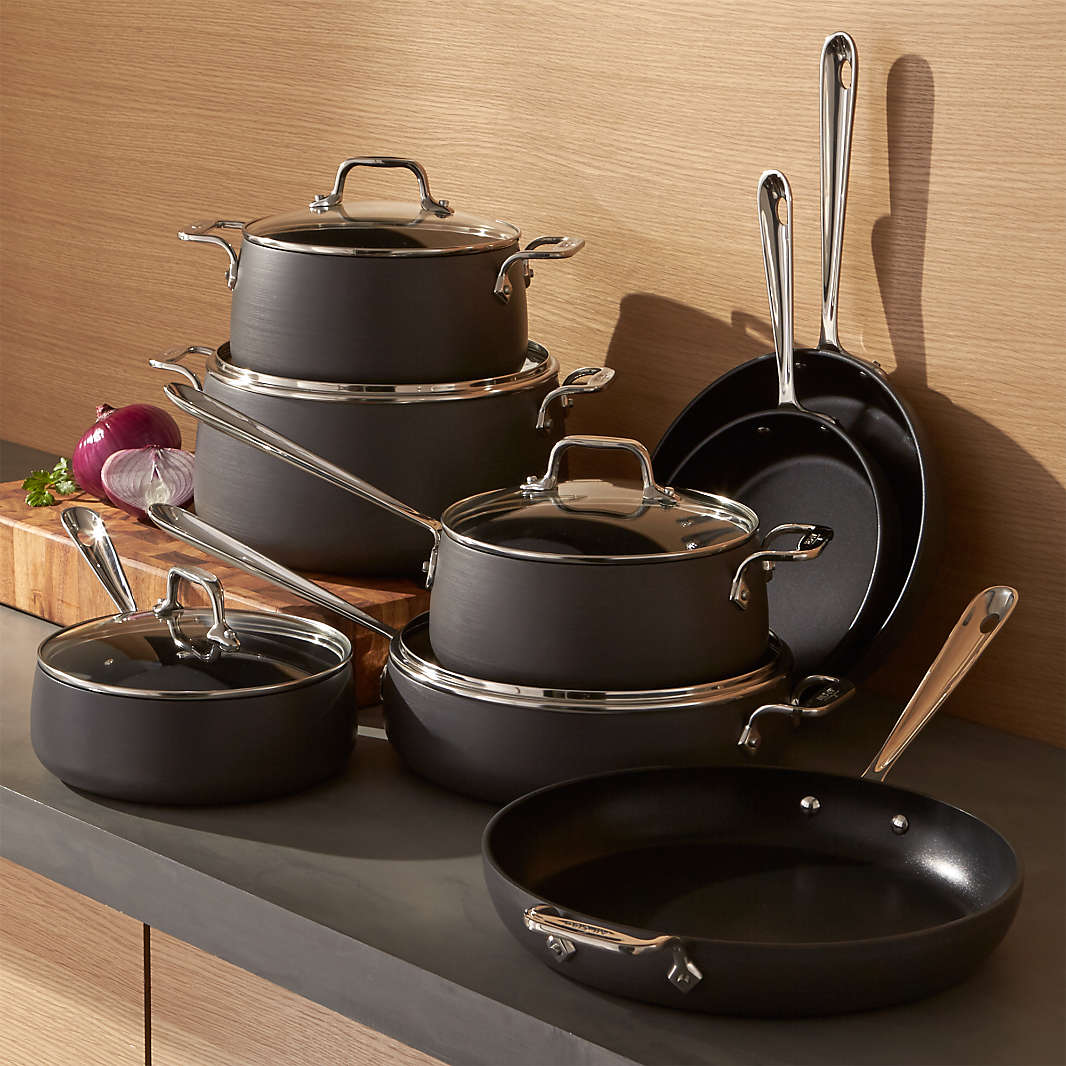
| HA1 or other hard-anodized nonstick | Aluminum body with a nonstick cooking surface | Eggs, fish, and low-fat cooking | Coating can wear over time |
| Ceramic-coated options | Metal body with a ceramic-style cooking surface | Users seeking a coated surface without traditional PTFE | Coating life and care needs vary |
All-Clad D3 Stainless
D3 is often the most practical starting point. Its three-layer design gives good heat spread without the extra weight of some five-ply pans.
It suits people who want:
- Stainless cookware for daily use
- A broad range of pan sizes
- A balance of price and performance
- A cooking surface that can last longer than a coating
D3 is not the cheapest option. It is simply easier to justify than the more expensive lines for many home kitchens.
All-Clad D5 Stainless
D5 uses more bonded layers and often feels heavier. The thicker build can provide steady heat, but heavier does not always mean better for every cook.
Choose D5 if you like a substantial pan and often cook large meals. Avoid buying it solely because it has more layers. For many recipes, D3 already provides the heat control most home cooks need.
All-Clad Copper Core
Copper responds quickly to temperature changes. That can help with delicate sauces and recipes where small heat changes matter.
The drawbacks are price and diminishing returns. Many cooks will not notice enough improvement to justify the added cost. Copper Core makes the most sense for serious cooks who value rapid response and are comfortable paying for it.
All-Clad nonstick cookware
Nonstick All-Clad cookware can be useful for eggs, pancakes, fish, and other delicate foods. It also makes cleanup easier.
But nonstick cookware is not a lifetime purchase in the same way stainless steel can be. The coating may lose performance through high heat, metal utensils, abrasive cleaning, stacking, or normal wear.
Use low to medium heat unless the instructions say otherwise. Replace the pan if the surface is badly scratched, peeling, or no longer releases food as intended.
Ceramic-coated cookware
Ceramic-style coatings may appeal to shoppers who want a slick surface without traditional PTFE. However, ceramic coatings can lose their easy-release performance over time.
Treat the pan gently, avoid overheating it, and follow the manufacturer’s care instructions. Do not assume that every coating has the same durability.
All-Clad Compared With Other Cookware Types
All-Clad is not automatically better than every alternative. Each material solves a different cooking problem.
| Cookware type | Best feature | Weak point | Good match for |
|---|---|---|---|
| All-Clad stainless | Browning and durability | Food can stick | Frequent cooks |
| Traditional nonstick | Easy release | Coating wears out | Eggs and delicate food |
| Cast iron | Heat retention and searing | Heavy and slow to change heat | Steaks and high-heat cooking |
| Carbon steel | Searing with a developing seasoning layer | Needs seasoning care | Skilled cooks |
| Bare aluminum | Low cost and fast heating | Can react with some foods | Budget cooking |
| Ceramic-coated | Easy release at first | Performance may decline | Light cooking and simple cleanup |
All-Clad versus cheaper stainless steel
The main difference is usually construction. Low-cost stainless pans may have a thin base or limited aluminum. They can still cook well, but they may heat less evenly.
All-Clad costs more because of its layered build, finishing, brand support, and manufacturing position. The improvement is most useful when you cook often and notice hot spots or poor heat response in cheaper pans.
All-Clad versus cast iron
Cast iron holds heat very well. It is excellent for steaks, cornbread, and foods that benefit from a strong sear.
All-Clad stainless changes temperature more quickly and is easier to lift and wash for many people. It also works well for pan sauces and foods that need frequent stirring.
All-Clad versus nonstick
Nonstick wins for easy release. All-Clad stainless wins for browning, high-heat flexibility within its instructions, and long-term surface durability.
Many kitchens benefit from both. A stainless skillet can handle searing, while a small nonstick skillet can handle eggs.
All-Clad versus carbon steel
Carbon steel can become naturally slick as its seasoning builds. It is lighter than cast iron but needs seasoning and careful drying.
All-Clad stainless needs less seasoning care and handles acidic foods more easily. Carbon steel may offer better value for cooks who enjoy maintaining cookware.
Is All-Clad Cookware Safe?
All-Clad cookware is generally suitable for normal food preparation when used according to the instructions for the exact product. Safety depends on the material, temperature, condition of the pan, and cooking method.
Stainless steel safety
Stainless steel is a common food-contact material. It can release small amounts of metals into food under some conditions, especially with long cooking times, high acidity, or new cookware. For most people, normal use is not a reason to avoid stainless steel.
People with a diagnosed metal allergy or a medical condition that affects metal exposure should ask a qualified health professional about suitable cookware.
Nonstick safety
Use nonstick pans at the heat level listed by the manufacturer. Do not preheat an empty nonstick pan over high heat, and do not use a damaged coating.
Avoid putting nonstick cookware under a broiler unless the instructions clearly allow it. Keep birds away from overheated cookware and kitchen fumes, since birds can be highly sensitive to airborne pollutants.
Handle and lid safety
Handles and lids can become hot, especially in the oven or on a large burner. Use a dry mitt or pot holder.
A wet cloth can transfer heat more quickly and may cause burns. Be careful when removing lids because steam can cause serious injury.
Induction compatibility
Many All-Clad stainless products work on induction cooktops. Some specialty products or nonmagnetic constructions may differ.
Before buying, check the product page or packaging for induction compatibility. If you already own the pan, a magnet can provide a quick indication: strong attraction at the base suggests induction suitability, but the manufacturer’s specification is the better source.
How to Clean and Maintain All-Clad Cookware
All-Clad stainless cookware lasts longer when you control heat, avoid harsh treatment, and clean it soon after cooking.
For stainless steel
- Let the pan cool before washing.
- Add warm water and mild dish soap.
- Use a soft sponge or nonabrasive scrubber.
- Soak stuck food rather than scraping hard.
- Dry the pan to reduce water spots.
For brown marks, rainbow stains, or cooked-on residue, use a stainless-steel cleaner according to its label. A mild paste of baking soda and water can also help with some residue.
Do not pour cold water into a very hot pan. Sudden temperature changes can warp cookware.
For nonstick cookware
Use soft tools and mild soap. Avoid metal utensils unless the specific manufacturer instructions allow them.
Even when a pan is listed as dishwasher safe, hand washing is often gentler. Avoid abrasive powders, steel wool, and harsh scrubbing.
Preventing food from sticking
Stainless steel sticking often comes from one of four causes:
- The pan was too cold.
- The pan was too hot.
- The food was wet.
- The pan was crowded.
Preheat gradually. Add oil before the food goes in. Dry meat and vegetables with a clean towel. Lower the heat if oil smokes heavily.
Preventing warping
Warping is more likely when a hot pan meets cold water or a cold surface. Let cookware cool before washing it.
Do not place a hot pan directly on a wet countertop. Use a dry trivet or heat-safe surface.
Common All-Clad Problems and What They Mean
Most complaints about All-Clad come from expectations, technique, weight, or care rather than a basic failure of the design.
“Food sticks to my All-Clad pan”
This is normal for stainless steel when used like nonstick cookware. Try lower heat, enough oil, dry food, and more patience before turning the food.
If you need effortless release every morning, use nonstick cookware for that task.
“The pan has rainbow stains”
Heat can create blue, gold, or rainbow marks on stainless steel. These marks are usually cosmetic.
A stainless cleaner may remove them. Do not use aggressive abrasives that could scratch the surface.
“The handle feels uncomfortable”
All-Clad handles are designed to keep hands away from the hot pan, but comfort is personal. Some cooks like the long, angular shape. Others prefer rounded handles.
If possible, hold a pan in a store before buying a full set. A heavy pan with an awkward handle may remain uncomfortable no matter how well it cooks.
“The pan is too heavy”
Five-ply cookware and large sauté pans can be tiring to lift. Consider D3 or smaller pieces if weight is a concern.
A three-piece collection that you can use easily is better than a larger set that stays in the cabinet.
“The lid or handle gets hot”
Any metal part near an oven, burner, or vent can become hot. Use protection and check the instructions for oven and stovetop limits.
“The nonstick surface is wearing out”
Nonstick coatings are consumable surfaces. High heat, dishwashers, stacking, and metal tools can shorten their life.
If the coating is peeling or damaged, stop using the pan and contact the manufacturer about warranty options or replacement.
How to Buy All-Clad Without Overspending
Buy individual pieces when you already know which pans you use. Sets may reduce the per-piece price, but only if you need most of the pieces.
A useful starter collection
For many U.S. home kitchens, this is enough:
- One 10- or 12-inch stainless skillet
- One 2- or 3-quart saucepan with lid
- One 3- or 4-quart sauté pan or small Dutch oven
- One small nonstick skillet for eggs, if desired
Exact sizes should match your household. A single cook may not need a 12-inch skillet, while a family may find a smaller pan crowded.
When a set can make sense
A set may be reasonable if:
- You are replacing several damaged pans.
- You cook often with matching sizes.
- The set includes lids you would buy separately.
- The pieces fit your storage space.
- The warranty and construction match your needs.
Do not buy a set only because the discount looks large. Unused cookware is not a saving.
Check before buying
Confirm:
- The exact line and construction
- Induction compatibility
- Oven and broiler limits
- Dishwasher guidance
- Lid material
- Handle design
- Return policy
- Warranty terms
- Whether the seller is authorized
Prices and product availability change. Compare the exact model number rather than relying on the collection name alone.

Who Should Buy All-Clad?
All-Clad is a strong fit for cooks who want durable stainless cookware and are willing to learn basic temperature control.
Choose it if you:
- Cook several times each week
- Want to sear and make pan sauces
- Use stainless cookware for many types of food
- Prefer long-term value over the lowest upfront price
- Want cookware that can work across several stovetop types
- Do not mind hand washing or careful cleaning
Consider another option if you:
- Need very light cookware
- Mostly cook eggs or delicate fish
- Want the lowest possible price
- Dislike cleaning stainless steel
- Have limited hand strength
- Prefer cookware that needs little technique
For many homes, the best plan is mixed cookware: All-Clad stainless for browning and sauce work, plus nonstick for delicate foods and perhaps cast iron or carbon steel for high-heat searing.
Key Takeaways
- All-Clad is high-quality cookware, but its value depends on how often and how you cook.
- Stainless models are strongest for browning, searing, sauces, and long-term use.
- D3 is often the most balanced choice for home cooks.
- D5 and Copper Core offer different heat and weight characteristics, but they may not justify their higher price for everyone.
- Nonstick All-Clad pans are convenient but should be treated as replaceable items.
- Stainless steel requires technique; it is not naturally nonstick.
- Buy individual pieces when possible to avoid paying for pans you will not use.
- Follow the exact care and temperature instructions for each model.
Frequently Asked Questions
Is All-Clad better than Calphalon?
All-Clad and Calphalon sell several different cookware lines, so the answer depends on the exact model. All-Clad is especially known for fully bonded stainless construction. Calphalon offers stainless, hard-anodized, and nonstick options at several price points.
Compare the construction, warranty, weight, cooking surface, and price of the exact pans rather than comparing brand names alone.
Does All-Clad last a lifetime?
Stainless All-Clad cookware can last for many years and may remain useful for decades with proper care. That does not mean every part is immune to damage. Handles, lids, finishes, and cookware exposed to severe overheating can develop problems.
Nonstick coatings generally have a shorter useful life than stainless cooking surfaces.
Can All-Clad go in the dishwasher?
Some All-Clad cookware is listed as dishwasher safe, but hand washing is usually gentler. Dishwashers can dull stainless finishes and may increase cosmetic wear.
Check the instructions for the exact product, especially for nonstick cookware.
Does All-Clad work on induction?
Many All-Clad stainless lines are induction compatible. Compatibility can vary by product, so confirm the exact model before buying.
A magnet test can offer a quick indication, but the manufacturer’s specifications should guide the final decision.
Why is All-Clad so expensive?
The price reflects layered construction, materials, manufacturing, finishing, distribution, and brand support. Higher cost does not guarantee better results for every recipe.
The value is strongest when you use the cookware often and benefit from even heating, stainless durability, and long-term service.
Is All-Clad made in the USA?
Several major All-Clad stainless lines are made in the United States, while the brand also sells products made in other locations. Manufacturing location can vary by collection.
Check the exact product listing or packaging if U.S. manufacturing is important to your purchase.
Conclusion
All-Clad cookware earns its premium reputation through bonded construction, strong stainless surfaces, and reliable performance across many cooking methods. It is especially good for people who sear meat, sauté vegetables, make sauces, and want cookware that can serve them for many years.
It is not the easiest or cheapest choice. Stainless steel takes practice, large pans can be heavy, and nonstick pieces will eventually wear. For most buyers, a few well-chosen All-Clad stainless pieces offer better value than a full set.
The practical next step is to choose the pan that solves your most common cooking problem. Start with one skillet or saucepan, learn how it responds to heat, and add more only when your kitchen shows you what is missing.