How Does Waterless Cookware Work: Simple Guide

Waterless cookware cooks food with very little added water. It uses a tight-fitting lid, low heat, and the food’s own moisture to create steam inside the pan. The steam cooks the food while the cookware’s thick base and side walls spread and hold heat.
In the United States, waterless cookware is often made from stainless steel with one or more layers of aluminum or copper inside the base. It works on many gas and electric stoves, but induction use depends on the exact model. Waterless cookware is not the same as a pressure cooker. It does not cook under high pressure.
Introduction
The main idea is simple: keep more moisture inside the pan instead of letting it boil away.
When vegetables, meat, fish, or other foods heat up, they release water. A close-fitting lid traps that moisture. As the pan warms, the water turns into steam. The steam transfers heat around the food and helps it cook.
You still may need a small amount of water for dry foods, grains, beans, or recipes that need liquid. “Waterless” usually means low-water cooking, not cooking with no water at all.
This method can reduce the need for stirring and draining. It may also help preserve water-soluble nutrients that can move into cooking water and be discarded. The final result depends on the food, pan design, heat level, cooking time, and method.

What Is Waterless Cookware?
Waterless cookware is a type of covered cookware designed to cook food with little or no added liquid. It usually has three important features:
- A tight-fitting lid
- A thick, heat-spreading base
- A durable cooking surface, often stainless steel
Some sets have a vapor valve or temperature indicator. These features can help show when the pan is hot enough to reduce the heat. Other models have no valve and rely on the cook’s timing and heat control.
The cookware does not create water. It captures the moisture already present in the food. A tomato, potato, onion, chicken breast, or piece of fish can release enough moisture to form steam. Dry foods need added liquid because they do not contain enough water for proper cooking.
Common materials
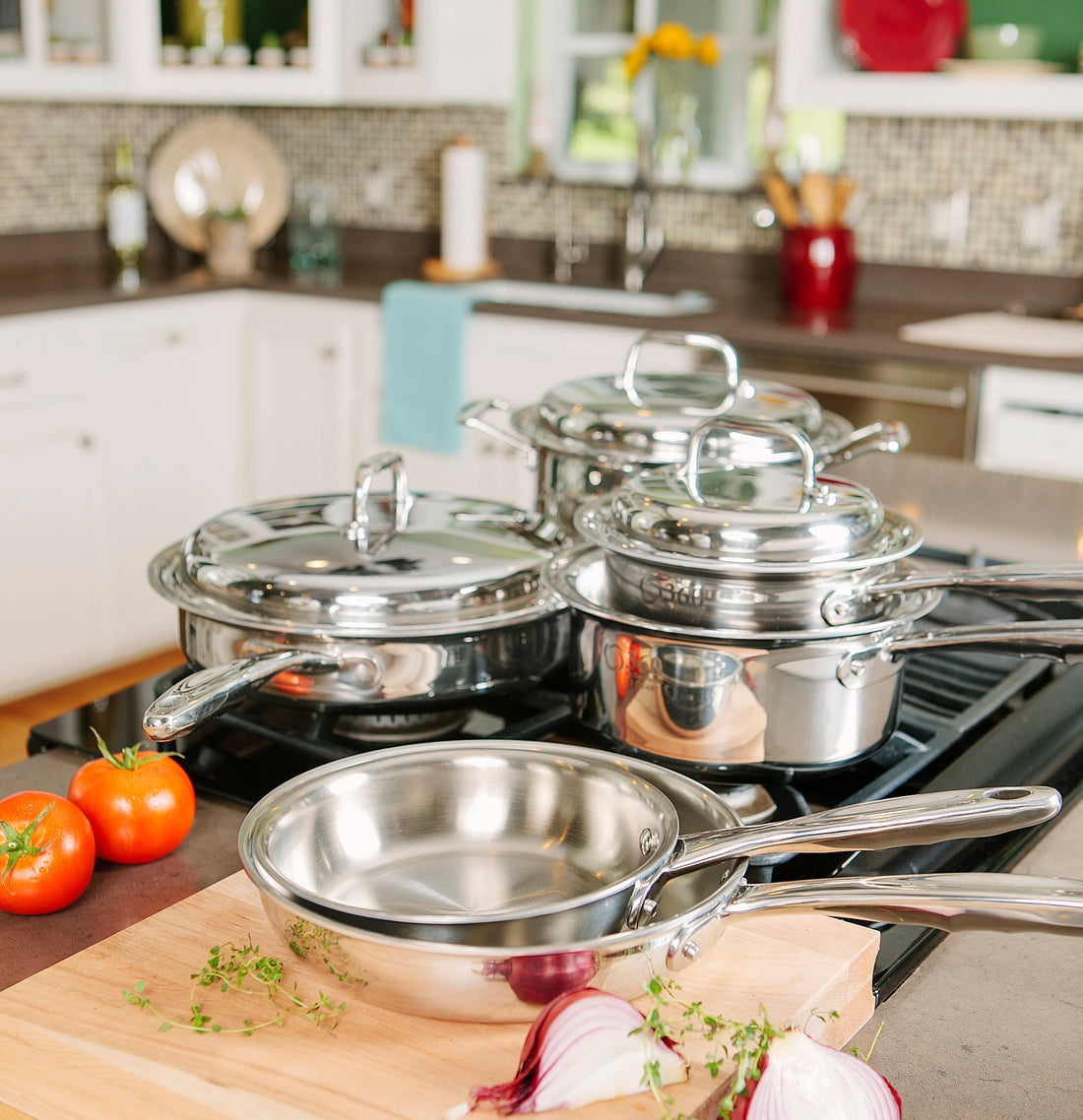
Many waterless pans use layered metal, also called clad construction. Stainless steel provides a hard, corrosion-resistant cooking surface. Aluminum or copper may sit between steel layers because these metals move heat more quickly.
The exact design varies by brand and model. A heavy pan often changes temperature more slowly than a thin pan. That can help prevent scorching, but it also means the pan may take longer to heat and cool.
Waterless cookware is not nonstick cookware
A stainless steel waterless pan may not have a nonstick coating. Food can stick if the pan is too cold, too hot, too dry, or disturbed too soon.
Some waterless cookware has a coated surface. Check the manufacturer’s instructions before using high heat, metal tools, or an oven. The cooking method and care rules depend on the surface.
How Does Waterless Cooking Work?
Waterless cooking works through heat transfer, trapped moisture, and steam.
1. The pan heats the food
heat moves from the stove into the pan. The pan then transfers heat to the food through direct contact.
A thick base spreads heat over a wider area. This helps reduce hot spots compared with a thin pan on the same burner. It does not make scorching impossible, especially when the pan is empty or the heat is too high.
2. Food releases moisture
Most fresh foods contain water. As they heat, their cells soften and release some of that water.
For example:
- Leafy greens wilt and release moisture.
- Onions soften and release juice.
- Tomatoes release liquid as their structure breaks down.
- Fish and meat release water during heating.
- Potatoes release some moisture but often need added water for longer cooking.
3. The lid traps steam
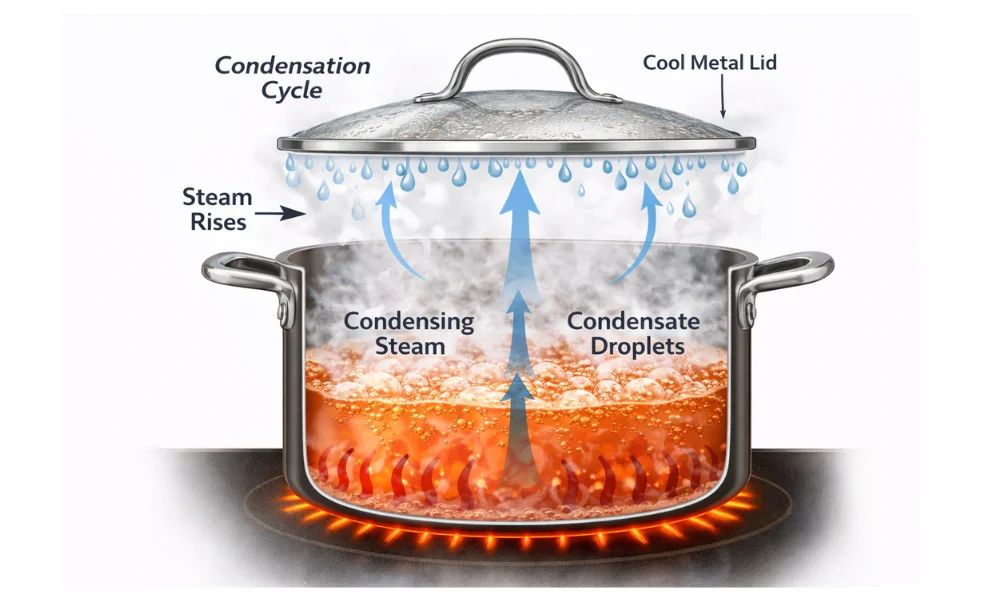
The lid holds steam inside the pan. This creates a warm, moist cooking environment.
Steam touches the lid and may condense into small drops. Those drops fall back onto the food. This cycle limits evaporation and helps keep the food moist.
A loose lid allows steam to escape. If too much steam escapes, the food may dry out or the pan may lose the moisture needed to prevent sticking.
4. Low heat maintains the cooking cycle
After the pan reaches the right temperature, the burner usually needs less heat. High heat can make the food release moisture too quickly. It can also cause the remaining liquid to evaporate before the food is done.
Many waterless cooking methods use medium heat at first, then low heat. The exact setting depends on the stove, pan size, food amount, and recipe.
5. The food cooks in its own juices
The food cooks through a mix of direct heat and steam. This is similar to a covered braise or steam cook, but it uses less added liquid.
Waterless cooking does not remove the need to follow safe cooking temperatures. Use a food thermometer for meat, poultry, seafood, and other foods where internal temperature matters. The USDA Food Safety and Inspection Service provides current guidance on thermometer use and safe food handling.

How to Use Waterless Cookware
Use waterless cookware in a controlled sequence. The goal is to build enough heat to create steam, then maintain that heat without drying the pan.
Step 1: Read the cookware manual
Start with the instructions for your exact pan. Look for information about:
- Stove compatibility
- Induction use
- Oven temperature limits
- Dishwasher safety
- Recommended heat settings
- Lid and valve care
- Preheating rules
Some brands use different lid designs and temperature signals. A method that works for one pan may not suit another.
Step 2: Prepare the food
Cut food into pieces of similar size. This helps the pieces cook at about the same rate.
Wash produce and leave a little surface moisture when suitable. Do not rely on surface water to replace the liquid needed by grains, dried beans, or other foods that absorb large amounts of water.
Step 3: Add the food to the pan
Place the food in an even layer when possible. Do not fill the pan past the manufacturer’s limit.
Dense piles of food may cook unevenly. A crowded pan can also release liquid slowly, which increases the risk of sticking before enough steam forms.
Step 4: Add only the needed liquid
Fresh vegetables may need no added water. A tablespoon or two may help with foods that are less juicy or with a pan that tends to run dry.
Use the recipe’s liquid when cooking rice, pasta, grains, dried beans, or similar foods. These foods need enough liquid to soften and hydrate.
Step 5: Cover the pan
Place the lid on the pan before the food becomes dry. Avoid lifting the lid often. Each lift releases steam and lowers the temperature.
If you must check the food, do so quickly. Add a small amount of liquid if the pan is dry and the food is not yet tender.
Step 6: Heat, then lower the burner
Start with medium heat unless the manual says otherwise. Once steam forms or the pan reaches the recommended temperature, reduce the heat.
A temperature indicator may help. If the lid rattles, steam escapes forcefully, or liquid vanishes quickly, the heat may be too high.
Step 7: Check doneness safely
Test texture with a fork or thermometer. For meat and poultry, check the thickest part without touching bone.
The USDA cooking temperature chart lists safe minimum internal temperatures for common foods. Cooking with steam does not make undercooked food safe.
Signs the method is working
You may notice:
- A warm, moist lid
- Gentle steam when the lid is lifted
- Food softening without a large pool of water
- Little liquid loss
- No strong burning smell
- A pan that stays moist during cooking
The exact signs vary by pan. A quiet pan is not necessarily a failed pan, and a noisy lid does not prove that the food is done.
What Foods Work Best in Waterless Cookware?
Waterless cookware works best with foods that contain natural moisture or that need only a small amount of liquid.
Good choices
- Fresh vegetables
- Leafy greens
- Fish
- Chicken pieces
- Ground meat
- Apples and pears
- Frozen vegetables
- Vegetable blends
- Covered stews with measured liquid
Vegetables are often easy to cook this way because they release water as they heat. Fish can also work well, but it cooks quickly and may become dry if left on the heat too long.
Foods that need extra liquid
Some foods cannot cook properly with only their own moisture:
- Rice
- Dried beans
- Lentils
- Pasta
- Quinoa
- Steel-cut oats
- Dried grains
- Dehydrated foods
These foods absorb liquid as they soften. Use a tested recipe or the package directions. A tight lid reduces evaporation, so you may need less liquid than in an open pot, but the amount must still be enough for the food.
Foods that need special care
Starchy foods can stick or scorch if the heat is too high. Dairy-based sauces can also burn on the bottom if they are heated too quickly.
For these foods, use low heat, stir when the recipe requires it, and avoid leaving the pan empty. Waterless cooking is not a universal replacement for every cooking method.

Does Waterless Cooking Preserve More Nutrients?
Waterless cooking may reduce the loss of some water-soluble nutrients, but it does not preserve every nutrient and does not guarantee a healthier meal.
Some vitamins, including vitamin C and several B vitamins, can move into cooking water. If you drain that water, you may discard part of those nutrients. Using less water can reduce this pathway.
Heat can also change nutrients. Longer cooking and higher temperatures may reduce some heat-sensitive vitamins. The result depends on the food and the cooking time.
Waterless cooking can help when you eat the cooking juices or keep the liquid in the dish. It does not make vegetables more nutritious than all other methods. Quick steaming, microwaving with little water, pressure cooking, roasting, and sautéing can also be useful, depending on the food.
The USDA Agricultural Research Service food composition resources provide food and nutrient data, but nutrient retention varies with the specific food and cooking conditions.
The practical lesson is simple: use enough heat and liquid to cook the food well, and avoid draining liquid when the recipe allows you to eat it.

Waterless Cookware vs. Regular Cookware
Waterless cookware and standard cookware can both produce good meals. The main difference is how they manage heat and moisture.
| Feature | Waterless cookware | Standard cookware |
|---|---|---|
| Added liquid | Usually little | Depends on the recipe |
| Lid fit | Often very tight | Varies |
| Heat use | Often low after preheating | Varies |
| Cooking liquid | Often stays in the pan | May evaporate or be drained |
| Best use | Moist foods and covered cooking | Broad range of methods |
| Main risk | Dry pan or high heat | Varies by pan and method |
Waterless cookware may suit someone who often cooks vegetables, fish, poultry, or covered meals. It may be less useful for a cook who mainly sears at high heat, boils pasta, or cooks large batches of grains.
A regular stainless steel saucepan with a good lid can perform some of the same tasks. The difference may be the pan’s weight, lid seal, heat spread, and ease of temperature control.
Do not assume that a higher price proves better cooking. Compare the features that affect your meals: base thickness, lid fit, handle design, stove compatibility, oven rating, warranty, and care rules.

Common Problems and How to Fix Them
Most problems come from too much heat, too little liquid, poor lid fit, or the wrong food for the method.
Food sticks to the bottom
Possible causes:
- The pan was heated too strongly.
- The food had too little moisture.
- The food was stirred or moved too late.
- The pan was too hot when the food went in.
- The pan was left uncovered.
What to do:
Lower the heat. Add a small amount of liquid if the food and recipe allow it. Do not scrape a badly burned layer while the pan is very hot. Let the pan cool first, then soak it according to the care instructions.
Food burns before it becomes tender
Possible causes:
- The burner is too large.
- The heat is too high.
- The food layer is too thick.
- The lid does not seal well.
- The recipe needs more liquid.
Move the pan to a smaller burner when possible. Reduce the heat and check the liquid level. If the food smells burned, stop cooking and inspect the bottom before adding more ingredients.
The pan produces too much steam
A strong burst of steam often means the burner is too high. Lower the heat rather than removing the lid for long periods.
Never place your face or hand over a lifted lid. Steam can cause serious burns. Use a dry, heat-safe mitt and lift the lid away from your body.
Food stays raw
The pan may be too cool, too full, or uncovered for too long. Pieces may also be too large.
Cut food into even pieces. Keep the lid closed and allow more time. For meat, poultry, and seafood, use a thermometer rather than judging safety by appearance alone.
The lid sticks
A lid can stick when steam cools and creates suction. Do not force it with a knife or sharp tool.
Turn off the heat and wait for the pan to cool. Follow the manufacturer’s instructions for releasing the lid. If the pan uses a valve, keep that part clean and unobstructed.

Waterless Cookware Safety Tips
Waterless cookware is generally used like other covered cookware, but trapped steam and hot metal require care.
- Keep handles turned inward and away from the edge of the stove.
- Use oven mitts for hot lids and handles.
- Lift lids away from your face and hands.
- Do not heat an empty pan unless the manual allows it.
- Do not leave a pan unattended on high heat.
- Keep children away from the stove.
- Do not treat the pan as a pressure cooker.
- Check the pan for damage before use.
- Replace a warped lid or damaged handle.
- Follow the maker’s rules for oven and dishwasher use.
Waterless cookware does not make food safe by itself. Clean raw meat juices from surfaces and tools. Refrigerate leftovers promptly. The FDA Food Safety guidance covers basic food handling, storage, and cooking practices in the United States.
If a pan begins smoking, turn off the burner if it is safe to do so. Do not pour water into a pan containing hot oil. Move away and call emergency services if a fire grows or cannot be controlled safely.

Is Waterless Cookware Worth It?
Waterless cookware may be worth it if you want to cook moist foods with less added water and lower heat after the pan warms. It can be convenient for vegetables, fish, poultry, and covered dishes.
It may not be worth replacing all your cookware if you often cook foods that need large amounts of liquid. You may also prefer standard cookware for high-heat searing, deep frying, baking, or recipes that require precise liquid ratios.
Before buying, check:
- Whether it works on your stove
- Whether it works with induction
- The pan and lid weight
- The oven temperature limit
- The warranty
- Replacement lid and handle costs
- Cleaning instructions
- Whether the set includes useful sizes
- Whether the maker provides clear recipes or heat guidance
A single well-made covered pan may be more useful than a large set. Choose the size that matches the meals you cook most often.
Key Takeaways
- Waterless cookware uses trapped steam and food moisture to cook with little added water.
- A tight lid helps keep steam and cooking juices inside the pan.
- Thick, layered metal can spread heat and reduce hot spots.
- Most waterless cooking starts at medium heat and continues at low heat.
- Dry foods such as rice, pasta, and beans still need added liquid.
- Waterless cookware is not a pressure cooker.
- Use a food thermometer for meat, poultry, and seafood.
- High heat, an empty pan, and a poor lid seal can cause sticking or burning.
- Check the exact manual for induction, oven, dishwasher, and heat limits.
Frequently Asked Questions
Does waterless cookware use any water?
Sometimes. Fresh foods may release enough moisture to cook without added water. Dry grains, beans, pasta, and similar foods need added liquid.
Can you use oil in waterless cookware?
Yes, if the cookware manual permits it. Oil may help with browning or prevent sticking, but it does not replace water needed to hydrate dry foods. Use only the amount suited to the recipe.
Can waterless cookware go in the oven?
Some models can, but the temperature limit differs. Handles, lids, valves, and coatings may have lower limits than the pan body. Check the manufacturer’s instructions before oven use.
Does waterless cookware work on an induction stove?
Only if the cookware has a magnetic base. Test the base with a magnet or check the product label and manual. Do not assume that all stainless steel cookware works with induction.
Is waterless cookware the same as a pressure cooker?
No. Waterless cookware traps steam but normally does not seal and regulate pressure like a pressure cooker. Never use a waterless pan as a substitute for pressure-rated equipment.
Why does food stick in a waterless pan?
Food may stick because the pan is too hot, too dry, too cold when food is added, or not covered well. Lower the heat, use suitable moisture, and follow the pan’s instructions.
Conclusion
Waterless cookware works by holding heat and moisture inside a covered pan. Food releases water as it heats, that water becomes steam, and the steam helps cook the food with little added liquid.
The method works best when you use the right foods, keep the lid closed, lower the heat after warming, and add enough liquid for dry ingredients. It can be a useful cooking method, but it is not a cure-all or a replacement for every type of cookware.
Start with a small batch of fresh vegetables or another moist food. Use the manufacturer’s heat guidance, watch the pan closely, and adjust the liquid and heat based on the result.