How Does Caraway Cookware Hold Up: Durability Review

Introduction
For home cooks in the United States, Caraway cookware holds up well as a convenient ceramic nonstick set, but it does not last like cast iron or high-quality stainless steel. Its smooth cooking surface can release eggs, fish, and pancakes with little oil at first. Over time, though, the coating may lose some of its slickness, especially with high heat, metal tools, dishwashers, or rough cleaning.
The short answer is simple: Caraway is a good fit for cooks who want easy cleanup and low-to-medium heat cooking. It is less suited to people who want one pan to last for decades or who often sear at very high heat.
This guide explains what Caraway cookware is made of, how long it may last, what commonly damages it, and how it compares with stainless steel, cast iron, and other cookware.
Key Takeaways
- Caraway cookware uses a ceramic nonstick coating over an aluminum pan body.
- It heats fast and works on gas, electric, glass, and induction cooktops.
- The coating is the main wear point.
- Low and medium heat help preserve the nonstick surface.
- Hand-washing is the safer choice, even if a product listing says the cookware is dishwasher safe.
- Silicone, wood, or plastic tools are better than metal utensils.
- Caraway can last for several years with careful use, but its nonstick performance may fade before the pan body wears out.
- Stainless steel or cast iron is a better choice for very high heat, oven-heavy cooking, and long-term durability.
What Is Caraway Cookware Made Of?
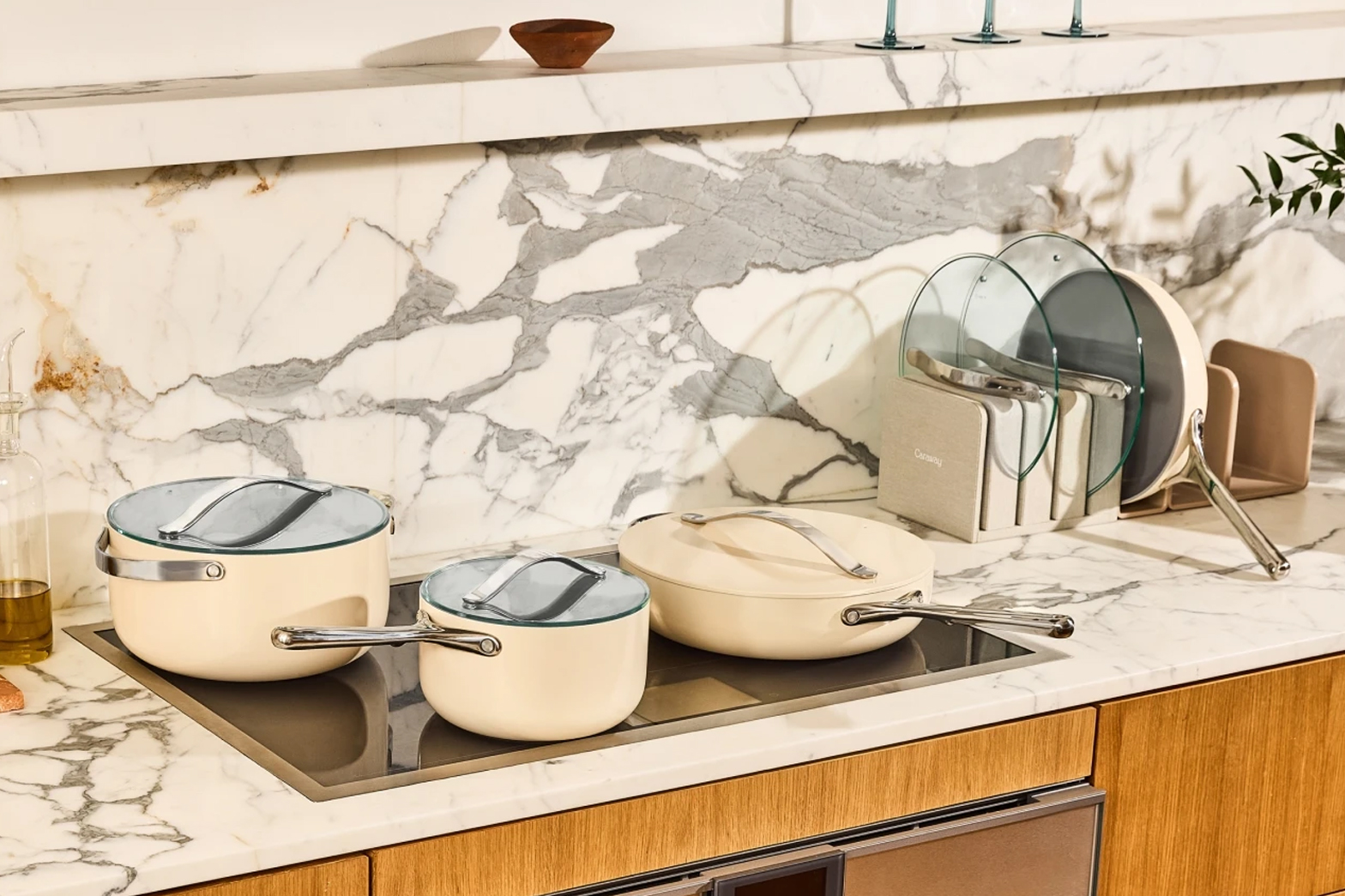
Caraway cookware has an aluminum body with a ceramic nonstick coating. Aluminum spreads heat quickly, while the coating helps food release from the pan with less oil.
The coating is not a thick block of natural pottery. It is a factory-applied, ceramic-based nonstick layer bonded to the metal pan. Like other coated cookware, it can wear down from heat, abrasion, and repeated use.
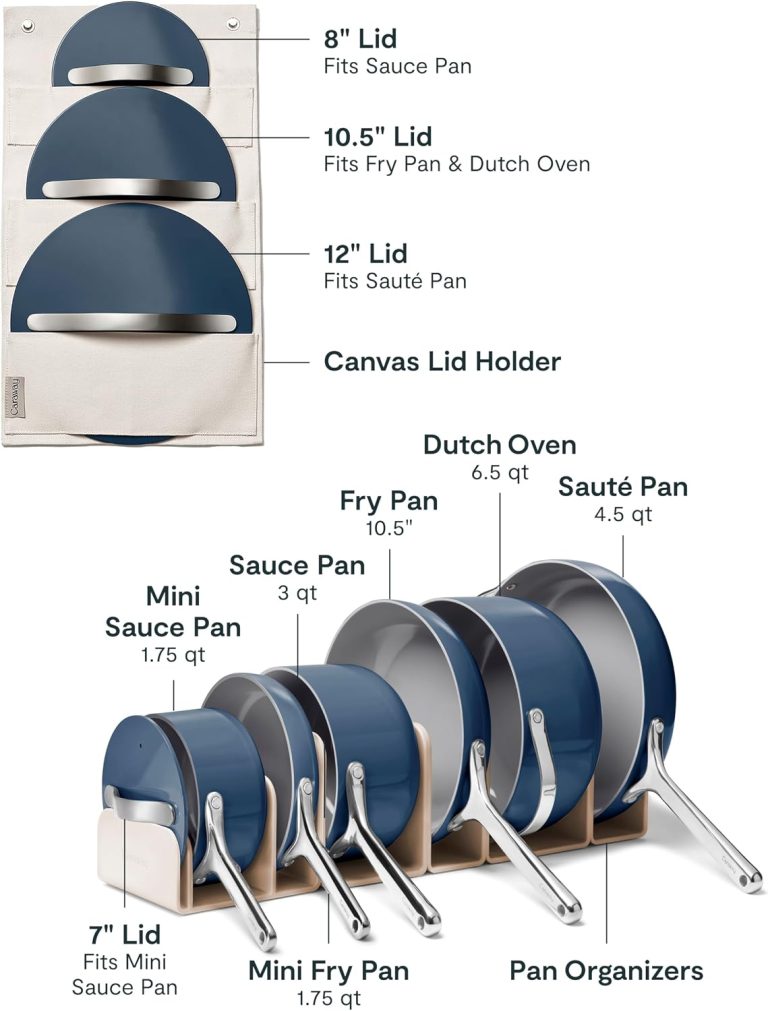
Most Caraway pieces also include:
- Stainless steel handles
- Glass lids
- An aluminum pan body
- A ceramic nonstick cooking surface
- Compatibility with gas, electric, glass, and induction cooktops
Caraway promotes its cookware as free of materials such as PFAS, PTFE, lead, and cadmium. Those are product claims made by the manufacturer. They are not the same as independent proof that every piece will perform better or last longer than other cookware.
The key distinction is this: “free from a certain chemical” and “highly durable” are separate claims. A coating may avoid PTFE and still lose its nonstick effect with age.

How Well Does Caraway Cookware Cook?
Caraway cookware usually performs best with delicate foods and everyday meals. Eggs, grilled cheese, pancakes, vegetables, rice, and fish are common good matches for a ceramic nonstick pan.
The aluminum body helps the pan heat quickly. That can reduce waiting time, but it also means the pan can become too hot faster than expected. A burner setting that seems moderate on one stove may be quite strong on another.
Foods Caraway Handles Well
Caraway cookware is well suited to:
- Eggs and omelets
- Pancakes and crepes
- Fish fillets
- Tofu
- Vegetables
- Rice and grains
- Chicken breast
- Grilled cheese
- Sauces that do not need intense reduction
use a small amount of oil or butter when cooking. Ceramic nonstick cookware does not always need much fat, but a little can improve flavor and help protect the cooking surface.
Foods That Need More Care
Some cooking tasks place more stress on the coating:
- High-heat steak searing
- Blackening fish
- Stir-frying at very high heat
- Broiling
- Burning sugar
- Long reductions
- Cooking sprays that leave a sticky film
Caraway cookware can brown food, but it is not the best tool for extreme searing. Stainless steel, carbon steel, or cast iron gives better results when you want a hard crust and high heat.

How Long Does Caraway Cookware Last?
Caraway cookware may remain useful for several years, but the exact life depends on heat, cleaning, storage, and frequency of use. The pan body can stay structurally sound while the ceramic coating slowly becomes less slippery.
This creates an important difference:
- Physical life: The pan still sits flat and has usable handles.
- Nonstick life: Food still releases easily with little oil.
The second stage often changes first.
A person who uses one pan twice a week on low heat may get much longer service than someone who uses the same pan every day on high heat. A household that stacks pans without protection may also see scratches sooner.
Practical Durability Estimate
The following is a planning guide, not a guaranteed lifespan:
| Use pattern | Likely effect on the coating |
|---|---|
| Occasional use, low heat, hand-washing | Best chance of long service |
| Daily use, careful handling | Moderate wear over time |
| Daily use with high heat | Faster loss of release |
| Dishwasher use and metal tools | Higher risk of scratches and coating wear |
| Frequent oven use | More heat stress on the coating and handles |
Caraway does not publish one universal service life for every user and cooking style. That means any exact “five-year” or “ten-year” promise should be treated with caution.
What Usually Damages Caraway’s Nonstick Coating?
The most common causes of early wear are excess heat, metal tools, rough cleaning, and poor storage.
1. High Heat
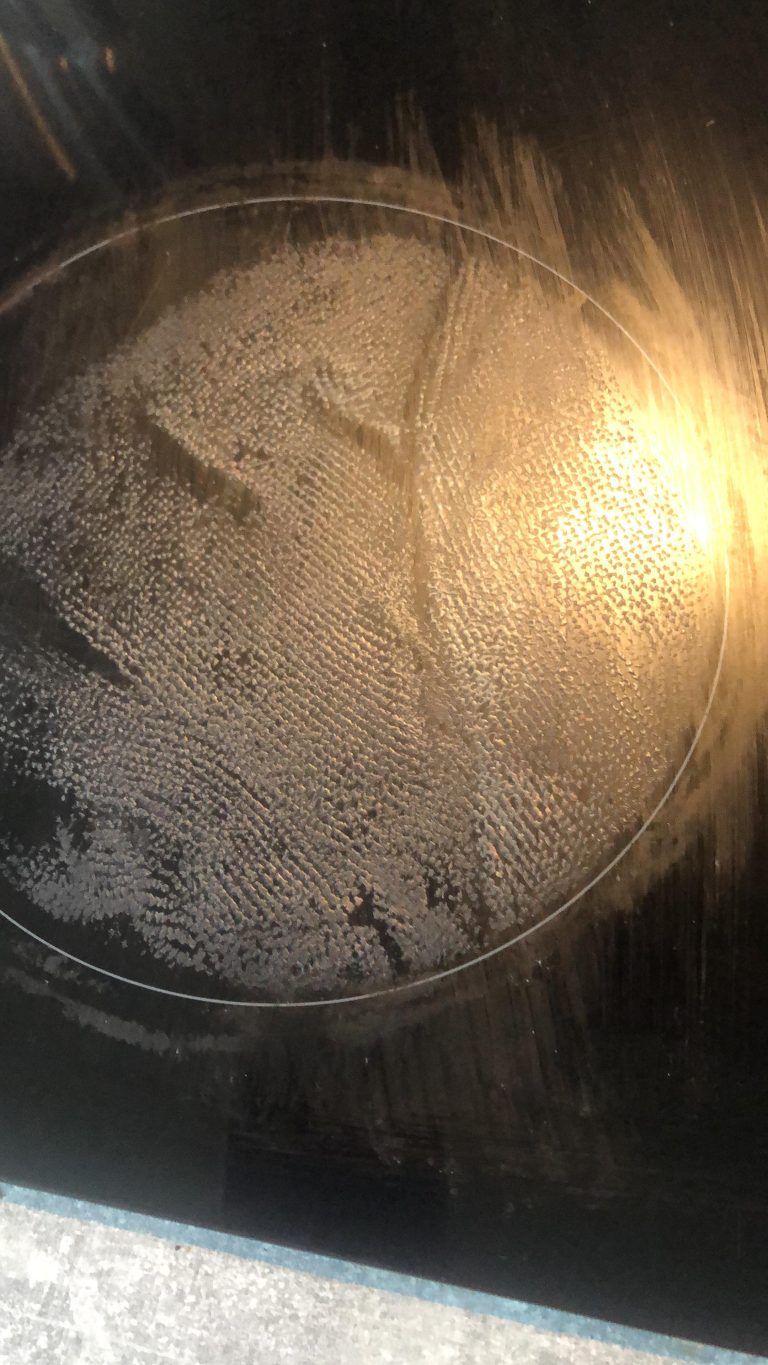
Ceramic nonstick coatings generally perform best at low to medium heat. High heat can cause food oils to bake onto the surface and may speed up the loss of nonstick performance.
Preheat the pan briefly rather than leaving it empty over a strong burner. If oil begins to smoke, the pan is too hot for most normal nonstick cooking.
2. Metal Utensils
Metal spatulas and forks can scratch the coating. One small mark may not ruin the pan, but repeated scraping can create a rough area where food sticks.
Choose:
- Silicone tools
- Wood spoons
- Nylon spatulas
- Soft plastic utensils rated for cooking
Do not cut food inside the pan with a knife.
3. Dishwashers and Harsh Detergents
Dishwasher cleaning can expose the coating and exterior to strong detergent, high water heat, and contact with other dishes. Even when a product is labeled dishwasher safe, hand-washing is usually the gentler long-term choice for coated cookware.
Let the pan cool before washing. Sudden temperature changes can stress the coating and may contribute to warping.
4. Abrasive Scrubbing
Steel wool, scouring pads, powdered cleaners, and gritty sponges can damage the surface. Soak stuck food in warm water, then use a soft sponge.
Do not scrape hard residue with a knife or metal turner.
5. Stacking Without Protection
Stacking pans can cause scratches from the base or rim of another piece. Use pan protectors, a soft towel, or the storage dividers supplied with the set.
Storage is easy to overlook. A pan can be cooked with carefully but damaged every day when it is pulled from a crowded cabinet.
How to Make Caraway Cookware Last Longer
Care has a direct effect on how long the nonstick surface stays useful.
Use Low or Medium Heat
Start with a lower burner setting. Ceramic cookware transfers heat quickly, so you may need less heat than with a heavy cast-iron pan.
For most stovetop meals:
- Place the pan on the burner.
- Add a small amount of oil or food.
- Start at low or medium heat.
- Raise the heat only if the food needs more browning.
- Lower the heat if oil smokes or food burns quickly.
Wash by Hand
After the pan cools, wash it with warm water, mild dish soap, and a soft sponge. Dry it fully before storing it.
For stuck food, soak the pan rather than attacking the residue. A paste made from baking soda and water may help with light residue, but avoid aggressive scrubbing.
Choose Safe Utensils
Silicone and wood tools are the safest everyday choices. A soft silicone turner is especially useful for eggs, fish, and pancakes because it slides under food without scraping the surface.
Use Oil Properly
A small amount of oil can help with cooking and release. Avoid aerosol cooking sprays when possible. Their propellants and additives may leave a sticky layer that is hard to remove.
Do not use oil as a way to compensate for excessive heat. Burned oil can form a stubborn film that makes a good pan seem defective.
Store Pieces Separately
If you stack Caraway pans, place a soft barrier between them. Keep lids from striking the pan edges, and avoid storing heavy tools inside the cookware.
Is Caraway Cookware Oven Safe?
Caraway cookware is designed for oven use within the temperature limits set by the manufacturer. Product instructions should take priority because limits can vary by piece, lid, and model.
Caraway commonly lists its cookware as oven safe to temperatures around 550°F, while lids may have a different limit. Confirm the current limit for your exact set before using it in the oven.
Keep these points in mind:
- Do not place a cold pan into a very hot oven if the care instructions warn against thermal shock.
- Use oven mitts because handles and lids become hot.
- Do not assume the lid and pan share the same temperature limit.
- Avoid broiling unless the instructions clearly allow it.
- Do not move a hot pan onto a cold, wet surface.
- Check the handle and lid instructions before using the cookware under a broiler.
Even when a pan can tolerate a high oven temperature, frequent oven use may shorten the useful life of a ceramic coating. The coating faces more heat stress than it would during gentle stovetop cooking.
Does Caraway Work on Induction Cooktops?
Yes. Caraway offers cookware designed to work on induction cooktops. Induction needs a magnetic base, so cookware must be built with compatible metal in the base.
Before buying, check the product page for the exact piece. Do not assume every Caraway item, accessory, or future model has identical compatibility.
To test a pan for induction, place a magnet against the bottom. A strong attraction suggests that the base may work with induction, but the manufacturer’s specifications remain the better source.
Caraway should also work on common U.S. gas, electric, and glass cooktops. On glass cooktops, lift the pan instead of sliding it. Sliding can scratch the cooking surface and may also wear the pan’s base.
Is Caraway Cookware Easy to Clean?
Caraway cookware is usually easy to clean when it is used at the right heat. Fresh food often wipes away with a soft sponge and mild soap.
The surface becomes harder to clean when oil or food burns onto it. This can happen when the pan is overheated, left empty on a burner, or used with too little moisture for a long cooking time.
For routine cleaning:
- Let the pan cool.
- Remove loose food with a soft tool.
- Soak the pan in warm, soapy water if needed.
- Wipe with a nonabrasive sponge.
- Rinse and dry.
If the pan develops a brown or sticky film, do not assume the coating has failed. It may be baked-on oil. Try gentle soaking and repeated light cleaning rather than one harsh scrubbing session.
If the surface is visibly peeling, flaking, or deeply scratched, stop using the pan and contact the manufacturer. Do not try to sand or repair the coating yourself.
What Are the Main Weak Points?
Caraway’s main weakness is not the handle or the pan shape. It is the long-term behavior of the ceramic coating.
The Nonstick Effect Can Fade
Ceramic nonstick cookware often feels very slick when new. That effect may decline with use. Food can begin to stick sooner, especially when the pan is overheated or cleaned with abrasive products.
This does not mean the pan has suddenly become unsafe. It means the pan may no longer meet your cooking needs.
It Is Not Ideal for Extreme Heat
Caraway can brown food, but it is not the strongest choice for repeated high-heat searing. Cast iron, carbon steel, and stainless steel are better for tasks that need intense heat and hard browning.
Coating Damage Is Hard to Reverse
A stainless-steel pan can often be scrubbed, polished, or re-seasoned. A coated pan does not offer the same repair options. Once the coating is badly worn, replacement is usually the practical answer.
Large Sets May Include Pieces You Rarely Use
A cookware set may look less expensive per piece, but some people use only two or three pans. Buying a smaller set or individual pieces can reduce cost and cabinet clutter.
How Does Caraway Compare With Other Cookware?
The best alternative depends on the job. No single material wins in every category.
| Cookware type | Best feature | Main drawback |
|---|---|---|
| Caraway ceramic nonstick | Easy release and simple cleanup | Coating can wear over time |
| PTFE nonstick | Very slick release | Requires careful heat and tool use |
| Stainless steel | Strong durability and high-heat use | Food can stick without proper technique |
| Cast iron | Excellent heat retention and long life | Heavy and needs seasoning care |
| Carbon steel | High heat and natural release after seasoning | Needs maintenance |
| Enameled cast iron | Heat retention and braising | Heavy and can chip if abused |
Caraway makes the most sense for someone who values easy daily cooking and prefers a coated pan without PTFE. Stainless steel may be better for a cook who wants long service and does not mind learning temperature and oil control.
A mixed cookware setup often works best. For example:
- Use Caraway for eggs and delicate foods.
- Use stainless steel for sauces and browning.
- Use cast iron or carbon steel for steaks and high heat.
- Use a Dutch oven for braises and soups.
This approach reduces the stress placed on any one pan.
Is Caraway Cookware Worth It?
Caraway cookware can be worth the price for U.S. home cooks who want:
- A clean, modern design
- A smooth ceramic cooking surface
- Easy cleanup
- Induction compatibility
- A coordinated cookware set
- A non-PTFE option
It may not be worth it for people who:
- Cook over very high heat often
- Want cookware that can be repaired or re-seasoned
- Use metal tools regularly
- Prefer dishwasher convenience
- Want a pan set for decades of heavy use
- Need the lowest possible cost per year
The value depends on how long the coating remains useful for you. A simple way to think about it is:
Cost per year = purchase price ÷ years of satisfactory use
Hypothetical Example
If a $395 set gives you four years of good performance, the basic cost is about $99 per year. If careful use extends that to seven years, the annual cost falls to about $56 per year.
This calculation does not include replacement pieces, shipping, discounts, or resale value. It also assumes that the set is used often enough to provide meaningful value.
How Should You Handle Scratches, Sticking, or Peeling?
Different symptoms point to different causes.
| Symptom | Possible cause | What to do |
|---|---|---|
| Food sticks in one spot | Burned oil or local coating wear | Clean gently and check for scratches |
| Food sticks across the whole pan | Normal coating wear or repeated overheating | Reduce heat; consider replacement if release does not improve |
| Brown film appears | Baked-on oil | Soak and clean with a soft sponge |
| Scratches appear | Metal tools or stacking | Stop using metal tools; add storage protection |
| Pan rocks on the cooktop | Warping | Stop using it and contact the manufacturer |
| Coating flakes or peels | Severe damage or manufacturing issue | Stop using the pan and request support |
| Handle becomes loose | Hardware issue | Stop using the pan until repaired or replaced |
Do not keep using cookware with peeling or flaking coating. Contact Caraway about warranty coverage, and keep your purchase record if possible.
A warranty does not automatically cover normal wear. Coverage depends on the exact policy, purchase date, seller, and type of damage. Check the current warranty terms for your item.
Common Mistakes to Avoid
Treating Ceramic Nonstick Like Cast Iron
Do not heat an empty Caraway pan for a long time. Do not use it as a griddle over maximum heat. Ceramic nonstick cookware needs gentler treatment.
Cutting Food in the Pan
A knife can leave permanent scratches. Move the food to a cutting board first.
Putting a Hot Pan in Cold Water
Sudden temperature changes can stress cookware. Let the pan cool before washing.
Using the Oven Limit as a Cooking Target
An oven-safe rating is a maximum limit under stated conditions. It is not a recommendation to use that temperature every day.
Ignoring the Lid Rating
The glass lid may have a different heat limit from the pan. Check both before oven use.
Buying a Full Set Without Checking Your Habits
If you mostly cook eggs, vegetables, and quick meals, a full set may include more pieces than you need. Count the pans you use now before ordering.
Frequently Asked Questions
Does Caraway cookware lose its nonstick quality?
It can. Ceramic nonstick performance may decline with normal use, and high heat, abrasive cleaning, metal tools, and stacking can speed up that process.
Is Caraway safer than traditional nonstick cookware?
Caraway states that its ceramic coating is made without PFAS and PTFE. That addresses specific materials, but “safer” is a broad claim. Use all cookware within its care and temperature instructions, and replace any pan with a damaged or peeling surface.
Can Caraway cookware go in the dishwasher?
Some Caraway product information may allow dishwasher use, but hand-washing is the gentler choice for long-term coating care. Check the instructions for your exact model.
Can I use cooking spray on Caraway pans?
Cooking spray may leave a residue that becomes sticky when heated. A small amount of regular cooking oil is usually easier to control and clean.
What should I do if my Caraway pan starts sticking?
First, lower the heat and gently remove any baked-on oil. Stop using metal tools and avoid abrasive cleaners. If food still sticks across the surface or the coating looks damaged, contact Caraway or replace the pan.
Conclusion
Caraway cookware holds up well when used as intended: low-to-medium heat, soft utensils, gentle cleaning, and careful storage. Its fast heating and easy release make it useful for everyday U.S. home cooking.
Its limits are just as clear. The ceramic coating can lose performance, and it cannot be restored like seasoned cast iron or polished stainless steel. If you want easy cleanup and a PTFE-free ceramic surface, Caraway may be a good fit. If you want maximum durability, high-heat performance, or cookware that can last for decades, stainless steel, cast iron, or carbon steel is likely the better choice.
Before buying, choose the pan size you will use most, review the current care and warranty terms, and plan to protect the coating from excess heat and abrasion.