How to Clean Cast Iron With Baking Soda for a Spotless Finish

Cleaning cast iron can feel like a mystery for many home cooks. You may have heard that soap is a no-go, and maybe you worry about rust, sticky spots, or stubborn bits of food. But there’s a simple, safe, and effective tool you might already have in your kitchen: baking soda. Used correctly, baking soda cleans cast iron without harming its famous non-stick surface, making your pans last for generations.
In this guide, you’ll learn exactly how to clean cast iron with baking soda, why it works, and how to avoid common mistakes. Along the way, you’ll get practical tips, see real examples, and understand when to use baking soda compared to other methods.
Whether you’re a seasoned cook or just bought your first skillet, this article will help you keep your cast iron in top shape.
Why Use Baking Soda For Cast Iron?
Baking soda is more than just a pantry staple. It’s a gentle abrasive, which means it scrubs away food and grime without scratching your pan. It also helps remove odors and neutralizes acids, which is important for cast iron care. Unlike harsh soaps or steel wool, baking soda won’t strip your pan’s seasoning or leave behind unwanted residue.
Many cleaning products can damage cast iron. Dish soaps can be too harsh, removing the protective oil layer (seasoning) that keeps your pan non-stick. Steel wool can scratch the surface. Baking soda is safe, cheap, and food-friendly.
Understanding Cast Iron And Its Seasoning
Cast iron is loved for its durability, heat retention, and natural non-stick surface. But it’s not like modern non-stick pans. Cast iron gets better with use because oil seeps into its surface and forms a protective layer called seasoning. This seasoning is what gives well-cared-for pans their easy-release quality and protection from rust.
If you use harsh chemicals or scrub too hard, you can damage this seasoning. That’s why gentle cleaning methods matter. Baking soda is mild enough to clean without stripping away the good stuff.

Credit: polienvasestransparentes.com
When Should You Use Baking Soda?
Not every mess on cast iron needs baking soda. For light cleaning, hot water and a brush are usually enough. But baking soda is ideal for:
- Stubborn stuck-on food
- Lingering odors (like fish or onions)
- Sticky or gummy spots
- Minor rust spots
If your pan has heavy rust, deep scratches, or seriously burnt-on food, you may need more powerful methods. But for most everyday problems, baking soda is your best friend.
What You Need To Clean Cast Iron With Baking Soda
You don’t need fancy tools. Here’s what works best:
- Baking soda (any brand works)
- Warm water
- Non-scratch scrubber (like a soft sponge or brush)
- Clean towels or paper towels
- Cooking oil (vegetable oil or flaxseed oil for re-seasoning)
Optional:
- Silicone pan scraper for tough bits
- Latex or rubber gloves if you want to protect your hands
If you want the best results, consider the Lodge Pan Scraper (available on Amazon). It’s inexpensive, fits easily in your hand, and won’t scratch your pan.
Step-by-step: How To Clean Cast Iron With Baking Soda
Cleaning cast iron with baking soda is straightforward. Here’s a detailed process for best results.
1. Let The Pan Cool Down
Never clean a hot cast iron pan with cold water. It can warp or crack. Let your pan cool to a safe, warm temperature before cleaning.
2. Rinse Off Loose Debris
Hold the pan under warm running water. Use a brush or sponge to remove loose food bits. Avoid using soap, which can strip seasoning.
3. Sprinkle Baking Soda
Sprinkle a generous layer of baking soda over the pan’s cooking surface. You don’t need to measure, but about 1-2 tablespoons is usually enough for a 10–12 inch skillet.
4. Scrub Gently
Use a non-scratch scrubber or brush. Rub the baking soda around in small circles. Baking soda acts as a gentle abrasive, lifting stuck food and grime without scratching the surface.
For tough spots, add a few drops of warm water to make a paste. Let it sit for 5-10 minutes before scrubbing again.
5. Rinse Thoroughly
Rinse away all baking soda and loosened debris with warm water. Make sure nothing gritty remains.
6. Dry Completely
Water is the enemy of cast iron. Use a towel or paper towels to dry your pan thoroughly. For extra safety, place it on a warm burner for 2–3 minutes to evaporate all moisture.
7. Re-season With Oil
Once dry, add a few drops of cooking oil to the pan. Rub it into the surface with a paper towel. This restores the seasoning and protects against rust.
8. Store Properly
Keep your cast iron in a dry place. If stacking with other pans, place a paper towel between them to prevent scratches.
Example Cleaning Routine
Imagine you just cooked a steak, and burnt bits are stuck on your cast iron skillet. Here’s how you could clean it:
- Let the pan cool until it’s warm, not hot.
- Rinse under warm water, using a brush to remove easy bits.
- Sprinkle 2 tablespoons of baking soda onto the pan.
- Scrub with a soft-bristled brush, focusing on stuck spots.
- Rinse thoroughly, checking that all baking soda is gone.
- Dry with a towel, then heat on the stove for 2 minutes.
- Rub in a thin layer of vegetable oil.
- Store as usual.
Comparison: Baking Soda Vs. Other Cleaning Methods
Some people wonder if baking soda is better than other methods. Here’s a direct comparison:
| Method | Safe for Seasoning? | Removes Odor? | Good for Rust? | Effort Level |
|---|---|---|---|---|
| Baking Soda | Yes | Yes | Minor | Low |
| Dish Soap | No (can strip seasoning) | Yes | No | Low |
| Steel Wool | No (can scratch and strip seasoning) | No | Yes (heavy rust only) | High |
| Coarse Salt | Yes | Some | Minor | Medium |
As you can see, baking soda is safe, easy, and effective for most everyday cleaning needs.
Why Not Use Soap?
Many people are told never to use soap on cast iron. The reason is that most soaps are designed to break down oil—exactly what seasoning is made of. While a small amount of mild soap won’t destroy your pan, it can slowly wear away the seasoning over time.
Baking soda is a much safer choice.
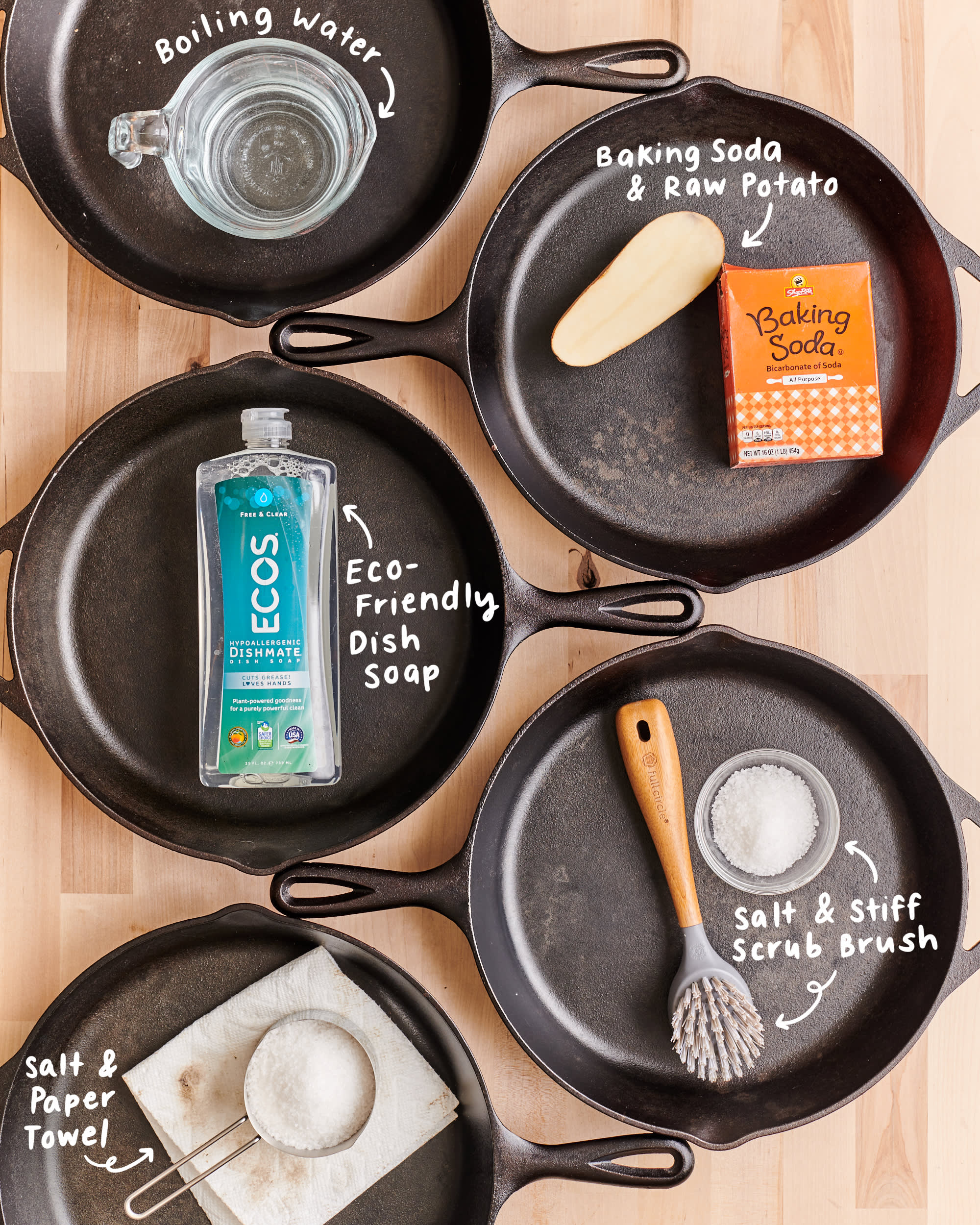
Credit: www.thekitchn.com
How Often Should You Use Baking Soda On Cast Iron?
You don’t need to use baking soda every time. Reserve it for when you have stubborn messes, odors, or sticky residue. For everyday cleaning, hot water and a brush are usually enough.
Too much scrubbing—even with baking soda—can thin the seasoning layer over time. Use it as needed, but don’t overdo it.
Removing Odors From Cast Iron With Baking Soda
Sometimes, your cast iron pan can hold onto strong smells, like fish or garlic. Baking soda is excellent for this.
- Sprinkle baking soda over the surface
- Add a little warm water to make a paste
- Let it sit for 10–15 minutes
- Scrub, rinse, dry, and oil as usual
This method absorbs and neutralizes odors without leaving any chemical smell behind.
Dealing With Sticky Or Gummy Spots
Sticky pans usually mean the seasoning has broken down, often from overheating oil. Baking soda helps remove these spots.
- Sprinkle baking soda directly onto sticky areas
- Add a few drops of water
- Scrub gently until the stickiness is gone
- Rinse, dry, and re-season
If stickiness returns, you may need to strip and completely re-season your pan.
How To Remove Minor Rust With Baking Soda
Light rust can be cleaned with baking soda. Here’s how:
- Sprinkle baking soda onto the rusted area
- Add water to make a paste
- Scrub with a non-scratch pad
- Rinse and dry thoroughly
- Re-season with oil
For heavy, deep rust, you may need steel wool or special rust removers. But baking soda works well for small spots.
What About Burnt-on Food?
If you accidentally burn food, don’t panic. Baking soda can help.
- Fill the pan with water and bring to a simmer for a few minutes
- Pour out the water and sprinkle baking soda on the burnt spot
- Scrub with a non-scratch pad
- Repeat if needed
- Dry and oil the pan
Simmering loosens burnt bits, while baking soda lifts them off.
Tips For Best Results
- Use warm, not hot, water. Sudden temperature changes can crack cast iron.
- Avoid soaking the pan. Water can cause rust.
- Dry immediately after cleaning. Don’t let the pan air-dry.
- Always re-oil. Even a little baking soda can remove some seasoning.
- Store with a paper towel inside. This absorbs moisture and prevents rust.
Common Mistakes When Cleaning Cast Iron
Beginners often make these errors:
- Using too much water or soaking the pan
- Scrubbing with steel wool or harsh pads
- Not drying thoroughly after cleaning
- Skipping the oiling step
- Using baking soda too often (which can strip seasoning)
Avoid these, and your cast iron will last for decades.
Real-life Example: Cleaning A Vintage Cast Iron Skillet
Suppose you find an old, rusty cast iron skillet at a garage sale. It’s not heavily corroded, but has some rust and grime.
- Wash off loose dirt with warm water.
- Sprinkle baking soda over the whole surface.
- Scrub with a nylon brush, focusing on rusty spots.
- Rinse and repeat as needed.
- Dry with towels and heat on the stove.
- Apply a generous layer of oil, inside and out.
- Bake in the oven at 350°F for one hour to help re-season.
With patience and baking soda, old pans can look and cook like new.
Baking Soda Vs. Other Natural Cleaners
Some people use coarse salt or vinegar. Here’s how they compare:
| Cleaner | Best Use | Effect on Seasoning | Ease of Use |
|---|---|---|---|
| Baking Soda | Odors, stuck food, minor rust | Very gentle | Easy |
| Coarse Salt | Heavy stuck food | Gentle | Medium |
| Vinegar | Heavy rust | Can strip seasoning | Requires care |
Baking soda is the safest all-around choice for most home cooks.
Best Practices For Cast Iron Care
To keep your cast iron in top condition:
- Clean right after cooking, not hours later
- Never put it in the dishwasher
- Avoid harsh chemicals and bleach
- Re-season regularly, especially after using baking soda
- Store in a dry place
A well-maintained cast iron pan can outlast almost any other cookware.
Can You Use Baking Soda On Enameled Cast Iron?
Enameled cast iron (like Dutch ovens) has a glass-like coating. Baking soda is safe for these surfaces, too. It helps remove stains and stuck food without scratching.
- Sprinkle baking soda onto stains
- Add a little water to form a paste
- Let sit for 10 minutes, then scrub gently
- Rinse and dry
Avoid using metal scouring pads, even on enamel, as they can scratch the surface.
Environmental Benefits Of Using Baking Soda
Baking soda is eco-friendly and non-toxic. It’s safe for your family, pets, and the environment. Many commercial cleaners contain chemicals that can harm waterways and wildlife. Baking soda breaks down naturally and leaves no harmful residue.
How To Choose A Good Baking Soda
Any brand of baking soda works for cleaning, but pure sodium bicarbonate is best. Avoid scented or mixed baking powders, which may contain additives. Arm & Hammer is a popular, reliable brand.
For heavy cleaning, buy larger boxes to save money. Store in a cool, dry place to prevent clumping.
When Not To Use Baking Soda
While baking soda is safe for most cleaning, avoid it if:
- Your cast iron has a special seasoning (like flaxseed oil) that you want to preserve perfectly
- The pan is heavily rusted (you’ll need stronger methods)
- The pan has delicate decorative paint
Otherwise, baking soda is your best option for regular cast iron maintenance.
Recommended Amazon Product
If you want to make cleaning even easier, try the Lodge Pan Scraper. This handy tool is designed for cast iron pans, fits in your hand, and won’t scratch your skillet. You can find it on Amazon by searching for “Lodge Pan Scraper” or by following this direct link: [Lodge Pan Scraper on Amazon](https://www.amazon.com/dp/B0039UU9UO).
This tool is affordable and long-lasting, making it a smart addition to any kitchen.
Advanced Tip: Removing Heavy Rust With Baking Soda And Vinegar
For serious rust, you can combine baking soda with vinegar. Be careful—this method can strip seasoning, so only use it when needed.
- Make a thick paste of baking soda and water
- Apply to rusted spots
- Spray with white vinegar (it will fizz)
- Let sit for 10 minutes
- Scrub with a non-scratch pad
- Rinse, dry, and re-season thoroughly
This method uses the natural reaction between acid (vinegar) and base (baking soda) to break up rust.

Credit: www.reddit.com
Troubleshooting: What If The Pan Still Feels Sticky Or Rough?
If, after cleaning, your pan still feels sticky or rough, try these steps:
- Clean again with baking soda paste
- Scrub more thoroughly, focusing on trouble spots
- Rinse and dry
- Apply a thin layer of oil and bake at 350°F for an hour
Sometimes, old seasoning needs to be stripped and re-applied. If problems persist, research stripping and re-seasoning cast iron for a deeper fix. The process is more involved but can restore even the oldest pans.
How To Store Cast Iron After Cleaning
Proper storage prevents rust and keeps your pan ready for use.
- Store in a dry place, never under the sink
- If stacking, place a paper towel or cloth between pans
- Keep the pan lightly oiled
- Check for moisture before storing
If you live in a humid area, consider storing your pan in the oven (when not in use) to keep it dry.
Understanding The Science: How Baking Soda Cleans
Baking soda (sodium bicarbonate) is slightly alkaline. It reacts with acids, oils, and grime, making them easier to wash away. Its fine texture helps scrub without scratching. Unlike soap, it doesn’t strip away oil layers too aggressively.
This makes baking soda a unique “just right” solution—strong enough to clean, gentle enough to protect.
Expert Opinions On Baking Soda And Cast Iron
Professional chefs and cast iron collectors often recommend baking soda as the safest cleaning option. It’s mentioned by trusted sources like America’s Test Kitchen and the Lodge Cast Iron company. Baking soda is also suggested in home science guides as a safe, non-toxic cleaner for cookware.
For more background on cast iron care, you can read the guide at Wikipedia.
Frequently Asked Questions
Is Baking Soda Safe For Daily Cast Iron Cleaning?
Baking soda is safe, but it’s not needed every day. Use it when you have stuck-on food, odors, or minor rust. For regular cleaning, hot water and a brush are enough. Too much scrubbing—even with baking soda—can thin the seasoning over time.
Does Baking Soda Remove Seasoning From Cast Iron?
Baking soda is gentle, but heavy or frequent use can slowly wear down the seasoning. Always re-oil your pan after cleaning with baking soda to restore the protective layer.
Can I Use Baking Soda To Clean Cast Iron In The Dishwasher?
No. Never put cast iron in the dishwasher. The long exposure to water and detergent will cause rust and destroy the seasoning. Always wash cast iron by hand.
Will Baking Soda Remove All Rust From Cast Iron?
Baking soda works for minor rust spots. For heavy, deep rust, you may need to use steel wool or a vinegar soak. Baking soda is best for surface rust and regular maintenance.
What’s The Best Oil To Re-season Cast Iron After Cleaning?
Vegetable oil, flaxseed oil, and canola oil are all good choices. Use a small amount and rub it in after each cleaning. For oven seasoning, flaxseed oil creates a hard, durable layer.
Keeping your cast iron clean and healthy is simple with baking soda. This gentle cleaner removes food, odors, and rust without harming the seasoning. Used wisely, it will help your pans last a lifetime. With the tips in this guide, you can cook with confidence—and enjoy the best your cast iron has to offer.