How to Clean Cast Iron With Baking Soda for a Spotless Finish

Cleaning cast iron can feel like a mystery for many home cooks. You may have heard that soap is a no-go, and maybe you worry about rust, sticky spots, or stubborn bits of food. I’ve cleaned dozens of skillets and Dutch ovens over the years, and I can tell you there’s a simple, safe, and effective tool you probably already have in your pantry: baking soda. Used the right way, baking soda cleans cast iron without harming its prized non-stick surface. That helps your pans stay useful and beautiful for years — even generations.
This guide shows you how to clean cast iron with baking soda step by step. I’ll explain why baking soda works, when to use it (and when to try something else), and how to avoid common mistakes. Expect practical tips, real-life examples, and clear actions you can follow the next time you’re standing at the sink with a grimy pan.
Whether you already love your cast iron or you just bought your first skillet, you’ll leave this article confident about care, cleaning, and preserving seasoning.
Why Use Baking Soda For Cast Iron?
Baking soda is more than a baking ingredient. It’s a mild, food-safe abrasive and an alkaline cleaner (sodium bicarbonate). That combination makes it very useful on cast iron. It lifts stuck food, neutralizes odors, and can help reduce surface rust — all without aggressively stripping the oil-based seasoning that gives cast iron its non-stick properties.
Many cleaners and tools can damage cast iron. Dish soap is designed to break down oils and can slowly wear away seasoning. Steel wool and metal scouring pads will scratch and remove seasoning. Baking soda cleans without those risks when used properly. It’s cheap, widely available, and safe around food.
Understanding Cast Iron And Its Seasoning
Cast iron is prized for even heat and durability. It differs from modern non-stick pans: the slick surface on cast iron is not a coating but a polymerized oil layer called seasoning. Seasoning forms when oil reacts with hot metal and carbonizes into a hard, smooth layer.
Seasoning gives the pan its non-stick feel and protects the metal from rust. Harsh chemicals, aggressive scrubbing, or prolonged soaking can damage that layer. That’s why gentle cleaning matters. Baking soda is abrasive enough to remove grime, yet gentle enough to preserve seasoning when used correctly.

Credit: polienvasestransparentes.com
When Should You Use Baking Soda?
Not every mess needs baking soda. For light cleaning, hot water and a brush usually do the job. Baking soda is best when you face:
- Stubborn stuck-on food
- Lingering odors (fish, garlic, or strong spices)
- Sticky or gummy seasoning spots
- Minor surface rust
If the pan has deep pitting, heavy rust, or seriously burned-on carbon, you may need stronger restoration methods such as stripping and re-seasoning, a vinegar soak, or steel wool followed by a full re-season. For most day-to-day problems, baking soda is my go-to solution.
What You Need To Clean Cast Iron With Baking Soda
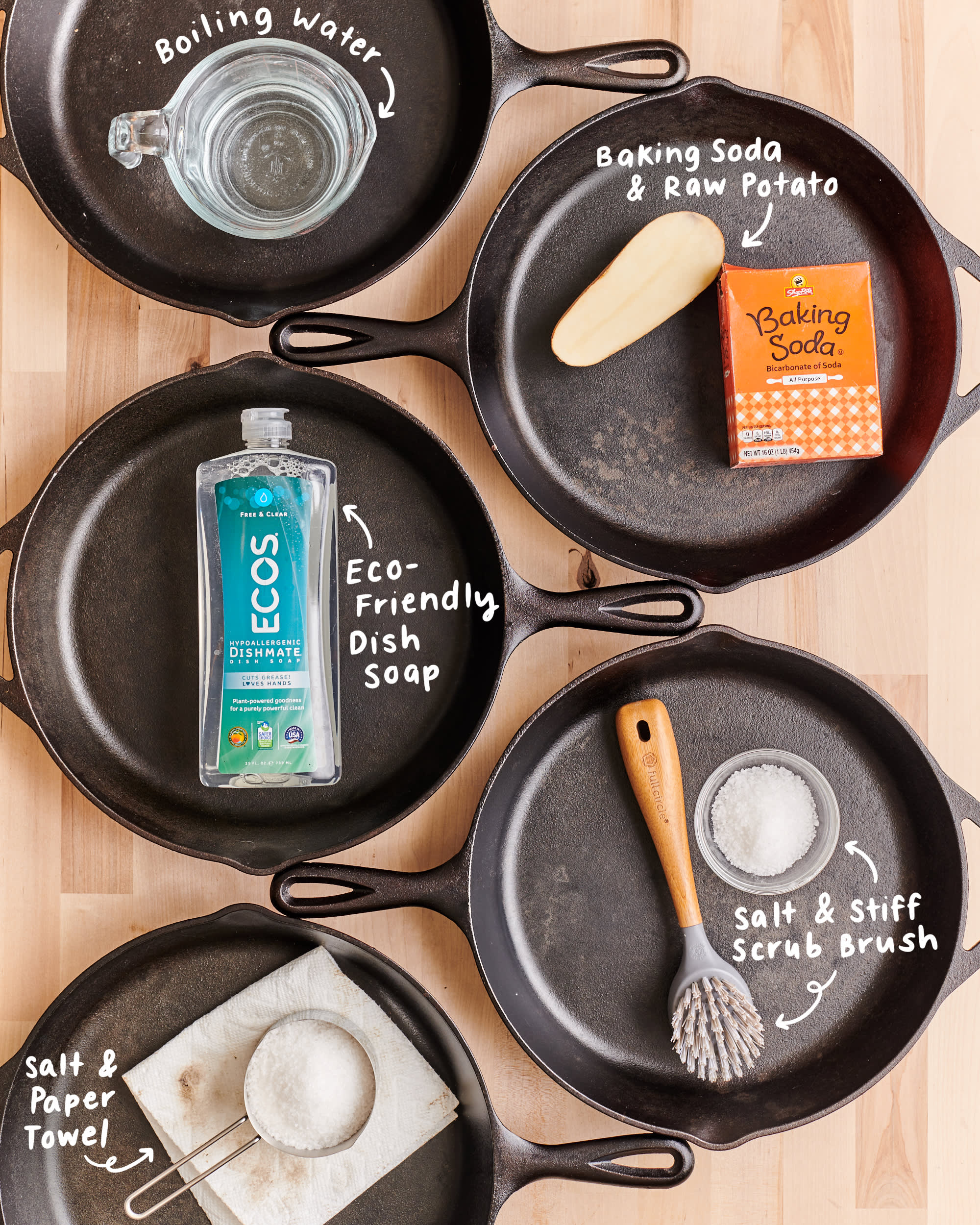
No fancy gear required. I keep these simple items near my sink:
- Baking soda (sodium bicarbonate)
- Warm water
- Non-scratch scrubber (soft sponge, nylon brush, or natural bristle brush)
- Clean towels or paper towels
- Cooking oil for re-seasoning (vegetable oil, canola, or flaxseed for long-term seasoning)
Optional tools I recommend:
- Silicone or plastic pan scraper for stubborn bits
- Latex or rubber gloves if you want to protect your hands
For scraping, I often use the Lodge Pan Scraper. It’s inexpensive, ergonomically shaped, and won’t scratch the cast iron. You can find it easily online if you want a reliable, long-lasting tool.
Step-by-step: How To Clean Cast Iron With Baking Soda
Here’s a clear, reliable process I follow every time I use baking soda on cast iron. Short sentences. Simple steps. Good results.
1. Let The Pan Cool Down
Never run cold water over a very hot cast iron pan. Sudden temperature change can warp metal or loosen seams. Allow the pan to cool until it is warm and safe to handle.
2. Rinse Off Loose Debris
Rinse the pan under warm running water. Use a brush or sponge to remove loose food. This lowers the effort required for the baking soda step. I usually skip soap at this stage.
3. Sprinkle Baking Soda
Sprinkle a generous layer of baking soda across the cooking surface. No exact measure is needed — for a 10–12-inch skillet, 1–2 tablespoons is typical. The goal is even coverage on trouble areas.
4. Scrub Gently
Use a non-scratch scrubber or a nylon brush. Rub the baking soda in small circles. The fine abrasive lifts stuck food and grime without cutting into seasoning. For stubborn areas, add a few drops of warm water to make a paste. Let the paste sit 5–10 minutes, then scrub again.
5. Rinse Thoroughly
Rinse away all baking soda and loosened debris with warm water. Run your fingers over the surface to ensure no gritty residue remains. Baking soda should leave a clean, matte surface — not a slick, soapy film.
6. Dry Completely
Water is the enemy of cast iron. Dry the pan thoroughly with towels or paper towels. For added safety, place it on a warm burner for 2–3 minutes to drive off any leftover moisture. This step lowers the chance of rust forming.
7. Re-season With Oil
Once dry, add a few drops of cooking oil to the pan and rub it in with a paper towel. This replaces any oil lost during cleaning and keeps the seasoning layer healthy. When I’m doing a deeper clean, I’ll place the oiled pan in a 350°F oven for an hour to bake the oil into the surface.
8. Store Properly
Store cast iron in a dry place. If you stack pans, put a paper towel between them to absorb moisture and prevent scratches. This simple habit prevents most rust issues.
Example Cleaning Routine
Imagine you just cooked a steak and have burnt bits stuck on your skillet. This is a routine I use:
- Let the pan cool until it’s warm, not hot.
- Rinse under warm water, using a brush to remove easy bits.
- Sprinkle 2 tablespoons of baking soda onto the pan.
- Scrub with a soft-bristled brush, focusing on stuck spots.
- Rinse thoroughly, checking that all baking soda is gone.
- Dry with a towel, then heat on the stove for 2 minutes to evaporate moisture.
- Rub in a thin layer of vegetable oil.
- Store as usual.
Comparison: Baking Soda Vs. Other Cleaning Methods
People often compare baking soda to other methods. Here’s a quick breakdown:
| Method | Safe for Seasoning? | Removes Odor? | Good for Rust? | Effort Level |
|---|---|---|---|---|
| Baking Soda | Yes | Yes | Minor | Low |
| Dish Soap | No (can strip seasoning) | Yes | No | Low |
| Steel Wool | No (can scratch and strip seasoning) | No | Yes (heavy rust only) | High |
| Coarse Salt | Yes | Some | Minor | Medium |
As the table shows, baking soda hits a useful middle ground. It cleans well with low effort and keeps seasoning intact, making it a practical first choice for most cook-at-home problems.
Why Not Use Soap?
You’ve probably heard the rule: never use soap on cast iron. The reason is straightforward. Most dish soaps are formulated to cut grease. That’s exactly what the pan’s seasoning is made from — polymerized oil. Repeated use of soap can slowly wear the seasoning away. A single mild soap wash won’t ruin a pan, but I avoid routine soap unless I need to remove sticky residues or sanitizing is required.
Baking soda is a safer everyday cleaner because it doesn’t attack oils the way detergent does.
Credit: www.thekitchn.com
How Often Should You Use Baking Soda On Cast Iron?
You don’t need baking soda every time you wash cast iron. Reserve it for stuck-on food, odors, sticky residue, or small rust spots. For daily cleaning, hot water and a brush are usually enough. Overuse — even of a gentle cleaner like baking soda — can gradually thin seasoning if you scrub aggressively. Use baking soda as needed, not on a fixed schedule.
Removing Odors From Cast Iron With Baking Soda
Strong smells can cling to cast iron. I use baking soda to neutralize them without adding fragrances or chemicals. Here’s my quick method:
- Sprinkle baking soda across the surface.
- Add a little warm water to form a paste.
- Let it sit 10–15 minutes to absorb smells.
- Scrub gently, rinse, dry, and oil as usual.
Baking soda absorbs and neutralizes odors. It leaves no lingering scent.
Dealing With Sticky Or Gummy Spots
Sticky pans often mean the seasoning polymerized unevenly or overheated. Baking soda helps remove the gummy residue so you can reapply a clean seasoning layer.
- Sprinkle baking soda on sticky areas.
- Add a few drops of water to form a paste.
- Scrub gently until the sticky film loosens.
- Rinse, dry, and re-season the pan.
If stickiness returns after cleaning and re-seasoning, a full strip and re-season is often the best long-term fix.
How To Remove Minor Rust With Baking Soda
Light rust spots are one of baking soda’s useful jobs. Here’s how I handle them:
- Sprinkle baking soda over the rusted area.
- Add water to create a paste.
- Scrub with a non-scratch pad or nylon brush.
- Rinse and dry thoroughly.
- Re-season with a thin layer of oil.
For heavy rust that has caused pitting or deep corrosion, you’ll need more aggressive methods (steel wool, rust remover, or a full strip). Baking soda works best on surface-level rust and for routine maintenance.
What About Burnt-on Food?
Burnt-on food happens to everyone. Baking soda plus heat is a gentle, effective combo:
- Fill the pan with water and bring to a simmer for a few minutes to loosen carbonized bits.
- Pour out the water and sprinkle baking soda on the burnt area.
- Scrub with a non-scratch pad or nylon brush.
- Repeat if needed, then dry and oil the pan.
Simmering softens burnt residue; baking soda lifts it without requiring abrasive scrubs that harm seasoning.
Tips For Best Results
- Use warm, not cold or boiling, water. Sudden temperature change can stress the metal.
- Avoid long soaking. Prolonged water contact promotes rust.
- Dry immediately and thoroughly after cleaning.
- Always re-oil after cleaning. Even gentle baking soda cleaning can remove tiny amounts of seasoning.
- Store with a paper towel inside the pan to absorb moisture and prevent rust.
Common Mistakes When Cleaning Cast Iron
New users often make these errors. I learned them the hard way, so here’s what to avoid:
- Soaking the pan for long periods.
- Using steel wool or harsh pads that strip seasoning.
- Not drying thoroughly after washing.
- Skipping the oiling step after cleaning.
- Using baking soda too often or scrubbing too aggressively (this can thin seasoning over time).
Avoiding these mistakes will extend the life of your pan and keep it cooking well.
Real-life Example: Cleaning A Vintage Cast Iron Skillet
Suppose you find an old, rusty skillet at a yard sale. It’s not falling apart — just dirty and mildly oxidized. Here’s a restoration approach I use for “rescue” pans:
- Rinse off loose dirt with warm water.
- Sprinkle baking soda over the whole surface.
- Scrub with a nylon brush, focusing on rusty or grimy spots.
- Rinse and repeat until clean.
- Dry with towels and warm on the stove to ensure all moisture is gone.
- Apply a generous layer of oil inside and out.
- Bake in the oven at 350°F for one hour to help re-season and bond the oil to the metal.
With patience, this method often brings old pans back to solid working condition. For kits with deep rust or pitting, a stronger approach may be needed, but baking soda is a great first step.
Baking Soda Vs. Other Natural Cleaners
Home cooks also use coarse salt and vinegar. Here’s a short comparison to help you choose:
| Cleaner | Best Use | Effect on Seasoning | Ease of Use |
|---|---|---|---|
| Baking Soda | Odors, stuck food, minor rust | Very gentle | Easy |
| Coarse Salt | Heavy stuck food (use as an abrasive with oil) | Gentle | Medium |
| Vinegar | Heavy rust or scale | Can strip seasoning | Requires care |
Baking soda is the safest all-around natural cleaner for most cook-at-home needs. Coarse salt is a useful partner when you want to scrub without soap, and vinegar is a last-resort tool for serious rust removal.
Best Practices For Cast Iron Care
To keep cast iron at peak performance, follow these habits:
- Clean right after cooking, while the pan is still warm (not hot).
- Never put cast iron in the dishwasher.
- Avoid harsh chemicals or bleach that attack metal and seasoning.
- Re-season regularly, especially after deep cleans with baking soda, vinegar, or dish soap.
- Store in a dry place and check for moisture before putting it away.
When you care for cast iron properly, it will outlast most other cookware by a wide margin.
Can You Use Baking Soda On Enameled Cast Iron?
Enameled cast iron (like many Dutch ovens) has a smooth, glass-like coating. Baking soda is safe on enamel and helps remove stains and stuck food. It won’t scratch the enamel when used gently.
- Sprinkle baking soda on stains.
- Add a little water to form a paste.
- Let sit 10 minutes, then scrub gently with a soft sponge.
- Rinse and dry.
Avoid metal scouring pads on enamel; they can scratch the finish. If in doubt, test a small area first.
Environmental Benefits Of Using Baking Soda
Baking soda is eco-friendly and non-toxic. It’s safe for people, pets, and waterways. Many commercial cleaners use chemicals that can harm aquatic life and leave residues. Baking soda breaks down naturally and leaves no harmful after-effects.
How To Choose A Good Baking Soda
Any pure baking soda (sodium bicarbonate) is fine for cleaning. Avoid scented baking powders or mixes that contain other ingredients. Arm & Hammer is a common and reliable brand, but generic store brands work just as well.
If you plan to clean often or work on large pans, buy larger boxes — they cost less per ounce. Store baking soda in a cool, dry spot to prevent clumping.
When Not To Use Baking Soda
Although baking soda is safe in most cases, avoid it when:
- Your cast iron has an ultra-fine, recently applied seasoning you want to preserve perfectly (some delicate layers respond poorly to frequent scrubbing).
- The pan is heavily rusted or pitted — treatment will require stronger methods.
- The pan has delicate decorative paint on the exterior that might dull with scrubbing.
In most other situations, baking soda is an excellent go-to cleaner.
Recommended Amazon Product
If you want to make cleaning even easier, try the Lodge Pan Scraper. This handy tool is designed for cast iron pans, fits in your hand, and won’t scratch your skillet. You can find it on Amazon by searching for “Lodge Pan Scraper” or by following this direct link: https://www.amazon.com/dp/B0039UU9UO.
This tool is affordable and long-lasting. I keep one in my utensil drawer — it saves time and protects the surface better than metal scrapers.
Advanced Tip: Removing Heavy Rust With Baking Soda And Vinegar
For serious rust, combining baking soda and white vinegar can help. Use caution: this method can strip seasoning and should be used only when necessary.
- Make a thick paste of baking soda and water.
- Apply to rusted spots.
- Spray or drizzle white vinegar over the paste (it will fizz).
- Let sit 10 minutes to loosen rust.
- Scrub with a non-scratch pad or nylon brush.
- Rinse, dry, and re-season thoroughly.
This uses the acid-base reaction to break the rust’s bond with the metal. After this treatment, always re-season the pan well to restore protection.

Credit: www.reddit.com
Troubleshooting: What If The Pan Still Feels Sticky Or Rough?
If the pan still feels sticky or rough after cleaning, try these steps:
- Clean again with a baking soda paste and warm water.
- Scrub more thoroughly, focusing on the trouble spots.
- Rinse and dry completely.
- Apply a thin layer of oil and bake at 350°F for an hour to polymerize the oil into a durable seasoning layer.
Sometimes old or damaged seasoning must be stripped and rebuilt. If issues persist after these steps, research “stripping and re-seasoning cast iron” for a deeper restoration process. It takes more time but can restore even very old pans.
How To Store Cast Iron After Cleaning
Proper storage prevents rust and keeps your pan ready for use:
- Store in a dry place; avoid humid areas and never under the sink.
- If stacking pans, place a paper towel or cloth between them to absorb moisture and prevent scratches.
- Keep the pan lightly oiled to protect bare metal.
- Check for moisture before storing; give the pan a quick heat if you’re unsure.
If you live in a humid climate, storing pans in a turned-off oven or a dry cupboard can reduce the risk of rust.
Understanding The Science: How Baking Soda Cleans
Baking soda is sodium bicarbonate. It’s mildly alkaline and reacts with acids, certain food residues, and grease to loosen them. Its fine crystalline texture provides gentle abrasion that lifts grime without cutting the metal. Unlike detergent, baking soda doesn’t aggressively emulsify and remove polymerized oils that form seasoning.
In short: baking soda is strong enough to clean, yet gentle enough to protect the seasoning when used correctly.
Expert Opinions On Baking Soda And Cast Iron
Many professional chefs and cast iron experts recommend baking soda as a safe cleaning option. Trusted sources like America’s Test Kitchen and the Lodge Cast Iron company suggest similar gentle maintenance routines. Baking soda also gets a nod in home science and cookware care guides as an effective, non-toxic choice.
For more background on cast iron care and the cookware’s history, you can read the guide at Wikipedia.
Frequently Asked Questions
Is Baking Soda Safe For Daily Cast Iron Cleaning?
Baking soda is safe, but you don’t need it every day. Use it for stuck-on food, odors, or minor rust. For everyday cleaning, hot water and a brush are usually enough. Excessive scrubbing — even with baking soda — can wear seasoning over time.
Does Baking Soda Remove Seasoning From Cast Iron?
Baking soda is gentle. It won’t remove well-bonded seasoning in normal use. However, heavy or frequent scrubbing can gradually thin the seasoning. Always re-oil the pan after using baking soda to restore any oil lost during cleaning.
Can I Use Baking Soda To Clean Cast Iron In The Dishwasher?
No. Never put cast iron in the dishwasher. Long exposure to water and detergent will cause rust and destroy seasoning. Always hand-wash cast iron.
Will Baking Soda Remove All Rust From Cast Iron?
Baking soda removes light, surface rust effectively. For deep, heavy rust or pitting, you’ll need steel wool, a vinegar soak, or a full strip and re-season. Baking soda is a great first step for maintenance and minor rust issues.
What’s The Best Oil To Re-season Cast Iron After Cleaning?
Vegetable oil, canola oil, and flaxseed oil are popular choices. Use a small amount and rub it in after each cleaning. For oven seasoning, flaxseed oil can create a hard, durable layer, but it requires careful application and baking. I often use vegetable oil for routine care and flaxseed when I’m doing a full re-seasoning project that I want to last a long time.
Keeping your cast iron clean and healthy is simple with baking soda. This gentle, food-safe cleaner removes food, neutralizes odors, and helps with minor rust — all without damaging the seasoning when used properly. With a little attention and the tips in this guide, your pan will reward you with great cooking for years. I’ve seen skillets improve with each use and each careful clean, and I hope these steps help you get the same reliable results.