Is Tri Ply Stainless Steel Safe: Facts, Risks & Tips 2026

Yes, tri-ply stainless steel is safe for everyday cooking when used as directed.
If you care about what touches your food, you’re in the right place. I test, cook, and teach with stainless steel every day. I’m often asked, “Is tri-ply stainless steel safe?” This guide answers that in plain language. I share kitchen-tested tips, research-backed facts, and simple steps you can use right away to cook safely and well.

What tri-ply stainless steel actually is
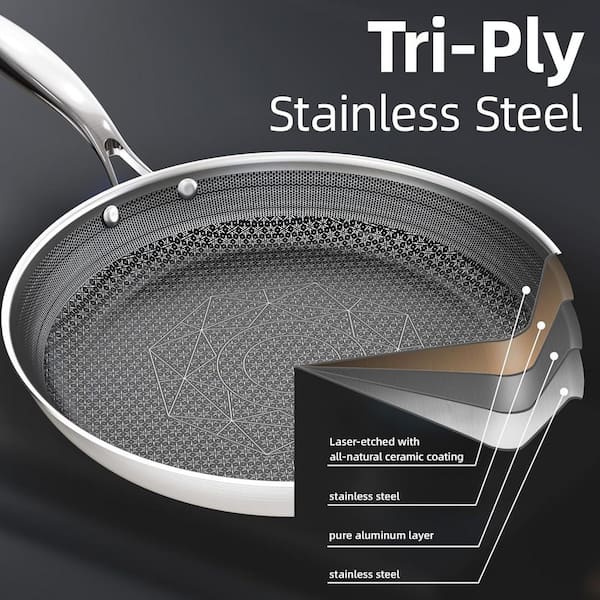
Tri-ply means three bonded layers. The usual build is:
- Stainless steel outside (cooking surface)
- Aluminum core (middle layer for heat distribution)
- Stainless steel on the outside again (base and exterior)
The aluminum core spreads heat quickly and evenly. The stainless steel layers keep food from touching aluminum. That prevents reaction and keeps flavors true.
Most quality pans use 304 stainless steel for the interior. Some higher-end lines use 316 stainless for extra corrosion and acid resistance. The aluminum core is fully sealed. It never touches your food unless the pan is badly damaged.
When people ask, “Is tri ply stainless steel safe?”, the answer begins with how it is made. A food-safe contact layer plus good heat control is the point of tri-ply cookware.
What you get in practice:
- Fast, even heat with fewer hot spots
- A tough, non-reactive surface for sauces, sears, and browning
- No chemical nonstick coating to wear or flake
Layers explained (quick)
Each layer has a job:
- Inner stainless (304 or 316): food contact, non-reactive surface.
- Aluminum core: moves heat across the pan quickly and evenly.
- Outer stainless: protects the core and, when magnetic, makes the pan induction-ready.
These parts together give you the control of metal with the food safety of stainless steel.
Is tri ply stainless steel safe? The evidence
Short answer: yes. Tri-ply stainless steel cookware uses a food-grade stainless surface. Regulators and health agencies accept stainless steel for cookware. It is stable at normal cooking temperatures. It does not break down the way some coatings do.
Key safety facts, made simple:
- The food-contact surface is stainless steel. It is inert in most cooking.
- The aluminum core is sealed inside. It will not touch food unless the pan is visibly damaged.
- There is no PTFE and no PFOA. You won’t get fumes from those chemicals.
- Trace nickel and chromium can leach into very acidic foods. This is most likely with brand-new pans and long, high-heat acid cooks.
- People with nickel sensitivity should take care. Consider 316 stainless or another material if you know you react.
What research and standards say
Independent lab tests show very low metal release under normal use. Tests do find higher release with prolonged cooking of high-acid foods or with brand-new pans. But release drops after a short break-in period and stays well under safety limits set by agencies such as the FDA and EFSA. High-quality stainless cookware from reputable brands typically meets these standards when used properly.
I use a simple break-in for new pans. I simmer water with a splash of vinegar for 10 minutes, then wash and start cooking. This quick step lowers early metal release and helps the pan perform well from the start.
Is tri-ply stainless steel safe across all stove types? Yes. It works on gas, electric, ceramic, and induction—but only if the outer layer is magnetic. Test with a fridge magnet before you buy if you need induction compatibility.

Potential risks and how to avoid them
People often ask, “Is tri ply stainless steel safe if you have allergies?” It depends. Stainless steel can contain nickel. If you have a nickel allergy, you may react to some grades. That said, reactions are uncommon for most people.
Practical ways to stay safe:
- Nickel sensitivity. Choose 316 stainless or nickel-free cookware. Use enameled cast iron for long, acidic dishes if you know you react.
- Overheating. Do not preheat an empty pan on high. That can warp and discolor the pan. It won’t usually be toxic, but it will shorten the pan’s life. Preheat on medium.
- Salt pitting. Don’t toss salt into cold water in a new pan. Bring water to a boil, then add salt and stir. This helps prevent pinhole pitting.
- Harsh scrubbers. Steel wool can scratch and trap food. Use a soft sponge or a non-scratch pad.
- Deep acid soaks. Avoid very long soaks in strong acids. Keep tomato braises at a gentle simmer rather than a hard boil for hours.
Nickel allergy: practical steps
If you suspect nickel sensitivity:
- Test: cook a small acidic item (tomato sauce) briefly. If you get a metallic taste or reaction, stop.
- Switch to 316 stainless, ceramic, or enameled cast iron for acidic foods.
- Consult your doctor for allergy testing and advice.
Is tri ply stainless steel safe if the inside is scratched? Light scuffs are normal and fine. Deep gouges that expose the inner layers or the aluminum core are not safe. Replace a pan if you can see or feel the core.

Cooking performance without compromise: My real-world take
I use tri-ply in home kitchens and classes. It gives me control and consistency. It also gives me peace of mind about safety.
A few simple habits keep both safety and results high:
- Preheat on medium until a drop of water skitters across the surface.
- Add oil, then food. Food sticks less and browns better when the pan and oil are warm.
- For eggs or delicate fish, start a bit lower and be patient.
- Deglaze stuck bits with water, wine, or stock. That lifts flavor and makes cleanup easier.
I have simmered tomato sauce for hours in a good tri-ply pan. I noticed no metallic taste or odd smell. The surface cleaned up bright after a normal wash. So, is tri-ply stainless steel safe for long cooks? With a quality pan and reasonable heat control, yes.
Quick cooking tips for best results
- Use medium heat for most tasks. Reserve high heat for searing meat briefly.
- When food sticks initially, let it form a crust. It will release naturally when ready.
- Use wooden or silicone tools to avoid scuffs.

How to choose safe tri-ply cookware
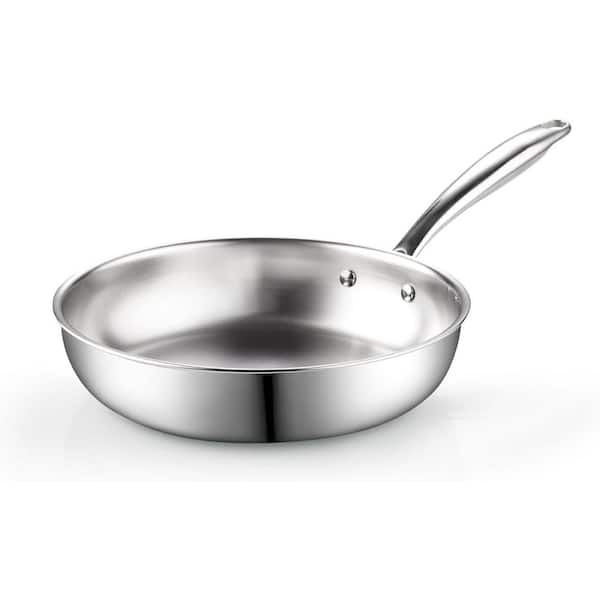
Not all tri-ply pans are the same. Look for clear specs and solid build. This helps you buy cookware that is safe, performs well, and lasts.
What to check before you buy:
- Interior grade. Look for 304 or 316 stainless steel inside.
- Full cladding. Heat-spreading layers should run up the sides, not just on the base.
- Thickness. A medium to heavy gauge reduces hot spots and warping. Look for weights or mm specs.
- Induction-ready. A magnet should stick to the bottom if you use induction.
- Solid handles and tight rivets. They should feel secure and stay cool enough to grip.
- Brand transparency. Good makers publish materials, testing, and warranties.
Quick buying checklist
- Does the spec sheet list 304 or 316 interior?
- Is the pan fully clad to the rim?
- Can a magnet stick to the base (for induction)?
- Does the brand offer testing or warranty info?
Is tri ply stainless steel safe from budget brands? It can be—if they use food-grade steel and proper bonding. Read the spec sheet and reviews. Check warranty and return policy.
Care and maintenance for long-term safety
Clean pans last longer and stay safe. Good care prevents problems like pitting, discoloration, and excess metal release.
Easy care steps:
- Hand wash warm with a mild soap. Dry right away to stop water spots.
- For rainbow tints, wipe with a little vinegar and water. For brown fond, use a baking soda paste and a soft cloth.
- For tough stains, a small amount of stainless cleaner or Bar Keepers Friend works well. Rinse fully.
- Store with cloth or paper between pans to protect rims and finishes.
You can “season” stainless for a slick, semi-nonstick feel. Heat the pan, add a thin layer of oil, let it shimmer, and wipe out the excess. It won’t match coated nonstick, but it helps with eggs and pancakes.
Is tri ply stainless steel safe in the dishwasher? Many lines are labeled dishwasher-safe. Still, I hand wash to reduce detergent wear and keep the finish bright. Hand washing also protects rivets and handles over time.
When to replace a pan
- Visible exposure of inner layers or core.
- Severe warping that stops even contact with the stovetop.
- Rivets or handles that loosen beyond repair.
Small scratches and scuffs do not mean the pan is unsafe. They are normal with use.

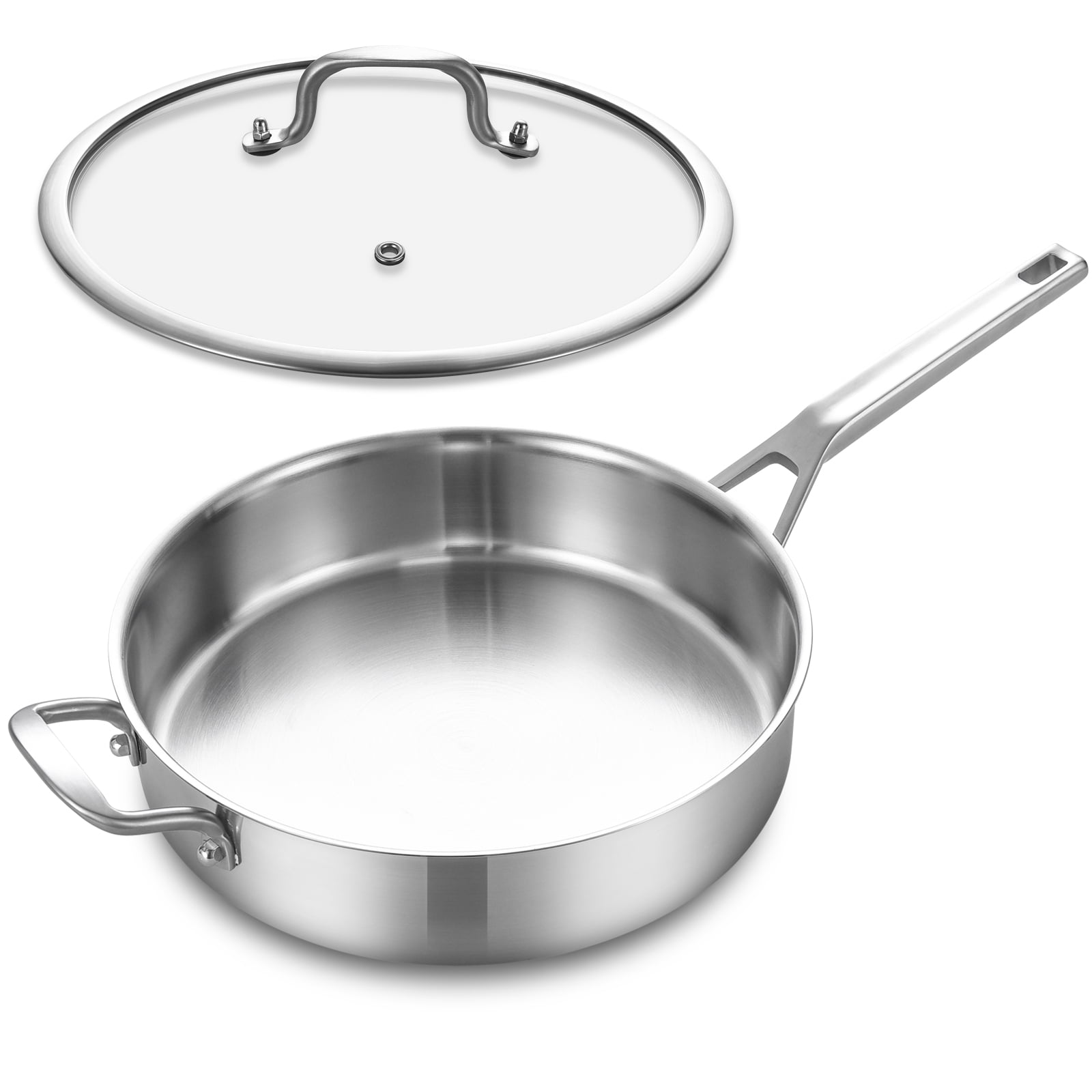
Tri-ply vs other cookware: a safety snapshot
How does tri-ply stack up against other common cookware types?
- PTFE nonstick. Great release, but coatings can scratch or overheat and may degrade over time. Tri-ply has no coating to shed.
- Ceramic nonstick. Easy at first, but some lose release quickly. Quality varies by brand.
- Cast iron. Very durable and adds iron to food. Needs seasoning and care with acid. Can be heavier.
- Carbon steel. Similar to cast iron in care and reactivity. Lighter and faster to heat.
- Bare aluminum. Light and cheap, but reactive with acidic foods. Often anodized to reduce reactivity.
- Copper. Excellent heat control. Needs an inner lining (usually stainless or tin) and regular polishing.
Is tri ply stainless steel safe compared to these? Yes. It balances safety, heat control, and longevity. For many cooks, tri-ply is the best all-round choice.
Myths and facts about tri-ply safety
Let’s clear common confusion with straight facts.
-
Myth: The aluminum core will leach into food.
Fact: The aluminum core is sealed between steel layers. If you can see aluminum, the pan is damaged and should be replaced. -
Myth: All stainless steel dumps nickel into food.
Fact: Stainless can release trace nickel, most when new and with acidic foods. Levels are low and drop after a few uses. -
Myth: Discoloration means danger.
Fact: Rainbow or golden tints are harmless oxidation. Clean and carry on. -
Myth: You must avoid salt.
Fact: Add salt to boiling water and stir. You are fine.
Is tri ply stainless steel safe once the pan shows minor scratches? Yes. Small marks are normal and do not affect safety or performance.

Environmental and long-term health angle
A safe pan should also be a smart buy for the planet. Tri-ply does well here.
- Long life. No coatings to flake. One good set can last decades.
- Lower waste. You replace less plastic-coated cookware.
- Recyclable. Stainless and aluminum are both recyclable metals.
- Heat control. Even heat helps you cook at lower settings and save energy.
Is tri ply stainless steel safe for a lifetime of use? With care, yes. Many professional kitchens still prefer it for good reason.
Frequently Asked Questions
Is tri ply stainless steel safe?
Yes. It uses a food-grade stainless surface with a sealed aluminum core. It is stable at cooking heat and has no chemical coatings.
Can stainless steel leach metals into food?
Trace nickel and chromium can leach, mostly with acidic foods and new pans. Levels are usually low and fall after a few uses.
Is tri ply stainless steel safe for induction cooktops?
Yes, if the outer layer is magnetic. Check with a fridge magnet before you buy.
Is tri ply stainless steel safe in the dishwasher?
Many lines say yes, but hand washing keeps the finish and rivets in better shape. Dry right away to prevent water spots.
What should I avoid when using tri-ply?
Avoid empty high-heat preheats, adding salt to cold water, and harsh steel wool. Use medium heat, boil then salt, and non-scratch tools.
How do I reduce sticking without nonstick coatings?
Preheat on medium, add oil, then add dry food. Let a crust form before you flip. Deglaze stuck bits with stock or wine.
Conclusion
If you want safe, steady, and durable cookware, tri-ply is hard to beat. The food-contact surface is stable. The aluminum core is sealed. With simple habits, you get clean flavor, even heat, and reliable results for years.
Choose a quality set, treat it well, and cook with calm. If you found this helpful, share it with a friend, subscribe for more practical kitchen guides, or drop a question in the comments.