How To Choose Cookware Sets: Smart Buying Guide

Choosing a cookware set means matching the pots and pans to your U.S. stovetop, cooking habits, storage space, and care routine. The best set is not the one with the most pieces. It is the one with the right pan sizes, a safe construction, useful lids, and a material that fits your kitchen.
A good starting set often includes a 10- or 12-inch skillet, a 2- to 3-quart saucepan with a lid, and a 5- to 8-quart stockpot or Dutch oven. From there, choose stainless steel, nonstick, cast iron, carbon steel, or another material based on how you cook.
This guide explains how to compare cookware sets in the United States, check stovetop and oven compatibility, avoid misleading piece counts, and choose pans that you will use for years.
Key Takeaways
- Count the useful cooking vessels, not just every lid and accessory.
- Check whether the set works with your stove, especially if you use induction.
- Stainless steel is a flexible choice for browning and high-heat cooking.
- Nonstick pans suit eggs, fish, pancakes, and low-fat cooking but need gentler care.
- Cast iron and carbon steel hold heat well but need seasoning and careful drying.
- A set with three excellent pans can be better than a large set with duplicate pieces.
- Read the maker’s limits for oven temperature, broiler use, dishwasher cleaning, and metal utensils.
Start With Your Cooking Needs
The right cookware set depends on what you cook most often. A person who makes eggs, rice, pasta, and quick stir-fries needs a different set from someone who sears steaks, makes sauces, and cooks large family meals.
Before shopping, answer these questions:
- How many people do you usually cook for?
- Do you cook mostly eggs, vegetables, meat, sauces, soups, or pasta?
- Do you use a gas, electric, glass, or induction cooktop?
- Do you move pans from the stove to the oven?
- Do you want dishwasher-safe cookware?
- Do you have room for large pots?
- Do you prefer easy cleanup or strong browning?
- Do you want a nonstick surface?
Your answers help narrow the field.
A simple size guide
| Cookware piece | Best use | Typical U.S. household need |
|---|---|---|
| 8-inch skillet | One egg, small portions | Useful but not essential |
| 10-inch skillet | Eggs, vegetables, chicken, fish | Core piece for 1–3 people |
| 12-inch skillet | Family meals, searing, one-pan dishes | Core piece for 3 or more people |
| 1.5- to 2-quart saucepan | Oatmeal, sauces, reheating | Useful for small portions |
| 3-quart saucepan | Rice, grains, vegetables, sauces | More flexible everyday size |
| 3- to 4-quart sauté pan | Braises, pasta sauces, shallow frying | Useful alternative to a large skillet |
| 5- to 8-quart stockpot | Pasta, soup, chili, boiling | Important for larger households |
| 5- to 7-quart Dutch oven | Braising, bread, soup, slow cooking | Helpful but often sold separately |
These sizes are general guides. A 12-inch skillet may be too large for a small glass cooktop, while a 10-inch pan may feel cramped when cooking for five people.
Buy for your real routine
if you cook simple meals, a large set may add clutter. If you cook several dishes at once, extra saucepans and a second skillet may save time.
Think of cookware like tools in a toolbox. A toolbox does not become better because it has three hammers. A cookware set does not become better because it includes several small pans that rarely leave the cabinet.

Understand Cookware Materials
Cookware material affects heat control, browning, cleanup, weight, and lifespan. No single material performs best at every task.
Stainless steel
Stainless steel cookware is durable, resistant to rust, and useful for browning meat and making pan sauces. Many stainless steel pans use an aluminum or copper core because stainless steel alone does not spread heat as well.
Look for terms such as:
- Tri-ply: Three bonded layers, often stainless steel with an aluminum center.
- Clad: Multiple metal layers joined across the base or up the sides.
- Fully clad: The heat-spreading layer extends up the side walls.
- Encapsulated base: A bonded heat-spreading disk sits under the pan.
Stainless steel can stick when used at the wrong temperature. Preheat the pan, add oil, and avoid moving food too soon. It is usually a strong choice for cooks who want one material for many tasks.
Best for: searing, sautéing, sauces, vegetables, and oven use when the handle and lid allow it.
Limitations: food may stick, and lower-quality pans may heat unevenly.
Nonstick cookware
Nonstick cookware uses a slick coating that helps food release with little oil. It works well for eggs, pancakes, delicate fish, and foods that tend to cling.
Most nonstick pans use either a fluoropolymer coating, such as PTFE, or a ceramic-based coating. The coating type, oven limit, and care instructions vary by product.
For safer, longer use:
- Do not heat an empty nonstick pan on high.
- Follow the maker’s oven and broiler limits.
- Use wood, silicone, or other approved utensils.
- Replace the pan if the coating is badly peeling, flaking, or damaged.
- Avoid placing a hot pan into cold water, which can warp it.
The U.S. Food and Drug Administration evaluates food-contact substances under its regulatory system. The Cookware Manufacturers Association also provides consumer guidance on cookware care. Still, the product manual controls the correct use of a specific pan.
Best for: eggs, fish, pancakes, and low-fat cooking.
Limitations: coatings can wear faster than bare metal, and high heat may reduce service life.
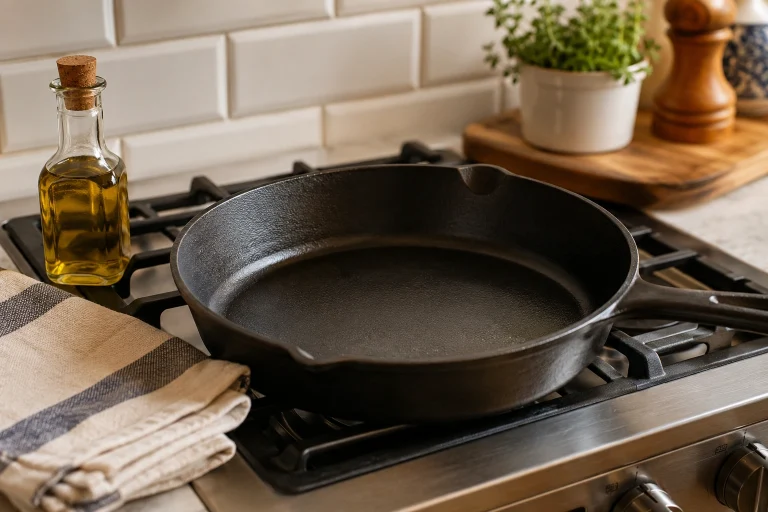
Cast iron
Cast iron holds heat for a long time. It is useful for searing, frying, baking, and dishes that move from the stovetop to the oven.
Traditional cast iron needs seasoning. Seasoning is a baked-on layer of oil that helps protect the metal and improve food release. Cast iron can rust if left wet, and it is heavy enough to strain some glass cooktops if dragged or dropped.
Acidic foods, such as tomato sauce, may affect seasoning, especially during long cooking. Enamel-coated cast iron avoids the need for regular seasoning, but the enamel can chip if hit or heated carelessly.
Best for: steaks, cornbread, deep frying, roasting, and slow cooking.
Limitations: heavy, slower to heat, and more demanding to maintain.
Carbon steel
Carbon steel is thinner and lighter than cast iron but shares many of its strengths. It can develop a seasoned surface and respond more quickly to heat changes.
It is popular for frying, searing, omelets, and high-heat cooking. Like bare cast iron, it needs drying and seasoning. Acidic foods can strip or weaken the seasoning.
Best for: high-heat cooking, stir-frying, searing, and cooks who want a lighter alternative to cast iron.
Limitations: requires care and may warp if heated or cooled too quickly.
Ceramic-coated cookware
Ceramic-coated pans usually have a metal body with a ceramic-based nonstick surface. They can offer easy food release at first, but the coating may lose performance over time, depending on use and care.
Do not assume that “ceramic” means solid ceramic. Read the construction details. Also check whether the handle, lid, and body can go in the oven.
Best for: low- to medium-heat cooking and easy cleanup.
Limitations: coating life varies, and high heat can shorten performance.
Copper cookware
Copper responds quickly to temperature changes and spreads heat well. Many copper pans have a stainless steel lining because bare copper reacts with some foods.
Copper cookware is often expensive and may need polishing. It may also require special care and can be unsuitable for induction unless the pan includes a magnetic base.
Best for: precise heat control and specialty cooking.
Limitations: high cost, more care, and possible induction limits.

Match the Set to Your Stovetop
Stovetop compatibility can eliminate a cookware set before you compare its finish or piece count.
Gas cooktops
Most cookware works on gas. A pan with a flat, stable base is still important. Very thin pans may develop hot spots over a strong flame.
Keep the flame under the pan rather than around its sides. Flames that climb the sides can damage handles and waste heat.
Electric coil cooktops
Electric coils heat and cool more slowly than gas burners. Heavy pans can work well, but they may take longer to respond when you lower the heat.
A flat base helps maintain contact with the coil. Do not drag heavy cast iron across the cooktop.
Smooth glass and ceramic cooktops
Flat-bottom cookware works best on smooth cooktops. Avoid rough, gritty bottoms that can scratch the surface.
Lift pans instead of sliding them. Heavy cast iron can work on some glass cooktops, but check the cooktop maker’s instructions and handle it carefully.
Induction cooktops
Induction cooktops heat magnetic cookware through the pan base. A simple magnet test can help: place a magnet against the bottom of the pan. If it sticks firmly, the pan may work with induction.
The test is not a full guarantee. The pan must also have a suitable, flat base. Some small pans may not activate the burner, and warped cookware may perform poorly.
Manufacturers often label induction cookware with an induction symbol or compatibility statement. Check the exact product information before buying a set.
How to check compatibility
- Identify your cooktop type.
- Read the cookware maker’s compatibility list.
- Check whether the entire set works, not just one pan.
- Use a magnet test for unmarked metal cookware.
- Confirm that the base is flat and stable.
- Review size limits for your cooktop burners.
Evaluate the Construction and Design
Two cookware sets can use the same material but perform very differently. Construction details often matter more than marketing terms.
Check the base
A thick, even base can reduce hot spots. For stainless steel, a bonded aluminum layer can improve heat distribution.
Look for a base that sits flat and does not wobble. Set the pan on a flat counter and gently press the rim. Movement may signal warping.
Check the handles
A good handle should feel secure, balanced, and comfortable. It should give you enough room to hold the pan without touching a hot wall.
Ask:
- Is the handle riveted, welded, or attached with screws?
- Does it stay cooler during normal stovetop use?
- Is it oven-safe?
- Does it fit comfortably in your hand?
- Does it make the pan hard to store?
Rivets inside the pan can collect food, but they can also create a strong attachment. Welded handles may provide a smoother cooking surface. Neither style is automatically best; inspect the design and warranty.
Check the lids
Lids should fit well without rocking. A small amount of steam release may be normal, but a loose lid can slow cooking and create mess.
Glass lids let you see food without lifting the lid. Metal lids often tolerate higher heat, but the exact limit depends on the product.
Check whether lids are:
- Oven-safe
- Dishwasher-safe
- Interchangeable
- Ventilated
- Easy to grip with a potholder
Check the weight
Heavy cookware may hold heat well, but weight affects daily use. A pan that is too heavy may stay in the cabinet.
Lift the pan with one hand if possible. Then imagine lifting it with food inside. This is especially important for large cast iron pans and full stockpots.
Compare Cookware Set Piece Counts Correctly
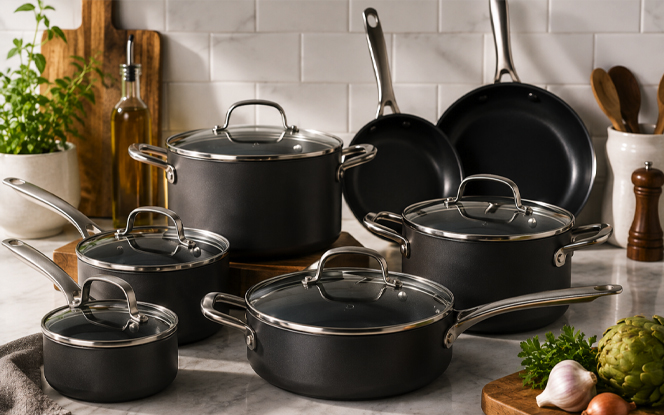
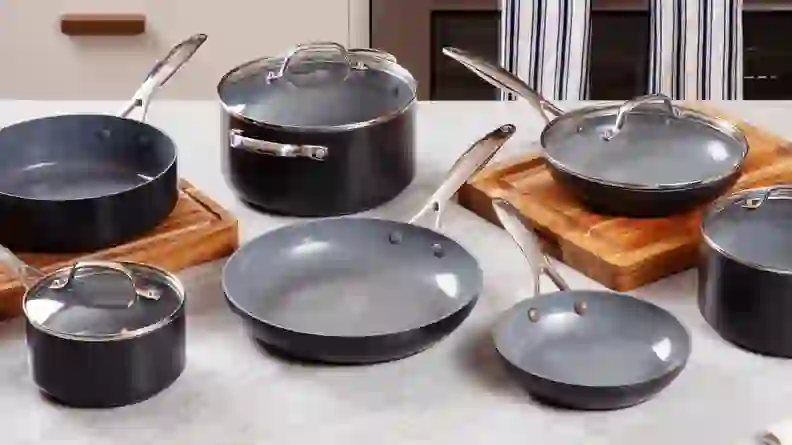
A “12-piece cookware set” may contain only six cooking vessels if the count includes lids. Some sets also count a steamer insert, utensils, or removable handles.
Before comparing prices, write down the actual pieces:
- 8-inch skillet
- 10-inch skillet
- 2-quart saucepan
- 3-quart saucepan
- 3-quart sauté pan
- 6-quart stockpot
- Matching lids
- Inserts and accessories
Then mark which pieces you would use at least once a month.
A useful set may include
For one or two people:
- 10-inch skillet
- 2-quart saucepan with lid
- 3- to 4-quart pot or sauté pan
- Optional 5-quart Dutch oven
For three or more people:
- 10- or 12-inch skillet
- 3-quart saucepan
- 5- to 8-quart stockpot
- Optional second skillet or sauté pan
For mixed cooking:
- Stainless steel skillet or sauté pan
- Nonstick skillet
- Saucepan
- Stockpot or Dutch oven
A mixed-material collection can be more useful than a matching set. For example, stainless steel can handle browning while nonstick makes eggs easier.
Calculate the cost per useful vessel
This is a simple comparison, not a measure of quality.
Hypothetical example:
- Set price: $300
- Actual cooking vessels: 5
- Useful-vessel cost: $300 ÷ 5 = $60 per vessel
If the set has eight pieces but three are lids and one is a steamer basket, do not divide the price by eight when comparing value.
Also account for replacement cost. If one pan wears out and the company does not sell matching replacements, a large set may be less practical.

Check Oven, Dishwasher, and Utensil Limits
A cookware set may be stovetop-safe but not safe for every cooking method.
Oven limits
The lowest-rated part sets the safe limit. A pan body may tolerate high heat while its handle, lid knob, glass lid, or nonstick coating has a lower limit.
Check the manual for:
- Maximum oven temperature
- Broiler use
- Lid temperature limit
- Handle restrictions
- Preheating rules
- Use under a grill or broiler
Do not assume that “oven-safe” means “safe at any oven temperature.”
Dishwasher care
Dishwasher-safe does not always mean dishwasher-best. Repeated dishwasher use can dull stainless steel, damage some finishes, and shorten the life of nonstick coatings.
Hand washing may help preserve:
- Nonstick surfaces
- Seasoned cast iron
- Carbon steel
- Decorative finishes
- Wooden or silicone handle parts
Follow the maker’s instructions. If care is a major concern, choose cookware that matches the routine you will actually follow.
Metal utensils
Bare stainless steel generally tolerates metal utensils. Nonstick, ceramic-coated, seasoned cast iron, and some enamel finishes may require more care.
When the product instructions say to avoid metal tools, use silicone, wood, or plastic utensils rated for heat.
Safety around heat
Use oven mitts for hot handles, even when a handle is designed to stay cooler. Keep pan handles turned away from the front edge of the stove.
Do not leave an empty nonstick pan over high heat. Do not pour cold water into a very hot pan unless the manufacturer allows it. Sudden temperature changes can warp cookware or damage finishes.
Choose Between a Set and Individual Pieces
A cookware set usually offers a lower combined price and a consistent design. Buying individual pieces gives you better control and may reduce unused cookware.
Choose a set when
- You need several pans at once.
- You want matching lids and handles.
- The set contains the sizes you use.
- You have enough storage space.
- Replacement pieces are available.
Buy individual pieces when
- You already own useful cookware.
- You need only one skillet or saucepan.
- Your cooking needs differ from standard set sizes.
- You want to mix materials.
- You need a special pan, such as a wok or Dutch oven.
A set is not automatically a better value. An unused pan is expensive storage.
Set a Realistic Budget
Price can reflect materials, construction, warranty, and finish, but a higher price does not guarantee a better fit.
Compare these points:
- Number of useful vessels
- Construction quality
- Stovetop compatibility
- Oven and dishwasher limits
- Warranty terms
- Availability of replacement lids and pans
- Weight and storage needs
- Expected coating life
- Return policy
A lower-priced stainless steel set may suit a careful cook who does not mind learning temperature control. A higher-priced nonstick set may be useful for someone who cooks eggs each morning but may still need replacement over time.
Do not choose a set only because it has a large discount. Check the regular piece list, exact model, warranty, and care limits.

Common Cookware-Buying Mistakes
Mistake 1: Choosing the largest set
More pieces can mean more duplicates and less cabinet space. Start with the pans you use most.
Mistake 2: Ignoring induction compatibility
A pan that works on gas may not work on induction. Confirm the full set before buying.
Mistake 3: Counting lids as cookware
A 10-piece set may contain five pans and five lids. Count cooking vessels separately.
Mistake 4: Buying only nonstick cookware
Nonstick is useful, but it is not always the best tool for high-heat searing or making a browned pan sauce. A mixed collection may perform better.
Mistake 5: Ignoring weight
A heavy pan can hold heat well, but it can also be hard to lift, wash, and store.
Mistake 6: Forgetting the oven limit
Handles, glass lids, and knobs often have different limits from the pan body.
Mistake 7: Using high heat for every task
High heat can damage coatings, burn oil, warp thin pans, and make food stick. Use the heat level suited to the material and recipe.
Mistake 8: Buying a set without checking replacements
Ask whether the maker sells single pans, lids, and handles. Replacement access can extend the useful life of the set.

A Step-by-Step Buying Checklist
Use this checklist before you place an order.
-
Name your main cooking tasks.
List the meals you make each week. -
Measure your storage space.
Check cabinet height, shelf width, and lid storage. -
Identify your cooktop.
Confirm gas, electric, glass, or induction compatibility. -
Choose the main material.
Select stainless steel, nonstick, cast iron, carbon steel, ceramic-coated, or a mix. -
List the useful vessels.
Ignore lids and accessories during the first count. -
Check the construction.
Inspect the base, handle attachment, balance, and lid fit. -
Read the care limits.
Confirm oven temperature, dishwasher use, utensils, and cleaning rules. -
Check the warranty and replacements.
Look for coverage terms and replacement parts. -
Compare useful-vessel cost.
Divide the price by the number of cooking pieces you expect to use. -
Buy only what solves a real need.
If one skillet and one saucepan cover your routine, you may not need a full set.
A successful choice should feel clear after this process. If you cannot identify a use for several pieces, choose a smaller set or buy individual pans.

Frequently Asked Questions
What cookware material is best for everyday use?
Stainless steel is a strong all-purpose choice because it handles browning, sauces, vegetables, and many oven tasks. A nonstick skillet can complement it for eggs and delicate foods. The best material depends on your cooking habits and care preferences.
Is stainless steel or nonstick cookware better?
Neither is best for every task. Stainless steel is better for high-heat browning and pan sauces. Nonstick is easier for eggs, pancakes, and foods that release poorly. Many kitchens benefit from using both.
How many cookware pieces do I really need?
Many households can start with a 10- or 12-inch skillet, a 2- to 3-quart saucepan, and a 5- to 8-quart pot. Add a sauté pan, Dutch oven, or second skillet only when your cooking routine needs it.
How can I tell whether cookware works on induction?
Look for the maker’s induction-compatibility statement or symbol. You can also place a magnet on the pan base. A strong attraction suggests compatibility, but the pan still needs a flat base and a suitable size for the induction burner.
Should I buy a cookware set or separate pans?
Buy a set when it includes the sizes and materials you need. Buy separate pans when you already own useful cookware, want different materials, or find that a set contains too many pieces you will not use.
Is ceramic cookware safer than traditional nonstick cookware?
“Ceramic cookware” can describe different products, so the label alone does not answer the question. Check the exact coating, manufacturer instructions, temperature limits, and care requirements. Use cookware as directed and replace any pan with badly damaged surfaces.
Conclusion
The best cookware set for a U.S. kitchen is the one that fits your stove, recipes, storage, and care habits. Start with useful pan sizes, then compare material, construction, compatibility, safety limits, and replacement support.
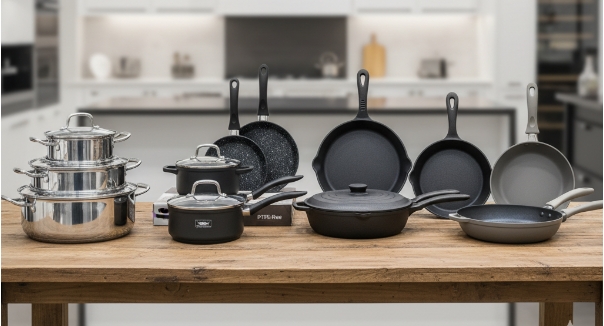
For many homes, a practical combination is a stainless steel skillet or sauté pan, a nonstick skillet, a saucepan, and a larger pot or Dutch oven. If you prefer one material, stainless steel offers broad use, while cast iron and carbon steel provide strong heat retention and nonstick cookware offers easy food release.
Before buying, count the actual cooking vessels, check the manual, and picture yourself using every piece. That simple test can prevent an expensive set from becoming a crowded cabinet.