How To Remove Stains From Enamel Cast Iron Cookware: Easy Tips 2026

You can remove most enamel cast iron stains with gentle soaking, baking soda, and non-abrasive scrubbing.
If you have ever cooked a rich tomato sauce, a dark stew, or a long-simmered curry in enamel cast iron cookware, you already know how easy it is for stains to show up. I have seen this many times, and the good news is that most marks are not permanent. With the right cleaning method, you can remove stains from enamel cast iron cookware without damaging that smooth, glossy surface.
What Causes Stains on Enamel Cast Iron Cookware?
Enamel cast iron is tough, but it is not stain-proof. The most common causes are high heat, burnt-on food, tomato-based sauces, spice pigments, and mineral buildup from hard water. Over time, these can leave cloudy spots, brown marks, or a dull ring around the bottom.
In my experience, the biggest mistake people make is using harsh scrubbers too early. Enamel does not like abrasion. Think of it like a polished countertop: strong, yes, but still worth treating with care.
How to Remove Stains from Enamel Cast Iron Cookware
The safest way to remove stains from enamel cast iron cookware is to start with gentle cleaning and move up only if needed. I always recommend beginning with warm water, mild dish soap, and a soft sponge. If the stain stays, use baking soda or a diluted vinegar soak depending on the type of mark.
Here is a simple method that works well for most everyday stains:
- Fill the pot or pan with warm water and a few drops of dish soap.
- Let it soak for 15 to 30 minutes.
- Scrub gently with a soft sponge or nylon brush.
- If the stain remains, sprinkle baking soda over the area.
- Add a little water to make a paste.
- Let it sit for 10 to 15 minutes, then wipe clean.
For deeper stains, I have found that a short simmer with water and baking soda can help lift stuck residue. This works especially well for orange or brown marks from sauces and soups.

Best Stain Removal Methods for Enamel Cast Iron Cookware
Different stains need different approaches. The trick is to match the method to the problem, rather than attacking every stain the same way. That saves the enamel and usually gets better results.
Baking Soda Paste for Brown or Tan Stains
Baking soda is one of the safest options for enamel cast iron cookware. It is mildly abrasive, so it can help loosen discoloration without scratching the finish. I use it most often after tomato sauces or browned bits stick to the surface.
To use it:
- Mix baking soda with a little water.
- Spread the paste over the stained area.
- Let it sit for 10 to 20 minutes.
- Wipe gently with a soft cloth or sponge.
If needed, repeat the process once more before trying anything stronger.
Vinegar Soak for Mineral Spots
Hard water can leave chalky white marks or a cloudy film. A diluted vinegar soak can help break down those mineral deposits. Use equal parts water and white vinegar, and do not leave it sitting too long.
A short soak is enough:
- Mix one part white vinegar with one part water.
- Fill the stained area or cover it with the solution.
- Let it sit for 5 to 10 minutes.
- Rinse well and dry fully.
I would not use vinegar often on enamel cast iron cookware, but for mineral stains, it can be very effective.
Boiling Water and Baking Soda for Stuck-On Stains
When food has really baked onto the surface, a gentle boil can loosen the mess. This is one of my favorite methods because it does a lot of the work for you. It is also safer than reaching for metal scrubbers.
Try this:
- Add water to cover the stained area.
- Add 1 to 2 tablespoons of baking soda.
- Bring it to a light simmer for a few minutes.
- Turn off the heat and let it cool.
- Wash with a soft sponge.
This method is especially useful for light burn marks and residue on the inside of pots.
Hydrogen Peroxide for Tough Discoloration
For stubborn discoloration, a diluted hydrogen peroxide soak may help. It can be useful when stains are old and still visible after normal cleaning. That said, I treat this as a backup option, not my first choice.
Use it carefully:
- Mix hydrogen peroxide with baking soda to form a paste.
- Apply it to the stained spot.
- Let it sit for 15 minutes.
- Rinse thoroughly and wash again with soap.
Always test a small area first if you are unsure about the finish.
What Not to Do When Cleaning Enamel Cast Iron Cookware
A lot of damage happens during cleaning, not cooking. I have seen enamel chipped by over-scrubbing, and once the coating is damaged, stains can become harder to remove. The surface is durable, but it is not indestructible.
Avoid these mistakes:
- Do not use steel wool or metal scouring pads.
- Do not use oven cleaner or harsh chemical cleaners.
- Do not shock hot cookware with cold water.
- Do not use knives or sharp tools to scrape stains.
- Do not soak for too long in strong acid or bleach.
If you remember one thing, let it be this: gentle and patient beats aggressive every time.
How to Prevent Stains on Enamel Cast Iron Cookware
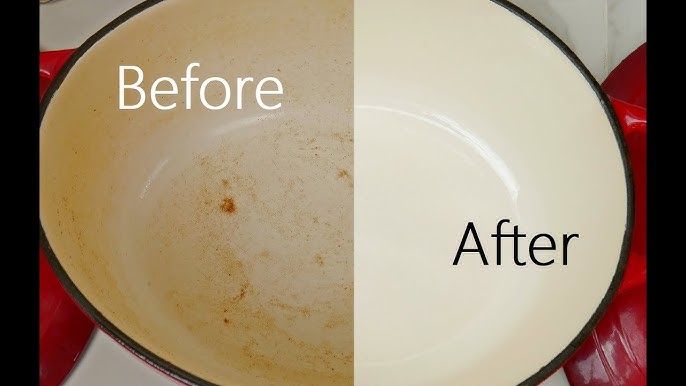
Prevention is much easier than restoration. The better you care for enamel cast iron cookware after each use, the fewer stains you will deal with later. This is one of those kitchen habits that pays off fast.
Here are the habits I recommend:
- Wash cookware soon after it cools.
- Use mild dish soap and warm water.
- Dry it completely after cleaning.
- Use low to medium heat for most cooking.
- Stir tomato sauces and thick dishes often.
- Avoid cooking on high heat for long periods.
- Clean mineral spots quickly before they settle in.
I also like to let the pan cool naturally before washing. That small pause helps protect the enamel from stress cracks and makes cleanup easier.
When Stains May Be Permanent
Not every mark will disappear completely. Some discoloration is cosmetic and may remain even after careful cleaning, especially if the stain has been there for years. That does not always mean the cookware is ruined.
Possible permanent issues include:
- Surface etching from harsh cleaners
- Heat discoloration from repeated high heat
- Tiny chips that trap pigment
- Deep brown staining from burnt sugar or sauce
If the enamel is chipped, cracked, or rough to the touch, cleaning alone will not solve the problem. In that case, the cookware may still be usable, but it should be monitored closely.
Personal Tips That Have Helped Me Most
After cleaning many enamel pots and Dutch ovens over the years, I have learned that less force usually gives better results. The first time I tried to scrub a tomato stain too hard, I only made the surface look dull. Since then, I always start with a soak and let time do most of the work.
A few tips that have saved me trouble:
- Clean stains the same day if possible.
- Use a wooden or silicone spoon while cooking to reduce residue.
- Keep a soft sponge just for enamel cookware.
- If a stain is stubborn, repeat a gentle method instead of jumping to something harsh.
- Dry right away to avoid water spots.
That approach is simple, but it works. Enamel cast iron cookware rewards careful handling the way a good cast iron skillet rewards seasoning and patience.
Frequently Asked Questions of How to Remove Stains from Enamel Cast Iron Cookware
Can baking soda damage enamel cast iron cookware?
Baking soda is usually safe when used as a paste or in a short soak. It is mildly abrasive, so it helps lift stains without harming the enamel when you scrub gently.
How do I remove brown stains from the inside of a Dutch oven?
Start with warm soapy water and a baking soda paste, then move to a short simmer with water and baking soda if needed. Brown stains often come from sauces or burnt food, and they usually respond well to slow, gentle cleaning.
Can I use bleach on enamel cast iron cookware?
I do not recommend bleach for regular cleaning. It can be too harsh and may leave behind residue or affect the finish, so mild cleaners are safer.
Why does my enamel cookware look cloudy after washing?
Cloudiness often comes from hard water minerals, soap residue, or very light surface buildup. A diluted vinegar rinse or a baking soda wash can usually clear it up.
How do I clean burnt sugar from enamel cast iron cookware?
Fill the cookware with warm water and let it soak first, because burnt sugar hardens like glue. Then simmer water with baking soda to loosen the residue before gently scrubbing with a soft sponge.
Is it safe to put enamel cast iron cookware in the dishwasher?
Some brands say it is dishwasher-safe, but handwashing is usually better for long-term care. Dishwashers can leave mineral spots and may dull the finish over time.
Conclusion
Removing stains from enamel cast iron cookware does not have to be stressful. With gentle soaking, baking soda, careful rinsing, and a little patience, most stains can be lifted without harming the enamel. The real secret is to clean early, avoid harsh tools, and treat the surface with the same care you would give any quality cookware.
If your pot or Dutch oven is already stained, start with the safest method and work slowly. Try one of the cleaning steps above, see what your cookware responds to, and build a simple routine that keeps it looking good for years. If you found this guide useful, share it, bookmark it, or leave a comment with the stain you are trying to remove.