How to Maintain Cast Iron Cookware: A Beginner’s Guide

I hear it all the time from readers setting up their first kitchen or trying out meal prep. They buy a heavy, classic cast iron skillet, use it once, and then panic. They are terrified of ruining it. They read wild, strict rules online about never washing it, treating it like a fragile antique, and spending hours maintaining it. Let me explain something right up front: cast iron is one of the toughest pieces of cookware you will ever own.
I am Daniel Cross, and I spend my days testing, organizing, and researching everyday kitchen tools for normal households. My goal is to make cooking simple and practical. Cast iron cookware is just a thick, molded piece of iron. It is built to survive campfires, high-heat searing, and daily family dinners. You do not need a degree in chemistry to keep it working well.
The good news is that learning how to maintain cast iron cookware takes only about three extra minutes of your time after dinner. Once you build a simple habit of cleaning it and keeping it dry, your skillet will reward you with a naturally nonstick surface that handles everything from morning eggs to weekend steaks. So, what should you do? Let us break down the exact, easy steps to keep your cast iron in great shape for years to come.
Quick Answer
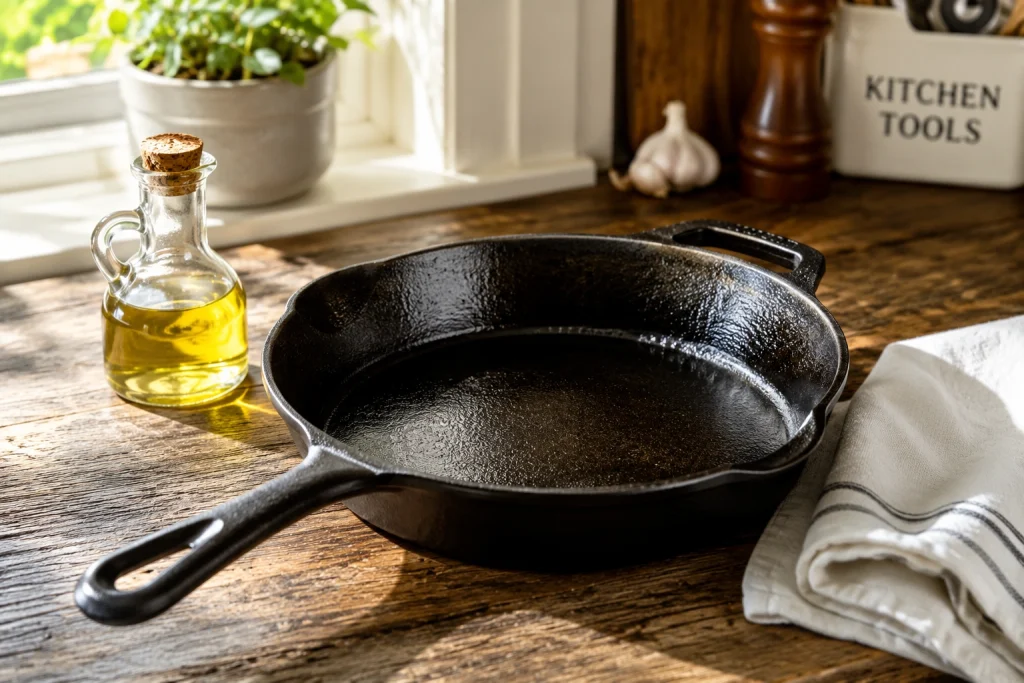
To maintain cast iron cookware, wash it by hand with warm water and a little mild dish soap immediately after cooking. Never let it soak in water or put it in the dishwasher. Dry the pan completely right away using a towel or by heating it on the stove for a few minutes. Finally, rub a very light layer of cooking oil all over the inside surface and wipe out the excess with a paper towel before storing it in a dry place.
What Home Cooks Should Know About Cast Iron
Before we look at the daily steps, it helps to understand what makes cast iron different from modern stainless steel or coated nonstick cookware. The magic word for cast iron is “seasoning.” When people talk about seasoning a pan, they do not mean salt and pepper.
Seasoning is simply oil that has been heated to the point where it bakes into the metal. This process is called polymerization. The liquid oil turns into a hard, slick, dark plastic-like layer. This layer does two important things: it stops the bare iron from rusting, and it creates a natural surface that stops food from sticking.
Every time you cook with oil or fat, you are actually adding tiny layers to your seasoning. The more you use it, the better it gets. However, because the pan is made of bare iron under that thin layer of baked oil, it is highly vulnerable to moisture. Water is the enemy of cast iron. If you leave it wet, it will rust.
To keep your maintenance routine simple, you only need a few basic kitchen tools:
- A sturdy nylon brush or chainmail scrubber for removing stuck food.
- A plastic pan scraper for sticky messes.
- Basic, mild liquid dish soap.
- A lint-free kitchen towel or heavy-duty paper towels.
- A high-smoke-point cooking oil, like canola, vegetable, or grapeseed oil.
If you have these simple items near your kitchen sink, maintaining your cookware becomes an effortless part of your daily cleanup routine.
Signs You Should Adjust Your Cleaning Method
Sometimes, your cast iron skillet will tell you exactly what it needs. Many beginners mistake a dirty pan for a damaged pan. Most cast iron problems are very easy to fix at home. You rarely need to throw the pan away unless it is cracked all the way through.
Here is the thing. If your food starts sticking aggressively, or if the pan feels sticky to the touch when sitting in the cupboard, your maintenance habit might need a slight adjustment. A sticky pan usually means you left too much oil on it during storage, and the oil went rancid or did not bake in. A dull, gray, or rusty pan means the protective seasoning has worn off or water was left sitting in the bowl.
Below is a simple guide to help you identify what is going on with your cookware and how to fix it.
| What You See or Feel | What It Means | How to Fix It |
|---|---|---|
| Black, slick, and slightly glossy surface. | Healthy, well-seasoned cast iron. | Keep doing what you are doing. Wash, dry, and lightly oil. |
| Sticky or tacky texture to the touch. | Too much oil was applied, or the pan was stored without heating. | Bake the pan upside down in the oven at 400 degrees for an hour to harden the oil. |
| Dull, gray, or dry-looking patches. | The seasoning is wearing thin in those spots. | Rub a little extra oil on those spots and continue cooking with fats like butter or oil. |
| Flaking black specks getting into food. | Old food or thick, weak seasoning is chipping off. | Scrub firmly with a chainmail scrubber, wash, dry, and apply a fresh, thin coat of oil. |
| Orange or brown rust spots. | Moisture was left on the pan, or it soaked in the sink. | Scrub the rust away completely, wash, dry thoroughly, and re-season the pan in the oven. |
How to Maintain Cast Iron Cookware Step by Step
Now, let us walk through the daily routine. You should do this every single time you cook with your cast iron skillet, griddle, or Dutch oven. It might seem like a lot of steps on paper, but in practice, this takes less time than loading the dishwasher.
- Wash the pan while it is still warm. Wait until the pan has cooled down enough that you can safely touch the handle without oven mitts, but do not let it sit out overnight. Bring it to the sink and run warm water over it. Add a drop or two of mild dish soap.
- Scrub away food residue. Use a stiff nylon brush, a sponge, or a chainmail scrubber to lift any leftover food. If you cooked something sticky, like sugary sauces or a heavy marinade, use a plastic pan scraper to gently push the food off the cooking surface.
- Rinse thoroughly. Rinse all the soap and food particles down the drain. The pan should feel smooth to the touch. If you are washing away raw meat residue, ensure you follow standard USDA Food Safety and Inspection Service guidelines by using enough hot water and soap to clean the surface completely before storing.
- Dry the pan completely. This is the most important step. Wipe the pan down with a clean towel. To be absolutely sure all moisture is gone, place the empty pan on your stove over medium-low heat for about three to five minutes until the surface is completely dry.
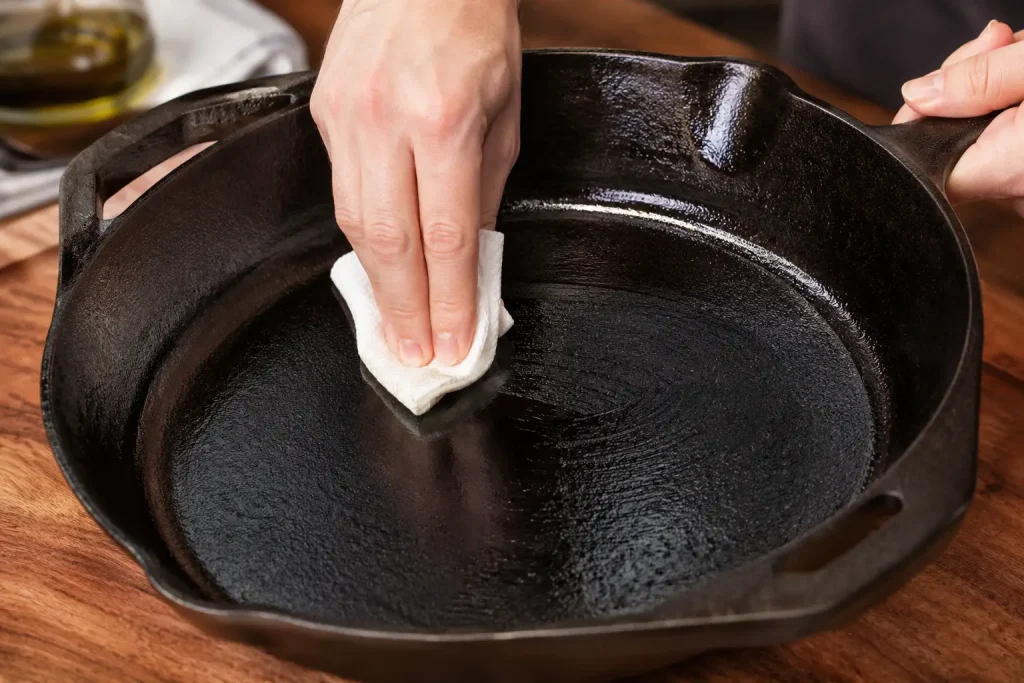
- Apply a protective oil layer. While the pan is still slightly warm on the stove, pour a tiny drop of cooking oil—about the size of a dime—into the pan. Take a paper towel and rub the oil over the entire inside surface, the rim, and even the handle.
- Buff out the excess oil. Take a fresh, dry paper towel and wipe out as much oil as you possibly can. You want the pan to look dry, not greasy. If you leave thick puddles of oil, the pan will become sticky in your pantry. Let the pan cool completely on the stove before putting it away.
Common Mistakes to Avoid
Cast iron is incredibly forgiving, but there are a few bad habits that can cause damage or make your cooking experience frustrating. If you avoid these mistakes, your cookware will last longer than you do.
- Putting it in the dishwasher: The harsh detergents and long water cycles in a dishwasher will strip away your protective seasoning and cause instant, heavy rust. Always wash by hand.
- Letting it soak in the sink: Never fill a dirty cast iron pan with water to soak overnight. Bare iron combined with standing water equals rust. Clean it right away.
- Using thermal shock: Never take a smoking hot pan off the stove and run it under cold water. The sudden temperature change can cause the thick metal to warp or even crack in half.
- Cooking highly acidic foods too long: Simmering tomato sauce, vinegar, or wine for long periods can eat away at the seasoning layer and give your food a metallic taste. Brief cooking is fine, but avoid long simmers until your pan has a very strong, thick layer of seasoning.
- Storing it wet: If you stack pans in a damp cupboard or put them away before they are 100 percent dry, moisture will get trapped and cause rust rings.
Practical Tips from Daniel
Over the years of setting up kitchens and organizing cookware, I have learned a few tricks that make handling these heavy pans much easier. You do not need to be a commercial chef to get this right.
Daniel’s Kitchen Tip: Don’t fear the soap.
You have probably heard that soap will destroy cast iron. That is an old myth. Decades ago, dish soaps contained lye, which would actually eat the oil right off the pan. Today’s modern dish soaps are very gentle. A little bit of soapy water will wash away old food grease but will not remove your hard, baked-on seasoning. Use the soap; your pan will be much cleaner.
Daniel’s Kitchen Tip: Cook fatty foods first.
If you just bought a brand new skillet, the factory seasoning might be a bit thin. The best way to build a great nonstick surface is to cook fatty foods for the first few weeks. Fry bacon, brown ground beef, or bake cornbread with plenty of butter. These foods naturally release oils that bake into the metal while you cook.
Kitchen Safety Note:
Cast iron handles get incredibly hot and stay hot for a long time. Unlike modern pans with silicone grips, the handle on a cast iron pan will burn your hand severely if you grab it after it has been on the stove or in the oven. Always keep thick, dry oven mitts or a dedicated heavy towel nearby. If you are ever unsure about proper heating limits for coated or enameled cast iron, always check the official appliance manufacturer manuals or care pages for safe operating temperatures.
Daniel’s Kitchen Tip: Protect your pans in storage.
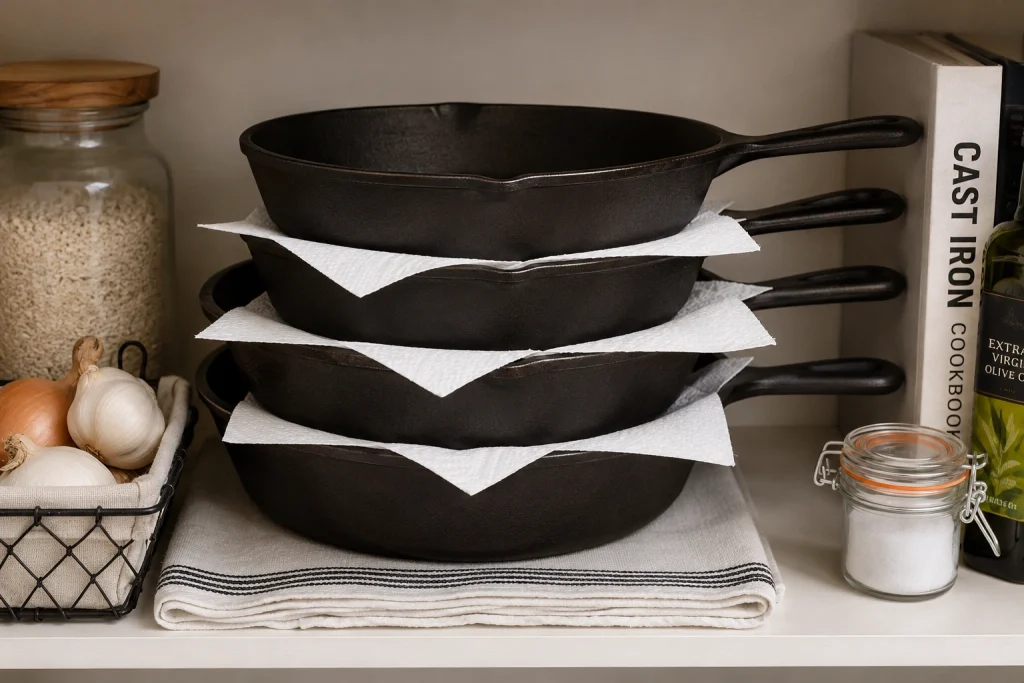
Because these pans are so heavy, stacking them can scratch the seasoning off the bottom of the pan above it. To fix this, just place a single paper towel or a cheap felt pan protector between each skillet when you stack them in your cabinet. It stops the scratching and helps absorb any leftover moisture.
Key Takeaways
- Wash your cast iron pan by hand with warm water and mild soap shortly after cooking.
- Never soak the pan in water or put it through a dishwasher cycle.
- Heat the pan on the stove for a few minutes after washing to ensure it is completely dry.
- Always rub a very thin layer of cooking oil onto the dry, warm pan before storing it.
- If your pan gets rusty or sticky, it is not ruined. You can easily clean it and re-season it at home.
Frequently Asked Questions
Can I use dish soap on cast iron?
Yes, you can. Modern dish soaps are gentle and do not contain lye. A small amount of soap mixed with warm water will safely clean away leftover food and grease without stripping the baked-on seasoning.
What is the best oil for seasoning cast iron?
The best oils are those with a high smoke point, such as canola oil, grapeseed oil, or standard vegetable oil. These oils bond well with the metal when heated and leave a hard, durable surface. Avoid using butter or olive oil for storage, as they have low smoke points and can turn rancid in the cupboard.
How do I remove rust from my skillet?
To remove rust, scrub the affected area firmly with a piece of steel wool, a chainmail scrubber, or a stiff brush and warm soapy water until all the orange color is gone. Once the rust is fully removed, dry the pan completely, apply a thin coat of oil, and bake it in the oven for an hour to restore the protective layer.
Can I put my cast iron in the dishwasher?
No, you should never put cast iron in the dishwasher. The heavy water pressure, high heat, and harsh cleaning chemicals will destroy the seasoning layer and cause the pan to rust almost immediately.
Why is my cast iron sticky after oiling?
A sticky pan means you applied too much oil, or you did not heat the oil enough to bake it into the metal. To fix this, wipe out any excess oil and bake the pan upside down in the oven at 400 degrees for one hour so the oil can harden properly.
How often should I season my cast iron?
If you maintain it well after every use by washing, drying, and wiping it with a light layer of oil, you rarely need to do a full oven seasoning. The pan will naturally season itself as you cook with fats and oils over time.
Conclusion
Taking care of cast iron cookware does not have to be a stressful chore. Once you get past the fear of ruining it, you realize it is just a solid piece of metal that requires a simple routine. Wash it, dry it completely on the stove, and give it a quick wipe with oil. That is all there is to it. By avoiding the dishwasher and keeping it away from soaking water, your skillet will quickly become your favorite tool for everything from searing steaks to baking cornbread.
If you build this quick three-minute habit into your daily kitchen cleanup, your cookware will perform beautifully and naturally resist sticking. It will outlast nearly everything else in your kitchen. If you are looking to upgrade your kitchen further or want to learn how to store the food you cook safely, be sure to check out our beginner’s guide to the best small kitchen appliances for more practical household tips.