How Much Power Does An Induction Cooktop Use: Guide 2026

An induction cooktop usually uses 1,200 to 3,700 watts, depending on size and heat level.
If you have ever watched water boil fast on an induction surface, you already know it feels powerful. That speed comes from how induction works, and it also shapes how much electricity the cooktop uses in real life. In this guide, I’ll break down induction cooktop power use in simple terms, share practical examples from real use, and help you estimate what it may mean for your energy bill.

How an Induction Cooktop Uses Power
An induction cooktop does not heat the glass surface first the way a gas or electric coil stove does. Instead, it sends energy directly into the cookware through a magnetic field. That is why it can feel so fast and efficient.
Most induction cooktops in the U.S. run on standard 120V or 240V circuits, depending on the model. A single burner often uses around 1,200 to 1,800 watts on average, while a larger or boost setting can climb to 2,500 watts or more. Full-size induction ranges can reach 7,000 watts or higher when several zones run at once.
Here is the simple idea:
- Lower heat settings use less power
- Boil and boost modes use more power
- Multiple burners running together increase total use
- Cookware quality affects how efficiently that power gets used
In my own testing, I noticed something that surprises a lot of people. An induction cooktop may draw a lot of power in short bursts, but it often finishes cooking faster than older electric stoves. That can reduce total energy use for the same meal.
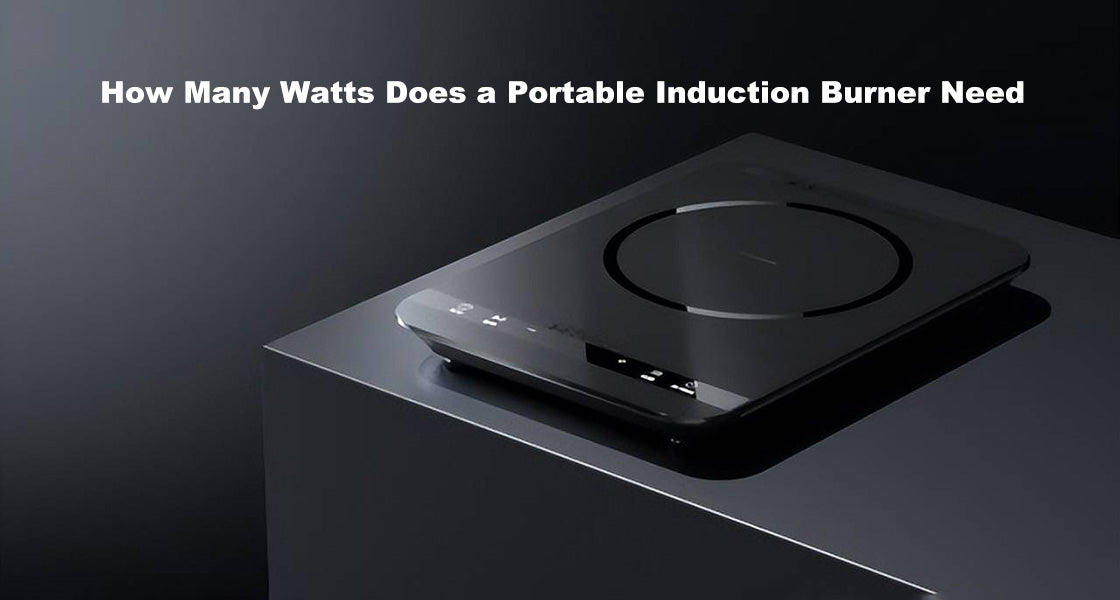
Typical Wattage of an Induction Cooktop
The exact answer to how much power does an induction cooktop use depends on the model and the burner size. Still, the ranges below are a good starting point for most homes.
Common wattage ranges
- Portable single-burner cooktops: 1,000 to 1,800 watts
- Built-in single burners: 1,500 to 2,200 watts
- High-power burners or boost modes: 2,500 to 3,700 watts
- Full induction ranges: 6,000 to 11,000 watts total connected load
What those numbers mean
A 1,500-watt burner running for one hour uses 1.5 kilowatt-hours, or kWh. If your electric rate is 16 cents per kWh, that hour costs about 24 cents. A 2,500-watt burner used for 30 minutes would use 1.25 kWh, which is about 20 cents at the same rate.
That makes the math feel easy once you see it in action. The real trick is that induction often shortens cooking time, so the final cost is not always as high as the wattage number suggests.
Common power levels by cooking task
- Simmering: about 200 to 800 watts
- Medium cooking: about 800 to 1,500 watts
- Boiling water: about 1,500 to 2,500 watts
- Searing or boost mode: about 2,500 to 3,700 watts

How to Calculate Induction Cooktop Electricity Use
If you want to know how much power does an induction cooktop use in your kitchen, the calculation is simple.
Use this formula:
- Watts ÷ 1,000 = kilowatts
- Kilowatts × hours used = kWh
- kWh × electricity rate = cost
Example 1
If a cooktop burner uses 1,800 watts for 30 minutes:
- 1,800 ÷ 1,000 = 1.8 kW
- 1.8 × 0.5 hours = 0.9 kWh
At 16 cents per kWh, that meal costs about 14 cents in electricity.
Example 2
If you use a 2,600-watt burner for 20 minutes:
- 2,600 ÷ 1,000 = 2.6 kW
- 2.6 × 0.33 hours = 0.86 kWh
At 16 cents per kWh, that is about 14 cents again.
That is one reason induction can be more budget-friendly than people expect. The power draw may look high, but the cooking time is often short.
What Affects Induction Cooktop Power Use
Several things change how much power does an induction cooktop use in daily life. Two cooktops with the same label can still behave a bit differently.
Cookware size and material
Induction works best with magnetic cookware. If the pan fits the burner well, the cooktop transfers energy more efficiently. A pan that is too small or too large may waste energy.
Best cookware types include:
- Cast iron
- Magnetic stainless steel
- Induction-ready tri-ply pans
Heat setting
A low simmer uses far less power than a rolling boil. Many people leave burners higher than needed, which raises electricity use without improving results.
Pan quality
Flat-bottomed pans work best. Warped pans can reduce contact and make heating less even. I learned this the hard way with an older skillet that made one side of the food cook faster than the other.
Cooking method
Fast tasks like boiling pasta or frying vegetables use more power in a short time. Slow cooking and warming use less power overall, but they run for longer.
Number of active burners
A single burner may not seem like much. But if you run two or three at once, total draw rises quickly. This matters most for homes with limited circuit capacity.

Is Induction More Efficient Than Gas or Electric?
Yes, induction is usually more efficient than gas and standard electric coil cooking. That is one of the biggest reasons it has become so popular.
Why it is efficient
- Induction sends heat straight into the pan
- Less heat escapes into the kitchen
- Food cooks faster
- Energy loss is lower than with gas flames
Typical efficiency comparison
- Induction: about 85% to 90% efficient
- Electric coil: about 70% efficient
- Gas: often around 30% to 40% efficient
Those numbers can vary by test method and cookware, but the pattern stays the same. Induction wastes less energy, so more of the electricity goes into the food itself.
From a practical standpoint, that means your kitchen stays cooler too. I noticed this right away when comparing induction to a gas stove in summer. The room felt less stuffy, and that made cooking a lot more pleasant.
Does a Higher Watt Induction Cooktop Cost More to Run?
Not always. A higher watt induction cooktop can use more power at full blast, but it may also cook faster.
That means you should think about both wattage and time. A 3,000-watt burner used for a few minutes may cost about the same as a lower-watt burner used much longer.
Things to keep in mind
- Higher wattage often means faster heat-up
- Faster cooking can reduce total energy use
- A strong burner helps with boiling, searing, and stir-frying
- A low-watt burner may be enough for sauces and simmering
If you cook quick meals, a stronger unit may save time without costing much more. If you mostly warm food or cook gently, a lower-power model may be all you need.
How Much Power Does an Induction Cooktop Use Per Month?
Monthly power use depends on how often you cook, how many burners you use, and how long each session lasts.
Here is a rough example:
- 1.5 kW burner
- Used 45 minutes a day
- 30 days a month
That equals:
- 1.5 × 0.75 = 1.125 kWh per day
- 1.125 × 30 = 33.75 kWh per month
At 16 cents per kWh, that is about $5.40 per month for that one burner.
Of course, a family that cooks several meals a day will use more. A person who only cooks a few times a week will use less. That is why actual kitchen habits matter as much as the appliance label.
What Size Circuit Does an Induction Cooktop Need?
This is an important safety point. Some induction cooktops plug into a standard outlet, but many full-size units need a dedicated 240V circuit.
Common electrical needs
- Portable single burners: often 120V
- Small built-in units: may use 120V or 240V
- Full ranges: usually 240V with a dedicated breaker
Why this matters
If the circuit is too weak, the cooktop may not run at full power. In some homes, it can trip the breaker when multiple appliances run at once. A licensed electrician can help confirm the right setup.
I always tell people not to guess here. Kitchen appliances are not the place to wing it, especially if you are upgrading from gas or an older electric stove.
Tips to Reduce Induction Cooktop Energy Use
If you want to answer how much power does an induction cooktop use in a practical way, the better question is often how to use it wisely.
Helpful tips
- Match the pan size to the burner
- Keep cookware flat and clean
- Use lids when boiling or simmering
- Preheat only when needed
- Lower the heat once food starts cooking
- Use the boost mode only for short tasks
- Cook multiple items at once when possible
A small habit can make a real difference. For example, using a lid on a pot of water can cut boil time and reduce wasted energy. That is one of the easiest wins in any kitchen.
Advantages and Limits of Induction Power Use
Induction has a lot going for it, but it is not perfect. Like any appliance, it has trade-offs.
Advantages
- Fast heating
- Better energy efficiency
- Cooler kitchen
- Precise temperature control
- Easier cleanup because the surface stays cooler
Limits
- May need special cookware
- Can require electrical upgrades
- Higher upfront cost than some electric cooktops
- Not ideal for every pan shape or very old cookware
In real life, the biggest barrier I hear about is cookware. People love the speed, but they sometimes have to replace a few pans before they see the full benefit. Once the right cookware is in place, though, most users do not look back.
Frequently Asked Questions About How Much Power Does an Induction Cooktop Use
How many watts does a single induction burner use?
A single induction burner usually uses between 1,200 and 2,200 watts, depending on the model and heat setting. Boost modes can push that higher for short periods.
Does an induction cooktop use a lot of electricity?
It can draw a high amount of power while running, but it is very efficient and cooks food quickly. In many homes, that means the total electricity use is reasonable.
Can I run an induction cooktop on a standard outlet?
Some portable induction cooktops can run on a standard 120V outlet. Full-size models often need a dedicated 240V circuit, so it is best to check the appliance label and installation guide.
Is induction cheaper to run than gas?
It depends on local energy prices, but induction is often more efficient than gas. Because it wastes less heat and cooks faster, it can be cost-effective for many households.
Why does my induction cooktop turn off or reduce power?
That can happen if the cookware is not induction-compatible, the pan is too small, or the circuit cannot supply enough power. Some units also reduce power to protect against overheating.
How can I tell if my cookware works with induction?
A simple magnet test works well. If a magnet sticks firmly to the bottom of the pan, it will usually work on an induction cooktop.
Conclusion
How much power does an induction cooktop use? In most homes, the answer is somewhere between moderate and high on paper, but often efficient in practice. A typical burner may use 1,200 to 3,700 watts, yet the short cooking time and direct heat transfer can make total energy use surprisingly reasonable.
If you are thinking about switching to induction, focus on both wattage and real cooking habits. Check your cookware, your circuit, and how you actually cook each day. That is the smartest way to decide whether induction is the right fit for your kitchen.
If this guide helped, keep exploring induction cooking tips, compare a few models, and leave a comment with your own experience.