Can You Season Cast Iron With Coconut Oil? Expert Tips Inside

Can You Season Cast Iron With Coconut Oil?
Cast iron cookware is a kitchen staple for many of us. It lasts for decades, cooks evenly, and builds up a naturally non-stick surface that improves with use. To keep cast iron performing well, you must season it. Seasoning means coating the pan with oil and heating it so the oil polymerizes and forms a hard, protective layer. A common question I hear is: Can you season cast iron with coconut oil? Coconut oil is popular for cooking and natural living, so it’s an easy choice to consider. In my experience, it can work — but there are trade-offs and techniques you should know.
Choosing the right oil affects how well the seasoning bonds, how long it lasts, and how easy the pan is to maintain. Some oils make a harder, longer-lasting finish. Others are easier to use. Coconut oil is often suggested because it’s widely available and stable. Let’s walk through the science, pros and cons, how to do it properly, and my personal tips for best results.
I’ll cover: what seasoning really is, how coconut oil behaves on cast iron, step-by-step instructions, troubleshooting sticky or patchy finishes, and how coconut oil compares to other oils. This guide aims to answer the search intent fully: you should finish knowing whether to use coconut oil and exactly how to get great results.
Understanding Cast Iron Seasoning
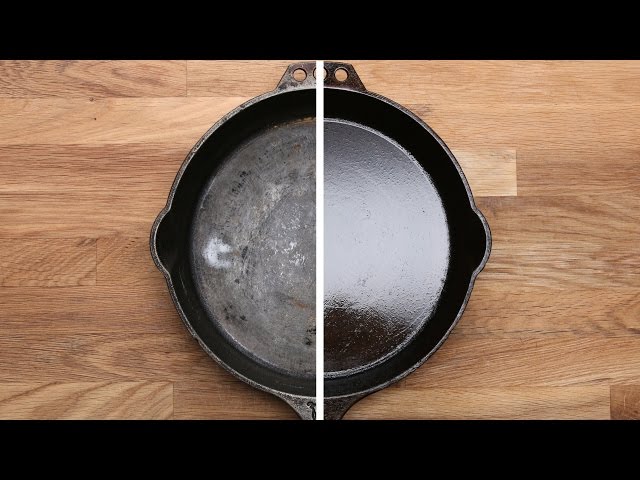
Seasoning cast iron is more than rubbing oil on metal. It’s a chemical and physical process called polymerization. When heated, oil molecules oxidize and link together. They form a thin, hard, plastic-like film that bonds to the iron. This film creates the non-stick surface, prevents rust, and improves flavor over time.
Without seasoning, cast iron rusts and food sticks. A well-seasoned pan has a shiny, black finish. It feels smooth and becomes easier to clean. Each cooking session adds tiny layers. Over time, those layers build a durable coating that can last for years if you maintain it.
Why Seasoning Matters
- Prevents rust: Seasoning creates a barrier that keeps water and oxygen away from bare iron.
- Non-stick surface: A proper polymerized layer reduces sticking and lowers the need for extra fats when cooking.
- Better taste: A well-maintained pan can add depth to seared foods.
- Longer life: Regular seasoning protects the pan so it can be passed down.
Seasoning is ongoing. If the surface gets dull, rusty, or sticky, you’ll need to refresh it.
What Makes A Good Seasoning Oil?
Not all oils behave the same when heated. The best oils for seasoning have the right combination of smoke point, fatty-acid profile, and neutral flavor. These factors determine how well the oil polymerizes and how durable the resulting layer will be.
Main Factors To Consider
- Smoke point — the temperature where oil breaks down and smokes. For seasoning, you want an oil that can withstand the baking temperature you’ll use without burning or leaving sticky residue.
- Fat structure — oils high in unsaturated fats (especially polyunsaturated) polymerize into harder layers. Saturated fats can be stable but may not create the hardest finish.
- Flavor — neutral oils are best so they don’t impart strong tastes to your food.
- Availability and cost — a practical seasoning oil should be affordable and easy to buy.
Popular Oils For Seasoning
Common recommendations include flaxseed oil, grapeseed oil, and canola oil. These are popular because they polymerize well and give a durable finish. Vegetable oil and shortening are often used too.
So where does coconut oil fit in? Read on to see how its properties compare and when it makes sense to use it for seasoning cast iron.
Properties Of Coconut Oil
Coconut oil differs from many seed oils. It’s mostly saturated fat and is solid at room temperature in cooler climates. Here are the key properties I take into account:
- Smoke point: Around 350°F for unrefined (virgin), up to about 400°F for refined coconut oil.
- Saturated fat: Very high—roughly 80–90% saturated fat. That makes it stable and less likely to go rancid.
- Flavor: Unrefined has a mild coconut aroma; refined is almost neutral.
- Texture: Solid when cool, melts quickly when heated.
Types Of Coconut Oil
- Unrefined (Virgin) Coconut Oil
- Has a noticeable coconut smell and flavor.
- Lower smoke point (~350°F).
- More natural but less tolerant of high heat.
- Refined Coconut Oil
- Neutral flavor and smell.
- Higher smoke point (~400°F).
- Better suited for seasoning at higher oven temps.
How Coconut Oil Reacts On Cast Iron
Coconut oil’s saturated structure makes it resistant to rancidity. That is a plus for long-term storage and light maintenance. But its smoke point is lower than many seed oils used specifically for seasoning. If oil smokes before polymerizing fully, you can end up with a sticky or blotchy finish.
In my tests and experience, coconut oil can form a decent seasoning if you use the refined kind and apply very thin layers. It just won’t always yield the hardest, most durable finish compared with high-polyunsaturated oils like flaxseed or grapeseed.
When to Avoid Coconut Oil
Avoid coconut oil if you:
- Want the absolute hardest, longest-lasting seasoning (use flaxseed or grapeseed instead).
- Cook at very high temperatures regularly and want a seasoning built quickly by repeated high-heat cycles.
- Or have a coconut allergy—don’t use it at all.
Seasoning Cast Iron With Coconut Oil: Step-by-step
If you choose coconut oil, follow these steps to get the best outcome. I use refined coconut oil and thin coats—here’s the exact method I prefer.
What You Need
- Clean, completely dry cast iron pan
- Coconut oil (refined is best for seasoning)
- Oven (recommended) or stovetop
- Paper towels or a lint-free cloth
- Aluminum foil
Instructions
- Preheat Your Oven
- Set to 400°F (204°C). This temperature is high enough to polymerize refined coconut oil without heavy smoking.
- Clean the Pan
- Wash with hot water and a bit of mild soap if needed. Scrub away rust or food residue. Dry thoroughly; moisture prevents oil bonding.
- Apply a Thin Layer of Oil
- Use a teaspoon or less. Rub a thin, even coat inside and out. Wipe off every drop of excess with a paper towel so only a hair-thin film remains. Thick layers lead to sticky buildup.
- Bake the Pan
- Place the pan upside down on the middle oven rack. Put foil on the lower rack to catch drips. Bake for 1 hour to allow polymerization.
- Cool Down
- Turn off the oven and let the pan cool inside until safe to handle. Cooling inside the oven helps the coating set slowly.
- Repeat (Optional)
- For a stronger finish, repeat the thin-oil-and-bake process 2–3 more times. Each thin layer builds a more uniform, non-stick surface.
Quick Reference Table: Seasoning Process
| Step | Action | Details |
|---|---|---|
| 1 | Preheat Oven | Set to 400°F (204°C) |
| 2 | Clean Pan | Wash and dry thoroughly |
| 3 | Apply Oil | Thin, even layer inside and out |
| 4 | Bake | 1 hour, upside down |
| 5 | Cool Down | Let cool in oven |
| 6 | Repeat | 2–3 times for best results |
Tips For Best Results
- Use refined coconut oil to cut down on smell and increase the smoke point.
- Always apply an ultra-thin layer. Less is more when building seasoning layers.
- Ensure the pan is bone-dry before oiling; water blocks bonding and causes sputtering.
- If you notice sticky or uneven spots, wipe the pan clean and rebake at the same temperature for another hour using a thin coat.
- Ventilate your kitchen when baking oil to reduce odor and smoke.
Pros And Cons Of Using Coconut Oil
Coconut oil can be effective for seasoning. Here’s a balanced look based on its chemistry and my hands-on experience.
Advantages
- Easily available: Most grocery stores carry coconut oil.
- Stable fat: High saturated fat content resists rancidity.
- Mild taste: Refined coconut oil leaves little or no flavor on the pan.
- Natural: No added chemicals—many cooks appreciate that.
Drawbacks
- Lower smoke point: Virgin coconut oil smokes sooner than many seasoning oils.
- Sticky residue risk: Thick layers or incomplete polymerization can leave a tacky finish.
- Not the hardest seasoning: It generally won’t produce as durable a layer as flaxseed or grapeseed oils.
When Is Coconut Oil A Good Choice?
- If you prefer plant-based, natural oils and want a simple, low-fuss option.
- For small pans or light-duty seasoning where you don’t need the toughest finish.
- When you already cook with coconut oil and like its availability and smell (if using virgin oil).
- Not appropriate if you or household members have a coconut allergy.
Comparing Coconut Oil To Other Seasoning Oils
Here’s a snapshot of how coconut oil stacks up against common alternatives for seasoning cast iron.
Key Features Comparison
| Oil Type | Smoke Point | Fat Content | Seasoning Quality | Flavor |
|---|---|---|---|---|
| Coconut (Refined) | 400°F | High saturated | Good, can be sticky if misused | Neutral |
| Flaxseed | 225°F | High polyunsaturated | Very hard, can flake | Neutral |
| Grapeseed | 420°F | High polyunsaturated | Strong, smooth | Neutral |
| Canola | 400°F | Mostly unsaturated | Strong, long-lasting | Neutral |
| Vegetable | 400°F | Varies | Good, affordable | Neutral |
Insights Beginners Miss
- High-polyunsaturated oils like flaxseed can create a very hard layer. But if you overheat or build it too thick, it may flake. That’s why many pros recommend grapeseed or canola for a smoother, durable finish.
- Coconut oil’s saturated fat profile means it won’t go rancid quickly. Still, its lower smoke point means you must be precise with temperature and coating thickness to avoid tackiness.

Credit: simplysustainablefamily.com
Common Mistakes When Seasoning With Coconut Oil
Seasoning is simple—but easy to get wrong. Here are the common errors I see and how to avoid them.
- Using too much oil
- Excess pools and becomes sticky. Wipe until only a thin film remains.
- Not heating enough
- If the oven isn’t hot enough, the oil won’t polymerize and the finish stays greasy.
- Overheating unrefined oil
- Unrefined coconut oil smokes around 350°F. Going higher causes burnt spots and off-odors.
- Not cleaning first
- Food residue or water prevents even bonding. Start with a clean, dry surface.
- Skipping multiple layers
- One coat usually won’t suffice. Two or three thin layers build a stronger finish.
Avoid these mistakes and your coconut oil seasoning will be smooth and durable.
How Long Does Coconut Oil-seasoned Cast Iron Last?
The life of any seasoning depends on use and care. A coconut oil finish can last months with gentle use. If you frequently cook acidic foods (tomatoes, wine-based sauces), the layer will wear faster.
Each cooking session and light oiling builds the layers further. When food starts to stick or the surface looks dull, it’s time to re-season. With regular light maintenance, coconut oil seasoning can be stable and useful for everyday cooking.
Caring For Cast Iron Seasoned With Coconut Oil
Once the pan is seasoned, care is simple and important. These steps keep the layer intact and stop rust.
- Clean with hot water and a soft brush. Avoid soap unless necessary.
- Dry completely after washing. I often heat the pan briefly on the stovetop to evaporate any moisture.
- Rub a small amount of coconut oil over the surface after each use to maintain the coating.
- Store in a dry place. Don’t stack wet pans or leave them in damp storage.
If your pan gets rusty or sticky, scrub down to bare metal and re-season from scratch.
Quick Care Guide
| Task | How Often | Details |
|---|---|---|
| Re-season | Every few months or as needed | When surface looks dull or food sticks |
| Wash | After each use | Use hot water, no soap unless necessary |
| Oil | After each wash | Apply a thin layer of coconut oil |
| Dry | Every time | Prevent rust by drying completely |
Health And Safety Concerns
Some worry about coconut oil’s high saturated fat. For seasoning, this is not a health risk. The oil is polymerized and does not transfer large amounts of fat to food. You use very little oil for seasoning compared to cooking amounts.
However, if you or a family member has a coconut allergy, avoid coconut oil entirely. Even polymerized oil may leave trace residues. Choose canola, grapeseed, or flaxseed instead.

Credit: www.youtube.com
Is Coconut Oil The Best Choice?
Coconut oil is a practical and natural option for seasoning cast iron. It’s especially useful for cooks who prefer plant-based or familiar kitchen oils. But it’s not the one-size-fits-all best choice. If your top priority is a rock-hard, long-lasting seasoning, oils like flaxseed, grapeseed, or canola are often better.
If you follow the right method—use refined coconut oil, apply thin coats, and bake at the correct temperature—coconut oil can produce a reliable, usable finish. For small pans or occasional re-seasoning, I use refined coconut oil all the time with good results. For heavy-duty cast iron I use for high-heat searing, I lean toward grapeseed or canola for their resilience.
Recommended Amazon Product
If you want to try seasoning your cast iron with coconut oil, consider Viva Naturals Organic Extra Virgin Coconut Oil. It’s highly rated, cold-pressed, and comes in a large jar that lasts a long time. You can find it on Amazon:
[Viva Naturals Organic Extra Virgin Coconut Oil – 16 fl oz](https://www.amazon.com/Viva-Naturals-Organic-Virgin-Coconut/dp/B00DS842HS/)
This product works for cooking and seasoning, but remember: for seasoning at higher temperatures I prefer refined coconut oil to avoid smoking.

Credit: www.youtube.com
Frequently Asked Questions
Can You Use Coconut Oil For Daily Cooking In Cast Iron Pans?
Yes. You can cook daily with coconut oil in cast iron. It handles medium heat well and adds a mild flavor if you use virgin oil. Avoid very high heat with unrefined coconut oil because it may smoke.
Will Coconut Oil Leave A Taste Or Smell In My Cast Iron Pan?
Refined coconut oil leaves little to no taste or smell after seasoning. Virgin coconut oil can leave a faint aroma, which typically fades after several uses. Most home cooks don’t notice a strong coconut flavor once the pan is well-seasoned.
How Often Should I Re-season Cast Iron With Coconut Oil?
Re-season when the surface looks dull or food starts to stick—usually every few months for typical home use. If you cook acidic foods often, re-season more frequently.
Is Coconut Oil Better Than Vegetable Oil For Seasoning?
Coconut oil and vegetable oil both work. Coconut oil resists rancidity and is natural, but it has a lower smoke point and a higher risk of tackiness if misapplied. Vegetable oil (or canola) is affordable, neutral, and reliable for many cooks.
Can I Use Coconut Oil For Seasoning If I Have A Coconut Allergy?
No. If you have a coconut allergy, avoid using coconut oil. Even polymerized residue could cause a reaction. Use canola, grapeseed, or flaxseed instead.
Troubleshooting Sticky or Flaky Seasoning
If your season feels sticky or tacky, remove the sticky layer with hot water and a scrub pad, dry thoroughly, then re-season with a very thin coat and bake longer. If layers flake, scrub back to bare metal and rebuild with several thin layers—don’t try to fix thick, flaking coats with more oil.
Seasoning cast iron is one of those kitchen skills that pays off. With a little attention, your pan will reward you for years. If you want to dive deeper into the science behind seasoning and polymerization, check out this resource from Wikipedia.
Cast iron and coconut oil can be a good match when used thoughtfully. If you try it, start with refined coconut oil, use thin coats, and be patient. Happy cooking—and enjoy that smooth, slowly built non-stick surface!