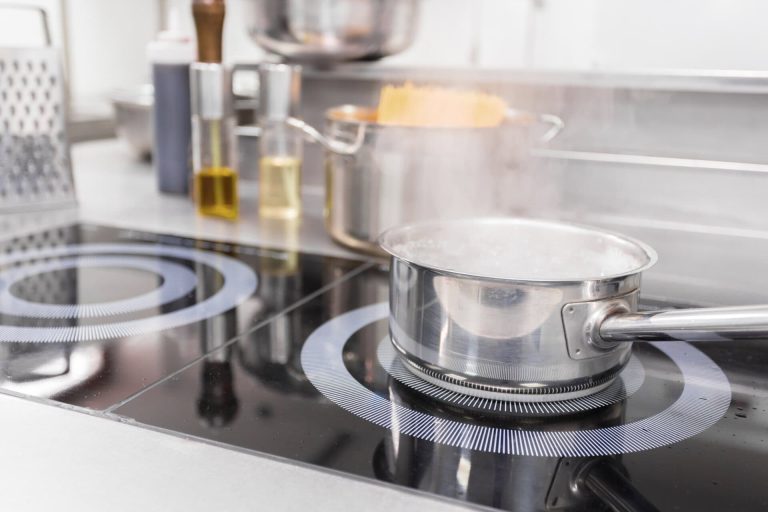
What Is Induction Cookware: Benefits And Buying Guide

Induction cookware uses magnetic energy to heat compatible pots and pans directly, making cooking fast, clean, and precise.
If you have seen a smooth glass cooktop boil water in minutes, you have seen induction cooking in action. What is induction cookware, though, and how does it differ from regular cookware? This guide explains the technology, materials, benefits, limits, safety points, and buying tips so you can choose with confidence.
What Is Induction Cookware?
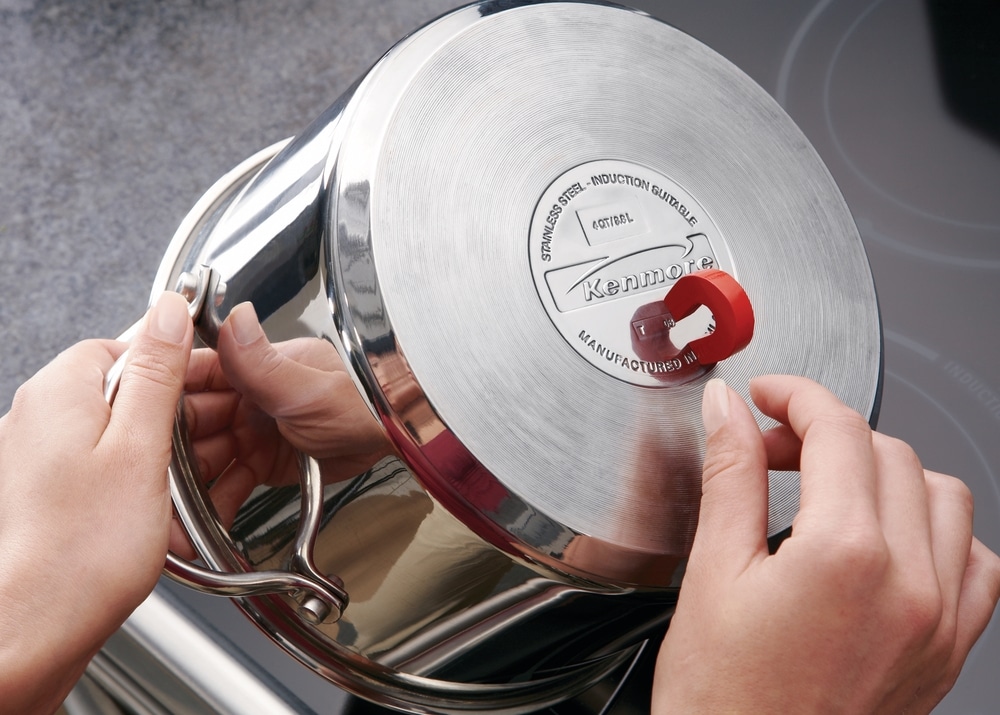
Induction cookware is cookware made with a magnetic metal base that works on an induction cooktop. The pan itself becomes hot when the cooktop creates a magnetic field beneath it.
Unlike a gas or electric stove, an induction cooktop does not mainly heat the air, a flame, or a heating coil. Instead, it sends energy straight into the pan. This process is called electromagnetic induction.
Most induction cookware contains one of these magnetic materials:
• Cast iron
• Enameled cast iron
• Magnetic stainless steel
• Stainless steel cookware with a bonded magnetic base
A simple magnet test can help you check a pan. Place a magnet on the bottom. If it sticks firmly, the cookware will usually work on induction. However, the magnet test is not the only factor. The base must also sit flat and cover the cooking zone well.
What is induction cookware in practical terms? It is cookware designed to act as part of the heating system. The pan is not just a container for food. It is also the surface where the heat is created.

How Induction Cooking Works
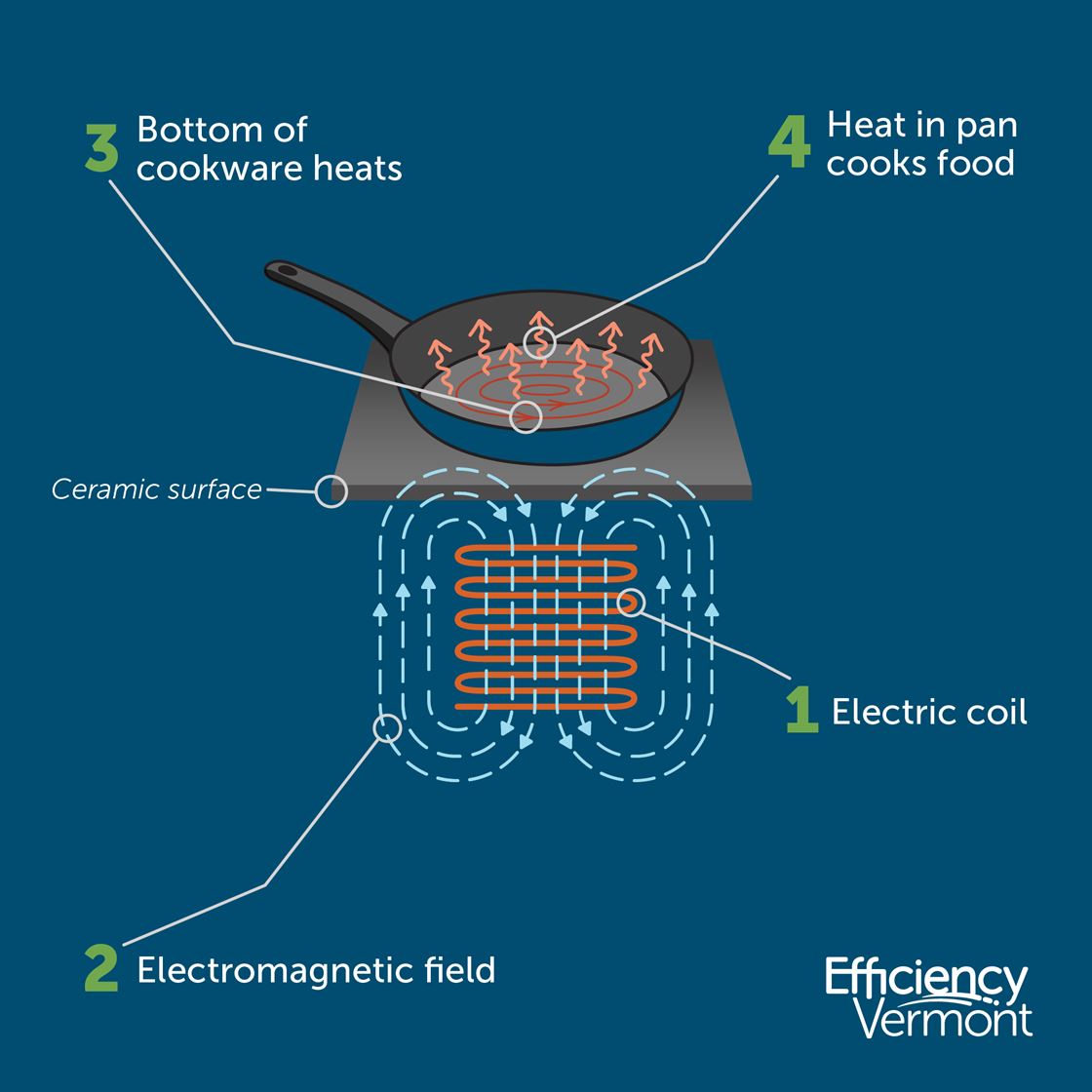
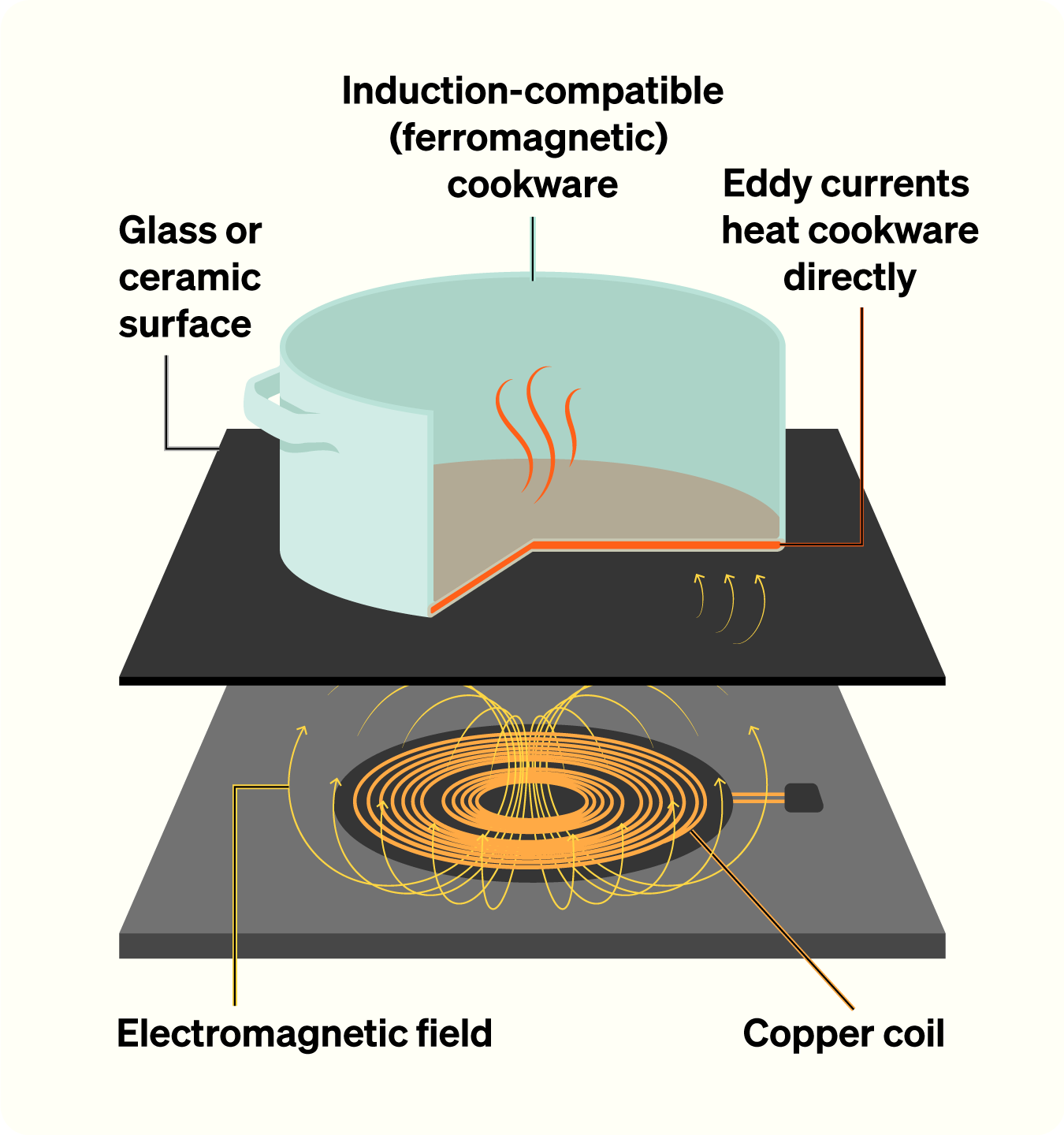
An induction cooktop has a copper coil beneath its glass surface. When you turn on the burner, electricity flows through this coil and creates a changing magnetic field.
When a compatible pan sits on the cooking zone, the magnetic field creates small electrical currents in the pan’s metal base. The metal resists these currents, and that resistance produces heat.
The process happens in three simple steps:
-
The cooktop creates a magnetic field.
-
The magnetic field interacts with the pan’s magnetic base.
-
The pan generates heat and cooks the food.
The glass surface may become warm because of heat from the pan. Still, it does not heat in the same way as a traditional electric coil. This is why spills often do not burn onto an induction cooktop as quickly.
What is induction cookware compared with regular cookware? Traditional cookware receives heat from a flame, coil, or hot surface. Induction cookware receives energy through magnetism, so the pan must contain a suitable magnetic material.
Induction cooking can also respond quickly when you change the temperature. This makes it useful for tasks that need control, such as melting chocolate, simmering sauces, or searing meat.
What Materials Work With Induction Cooktops?
The material matters more than the brand or price. A costly pan may fail on induction if its base is not magnetic.
Cast Iron
Cast iron works very well on induction because it contains a large amount of iron. It holds heat for a long time and is excellent for searing, frying, baking, and slow cooking.
Its main drawback is weight. Rough cast iron can also scratch a glass cooktop if you slide it across the surface. Lift the pan instead of dragging it.
Enameled Cast Iron
Enameled cast iron combines a magnetic iron body with a smooth enamel coating. It works well for soups, stews, braises, and bread baking.
The enamel helps protect the metal and makes cleaning easier. Still, sudden temperature changes can damage some enamel finishes, so follow the care instructions.
Magnetic Stainless Steel
Many stainless steel pans work on induction. Look for cookware labeled “induction compatible” or “induction ready.”
Some stainless steel is not magnetic because it contains a different mix of metals. This is why a magnet test is useful when the label is unclear.
Aluminum and Copper
Plain aluminum and copper do not normally work on induction. They do not respond strongly enough to the magnetic field.
Some aluminum or copper cookware includes a magnetic stainless steel plate on the bottom. That added layer can make it induction compatible.
Glass, Ceramic, and Stoneware
Pure glass, ceramic, and stoneware cookware generally will not work on induction. These materials are not magnetic.
Some products may include a special magnetic base. Check the product label before using them on an induction cooktop.
How to Tell If Cookware Is Induction Compatible
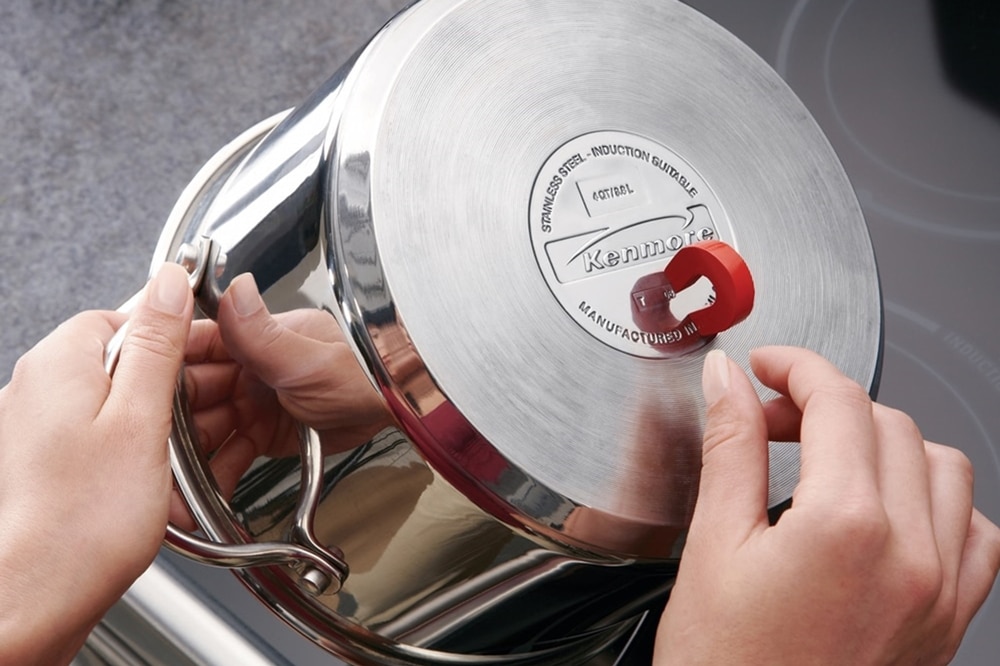
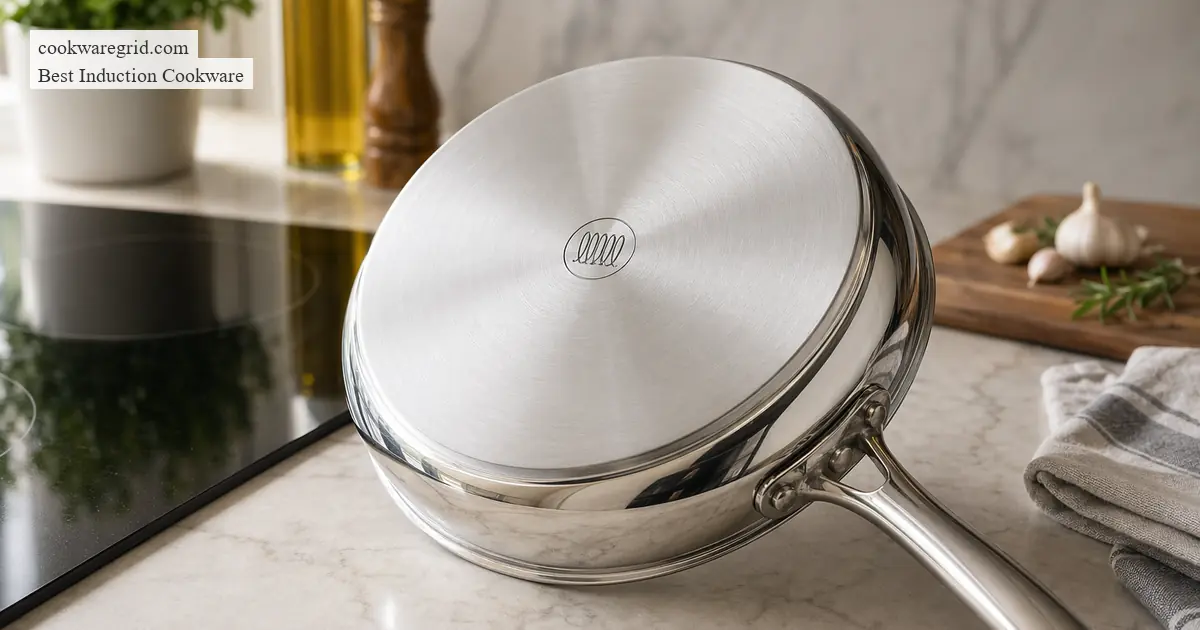
The easiest method is to check the packaging or the symbol on the pan. The induction symbol often looks like a coil or a series of curved loops.
If you do not have the packaging, use these checks:
• Hold a magnet against the outside bottom of the pan. A strong connection is a good sign.
• Look for words such as “induction ready,” “induction compatible,” or “works with induction.”
• Check whether the bottom is flat and smooth.
• Review the manufacturer’s product details.
• Test the pan with a small amount of water on the cooktop.
A pan that passes the magnet test may still perform poorly if its base is too small, warped, or uneven. For best results, the pan should match the size of the induction cooking zone.
What is induction cookware if the pan only partly works? It may have a magnetic spot that is too small or too weak. The cooktop may fail to detect it, heat it unevenly, or shut off during use.
Benefits of Induction Cookware
Induction cookware offers several benefits when paired with a suitable cooktop.
Fast Heating
Induction transfers energy directly to the pan. This can make it faster than many traditional cooking methods, especially when boiling water or heating a large pot.
Actual speed depends on the cooktop, pan size, pan material, and power level. A thick cast iron pan may heat more slowly than a lighter stainless steel pan, even though both work on induction.
Precise Temperature Control
Many induction cooktops let you adjust heat in small steps. This gives you better control when simmering, frying, or reducing a sauce.
The pan also stops receiving active energy when you turn the burner down. It may remain hot, but the cooking process can slow quickly.
Better Energy Use
Because the energy goes into the pan instead of spreading around it, induction cooking can waste less heat than gas cooking. Tests from energy-efficiency organizations often find induction more efficient than gas and conventional electric cooking.
Efficiency varies by cookware and cooking method. A lid, correct pan size, and moderate heat can improve results even more.
Improved Kitchen Safety
The cooktop has no open flame. This reduces the risk of gas flames touching nearby objects.
Many induction cooktops also include safety features such as:
• Automatic pan detection
• Child locks
• Overheat protection
• Residual heat indicators
• Automatic shutoff
The pan can still become very hot, so induction is not completely burn-proof. Always use normal kitchen safety habits.
Easier Cleaning
The flat glass surface has fewer gaps and no burner grates. Once the surface cools, you can usually wipe it with a soft cloth and a suitable cooktop cleaner.
Cleaning spills soon is wise. Sugar, syrup, and melted plastic can damage a glass cooktop if they become baked onto the surface.
:max_bytes(150000):strip_icc()/Induction-Cooktop-GettyImages-1550758299-662f98618b154c4cb2e0d2dd73ad5872.jpg)
Limitations of Induction Cookware
Induction cookware is useful, but it is not perfect for every kitchen.
The biggest limitation is compatibility. You may need to replace some favorite aluminum, copper, glass, or ceramic pans. A portable induction disk can help, but it reduces efficiency and may make temperature control less precise.
Induction cookware can also cost more than basic cookware. High-quality construction, thick bases, and multiple layers often increase the price.
Other possible drawbacks include:
• Some pans make a humming or buzzing sound.
• Uneven or thin pans may develop hot spots.
• Cast iron can scratch the cooktop if handled roughly.
• Very small pans may not trigger the burner.
• Warped pans may heat poorly.
• The cooktop needs electricity to operate.
Noise is usually caused by vibration between the magnetic field and the pan. It may be more noticeable at high power or with lightweight cookware. In most cases, a different pan can reduce the sound.
What is induction cookware’s main weakness? It depends on a compatible magnetic base. Without that base, even excellent cookware will not heat properly on an induction stove.
Induction Cookware Compared With Other Cookware
Understanding the differences can make your choice easier.
Induction Versus Gas
Gas provides instant visual heat and works with nearly any pan material. Many cooks enjoy the way a flame responds to movement and temperature changes.
Induction is often easier to clean and may use energy more efficiently. It also avoids indoor combustion, which can affect kitchen air quality. Good ventilation is still important with any cooking method because food itself creates smoke and particles.
Induction Versus Electric Coil
Electric coil stoves heat a metal coil, which then heats the pan. The coil may stay hot for some time after you lower the setting.
Induction usually responds faster and keeps the cooking surface cooler. Electric coil stoves, however, work with a wider range of cookware.
Induction Versus Ceramic Glass Cooktops
A ceramic glass cooktop may use radiant electric heating beneath the glass. It looks similar to induction but uses a different heating method.
Both surfaces are smooth and easy to wipe. Only induction requires magnetic cookware.
Induction Versus Nonstick Cookware
Nonstick cookware is a coating type, not a heating method. Some nonstick pans work on induction when they have a magnetic base.
Use moderate heat and avoid metal tools unless the manufacturer allows them. Overheating can damage many nonstick coatings.
How to Choose the Best Induction Cookware
Start with the pieces you use most. A practical set does not need to include every pan shape.
Look for these features:
• A flat, stable base
• A strong magnetic layer
• Even heat distribution
• A comfortable, heat-resistant handle
• A secure lid
• Clear induction compatibility labeling
• Durable construction
• A size that matches your cooktop zones
A three-layer or five-layer stainless steel pan can offer good heat control and durability. Cast iron is excellent for high-heat cooking and heat retention. Enameled cookware is useful for soups, stews, and slow cooking.
Avoid pans with visibly warped bottoms. Also avoid cookware with a very small magnetic disk unless the manufacturer provides clear performance details.
A helpful starter group may include:
-
A 10-inch stainless steel skillet
-
A two- to three-quart saucepan
-
A five- to six-quart stockpot
-
A cast iron skillet
-
A Dutch oven for braising and baking
You do not need to buy a complete set at once. Replacing one weak pan at a time can be easier on your budget.
Tips for Using Induction Cookware
Good technique helps you get the best results from induction cooking.
First, place the pan in the center of the cooking zone before turning on the burner. This helps the cooktop detect the pan and spreads heat more evenly.
Next, preheat with care. Induction can heat a pan quickly, so high heat may be more than you need. Start at a medium setting, then increase it if necessary.
Follow these practical habits:
• Lift pans instead of sliding them across the glass.
• Keep the pan base clean and dry.
• Match the pan diameter to the cooking zone.
• Use low heat for delicate foods.
• Avoid heating an empty nonstick pan.
• Use a lid to reduce cooking time.
• Let hot cookware cool before washing it.
• Remove spills as soon as the surface is safe to touch.
One lesson many home cooks learn is that induction power levels may not match gas settings. A setting of “7” on one cooktop may feel different from “7” on another. Treat the numbers as a guide and watch the food.
If a pan does not heat, move it to the center. If it still fails, test the base with a magnet and check the cookware instructions.
Common Mistakes to Avoid
Many induction problems come from simple setup mistakes rather than faulty cookware.
One common mistake is assuming that all stainless steel pans work. Stainless steel is a broad category, and some grades are not magnetic.
Another mistake is using the highest setting for every task. Induction can deliver strong heat quickly, which may burn oil, scorch sauces, or damage delicate coatings.
Avoid these errors:
• Do not drag rough cast iron across the cooktop.
• Do not use a pan smaller than the cooking zone’s minimum size.
• Do not place foil directly between the pan and the cooktop.
• Do not heat an empty pan for a long time.
• Do not use a chipped or badly warped pan.
• Do not ignore the cookware maker’s care instructions.
During cookware testing and everyday kitchen use, flatness has proved just as important as magnetism. A pan can pass the magnet test but still cook poorly if the bottom does not make good contact with the surface.
Is Induction Cookware Safe?
Induction cookware is generally safe when used as directed. It does not create an open flame, and the cooking surface often stays cooler than a gas or radiant electric stove.
People with implanted medical devices should follow guidance from their doctor and the device manufacturer. Induction cooktops create electromagnetic fields, and recommended distances may vary by device.
Use oven mitts with hot pans, keep handles turned away from the edge, and supervise children around the cooktop. Also remember that food can continue cooking in a hot pan after the burner is turned off.
The safety of the cookware itself depends on its materials and condition. Buy from reputable manufacturers, avoid damaged coatings, and stop using pans with loose handles or badly cracked enamel.
What is induction cookware from a safety standpoint? It is cookware designed for a magnetic heating system, but it still requires the same care as any hot cookware.
Frequently Asked Questions About What Is Induction Cookware
What is induction cookware made of?
Induction cookware usually contains cast iron, magnetic stainless steel, or another magnetic metal. Some aluminum and copper pans work only when they have a magnetic plate bonded to the base.
How can I tell if my cookware works on induction?
Place a magnet on the outside bottom of the pan. If it sticks firmly, the pan will often work, but you should also check the manufacturer’s instructions and confirm that the base is flat.
Can I use nonstick pans on an induction cooktop?
Yes, if the nonstick pan has a magnetic base and is labeled induction compatible. Use moderate heat and follow the care instructions to protect the coating.
Does induction cookware work on a gas stove?
Most induction cookware also works on gas and standard electric stoves. Cast iron and stainless steel pans are often made for several cooking surfaces, but check the product label first.
Is induction cookware better than regular cookware?
Induction cookware is not automatically better for every person. It is a strong choice for fast heating, precise control, easy cleaning, and energy efficiency, but it requires a compatible cooktop and may cost more.
Can I use cast iron on an induction cooktop?
Yes, cast iron works well because it is magnetic. Lift it instead of sliding it, since rough cast iron can scratch a glass cooking surface.
What happens if cookware is not induction compatible?
The cooktop may not detect the pan, or it may produce little to no heat. A pan with a weak or small magnetic base may also heat unevenly.
Conclusion
What is induction cookware? It is cookware with a magnetic base that heats through electromagnetic energy from an induction cooktop. Cast iron, enameled cast iron, and magnetic stainless steel are common choices, while plain aluminum, copper, glass, and ceramic usually need a special magnetic layer.
The best results come from using flat pans, matching pan sizes to cooking zones, and starting with moderate heat. Test your current cookware with a magnet before replacing it, then choose durable pieces that fit your cooking habits and budget.
Ready to upgrade your kitchen? Test your pans today, compare induction-ready options, and share your favorite induction cooking tips in the comments.