How Many Watts Does A Cooktop Use: Power Guide

Most cooktops use 1,200 to 3,700 watts per burner, depending on type and size.
If you have ever wondered how much power a cooktop really draws, you are not alone. I have worked with plenty of kitchens where energy use matters just as much as cooking performance, and the numbers can vary a lot based on whether you use electric coil, radiant, induction, or a gas cooktop with electric ignition. In this guide, I will break down how many watts a cooktop uses, what affects that number, and how to choose the right cooktop for your home without guessing.

What Affects How Many Watts a Cooktop Uses?
A cooktop’s watt use depends on the heating technology, burner size, and power setting. A small burner may use far less power than a large high-output zone, especially on electric and induction models.
In real use, the wattage also changes based on what you are cooking. A pot of soup on simmer uses less power than a large pan of water at a hard boil. That is why the label on the appliance tells only part of the story.
Here are the biggest factors:
• Cooktop type: Electric coil, smoothtop, induction, and gas with electric parts all use power differently
• Burner size: Larger elements usually use more watts
• Heat level: High heat pulls more power than low simmer
• Number of burners in use: Multiple burners can raise total load fast
• Voltage and wiring: Most full-size electric cooktops run on 240 volts in the US
From a practical point of view, I always tell homeowners to think in ranges, not single numbers. That gives a much better picture of real kitchen energy use.

How Many Watts Does an Electric Cooktop Use?
An electric cooktop often uses between 1,200 and 3,000 watts per burner. Some high-power burners can reach about 3,500 watts or more, especially on larger premium models.
A standard four-burner electric cooktop may have a total connected load around 6,000 to 9,000 watts. That does not mean it uses that much power all the time. It only reaches those numbers when all burners are on high.
Common electric cooktop watt ranges:
• Small burner: about 1,200 to 1,500 watts
• Medium burner: about 1,500 to 2,000 watts
• Large burner: about 2,000 to 3,000 watts
• High-power rapid burner: about 3,000 to 3,500 watts
I have seen many people underestimate this part and then wonder why a circuit trips. The wattage is not just a tech detail. It affects wiring, breakers, and your electric bill.
How Many Watts Does an Induction Cooktop Use?
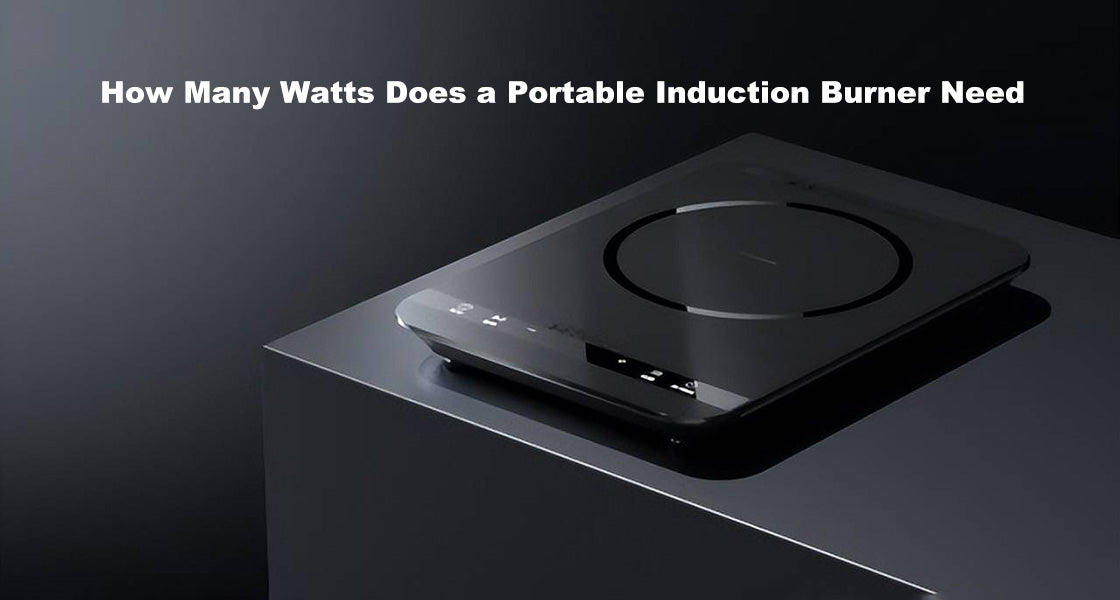
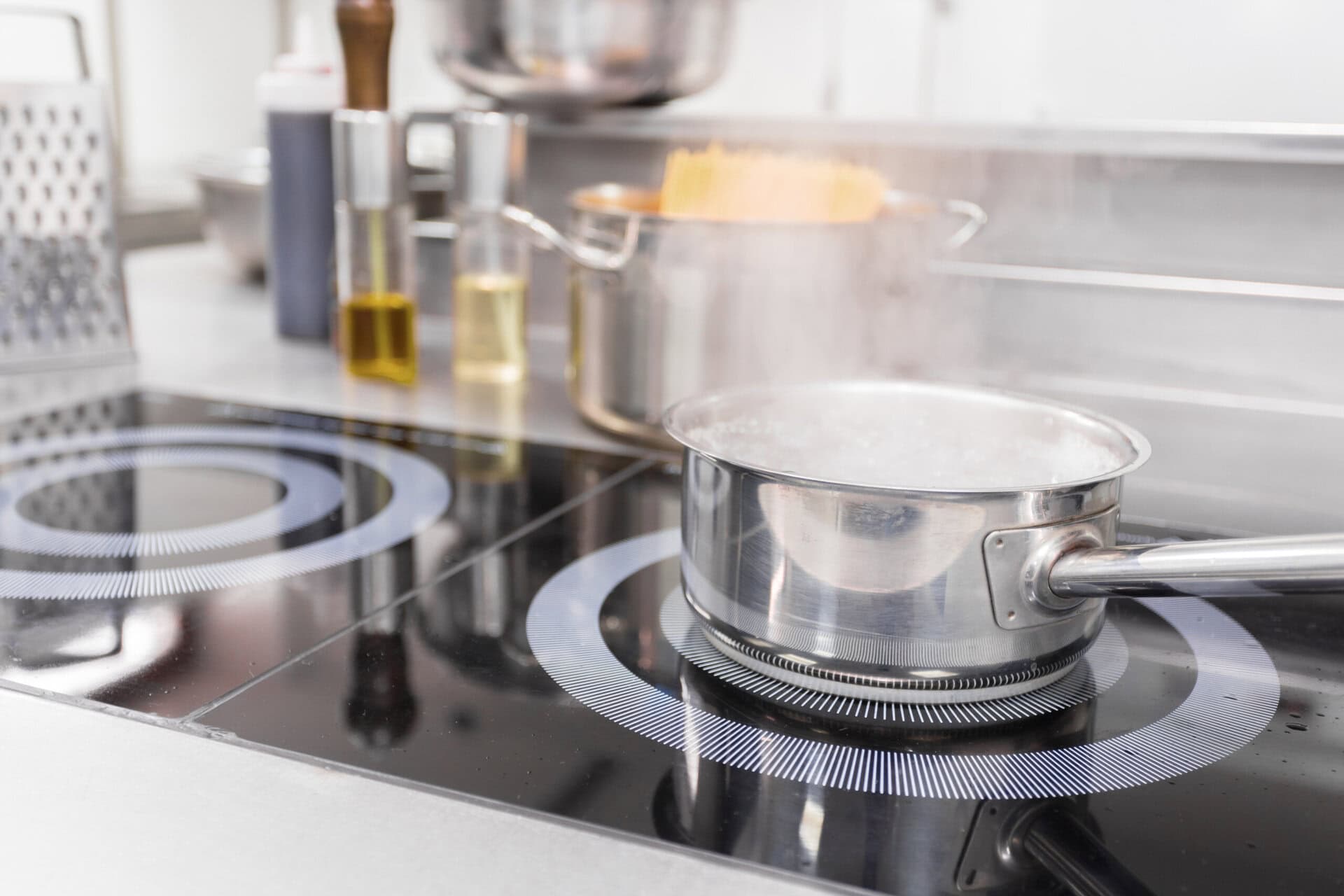
An induction cooktop usually uses about 1,300 to 3,700 watts per cooking zone. Many portable induction units run near 1,500 watts, while built-in models can go much higher.
Induction is often more efficient than standard electric cooking because it heats the pan directly. That means less wasted heat in the air and often faster cooking with less overall energy use. In practice, an induction cooktop may feel more powerful even when its watt rating looks similar to another electric model.
Typical induction watt ranges:
• Portable single-zone unit: about 1,300 to 1,800 watts
• Mid-size built-in zone: about 1,800 to 2,600 watts
• Booster zone: about 3,000 to 3,700 watts
One thing I learned after testing induction in a real kitchen is that power management matters. Some units share wattage across burners, so using multiple zones at once can lower the max output on each one.
)
How Many Watts Does a Gas Cooktop Use?
A gas cooktop uses very little electricity compared with an electric or induction model. Most gas cooktops use around 1 to 15 watts for ignition, timers, lights, or control systems.
The heat for cooking comes from gas, not electricity. So when people ask how many watts a gas cooktop uses, the honest answer is that it uses almost none for actual cooking. The electric draw is mostly for convenience features.
Typical gas cooktop power use:
• Manual ignition models: near 0 watts during cooking
• Electric ignition systems: about 1 to 5 watts during use
• Models with lights, fans, or displays: sometimes up to 15 watts total
If your goal is low electric use, gas looks very efficient on paper. But you still need to think about fuel type, ventilation, and safety. Energy use is only one piece of the kitchen puzzle.
How Many Watts Does a Portable Cooktop Use?
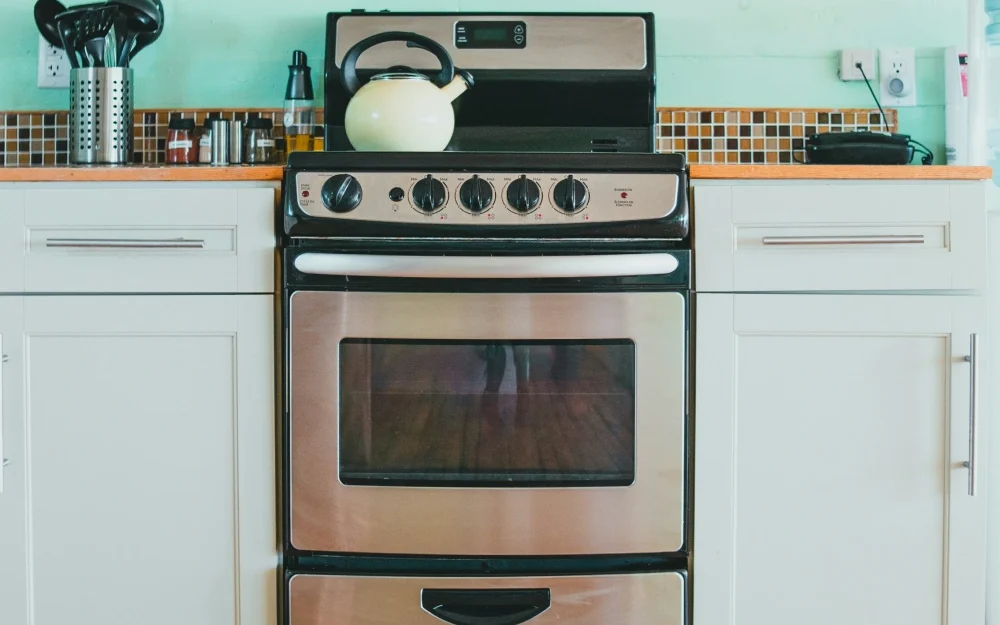
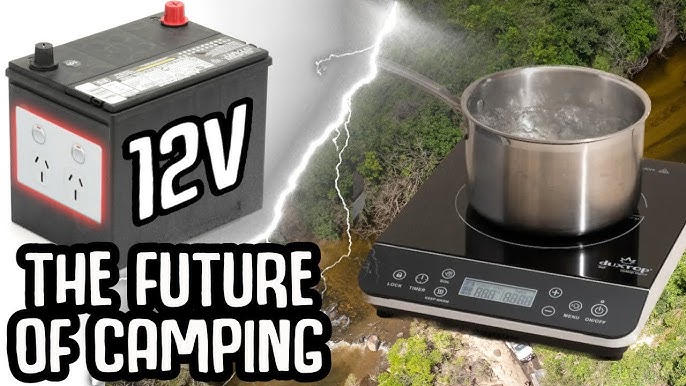
A portable cooktop usually uses between 1,000 and 1,800 watts. Most plug into a standard 120-volt outlet, which makes them popular for dorms, small kitchens, RVs, and extra cooking space.
Portable electric coil units tend to sit near the lower end. Portable induction units often use 1,300 to 1,800 watts because they heat faster and more efficiently.
Useful ranges for portable cooktops:
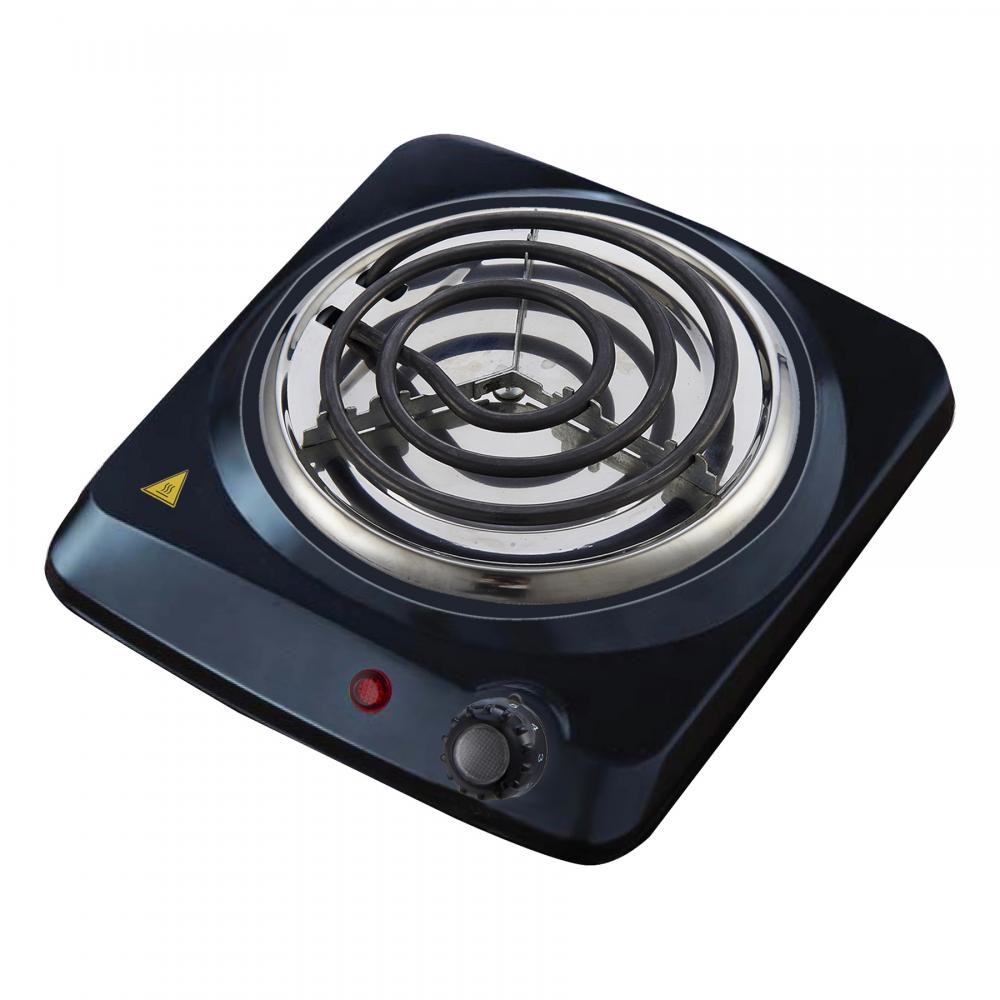
• Single electric hot plate: about 1,000 to 1,500 watts
• Portable induction burner: about 1,300 to 1,800 watts
• Larger dual portable unit: sometimes 2,000 watts or more total
I have used portable units for backup cooking during remodels, and they are handy, but they are not all equal. A cheap hot plate can feel slow, while a good induction burner can boil water surprisingly fast.
How to Convert Cooktop Watts to Amps
To estimate amps, use this simple formula:
Amps = Watts ÷ Volts
For a 240-volt electric cooktop using 3,000 watts, the draw is about 12.5 amps. On a 120-volt portable unit using 1,500 watts, the draw is about 12.5 amps as well.
Here are a few examples:
• 1,500 watts on 120 volts = 12.5 amps
• 3,000 watts on 240 volts = 12.5 amps
• 7,200 watts on 240 volts = 30 amps
This matters because your breaker and wiring must safely handle the load. I have seen people buy a beautiful cooktop and then discover their kitchen circuit cannot support it. That is a frustrating mistake, and it is easy to avoid with a quick check before buying.
How Much Electricity Does a Cooktop Use in a Day?
Daily use depends on how long you cook and at what power level. A cooktop may be rated at several thousand watts, but real daily use is usually much lower.
For example, if you use a 2,000-watt burner for 30 minutes, it consumes 1 kilowatt-hour of electricity. If your electricity rate is 16 cents per kWh, that session costs about 16 cents.
Simple examples:
• 1,500-watt cooktop used for 1 hour = 1.5 kWh
• 2,000-watt cooktop used for 30 minutes = 1.0 kWh
• 3,000-watt cooktop used for 15 minutes = 0.75 kWh
A lot of people focus on peak wattage and worry too much. In real life, cooking is often short bursts of heat, not constant max power all day.

Which Cooktop Uses the Most Watts?
High-output electric and induction cooktops usually use the most watts per burner. Induction can reach very high output fast, while large electric radiant burners also draw a lot of power.
Here is the general pattern:
• Gas cooktops use the least electricity
• Portable electric units use moderate power
• Standard electric cooktops use more power
• High-end induction cooktops can use the most per zone
That said, the most watts do not always mean the highest energy cost. Induction often finishes cooking faster, so it may use less total energy for the same task. That is one of the most useful tradeoffs to understand.
Is a Higher-Watt Cooktop Better?
A higher-watt cooktop can heat faster and recover heat better, but that does not automatically make it better for every home. The best choice depends on your cooking style, electrical setup, and budget.
If you cook a lot of stir-fries, boil water often, or want fast temperature changes, higher wattage can be a real advantage. If you mostly simmer sauces or cook simple meals, moderate wattage may be enough.
Pros of higher wattage:
• Faster boiling and preheating
• Better heat recovery when adding cold food
• Stronger performance for large pans
Limitations:
• May need special wiring or a stronger breaker
• Can cost more upfront
• May not be necessary for light cooking
I usually advise people to match wattage to actual habits, not just marketing claims. That keeps you from paying for power you never use.
How to Choose the Right Cooktop Wattage
Choosing the right wattage starts with your kitchen setup and your cooking needs. The goal is to find enough power without overloading your electrical system or overspending.
Use this simple checklist:
- Check your home’s voltage and breaker size
- Decide how often you cook and what you cook most
- Compare per-burner wattage, not just total wattage
- Look at energy efficiency and heat control
- Confirm installation requirements before buying
If you are replacing an old cooktop, compare the nameplate specs with your new model. A mismatch can create installation problems or poor performance. I have seen smooth installs become expensive because someone skipped this step.
Cooktop Wattage vs Energy Efficiency
Wattage tells you how much power a cooktop can use at once. Energy efficiency tells you how well it turns that power into cooking heat.
Induction is usually the most efficient because it transfers heat directly to the pan. Electric radiant and coil cooktops lose more heat to the air. Gas gives you good visual control, but it is less efficient for heat transfer.
Think of it this way:
• Wattage is the size of the engine
• Efficiency is how well the engine uses fuel
That is why a lower-watt induction burner can sometimes outperform a higher-watt electric one. It is not just about raw power. It is about how that power gets used.
Frequently Asked Questions of How Many Watts Does a Cooktop Use
How many watts does a 4-burner cooktop use?
A 4-burner electric cooktop often uses about 6,000 to 9,000 watts total. The exact number depends on burner sizes and whether all zones run at full power at the same time.
How many watts does a cooktop burner use?
A single cooktop burner usually uses between 1,200 and 3,700 watts. Smaller burners use less, while large or booster burners use more.
Does a cooktop use a lot of electricity?
It can, especially at high heat, but actual use depends on cooking time. A cooktop may draw a lot of watts while running, yet still use a modest amount of electricity if you cook for short periods.
Can I plug a cooktop into a regular outlet?
Most full-size electric cooktops cannot use a standard outlet because they need 240 volts. Portable cooktops are more likely to plug into a regular 120-volt outlet, but you should always check the label first.
Is induction cheaper to run than electric?
Induction is often cheaper to run than standard electric cooking because it heats more efficiently and cooks faster. Your actual savings depend on cooking habits, local electricity rates, and the model you choose.
Conclusion
Cooktop watt use is not one-size-fits-all. Most electric burners use about 1,200 to 3,700 watts, induction can run in a similar range with better efficiency, and gas cooktops use very little electricity.
The smartest move is to match the cooktop to your kitchen, your breaker, and your cooking style. If you check the wattage before buying, you can avoid electrical surprises and choose a model that fits your life better.
If this guide helped, take a closer look at your own cooktop specs and compare them with how you really cook. Then explore more appliance guides, subscribe for updates, or leave a comment with your cooktop model if you want help estimating its power use.