How To Restore Enamel Cast Iron Cookware: Easy Guide

Enamel cast iron cookware can often be restored with gentle cleaning, stain removal, chip repair, and the right care.
If your Dutch oven, skillet, or braiser has lost its shine, you are not alone. I have brought tired enamel cookware back to life more than once, and the fix is usually less dramatic than people think. With the right approach, you can remove buildup, improve the look, and extend the life of your enamel cast iron cookware without making the damage worse.
What Enamel Cast Iron Cookware Can and Cannot Be Restored From
Before you start, it helps to know what “restore” really means. Enamel cast iron cookware is cast iron coated with a glass-like enamel layer, so it does not restore the same way bare cast iron does. You can often clean away stains, remove burnt-on residue, fix dullness, and make small chips less noticeable, but you cannot fully repair cracked or badly flaked enamel at home.
In my experience, the biggest mistake is treating enamel like a metal pan that can be scrubbed hard. That usually turns a small issue into a bigger one. A careful reset works far better than aggressive cleaning.
What you can usually restore:
• Stains from tomato sauce, broth, tea, or oil
• Cloudy film and dull spots
• Burnt-on food residue
• Light rust on exposed rims or chips
• Minor cosmetic wear
What you usually cannot fully restore:
• Deep enamel cracks
• Large chips that expose a lot of cast iron
• Spiderweb crazing that keeps spreading
• Structural damage from dropping or overheating

Common Reasons Enamel Cast Iron Looks Worn
Most enamel cast iron cookware gets dull for simple reasons. Hard water leaves mineral film. High heat can stain the enamel. Sugar, oil, and tomato-heavy recipes can leave a sticky layer that slowly builds up over time.
I have also seen cookware look “ruined” when it was really just coated in a thin film. Once that layer comes off, the color and shine often return. That is why a proper cleanup matters before you decide the pot is beyond saving.
Common causes include:
• Overheating empty cookware
• Using metal tools that scratch the enamel
• Dish soap buildup or detergent residue
• Food burns that were not soaked soon after cooking
• Hard water spots and mineral deposits
• Storing with the lid closed while still damp
What You Need Before You Start
You do not need a huge repair kit. Most restoration jobs can be done with simple items you already have at home. The key is using mild tools first and only moving to stronger methods if needed.
Gather these supplies:
• Warm water
• Mild dish soap
• Soft sponge or non scratch pad
• Baking soda
• White vinegar
• Plastic or wooden scraper
• Microfiber cloth
• Soft toothbrush
• Paper towels
• Cooking oil for conditioning the exterior rim, if needed
Avoid these when possible:
• Steel wool
• Abrasive powders
• Oven cleaner
• Bleach
• Knife blades or metal scrapers
• Harsh scouring pads
How to Restore Enamel Cast Iron Cookware Step by Step
Restoring enamel cast iron cookware is really a series of small, careful steps. Think of it like washing a delicate shirt with stubborn stains. You start light, then increase cleaning power only if the stain stays put.
1. Wash off loose food and grease
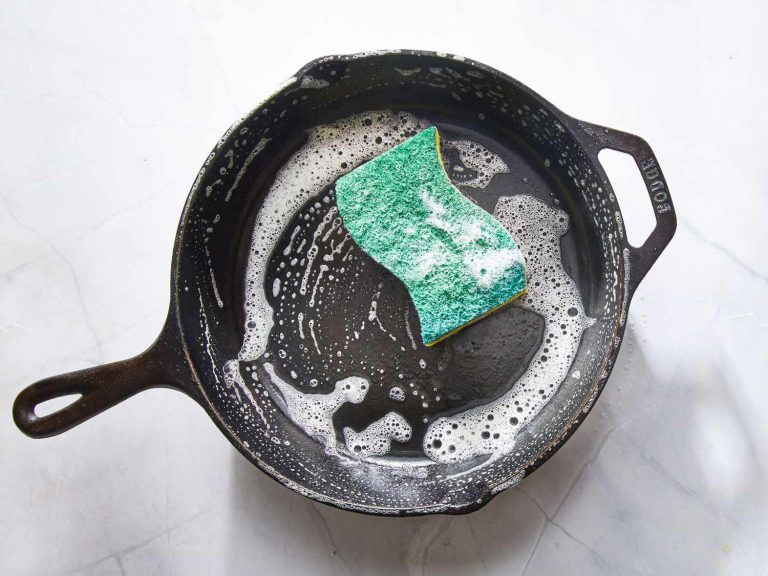
Start with warm water and a little dish soap. Let the cookware sit for 15 to 30 minutes if food is stuck on. Then use a soft sponge to lift away the loose residue.
Do not rush this part. A lot of mess comes off here without needing anything stronger. I have saved many pans from unnecessary scrubbing just by giving them time to soak.
2. Make a baking soda paste
If stains or cooked-on spots remain, mix baking soda with a little water to form a paste. Spread it on the problem areas and let it sit for 15 to 20 minutes. Then scrub gently with a soft sponge or toothbrush.
This works well for cloudy residue and light discoloration. Baking soda is mild enough for regular use but still helpful on many enamel surfaces. It is one of the safest first-line options.
3. Try a vinegar soak for mineral film
If the cookware looks dull, chalky, or streaked, hard water may be the issue. Mix equal parts white vinegar and water, then fill the pot enough to cover the affected area. Let it soak for 10 to 15 minutes, then wash and rinse well.
Do not leave vinegar in the cookware for hours. Acids can be helpful, but too much contact is not a good idea for enamel surfaces, especially if they already have chips.
4. Remove burnt-on stains carefully
For stubborn burnt spots, make a baking soda paste and add a small splash of water. Heat the pot with water and baking soda on very low heat for a few minutes, then let it cool before scrubbing. Another option is to simmer water in the pot to soften the residue first.
This step has saved me many times after sauces or sugars scorched on the bottom. The trick is patience. If you force it, you risk scratching the finish.
5. Treat exterior stains and the rim
The outside of enamel cast iron often gets overlooked. Soot, oil, and stove marks can collect around the bottom and rim. Use warm soapy water, then baking soda paste on the stubborn spots.
If the rim is raw cast iron and has rust, dry it fully and wipe on a very thin coat of oil. Keep the oil off the enamel interior. That small step can help stop rust from spreading.
6. Dry it completely
Dry the cookware with a soft towel right away. Then leave it uncovered for a bit so moisture can escape from seams, handles, and lids. This matters more than people think.
If you store enamel cast iron while damp, even a small amount of trapped moisture can lead to rust on exposed edges. I learned that the hard way with a lid that looked clean but had water hiding near the knob.
7. Inspect for chips and cracks
After cleaning, look closely in good light. Small chips at the rim or base are common, but deep cracks or large enamel loss need caution. If the damage reaches bare cast iron inside the cooking area, the cookware may still be usable for some tasks, but it is no longer fully protected.
If a crack spreads or the enamel is flaking in a large area, replacement is often the safer choice. Cosmetic restoration is not worth a safety risk.

How to Handle Specific Problems
Different problems call for different fixes. Matching the method to the issue makes the work easier and protects the enamel.
Stains from tomato sauce or curry
These often leave a faint orange or brown tint. Use a baking soda paste first, then a short vinegar rinse if the stain remains. Tomato-based stains usually respond well to a second round of gentle cleaning.
Cloudy white film
This is often mineral buildup from water. A brief vinegar soak is usually the best fix, followed by a thorough rinse and dry.
Sticky grease film
Grease film can feel like the pan is still dirty no matter how much you wash it. Use warm water, dish soap, and a non scratch pad, then finish with baking soda paste if needed.
Burnt sugar or caramelized residue
Sugar burns can bond tightly to enamel. Soak with hot water, then loosen the residue with a wooden scraper before cleaning again. Never chip at it with metal tools.
Light rust on exposed cast iron
If the enamel is chipped and the bare edge rusts, clean the rust gently with a soft brush and dry it well. Apply a tiny amount of oil to the exposed metal rim. Keep using the pot only if the damage is minor and stable.
What Not to Do When Restoring Enamel Cast Iron Cookware
This is where many people go wrong. Enamel is durable, but it is not indestructible. One harsh product can do more harm than years of normal cooking.
Avoid these mistakes:
• Do not use steel wool or harsh pads
• Do not shock hot cookware with cold water
• Do not heat an empty enamel pan on high heat
• Do not use bleach or oven cleaner
• Do not cut food directly in the pot
• Do not scrape with knives or metal spatulas
• Do not soak for very long in strong acids
• Do not put chipped cookware in the dishwasher if it worsens damage
I have seen more damage from overcleaning than from regular cooking. Gentle, repeatable care wins almost every time.
When Restoring Is Worth It and When to Replace
Restoration makes sense when the cookware still has a solid structure and the enamel is mostly intact. If the pan is stained, dull, or lightly chipped, it is often worth saving. High-quality enamel cast iron is expensive, so a careful restoration can bring real value back.
Replacement is the better choice if:
• The enamel is deeply cracked
• Large flakes are coming off
• The interior coating is badly worn in a cooking area
• Rust keeps returning after cleaning
• The pot no longer heats evenly because of damage
A good rule I use is simple: if the cookware is ugly but stable, restore it. If it is unstable or flaking, replace it.
How to Keep Enamel Cast Iron Looking Better Longer
Once you restore enamel cast iron cookware, regular care keeps it looking good. Think of this like protecting a restored table after refinishing it. A little habit goes a long way.
Helpful care tips:
• Use medium or low heat most of the time
• Let cookware cool before washing
• Wash soon after cooking acidic foods
• Use wooden, silicone, or nylon tools
• Dry right after cleaning
• Store with the lid slightly open
• Place a paper towel or cloth inside when stacking
A small habit like drying the lid separately can prevent a lot of issues later. That one habit has saved me from rust around knobs and rims more than once.
Benefits of Restoring Enamel Cast Iron Cookware
Restoring cookware is not just about looks. It can improve your kitchen routine and help you get more years out of a trusted pan.
Benefits include:
• Better appearance
• Easier cleaning
• Less lingering odor from old buildup
• Longer cookware life
• Better resale or resale-like value
• More confidence cooking daily meals
There is also something satisfying about bringing a favorite pot back into use. It feels a bit like giving a well-loved tool a second life.
Frequently Asked Questions of How to Restore Enamel Cast Iron Cookware
Can you restore chipped enamel cast iron cookware?
You can improve the appearance of small chips, but you cannot fully rebuild enamel at home. If the chip exposes a small patch of cast iron, clean and dry it well to slow rust, but watch for spread.
Is baking soda safe for enamel cast iron cookware?
Yes, baking soda is one of the safest cleaning options for enamel cast iron cookware. It works well for stains and grime without being too abrasive when used gently.
Can vinegar damage enamel cast iron cookware?
Short vinegar soaks are usually fine, but long soaks are not a good idea. Use it only for short stain or mineral removal, then rinse and dry the cookware well.
Why does my enamel cast iron cookware look cloudy?
Cloudiness usually comes from mineral deposits, soap film, or cooked-on residue. A gentle vinegar rinse or baking soda paste often helps bring back the shine.
Is it safe to cook in enamel cast iron with small chips?
Small exterior chips or tiny rim chips may still be usable, but interior chips in the cooking area need caution. If bare cast iron is exposed inside, monitor it closely and avoid using it if the damage grows.
Conclusion
Restoring enamel cast iron cookware is usually about patience, not force. Start with gentle washing, use baking soda or vinegar only where needed, and dry the cookware fully before storing it. Most of the time, that simple approach can bring back shine, remove stubborn buildup, and extend the life of a great pan.
If you have a piece that looks tired, do not give up on it too quickly. Try the safest methods first, inspect the damage honestly, and keep your care routine gentle from now on. If this guide helped, explore more cookware care tips or leave a comment with the restoration issue you are dealing with.