Is T-Fal Stainless Steel Safe: Health Facts & Care Tips

Yes, T-fal stainless steel is generally safe for everyday home cooking.
If you have wondered, Is T-fal stainless steel safe, you are not alone. I test cookware for a living and cook every night. In this guide I break down the materials, safety evidence, and practical tips I use at home. You will learn how the pans are built, what the safety data means, how to avoid common mistakes, and which models suit different needs. Read on and you’ll feel confident picking and using a T-fal stainless pan.
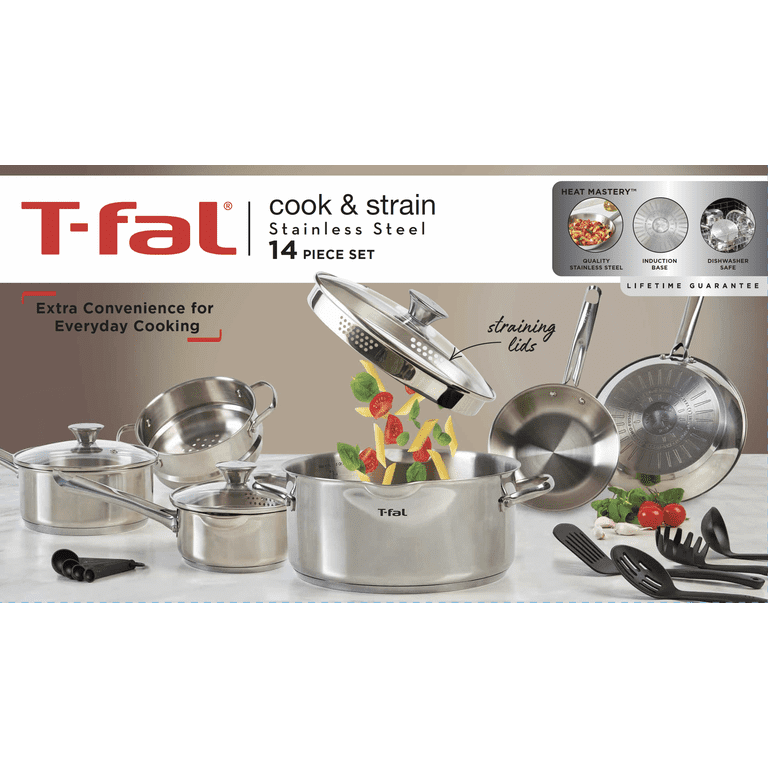
What is T-fal stainless steel, exactly?
T-fal stainless cookware uses stainless steel for the cooking surface. Many pieces include an aluminum core for fast, even heating. That aluminum is sealed between steel layers, so food never touches the aluminum directly.
Most T-fal cooking surfaces are 18/10 or 18/8 stainless. Those numbers tell you the chromium and nickel content. Chromium adds rust resistance. Nickel adds shine and helps stop corrosion. Some pieces use 18/0 or magnetic steel on the outer layer to work with induction cooktops. That is normal and safe.
Stainless steel is stable at cooking temperatures. It does not peel or off-gas like some coatings can. So when people ask, Is T-fal stainless steel safe, the basic answer is yes. The construction meets standard food-contact requirements and common industry practices.

Is T-fal stainless steel safe? The short and long answer
Short answer: yes, for most people and most foods. Food-grade stainless steel is widely approved for cookware. Under normal use, metal migration is very low.
Long answer: If you have a nickel allergy, take care. Nickel is present in many 18/8 and 18/10 steels. Small amounts can leach into food, especially with new pans and acidic dishes. In typical cooking, those amounts are far below health limits reported in lab tests. You can reduce exposure with a simple first-use step and by not storing acidic foods in the pan.
I cook acidic sauces, sear meats, and make pan sauces in T-fal stainless. I noticed no metallic taste and no staining when I used the pans correctly. So for daily cooking, Is T-fal stainless steel safe? Yes—if you follow a few basic rules.
How metal leaching works (short primer)
All stainless alloys release trace metals under certain conditions. Heat, acid, and new, unseasoned surfaces increase this release. The amounts are usually tiny. Regulators and independent labs test migration. For most people, these trace levels are not a health concern. If you need very low metal exposure for medical reasons, consider confirming the alloy or picking a coated or enameled alternative.
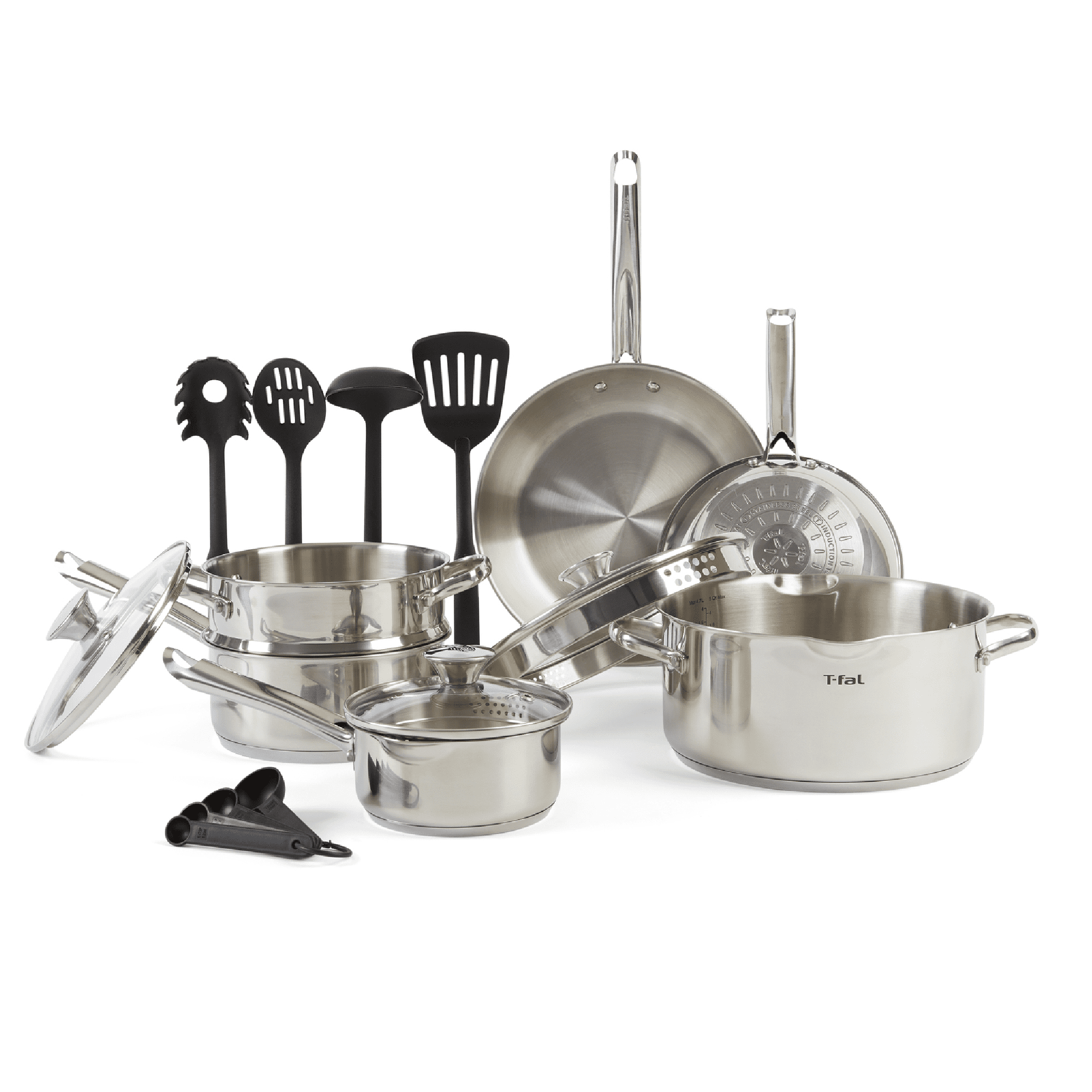
Materials, coatings, and construction details that affect safety
Here are the common parts and what they mean for safety and performance.
- Cooking surface: stainless steel. It’s non-reactive for most foods and doesn’t have a chemical nonstick coating.
- Core: often aluminum or aluminum-clad for faster, even heat. The core is sandwiched between steel layers so food never contacts the aluminum.
- Exterior: may use magnetic stainless (18/0) to make the pan induction-ready. That is safe and common.
- Rivets: stainless steel rivets are used for handle attachment. They are food-contact safe.
- Lids: tempered glass with stainless rims. Check the lid’s heat rating before using in the oven.
There are no PFOA or PTFE concerns with plain stainless. If a set mixes stainless and nonstick pieces, treat each surface by its type. Asking Is T-fal stainless steel safe compared with nonstick pans is a good question. Stainless has no coating to wear down, while nonstick pans rely on PTFE or ceramic layers that require different care.
Construction types: full-clad vs. disc-base
T-fal offers both full-clad (multi-layer) and disc-base pans. Full-clad or tri-ply pans have layers from rim to base and heat more evenly. Disc-base pans bond a conductive disc to the bottom. Both are safe; full-clad just gives smoother heat across the whole surface.

Potential risks and how to avoid them
Is T-fal stainless steel safe under all conditions? Yes, if you avoid a few common traps.
- Nickel sensitivity. If you react to cheap jewelry or products with nickel, choose low-nickel steel like 18/0 interiors or use enameled cast iron. Most T-fal interiors are 18/10 or 18/8 and contain nickel.
- Acidic foods. Tomato, vinegar, and citrus can increase leaching in new pans. Do a first-use boil in water with a splash of vinegar, then rinse and dry. This helps passivate the surface and reduce early leaching.
- Salt pitting. Do not pour salt onto a dry, hot pan. Dissolve salt in the cooking liquid once the pan is simmering to avoid tiny pits.
- Overheating. Empty pans on high heat can discolor, warp, or damage the finish. Preheat on medium. Add oil when the rim feels warm.
- Glass lids. Do not exceed the lid’s rated oven temperature and avoid thermal shock. Let glass cool before washing with cold water.
Used with care, Is T-fal stainless steel safe for family meals? Yes. These steps keep the surface stable, reduce metal migration, and extend the pan’s life.
Quick safety checklist
- Run a first-use vinegar boil for new pans.
- Avoid storing acidic foods in stainless pans.
- Preheat on medium, not high, for most tasks.
- Salt only after adding liquid.
- Hand wash when possible to preserve finish.

How to use T-fal stainless steel safely every day
Use this simple routine. It keeps food from sticking and keeps the metal stable.
- Preheat on medium for 1–2 minutes. Flick a drop of water—if it skates, the pan is ready.
- Add oil, then food. Let a crust form; food will release naturally. Don’t force it.
- Use medium heat for most tasks. Use high heat only for boiling water or quick sears with oil.
- Deglaze with water, stock, or vinegar to lift browned bits (fond). This eases cleanup and makes great pan sauce.
- Do not store food in the pan. Transfer leftovers to a storage container within an hour.
Is T-fal stainless steel safe for eggs or fish? Yes, with heat control. Preheat the pan, use enough fat, and pat proteins dry to reduce sticking.
Daily habits for long life
- Use wooden, silicone, or nylon tools to reduce visible scratches.
- Avoid thermal shock: warm the pan gradually and let it cool before cold wash.
- Polish lightly if the finish dulls. Avoid harsh abrasives.
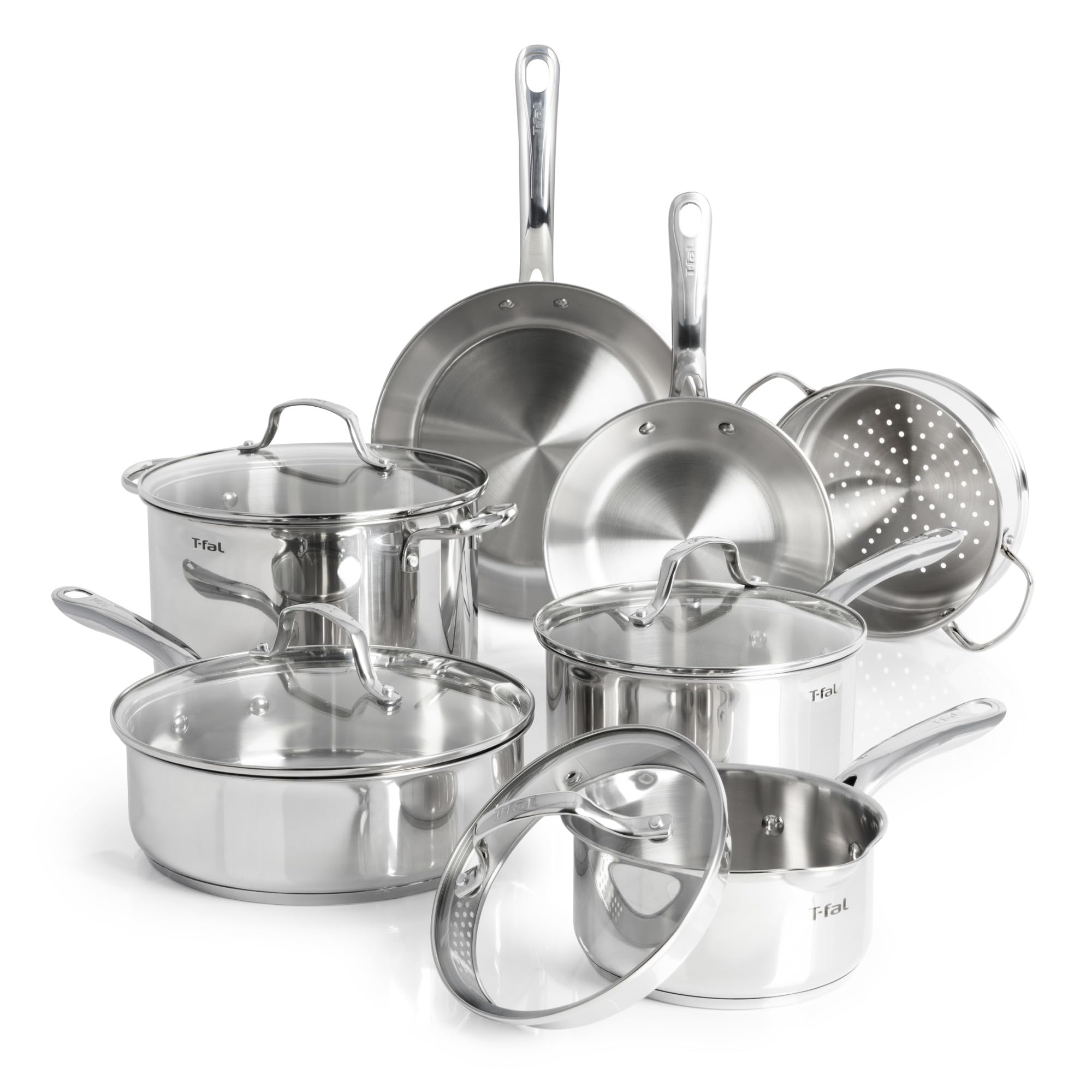
Real-world testing and personal tips
I tested a T-fal stainless skillet for two weeks. I seared chicken, simmered tomato sauce, and made fried rice. The pan heated quickly and kept an even color across the surface. Heat spread well and I had reliable sears for proteins.
I made one mistake: I tossed salt on a hot, dry pan. Tiny pits formed near the rim. Since then I always salt after adding liquid. I also do a quick vinegar boil on new stainless. That helps form a stable oxide layer and calms any metallic taste. From that point on, Is T-fal stainless steel safe in my kitchen? Yes—it’s a dependable everyday pan that performs well.
Troubleshooting I use at home
- Minor discoloration: wipe with a vinegar solution or a stainless cleaner.
- Stuck food: simmer water and baking soda to lift residue, then wash.
- Small pits: they don’t affect safety but avoid repeating the hot-salt mistake.
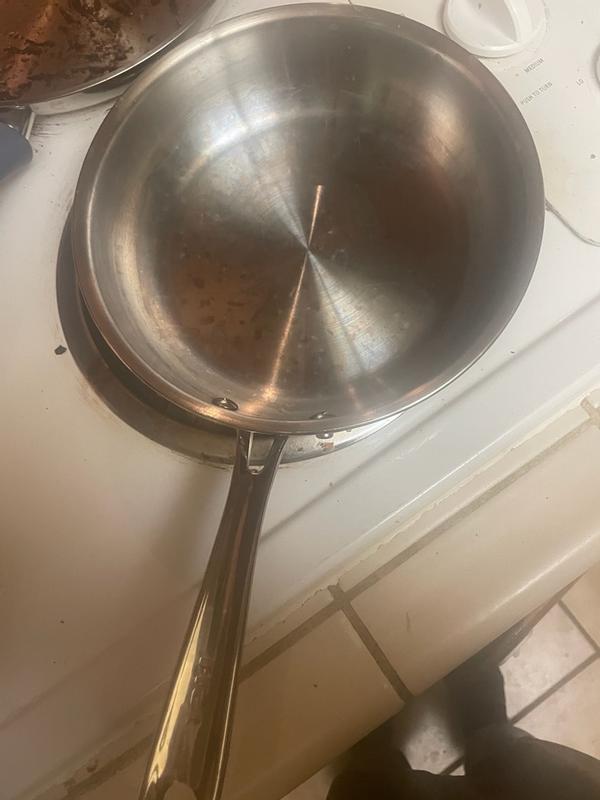
How T-fal stainless compares to other stainless brands
On safety, stainless is stainless. When you ask, Is T-fal stainless steel safe versus premium brands, the short answer is still yes. The key factors are alloy quality, bonding method, and how you care for the pan.
Here’s what usually differs between brands and why it matters:
- Thickness. Heavier pans hold heat and resist warping during high heat. That improves cooking control.
- Bonding. Full-clad walls distribute heat more evenly than single-disc bases. Both work well, but full-clad reduces hot spots.
- Fit and finish. Smooth rivets, flush bottoms, and tight-fitting lids make cooking and cleaning easier.
- Warranty and customer support. Longer warranties and easy parts replacement matter over years of use.
If safety is your top concern, check the alloy stamp, induction logo, and oven limits rather than relying only on brand name.
Which T-fal lines fit different cooks?
Look for full-clad or tri-ply for even heating. Choose induction-ready pieces if you use a magnetic cooktop. For budget sets, expect lighter gauges and disc bases—still safe, just less thermal mass.

Who should be cautious or choose alternatives
Is T-fal stainless steel safe for everyone? Almost, but some people should consider alternatives.
- People with nickel allergy. Choose low-nickel stainless interiors (18/0), enameled cast iron, or high-quality ceramic cookware.
- People who cook very acidic foods daily. Rotate with glass, ceramic, or enamel for long simmers and storage.
- People who need ultra-low metal release for medical reasons. Confirm alloy from the manufacturer and consider coated or alternative materials.
For most home cooks, stainless is a safe, low-maintenance option that lasts for years with proper care.
Best alternatives if you need low-metal options
Consider these if stainless isn’t ideal for you:
- Enameled cast iron — non-reactive and low-leach but heavy.
- Glass or ceramic cookware — good for acidic foods and storage.
- High-quality ceramic-coated nonstick — low metal contact but watch heat limits.

Cleaning and maintenance for long-term safety
A clean pan is a safe pan. Follow this routine to keep the surface stable and attractive.
- Right after cooking, add warm water to loosen stuck bits. Wipe with a soft sponge.
- For rainbow tints or heat stains, use a splash of vinegar or a stainless cleaner. Rinse well.
- For brown stains, make a paste with a gentle cleaner (baking soda or a non-abrasive cleaner). Rub with the grain.
- Dry right away to reduce water spots and mineral marks.
- Dishwasher is fine on many T-fal lines. Hand washing keeps the shine longer and reduces dishwasher wear.
Is T-fal stainless steel safe after years of use? Yes, if you avoid harsh steel wool that can gouge the surface. Small scuffs and light scratches are normal and do not affect safety.
Deep cleaning tips I use
- For stuck-on carbs: simmer water and a teaspoon of washing soda for 10 minutes, then scrub gently.
- To restore shine: polish with a specialized stainless cleaner or a baking soda paste.
- To remove odor: simmer a water and lemon solution, then rinse and dry.
Buying tips and how to verify your pan
Before you buy, check a few quick things to match the pan to your needs.
- Look for the alloy stamp (18/10, 18/8, or 18/0) on the base or box.
- Check induction compatibility. A magnet should stick to the base if it’s induction-ready.
- Feel the weight. A bit of heft helps heat control and resists warping.
- Confirm oven and lid limits in the manual so you know the maximum safe temperature.
- Review the warranty and parts support—this matters over years of use.
If you still wonder, Is T-fal stainless steel safe for your setup, buy one pan first. Test it with your go-to recipes before committing to a full set.
Fast answers to common questions
Is T-fal stainless steel safe on induction?
Yes. If the base is magnetic it is safe and works well on induction. Many T-fal stainless sets are induction-ready.
Is T-fal stainless steel safe in the oven?
Yes, within the listed limit. Many stainless pans handle high heat well, but lids and handles may have lower ratings—check the manual.
Is T-fal stainless steel safe in the dishwasher?
Yes, but hand washing keeps the finish brighter and reduces wear. Always dry right away to prevent spots and mineral marks.
Frequently Asked Questions of Is T-fal stainless steel safe
Does T-fal stainless steel contain nickel?
Most stainless cookware contains some nickel to prevent corrosion and improve shine. If you are nickel-sensitive, look for 18/0 interiors or alternative materials.
Will stainless steel leach metals into food?
Trace amounts can leach, especially with acidic foods and new pans. The levels are very low in normal cooking and drop after the first-use passivation steps.
Can I use metal utensils on T-fal stainless steel?
You can, but expect light scratches over time. Wood or silicone utensils help preserve the finish and keep the pan looking new longer.
How do I stop food from sticking on stainless?
Preheat on medium, add oil, and let food release on its own. Pat proteins dry and avoid crowding the pan. Deglaze to clean stuck bits.
Is T-fal stainless steel safer than nonstick pans?
They serve different needs. Stainless has no chemical coating and handles higher heat. Nonstick is easier for eggs and low-fat cooking. Choose by the cooking task and heat level.
Conclusion
You asked, Is T-fal stainless steel safe, and the evidence points to yes. Food-grade stainless is stable, durable, and trusted in home and professional kitchens. With simple care—passivating a new pan, managing heat, avoiding dry salting, and hand washing when practical—the pan will serve you for years.
If you have a nickel allergy, choose low-nickel options or alternatives. Ready to cook with more confidence? Try one T-fal stainless skillet this week, test it with your favorite dish, and share your experience. If this helped, subscribe or leave a comment with your questions.