How To Make Turkish Coffee In A Saucepan: Easy Guide 2026

Turkish coffee in a saucepan is made by combining very finely ground coffee, cold water, and sugar, then heating it slowly until a rich foam forms.
Turkish coffee has a special kind of charm. It is simple, old, and full of flavor, but it also rewards patience and a steady hand. If you want to learn how to make Turkish coffee in a saucepan the right way, I’ll walk you through the method I’ve used many times, along with the small details that make the cup taste smooth, bold, and traditional.

What Turkish coffee is and why the saucepan method works
Turkish coffee is not just coffee cooked in water. It is a brewing style built around very fine coffee grounds, slow heat, and careful timing. The result is a dense, aromatic cup with a foam on top and a thick layer of sediment at the bottom.
A saucepan works because it gives you control. You can heat the coffee gently, watch for foam, and stop before it boils over. In my experience, that control matters more than fancy tools. A small pan, a spoon, and a little patience can give you a cup that feels just as traditional as one made in a cezve.
The saucepan method is also practical. Not everyone has a Turkish coffee pot at home, and that should not stop you from making this drink. If you use the right grind and keep the heat low, you can still make excellent Turkish coffee in a saucepan.
Ingredients and tools you need
The ingredient list is short, which is one reason this drink has lasted for centuries. The quality of each part matters, though, so simple does not mean casual.
You will need:
- 1 cup cold water
- 1 to 2 teaspoons Turkish coffee, finely ground like powder
- 1 teaspoon sugar, if you want sweet coffee
- A small saucepan
- A spoon
- Small cups for serving
Optional additions:
- A pinch of ground cardamom
- A small piece of Turkish delight for serving
- A tiny splash of rose water for a more floral style
The most important part is the grind. Turkish coffee needs an extra-fine grind, much finer than espresso. If the grind is too coarse, the drink will taste weak and the texture will feel wrong.
How to make Turkish coffee in a saucepan step by step
Making Turkish coffee in a saucepan is easy once you understand the rhythm. Think of it like warming a candle instead of lighting a fire. Slow heat gives better foam and better taste.
Follow these steps:
-
Add cold water to the saucepan
Use about one small cup of water per serving. A little extra is fine if you want a larger drink, but keep the ratio balanced. -
Add the coffee
Stir in 1 to 2 teaspoons of Turkish coffee for each cup. If you like a stronger drink, use the higher amount. -
Add sugar now, if you want it
Turkish coffee is usually sweetened before heating, not after. You can make it unsweetened, lightly sweet, medium sweet, or very sweet. -
Stir once or twice
Mix gently so the coffee, water, and sugar start to blend. After that, stop stirring too much. Too much movement can affect the foam. -
Heat on low
Place the saucepan over low heat. Do not rush this part. Slow heating is one of the secrets to good Turkish coffee in a saucepan. -
Watch for foam to rise
As the coffee warms, a foam layer will begin to form on top. Remove the pan just before it boils over. -
Spoon foam into the cups
This is a classic touch. Spoon a little foam into each cup first, then return the pan to the heat for a second rise if you want more foam. -
Pour slowly
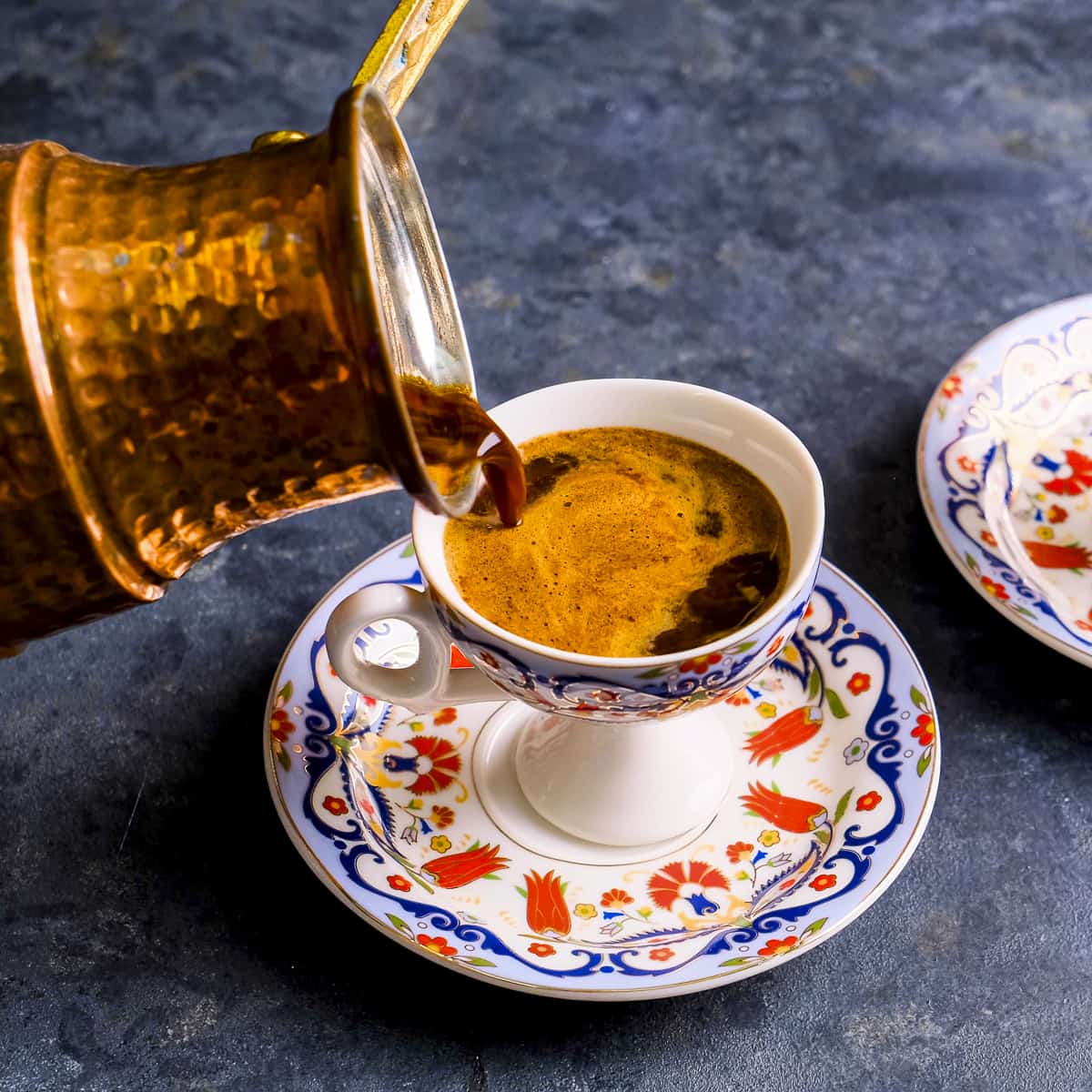
Pour the coffee into the cups in a steady stream. Try to keep the grounds mostly in the pan, though some sediment will still make it into the cup. That is normal. -
Let it settle
Wait about 30 seconds before drinking. The grounds will sink to the bottom, and the flavor will smooth out a little.
The best ratio for Turkish coffee in a saucepan
The ratio can change based on taste, but a good starting point is very simple. For one small cup of water, use 1 to 2 teaspoons of finely ground coffee.
Here is a practical guide:
- Mild cup: 1 teaspoon coffee per small cup of water
- Balanced cup: 1.5 teaspoons coffee per small cup of water
- Strong cup: 2 teaspoons coffee per small cup of water
If you want sugar, add it before heating. A common approach is:
- Unsweetened: no sugar
- قليل sweet: 1/2 teaspoon sugar
- Medium sweet: 1 teaspoon sugar
- Very sweet: 1.5 to 2 teaspoons sugar
In my own testing, the best balance often comes from starting light. You can always adjust the next cup. Turkish coffee is small and concentrated, so a tiny change in ratio makes a big difference.
Common mistakes to avoid
I have seen a few mistakes come up again and again, and they can ruin an otherwise good cup. The good news is that each one is easy to fix.
Avoid these:
- Using high heat, which can scorch the coffee and kill the foam
- Using coarse coffee grounds, which makes the drink gritty in the wrong way
- Boiling the coffee hard, which creates bitterness
- Stirring too much after heating starts, which can break the foam
- Serving it immediately without letting the grounds settle
One of the biggest lessons I learned is that Turkish coffee rewards restraint. If you try to hurry it, the flavor usually suffers. The cup tastes better when you let the coffee rise slowly and naturally.
Flavor tips for a better cup
Turkish coffee has a bold base, but you can shape the flavor in simple ways. I like to think of it like seasoning a stew. Tiny changes can create a very different result.
Try these ideas:
- Add cardamom for a warm, spiced taste
- Use filtered water for a cleaner flavor
- Choose a fresh roast for better aroma
- Pre-warm the cups if you want the coffee to stay hot longer
- Serve with a sweet bite, like Turkish delight or a small biscuit
Freshness matters a lot. Coffee that has sat open for too long loses its aroma quickly, and Turkish coffee depends on aroma as much as taste. A fresh bag will usually give you a fuller, richer cup.
Cultural notes and serving tradition
Turkish coffee is more than a drink. It is part of hospitality, conversation, and ritual. It is often served in small cups with a glass of water on the side, and sometimes with something sweet.
In many homes, the coffee is poured carefully so each guest gets a bit of foam. That foam is seen as part of the joy of the drink. It is a sign that the coffee was made with attention.
There is also a social side to the tradition. Turkish coffee is often shared after meals or during visits, where the pace is slow and the talk matters as much as the cup. That is part of why the saucepan method feels special. It invites you to slow down.
Health and caffeine notes
Turkish coffee is strong, so it is smart to drink it in moderation. Because the grounds stay in the cup, the drink can taste heavier and more intense than drip coffee.
A few things to keep in mind:
- It usually has more caffeine per ounce than regular brewed coffee
- The grounds create a fuller mouthfeel
- People sensitive to caffeine may want a smaller cup
- Sugar changes the drink, so unsweetened versions are easier on some people
If you are watching your caffeine intake or have a sensitive stomach, start with a small serving. That way you can enjoy the flavor without overdoing it.
Why the saucepan method is worth learning
Learning how to make Turkish coffee in a saucepan gives you flexibility. You do not need special equipment, and you can still make a drink that feels traditional and special. That makes it useful at home, while traveling, or anytime you want a quick coffee ritual.
It also teaches patience. The process is small, but it asks for care. That is part of the pleasure. The coffee becomes better when you pay attention, much like bread dough, tea steeping, or any other simple craft.
Frequently Asked Questions of How to Make Turkish Coffee in a Saucepan
Can I make Turkish coffee without a cezve?
Yes, you can make Turkish coffee in a saucepan if you use very low heat and a fine grind. The main goal is to let the foam form slowly without boiling the drink hard.
Why is my Turkish coffee bitter?
Bitterness usually comes from too much heat, over-boiling, or coffee that is too old. Use low heat and fresh coffee for a smoother result.
Do I stir Turkish coffee while it heats?
Stir only at the beginning to combine the ingredients. After that, leave it alone so the foam can form properly.
How fine should the coffee be?
The grind should be extra fine, almost like cocoa powder. If it feels sandy, it is usually too coarse for Turkish coffee.
Can I add milk to Turkish coffee?
Traditional Turkish coffee is made with water, not milk. Milk changes the texture and flavor, so it is better to treat that as a different style of coffee.
Conclusion
Making Turkish coffee in a saucepan is one of those simple kitchen skills that feels richer every time you do it. With cold water, very fine coffee, low heat, and a little patience, you can create a strong, smooth, and aromatic cup at home.
The key is to respect the process. Start gently, watch the foam, and do not rush the heat. Once you get the rhythm, Turkish coffee in a saucepan becomes easy, rewarding, and almost meditative.
Try it with your next quiet morning or after dinner, and see how small changes affect the taste. If you found this guide helpful, share it, leave a comment, or explore more coffee brewing tips to keep learning.