How To Clean Glass Cooktop With Vinegar: Easy Guide

Vinegar cuts grease, loosens mineral spots, and helps glass cooktops shine without harsh chemicals.
If you have ever stared at a cloudy glass cooktop and wondered how to make it look new again, you are not alone. I have cleaned plenty of glass tops over the years, and vinegar is one of the simplest tools that works well when used the right way. In this guide, I’ll show you exactly how to clean glass cooktop with vinegar, what to avoid, and how to keep that smooth surface looking polished day after day.
Why Vinegar Works on a Glass Cooktop
Vinegar is mildly acidic, which makes it useful for breaking down light grease, water spots, and the dull film that builds up from everyday cooking. On a glass cooktop, that matters because the surface can look dirty even when there is no heavy food mess.
I like vinegar for routine cleaning because it is cheap, easy to find, and gentle when compared with stronger cleaners. It is not magic, though. It works best on fresh spills, light residue, and mineral marks, not on burnt-on food that has been sitting for days.
What You Need Before You Start
Before you clean glass cooktop with vinegar, gather a few simple items. Having everything ready keeps you from scrubbing too hard or reaching for the wrong tool mid-clean.
- White vinegar
- Warm water
- Spray bottle
- Microfiber cloths
- Soft sponge
- Razor scraper made for glass cooktops
- Baking soda for tough spots
- Dry towel for buffing
A small tip from real life: use clean microfiber cloths, not old rags that may leave lint behind. I learned that the hard way after wiping a cooktop with a towel that looked clean but left tiny fibers everywhere.
How to Clean Glass Cooktop with Vinegar Step by Step
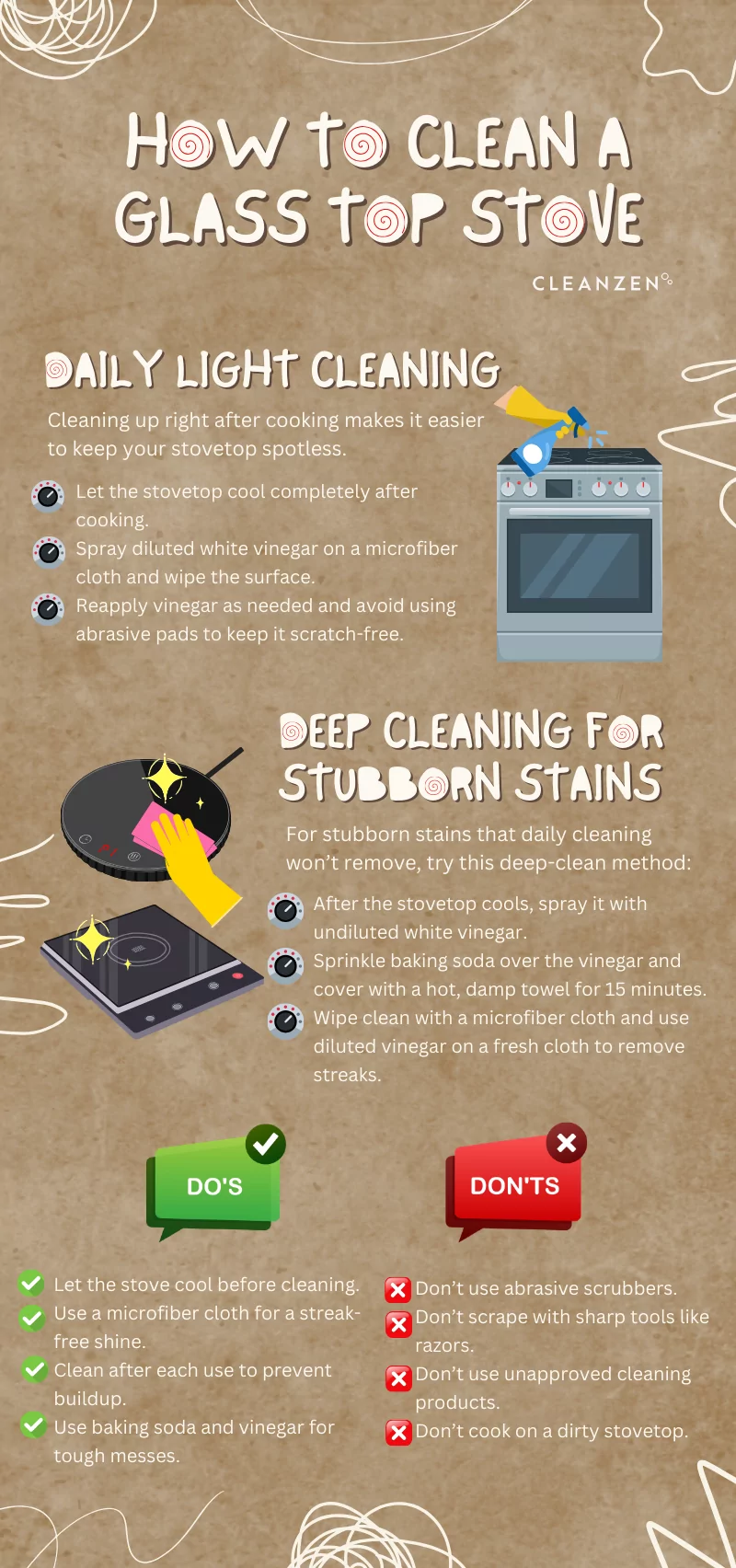
The best way to clean glass cooktop with vinegar is to keep the process simple and gentle. You want to lift dirt, not grind it into the glass.
-
Let the cooktop cool completely
Never spray vinegar on a hot surface. A cool cooktop is safer and helps you clean without streaking or fast evaporation. -
Remove loose crumbs first
Wipe away food bits with a dry microfiber cloth. This stops debris from scratching the glass while you clean. -
Make a vinegar spray
Mix equal parts white vinegar and warm water in a spray bottle. For stronger kitchen buildup, you can use plain white vinegar on problem areas. -
Spray the surface lightly
Cover the cooktop with a light mist. Do not soak it, since too much liquid can run into edges and seams. -
Let it sit for a minute or two
This gives the vinegar time to loosen grease and film. For everyday grime, this short wait is usually enough. -
Wipe in circles or straight passes
Use a soft microfiber cloth to lift the loosened residue. Work gently and keep turning the cloth so you are not spreading grime back across the surface. -
Tackle stubborn spots with baking soda
Sprinkle a little baking soda over the spot, then add a small splash of vinegar. It will fizz a bit, which helps break up stuck-on messes. -
Use a scraper only if needed
For burnt-on food, hold a glass cooktop scraper at a low angle and glide carefully. Do not dig into the surface or use a dull blade. -
Buff dry
Finish with a clean dry cloth to remove streaks. This step gives the glass that clear, polished look many people want.
How to Clean Glass Cooktop with Vinegar for Burnt-On Food
If you cook often, you already know the worst mess is the one that gets baked onto the surface. When that happens, vinegar still helps, but it usually needs backup.
Start by laying a warm, damp cloth over the spot for a few minutes to soften it. Then spray vinegar, wait, and use a baking soda paste if needed. If the food is still stuck, a cooktop scraper is the safer choice than scrubbing harder.
I have seen people ruin a good cooktop by using metal pads or abrasive powders. That usually leaves fine scratches that catch light forever. With glass, patience always beats pressure.
Best Vinegar Cleaning Mix for Glass Cooktops
There is no perfect formula for every mess, but this simple mix works well for most daily cleaning.
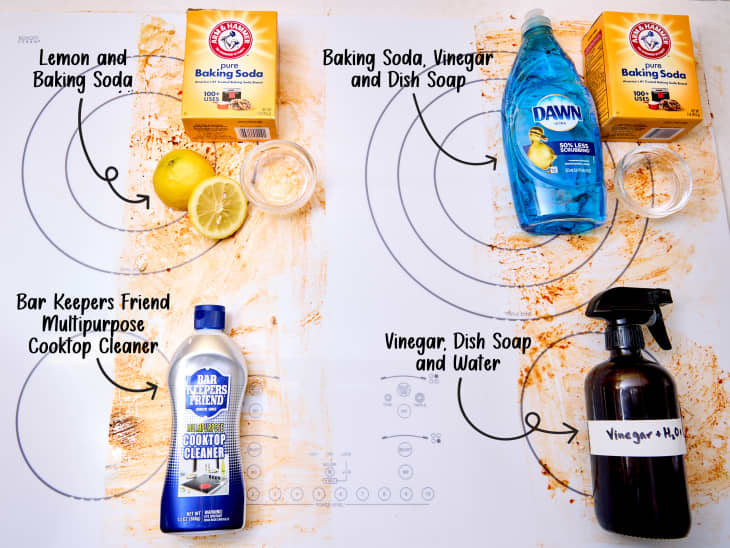
- Daily cleaner: 1 part white vinegar and 1 part warm water
- Greasy buildup: plain white vinegar
- Stubborn residue: baking soda with a few drops of vinegar
- Final shine: vinegar spray followed by a dry microfiber cloth
Keep in mind that more vinegar does not always mean better results. The goal is to loosen grime, not flood the surface.
Mistakes to Avoid When You Clean Glass Cooktop with Vinegar
A lot of damage happens because people mean well but use the wrong method. These are the most common mistakes I see:
- Cleaning while the surface is still hot
- Using steel wool or abrasive pads
- Spraying too much liquid around burner edges
- Letting vinegar sit too long on decorative trim
- Scrubbing hard instead of letting the cleaner do the work
- Using dirty cloths that drag grit across the glass
One lesson I have learned: if a spot does not come off with gentle effort, stop and soften it first. Forcing it usually creates a bigger problem than the original stain.
When Vinegar Is Not Enough
Vinegar is excellent for maintenance, but it has limits. It may not fully remove heavy carbon buildup, melted sugar, or deep burnt rings.
In those cases, try this approach:
- Soften the spot with a warm, damp cloth
- Use baking soda as a mild abrasive
- Scrape carefully with a cooktop-safe blade
- Repeat the vinegar wipe after the mess lifts
If the stain still will not budge, the issue may be discoloration rather than dirt. That can happen on older cooktops, especially if spills were burned in repeatedly.
How to Keep a Glass Cooktop Clean Longer
The easiest cleaning job is the one you prevent. A few small habits can keep your cooktop looking better between deep cleans.
- Wipe spills as soon as the cooktop cools
- Use flat-bottom pans that fit the burner size
- Avoid dragging pots across the surface
- Clean after cooking sugary foods right away
- Do a quick vinegar wipe once or twice a week
This is where consistency pays off. A quick two-minute wipe after dinner often saves twenty minutes of scrubbing later.
Why People Like Vinegar for Cooktop Cleaning
People keep using vinegar because it fits real life. It is affordable, easy to store, and useful in many parts of the home. It also avoids the strong chemical smell some commercial cleaners leave behind.
For many households, that matters. If you cook around kids, pets, or guests, a simple cleaner can feel more comfortable. Vinegar is not the only option, but it is one of the most practical ones for routine care.
What Experts Generally Recommend for Glass Cooktops
Most appliance makers recommend soft cloths, nonabrasive cleaners, and tools made for glass surfaces. That advice lines up well with vinegar cleaning, as long as you use gentle methods.
The big idea is simple: protect the glass while removing residue. Mild cleaners, soft wiping, and safe scraping tools are the best combination for long-term care. That is why vinegar fits into a smart cleaning routine rather than replacing every other method.
Frequently Asked Questions of How to Clean Glass Cooktop with Vinegar
Can I use vinegar on a glass cooktop every day?
Yes, you can use vinegar for light daily cleaning as long as the cooktop is cool. It works best for fingerprints, grease film, and small smudges.
Is vinegar safe for all glass cooktops?
In most cases, yes, white vinegar is safe for standard glass-ceramic cooktops when used lightly. Still, always check your appliance manual in case the manufacturer has a specific care warning.
Can vinegar remove burnt-on food from a glass cooktop?
Vinegar can help soften burnt-on food, but it usually will not remove heavy buildup alone. For those spots, use a baking soda paste or a cooktop scraper made for glass surfaces.
Will vinegar leave streaks on the cooktop?
It can leave streaks if you use too much or if you do not dry the surface afterward. Wiping with a clean microfiber cloth at the end usually gives the best shine.
Can I mix vinegar with baking soda for cleaning?
Yes, but use it carefully because the fizz happens quickly and does not last long. This combo can help loosen stuck residue, but it works best as part of a gentle scrub, not a replacement for scraping tough burnt spots.
Conclusion
Cleaning a glass cooktop with vinegar is one of the easiest ways to keep your kitchen looking fresh without harsh products. When you use it the right way, vinegar helps lift grease, remove spots, and restore shine with very little effort.
The key is to stay gentle, work in small steps, and clean spills before they turn into stubborn stains. Try the method the next time your cooktop looks dull, and you may be surprised by how much better it looks after just a few minutes. If you found this guide helpful, leave a comment or explore more easy home cleaning tips to keep your kitchen spotless.