How to Clean Cast Iron Skillet Without Salt: Easy Methods 2026

Cleaning a cast iron skillet can feel confusing. You may have heard one rule again and again: “use salt.” But what if you don’t want to use salt? Maybe you’re out of it, worried about scratches, or simply prefer another method. I’ve cleaned cast iron for years, and I can tell you this: you don’t need salt to keep your cast iron skillet clean and well-seasoned. There are several salt-free ways that are gentle, reliable, and use items you already have at home.
In this guide I’ll walk you through every step: the tools I trust, simple salt-free cleaning methods, how to dry and re-season, and how to handle tough problems like burnt food or rust. I’ll share tips I’ve learned the hard way so you can keep your skillet nonstick and rust-free without reaching for the shaker.
Whether you’re new to cast iron or have a well-loved pan, you’ll find practical, tested methods here — written in plain language and backed by hands-on experience.
Why Skip Salt For Cast Iron Cleaning?
Salt is a common scrub, but it’s not required. I skip it for a few good reasons:
- It can abrade the surface if used too hard, especially on older seasoning layers.
- Cleaning with salt uses a lot of product and can feel wasteful.
- It’s not always on hand when you need to clean right after cooking.
Salt-free cleaning works just as well for everyday maintenance. It also helps protect the seasoning — the baked-on oil layer that gives cast iron its nonstick power.
What Makes Cast Iron Unique?
Cast iron behaves differently than nonstick or stainless steel pans. Keep these points in mind:
- The seasoning is a polymerized oil coating that creates a durable nonstick surface.
- Cast iron is porous compared with stainless. It can hold onto flavors and moisture.
- Cast iron rusts quickly if left wet or stored damp.
Clean properly and you preserve the seasoning and avoid rust. Harsh chemicals, extended soaking, and aggressive metal pads can remove seasoning. The aim is to remove food and grease, not polish the metal.
:max_bytes(150000):strip_icc()/GettyImages-1264873968-5f680e239cde4e9dbe112d5c815ae60c.jpg)
Credit: www.marthastewart.com
Essential Tools For Salt-free Cleaning
You don’t need anything fancy. I keep these items within reach:
- Non-abrasive sponge: A soft scrubber that won’t damage seasoning.
- Chainmail scrubber: Stainless steel rings that lift stuck food without gouging the surface.
- Plastic scraper: Gets under stubborn bits safely.
- Paper towels or a lint-free cloth: For drying and applying oil.
- Hot water: The simplest and most effective cleaner to loosen stuck food.
- Small bottle of cooking oil: For quick re-oiling and maintenance.
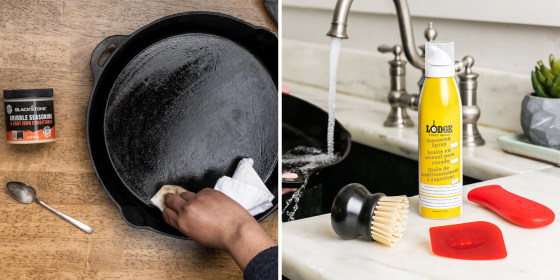
Most of these are kitchen staples. If you want dedicated tools, the Lodge Pan Scraper and Lodge Cast Iron Care Kit are reliable choices for scrapers and brushes.
Step-by-step: How To Clean Cast Iron Skillet Without Salt
1. Clean While Still Warm
I clean my skillet right after cooking while it’s warm, not piping hot. Warm pans release food more easily. Let it cool just enough to handle safely.
2. Wipe Out Excess Oil And Food
Start by wiping out pooled oil and loose crumbs with a paper towel or cloth. Removing that bulk first makes the next steps faster.
3. Rinse With Hot Water
Hold the skillet under hot running water and scrub gently with a soft sponge or brush. Hot water loosens grease and small bits. If the pan is very greasy, one drop of mild dish soap is fine. Modern soap won’t ruin the seasoning if you rinse and dry promptly.
4. Remove Stuck-on Food (no Salt Needed)
For stubborn spots I rely on these tricks:
- Use a plastic scraper or a chainmail scrubber to lift stuck food without harming seasoning.
- Add a splash of hot water and let it sit 1–2 minutes to loosen debris. Don’t soak for long.
- For very tough residue, simmer a half cup of water in the skillet for 2–3 minutes. The steam helps release burnt bits so you can scrape them away.
Quick daily clean (60 seconds)
When I’m short on time, I wipe out the pan while warm, rinse under hot water, scrub briefly with a sponge or chainmail, dry, and oil. This quick routine prevents buildup and keeps the seasoning strong.
5. Dry Thoroughly
Water causes rust. After washing, dry the skillet right away with a towel. For extra protection, pop it on a low burner for 1–2 minutes to evaporate any lingering moisture. Never leave it damp.
6. Re-oil The Surface
Rub a few drops of vegetable, canola, or flaxseed oil across the inside and outside with a paper towel. Wipe until the surface looks dry and smooth — not shiny with excess oil. This keeps the seasoning primed and rust-free.
7. Store Properly
Store your skillet in a dry place. If you stack pans, put a paper towel or cloth between them to protect the cooking surface and absorb any moisture.
Credit: www.nbcnews.com
Comparing Cleaning Tools: Which Should You Use?
Here’s what I use and why — a quick tool comparison to match the job:
| Tool | Best For | Pros | Cons |
|---|---|---|---|
| Non-abrasive sponge | Everyday cleaning | Gentle, cheap, easy to find | May not remove tough residue |
| Chainmail scrubber | Stubborn residue | Durable, effective, doesn’t harm seasoning | More expensive, noisy |
| Plastic scraper | Stuck-on food | Safe, cheap, won’t scratch | Less effective for burnt messes |
| Paper towel/cloth | Drying & oiling | Prevents rust, easy to use | Single use (paper towel), can leave lint (cloth) |
I keep a chainmail and a plastic scraper handy. The scraper removes large bits and the chainmail cleans the surface without sanding away seasoning.
How To Handle Burnt Or Sticky Messes
Burnt or sticky food happens. Here’s my step-by-step fix — no salt required:
- Simmer water: Pour a half cup of water into the pan and bring to a gentle simmer. The steam loosens charred bits.
- Scrape gently with a plastic scraper or wooden spatula.
- Repeat if needed: Repeat simmer-and-scrape until clean.
- Avoid harsh tools: Don’t use steel wool or heavy metal scouring pads — they can strip seasoning.
Tip: Never leave water in the skillet more than a few minutes. Prolonged soaking can cause rust in less time than you’d think.
Using Soap On Cast Iron: Fact Vs. Myth
The old myth says soap ruins cast iron. In practice, modern dish soap is mild. I use a small drop when grease or gummy residue won’t come off with water alone. A little soap plus hot water and quick drying won’t damage the polymerized seasoning layer.
- Use a gentle, unscented dish soap when possible.
- Rinse well to remove all soap.
- Dry and apply a thin oil layer after washing.
Note: Seasoning is a baked-on polymerized oil layer. It’s robust. It takes more than a single light wash to ruin it. Still, avoid long soaks in soapy water.
How To Re-season Cast Iron After Cleaning
If your skillet looks dull or food sticks more than usual, it’s time to re-season. I follow these steps:
- Clean and dry the pan thoroughly.
- Apply a thin layer of neutral oil (canola, grapeseed, or flaxseed). Rub it in well.
- Place the skillet upside down in a 400°F (204°C) oven for 1 hour. Put foil underneath to catch drips.
- Let it cool in the oven before removing.
This builds a durable, nonstick surface. For daily care, light oiling after each use is enough. But do a full oven seasoning every few months for best results.

Credit: www.reddit.com
Common Mistakes To Avoid
These are the pitfalls I see most often. Avoid them:
- Leaving the pan wet: Always dry thoroughly after washing.
- Soaking for too long: Even a few minutes of standing water can cause surface rust.
- Using harsh scrubbers: Steel wool and aggressive pads strip seasoning fast.
- Skipping oiling: A dry pan will rust and food will stick.
- Storing with food residue: Leftover crumbs can go rancid and create odors.
Less obvious mistake: Using too much oil when re-seasoning. Thick layers polymerize unevenly and can stay sticky. Thin, even coats work best.
How To Remove Rust Without Salt
Found rust? Don’t panic. You don’t need salt:
- Scrub surface rust with a non-abrasive sponge or chainmail.
- Rinse, dry, and oil immediately.
- For tougher rust, make a paste from baking soda and water and rub gently with a sponge.
- If rust is deep, repeat cleaning and then re-season in the oven until the surface is restored.
Cast iron is forgiving. Unless rust has eaten through the metal, most pans can be saved with a little elbow grease and re-seasoning.
Cleaning Cast Iron In Special Situations
After Cooking Acidic Foods
Acidic foods like tomatoes, wine, or vinegar can weaken seasoning if left too long. After cooking acidic dishes:
- Clean promptly and gently.
- Dry and oil the skillet right away.
- Consider a quick oven re-seasoning if the surface looks dull or uneven.
Removing Sticky Or Gummy Spots
Sticky spots mean excess oil or uneven seasoning. Scrub with a chainmail scrubber and a drop of soap, rinse, dry, and then re-season with a thinner oil layer.
Cleaning After Deep Frying
Deep frying often leaves a thin sticky film of oil. Wipe out the bulk of oil, wash with hot water and a small amount of soap, dry thoroughly, and reapply a thin oil layer.
Comparing Cast Iron To Other Pan Types
How cast iron care stacks up against other cookware:
| Type | Cleaning Method | Care Needed | Durability |
|---|---|---|---|
| Cast Iron | Hand wash, dry, oil | High (avoid rust, maintain seasoning) | Very durable (lasts generations) |
| Nonstick | Gentle wash, avoid abrasives | Medium (coating wears out) | Less durable (3-5 years typical) |
| Stainless Steel | Dishwasher safe, soak ok | Low (no seasoning needed) | Very durable |
Cast iron takes more care. In return, it offers amazing heat retention and a nonstick surface that improves with use.
How To Keep Your Cast Iron Skillet Seasoned
Good seasoning is the key. Here’s my routine to keep it strong:
- Cook with oil or fat regularly — this builds the seasoning naturally.
- Avoid boiling water or cooking acidic foods frequently.
- Don’t over-clean — remove food, not seasoning.
- Oil lightly after each wash.
- Do a full oven re-season every few months or when the surface looks dull.
Bonus tip: If your skillet feels sticky or rough, that’s a sign to strip and re-season or to sand and repeat the oven seasoning process.
What If You Accidentally Strip The Seasoning?
If your skillet loses its nonstick surface or shows bare spots, here’s how I restore it:
- Wash and dry thoroughly.
- Paint a very thin layer of oil over the entire pan.
- Bake at 400°F (204°C) for 1 hour, upside down, with foil underneath.
- Repeat the oil-and-bake 2–3 times for a robust coating.
This rebuilds the polymerized seasoning and returns the pan to life.
How Often Should You Clean And Season Cast Iron?
- Clean after every use: Don’t let food sit overnight.
- Oil after each cleaning: Keeps rust at bay and seasoning happy.
- Deep re-season: Every 3–6 months or when you notice sticking or dullness.
With regular care, your skillet will improve over time and can last generations.
Recommended Amazon Products For Cast Iron Care
Here are products I’ve used or recommend for easier maintenance:
- Lodge Pan Scrapers: Durable plastic scrapers shaped to fit skillet curves.
- Lodge Cast Iron Care Kit: Includes a brush, scraper, and seasoning spray for basic upkeep.
- The Ringer Original Stainless Steel Chainmail Scrubber: Handles stubborn bits without harming seasoning.
- Caron & Doucet Cast Iron Oil: Formulated for seasoning and regular care.
All are available on Amazon and have strong reviews. A couple of right tools saves time and protects your pan.
Practical Tips Most Beginners Miss
- Always preheat your skillet before adding food. It helps food release and protects seasoning.
- Don’t fear a little soap. Used sparingly, it won’t harm your pan.
- Never plunge a hot skillet into cold water. Thermal shock can warp or crack cast iron.
- Store in a dry place. If you live somewhere humid, put a paper towel inside the pan to absorb moisture.
- Don’t cook everything in cast iron. Acidic foods and long boiling can wear seasoning faster than other dishes.
Troubleshooting Common Problems
Pan Feels Sticky Or Tacky
- This usually means too much oil was used when seasoning.
- Wash with hot water and a drop of soap, dry well, and re-season using a thin oil layer.
Black Residue On Food
- This can be old seasoning flaking off.
- Scrub gently with a non-abrasive sponge, rinse, dry, and oil lightly. If flakes persist, do a light re-season cycle.
Rust Spots Appear
- Scrub rust away, dry completely, and re-oil. For severe rust, repeat and re-season in the oven.
Food Sticks To Pan
- The seasoning may be thin or uneven.
- Do a proper oven re-season to build up the nonstick layer.
Advanced Care: Restoring Old Or Damaged Skillets
If you find a rusty or neglected skillet — yes, you can restore it. Here’s my process:
- Scrub off rust with a chainmail scrubber or a gentle abrasive pad until the metal is clean.
- Wash with soap and hot water for the initial clean — that’s fine for a neglected pan.
- Dry fully.
- Apply oil and bake at 400°F for 1 hour.
- Repeat the seasoning cycles until the surface is smooth and black.
Restoring old pans can be rewarding. Many vintage skillets regain great performance and even collectible value.
The Benefits Of Cast Iron Skillets
Why Invest Time In Caring For Cast Iron?
- Exceptional heat retention: Cast iron holds heat and cooks evenly.
- Natural nonstick surface: Proper seasoning improves with age and use.
- Adds iron to food: Small iron traces can boost dietary iron.
- Long lifespan: A well-cared-for pan can last decades, even generations.
With straightforward care—no salt needed—you’ll get great cooking results and a pan that improves with time.
FAQs (How to Clean Cast Iron Skillet Without Salt)
How Do I Clean A Cast Iron Skillet After Cooking Eggs?
After frying eggs, while the skillet is still warm, rinse under hot water and scrub gently with a non-abrasive sponge or plastic scraper. If some residue remains, simmer a little water and scrape. Dry completely and oil before storing.
Is It Safe To Use Soap On Cast Iron?
Yes. A small amount of mild dish soap is safe. Modern soaps won’t strip seasoning if you rinse and dry quickly. Avoid long soaks in soapy water.
What Oil Should I Use For Seasoning Cast Iron?
Use a neutral oil with a high smoke point: canola, grapeseed, or flaxseed oil are good choices. Avoid butter or olive oil for long-term seasoning — they can stay sticky or rancid. For daily wiping, any neutral cooking oil works fine.
Can I Put My Cast Iron Skillet In The Dishwasher?
Never put cast iron in the dishwasher. Dishwasher detergent and long water exposure will strip seasoning and cause rust. Hand wash, dry, and oil instead.
How Do I Fix A Rusty Cast Iron Skillet?
Scrub rust off with chainmail or a baking-soda paste. Rinse, dry, and apply a thin oil layer. Re-season in the oven if needed. Most skillets recover unless rust has eaten through the metal.
If you want to learn more about cast iron care, visit the Lodge Cast Iron official guide for expert tips and videos.
Cleaning a cast iron skillet without salt is simple once you know the routine. With the right tools, quick habits, and occasional oven seasoning, you’ll enjoy a durable, naturally nonstick skillet for years.