Can You Season Cast Iron With Avocado Oil? Expert Guide 2026

Can You Season Cast Iron With Avocado Oil
A cast iron skillet can last a lifetime. It can even outlast you. But that longevity depends on one thing: how well you season it. Seasoning is not about adding spices. It’s a simple chemical process that builds a natural, non-stick surface and stops rust. As avocado oil grows in popularity, the question comes up more often: can you season cast iron with avocado oil? Many cooks ask this because avocado oil has a very high smoke point and a neutral taste.
If you want to pick the right oil for seasoning or you’re just curious about avocado oil, this guide will help. I’ll explain the science, share real-world experience, and give step-by-step instructions. You’ll learn pros, cons, troubleshooting, and tips that most articles skip.
What Is Cast Iron Seasoning?
Seasoning builds a thin, protective layer on your cast iron. You apply oil and heat the pan. Heat causes the oil to bond to the iron through a process called polymerization. The result is a smooth, black surface that becomes more non-stick the more you use it.
Why season? Without it, cast iron rusts and food sticks. Good seasoning means less scrubbing, easier cooking, and a pan that can last for generations.
Why Oil Choice Matters In Seasoning
Not all oils give the same result. The oil you choose affects the color, durability, and feel of the seasoning. Some oils bake into a hard, slick finish. Others can leave sticky or flaky patches.
Here’s why the oil choice matters:
- Smoke point: Oils with higher smoke points tolerate higher oven temps during seasoning.
- Fatty acid profile: Oils rich in polyunsaturated fats polymerize faster. Oils with more monounsaturated fats form flexible, durable layers.
- Availability and cost: Some oils are cheap and easy to find. Others cost more but may give a better finish.
What Makes Avocado Oil Unique?
Avocado oil stands out for a few clear reasons. It has a very high smoke point and a neutral flavor. It is also mostly monounsaturated fat, which affects how it bonds to metal.
- Smoke point: About 520°F (271°C). One of the highest of common cooking oils.
- Flavor: Neutral. It won’t change the taste of your food.
- Fat content: High in monounsaturated fats, roughly 70%, with about 12% polyunsaturated fats.
- Shelf life: Unrefined avocado oil can go rancid faster. Refined avocado oil is more stable for high heat use.
These traits make avocado oil a strong candidate for both cooking and seasoning cast iron. In my experience, refined avocado oil gives consistent, durable results when used correctly.
How Does Avocado Oil Compare To Other Oils For Seasoning?
Different oils yield different finishes. Here’s a quick comparison:
| Oil Type | Smoke Point (°F) | Polymerization Quality | Flavor | Cost |
|---|---|---|---|---|
| Flaxseed Oil | 225 | Excellent (can flake if overused) | Neutral | High |
| Canola Oil | 400 | Good | Neutral | Low |
| Grapeseed Oil | 420 | Good | Neutral | Medium |
| Vegetable Oil | 400-450 | Good | Neutral | Low |
| Avocado Oil | 520 | Very Good | Neutral | High |
| Crisco (Shortening) | 360-420 | Good | Neutral | Low |
Insight: Beginners often focus only on smoke point. That matters. But polymerization quality matters too. Avocado oil scores well on both. It heats safely and forms a strong, flexible layer when you use the right technique.

Credit: www.reddit.com
The Science Of Seasoning With Avocado Oil
Seasoning works through polymerization. Heat turns oil into a hard, plastic-like film that bonds to the iron. The film forms when fatty acids react under heat. How the film behaves depends on the oil’s fatty acid mix.
Avocado oil is mostly monounsaturated. That means its seasoning layer tends to be tough and flexible. Flaxseed oil has more polyunsaturated fats. That polymerizes fast but can be brittle and flake with heavy use.
Key rule: Use a thin coat. Thick layers can stay soft and gummy. That is true no matter which oil you use.
Step-by-step: How To Season Cast Iron With Avocado Oil
Here’s a clear, practical method I use and recommend:
- Clean the pan. Wash the cast iron with warm water and a little soap if needed. Remove rust with steel wool or a scrub pad. Rinse well. Dry fully with a towel.
- Apply a thin layer of oil. Put a teaspoon of refined avocado oil on a paper towel. Rub it inside and outside the pan. Wipe off the excess. The metal should look glossy, not wet or oily.
- Heat your oven. Preheat to 475–500°F (246–260°C). Avocado oil’s high smoke point lets you season at this higher temperature.
- Bake the pan upside down. Put foil on the lower rack to catch drips. Place the pan upside down.
- Bake for 1 hour. This time helps the oil polymerize into a solid layer.
- Cool in the oven. Turn the oven off and let the pan cool inside. Cooling slowly helps the layer set.
Repeat the cycle 2–3 times. Each thin layer builds a stronger, darker seasoning.
Pro tip: Wipe off all visible oil between coats. Leaving excess oil is the main cause of sticky seasoning.
Credit: www.reddit.com
Pros And Cons Of Using Avocado Oil For Seasoning
No oil is perfect. Here is what to expect with avocado oil:
Pros
- High smoke point: Less risk of burning at seasoning temperatures.
- Neutral taste: No strange flavors transfer to food.
- Durable finish: Forms a tough, flexible layer that resists flaking.
- Widely available: You can find refined avocado oil in most stores.
Cons
- Cost: Usually pricier than canola or vegetable oil.
- Slower build-up: It can take a few more layers to reach the same black finish some get quickly with flaxseed oil.
- Quality varies: Unrefined types can spoil and sometimes leave a tint. Use refined oil for seasoning.
Real-world Examples: How Does Avocado Oil Perform?
From home cooks and pros, the common reports say:
- After a few thin layers, seasoning looks smooth and glossy.
- Eggs, pancakes, and meats release well on a properly seasoned surface.
- The seasoning stays intact and does not flake under normal use.
- With regular use, the pan darkens and the non-stick surface improves.
A frequent mistake I see is using cold-pressed, unrefined avocado oil. That can cause smoking, spoilage, or a greenish tint. Use refined avocado oil for more predictable results.
Avocado Oil Vs. Other Oils: Performance Test
Here’s a simple comparison based on multi-month use and common tests:
| Test | Avocado Oil | Flaxseed Oil | Canola Oil |
|---|---|---|---|
| Non-stick ability after 3 layers | Excellent | Very Good | Good |
| Durability (6 months use) | Very Good | Fair (can flake) | Good |
| Color of finish | Deep black | Dark brown | Brownish-black |
| Time required per layer | 60 mins | 60 mins | 60 mins |
| Risk of sticky residue | Low (if thin layer) | High | Medium |
Insight: Flaxseed oil is praised online, but many people find its finish brittle. Avocado oil is more forgiving for everyday cooks. It gives a strong, flexible surface that holds up to regular use.
Common Mistakes When Seasoning With Avocado Oil
Even the right oil can fail if you make these mistakes:
- Using too much oil. Thick coats stay soft and sticky.
- Not cleaning first. Old food or rust blocks bonding.
- Using unrefined avocado oil. It can smoke and leave off-colors.
- Not heating enough. Polymerization needs steady, high heat.
- Doing only one coat. A single layer won’t give lasting protection.
Pro tip: If your pan is sticky, scrub with coarse salt and warm water. Dry it, then apply a very thin coat and rebake. That usually fixes it quickly.
How Often Should You Season Cast Iron With Avocado Oil?
You don’t need to fully reseason after every use. Here’s a simple routine:
- After each use: Wipe a tiny amount of avocado oil on the warm pan. This is light maintenance, not a full reseason.
- When food starts sticking: Do a full seasoning session (the oven method above).
- If you see rust or dull spots: Strip the pan and start fresh with the oven method.
With regular use and light oiling, the pan’s seasoning becomes stronger and more non-stick over time.
Is Avocado Oil Safe And Healthy For Seasoning?
People worry about oils breaking down at high heat. Refined avocado oil is stable at the temperatures used to season cast iron. It does not produce dangerous compounds when used properly.
Note: Use refined avocado oil for seasoning. Unrefined oil can smoke and degrade under high heat.
Tips For Best Results With Avocado Oil
- Buy refined avocado oil. Look for “refined” and a high smoke point (above 500°F).
- Store oil in a cool, dark place to slow spoilage.
- Apply oil with a paper towel or lint-free cloth. Avoid using bare hands to prevent skin oils mixing with the oil.
- Dry the pan fully—especially in humid climates—to avoid rust.
- Be patient. Thin layers build the best, longest-lasting seasoning.
When Should You Not Use Avocado Oil For Seasoning?
Avocado oil works well for most cooks. But consider other options if:
- Budget: Canola or vegetable oil is cheaper and still effective.
- Allergy: If you have an avocado allergy, avoid it.
- Flavor preference: If you want a seasoning that carries a taste, use rendered animal fats or bacon grease.
Real User Experiences: What Do People Say?
On Reddit and in cast iron groups, most users report the same things:
- “My eggs don’t stick anymore.”
- “It took three rounds, but now my skillet is slick and dark.”
- “I tried flaxseed and had flaking, but avocado oil fixed it.”
A common piece of advice from users: always use refined avocado oil and never apply too much. That tip alone saved me hours of redoing sticky pans.
Non-obvious tip: If you bake in cast iron (cornbread, cobblers), avocado oil won’t add unwanted flavors. It stays neutral and reliable.
Does Avocado Oil Work For All Types Of Cast Iron?
Yes. You can use avocado oil on:
- Skillets
- Dutch ovens
- Griddles
- Bakeware
If a pan is very old or rusty, strip it first. Then follow the oven seasoning steps above for best results.
Avocado Oil And High-heat Cooking
Because avocado oil tolerates high heat, a pan seasoned with it handles searing, roasting, and baking well. The seasoning does not break down quickly under normal high-temperature cooking.
Practical example: If you roast at 500°F, a properly seasoned pan with avocado oil will stay intact. Lower smoke-point oil may degrade sooner under the same conditions.
How To Fix A Sticky Or Patchy Seasoning Layer
If your pan looks sticky or uneven, here’s a clear fix:
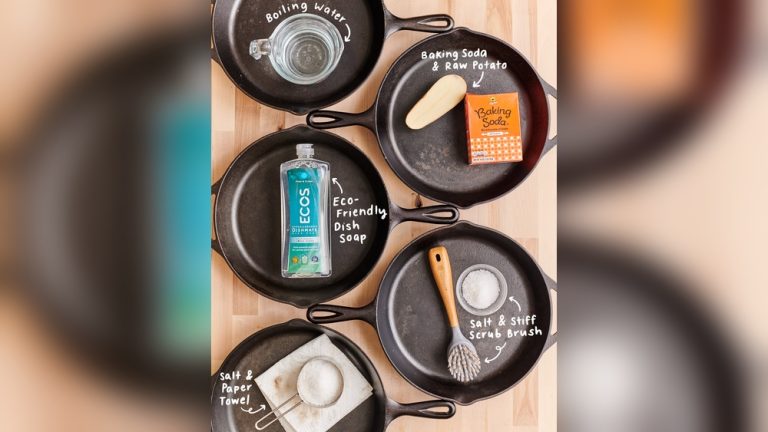
- Scrub with coarse salt and a little water. Use a scrub pad to remove sticky oil.
- Dry the pan thoroughly.
- Apply a much thinner layer of avocado oil. Wipe the pan until it looks nearly dry.
- Reheat in the oven at 475–500°F for 1 hour.
Repeat as needed. Thin coats are the key. In my experience, two thin rebuilds fix most sticky or patchy finishes.
Environmental And Ethical Aspects Of Avocado Oil
Avocado oil is plant-based and generally seen as sustainable. But there are real concerns about water use and farming practices in some regions. If sustainability matters to you, check brand sourcing and certifications.
Tip: Look for brands that list ethical sourcing or which use sustainable farming practices.
How To Store Seasoned Cast Iron Cookware
After seasoning, store your pan in a dry place. Moisture is the enemy. After each use:
- Wash with water or mild soap when needed.
- Dry completely with a towel.
- Heat on the stove for a few minutes to remove any residual moisture.
- Add a tiny drop of avocado oil. Wipe it thinly with a paper towel.
This simple routine keeps the seasoning strong and prevents rust.
Suggested Amazon Products
If you want to try avocado oil for seasoning, these products work well:
- Chosen Foods 100% Pure Avocado Oil – Refined, high smoke point, large bottle size.
- La Tourangelle Avocado Oil – Refined, good reviews, easy-pour bottle.
- Lodge Cast Iron Skillet – If you need a reliable skillet to start with.
Always check for “refined” on the label. That ensures the oil is suited for high-heat seasoning.
Is Avocado Oil The Best Oil For Seasoning?
There is no single “best” oil for everyone. Avocado oil is a top choice. It is stable, neutral, and builds a durable, non-stick layer when used correctly. It’s ideal for cooks who want a reliable method and don’t mind paying a bit more.
For budget cooks, canola or vegetable oil still works. Some people prefer flaxseed oil because it polymerizes quickly. But flaxseed can flake if you overdo it.

Credit: www.reddit.com
Expert Opinions On Seasoning With Avocado Oil
Many chefs and cookware experts recommend avocado oil as a modern, reliable seasoning oil. Food scientists point out that the main factors are a thin, even layer and proper heat. The oil matters, but the method matters more. Avocado oil’s high smoke point simply makes the process more forgiving.
For more on the chemistry of seasoning, see this Wikipedia article.
FAQs (Can You Season Cast Iron With Avocado Oil)
Can You Season Cast Iron With Avocado Oil?
Yes. You can season cast iron with avocado oil. It works well thanks to its high smoke point and its ability to form a durable, non-stick layer when applied thinly and heated properly.
Is Refined Or Unrefined Avocado Oil Better For Seasoning?
Refined avocado oil is better. It has a higher smoke point and is more stable during the high-heat seasoning process. Unrefined oil can smoke and degrade.
How Often Should I Reseason My Cast Iron With Avocado Oil?
You only need to fully reseason if the surface rusts or loses its non-stick quality. Otherwise, a light wipe of oil after each use is enough to keep the seasoning healthy.
Does Seasoning With Avocado Oil Change The Taste Of My Food?
No. Avocado oil is neutral in flavor. It won’t change how your food tastes. That makes it a great choice for many dishes.
What Should I Do If My Pan Gets Sticky After Seasoning With Avocado Oil?
If the pan is sticky or patchy, scrub it with salt and warm water. Dry it thoroughly. Then reseason with a much thinner layer of oil and bake at the right temperature. That usually fixes the issue.
Seasoning cast iron with avocado oil is not only possible, it’s a smart, modern choice. Use refined avocado oil, thin coats, and high heat. Follow the steps above and your cast iron will reward you with years of easy cooking and a strong, non-stick finish.