
BK Cookware Explained for Beginners: A Complete Guide 2026

BK Cookware is a Dutch brand that makes solid, no-nonsense pots and pans for home cooks. They focus on tools that work hard every day. You get durable cookware at a fair price. That makes BK a smart choice if you are starting out or want reliable kitchen gear without overspending.
In Europe, BK is a household name. The brand has been around for a very long time. I like that they don’t chase every trend. They build cookware that helps you cook well. The feel is honest and practical when you hold their pans.
New cooks often ask me where to begin. I point them to BK a lot. The cost is low for the quality you get. You can find a pan for almost any dish. Buying is simple and using them is easy.
Think of BK pans as kitchen workhorses. They value function over flashy looks. BK Cookware gives real value for your money. These pans are built to last through many family meals and everyday use.

A Short History of BK
BK began in 1851 in the Netherlands. That is over 170 years of cookware history. That long track record builds trust. When a brand lasts this long, it usually means they get a lot of things right.
In many parts of Europe, BK is a true icon. People use it in daily cooking. It feels like a reliable old friend in the kitchen. They earned that trust through decades of steady performance and solid design.
BK has been making cookware for over 100 years. They stick to practical solutions. They don’t sell empty luxury hype. They sell tools that cook food well and last for years with basic care.
That history matters if you are new to cooking. You are not buying into a short-lived fad. You are choosing gear with proven use. For many beginners, that makes BK a safe and sensible pick.
What Types of Cookware Does BK Make?
BK offers several main types of cookware. Knowing the differences helps you pick what fits your style and meals. Below I break them down in plain terms.
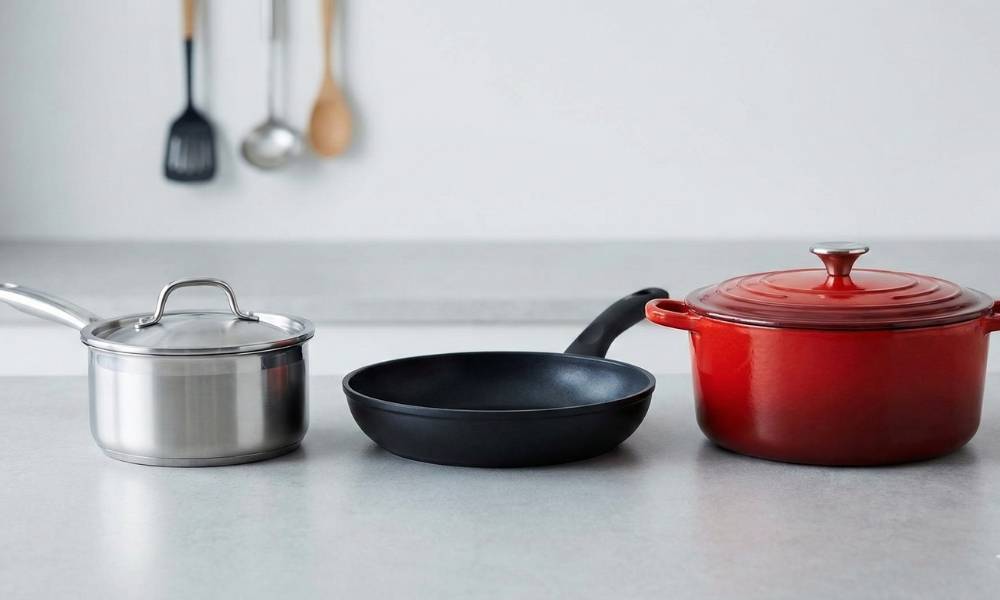
1. BK Stainless Steel Cookware
BK makes tough stainless steel pans built for years of use. They handle a wide range of tasks: boiling, searing, simmering. Stainless steel is a good all-rounder for home cooks.
Many BK stainless pots are dishwasher safe. A BK pots and pans set in stainless is low-maintenance. You don’t need special care to keep them working well. With simple cleaning, they stay attractive after heavy use.
Choose stainless steel if you want long-lasting gear that tolerates a bit of rough handling. It’s a solid pick if you dislike nonstick coatings and want straightforward cooking performance.
2. BK Nonstick Cookware
BK nonstick pans are easy to use. Their coating helps food slide free, which makes cooking and cleanup fast. Nonstick is perfect for delicate foods.
Which type of cookware is best for cooking eggs? Nonstick is the clear winner. Use soft tools such as wood or silicone to protect the coating.
Avoid high heat with nonstick pans. High temperatures can damage the slick surface. Treat them gently and they will serve you well for breakfasts, pancakes, and finished sauces.
3. BK Cast Iron & Enameled Cookware
BK’s heavy cast iron and enameled pieces are classic workhorses. Their Dutch ovens hold heat well and are excellent for slow cooking, braises, and stews.
Use them for long-cooked meals where consistent heat and moisture retention matter. The heavy lids help keep stews moist and tender.
The BK Bourgogne series is a popular pick. It gives a cozy, traditional feel in the kitchen. It is heavy, but it cooks with real soul—great for Sunday dinners and family meals.
4. BK Carbon Steel Cookware
BK also offers carbon steel pans. These are lighter than cast iron and heat up fast. Carbon steel develops a natural nonstick patina over time if you season it.
Carbon steel is ideal for high-heat searing, stir-frying, and crepes. If you want a pan that improves with use, consider carbon steel. See my hands-on take on similar pans in this BK Nature carbon steel review.
Is BK Cookware Good Quality?
Short answer: yes. BK delivers solid quality for the price. It sits in a practical middle ground—better than budget junk, but not as luxurious as high-end brands.
From reading many BK Cookware reviews and testing pieces myself, the cookware performs well. Heat spreads evenly across the pan. That helps you cook without hot spots and reduces burning. The pieces feel sturdy when you lift them.
Be realistic about expectations. BK is not a luxury brand like Le Creuset or All-Clad. The finish may not stay showroom-perfect forever. But for everyday cooking and family meals, BK is hard to beat for the cost.
In short, BK is “good for most home cooks.” If you cook dinner for your family regularly, BK will serve you reliably. You don’t need to spend a fortune to get good results.
Where Is BK Cookware Made?
A common question is: Where is BK cookware made? The design and brand heritage come from the Netherlands. However, much of the manufacturing is done in factories in China. That helps keep prices affordable.
Factory location does not automatically mean low quality. BK sets production standards and inspects factory work. The brand puts quality controls in place to meet its specifications.
In practice, you get smart Dutch design with cost-conscious manufacturing. That trade-off makes BK accessible to more cooks. You pay for the pan and its function, not for a “Made in Europe” premium.
BK Cookware vs Premium Brands (Simple Comparison)
You may wonder how BK stacks up against premium names like Le Creuset, Staub, or All-Clad. The main differences show up in finish, materials, and warranty.
Premium brands often use thicker enamel or heavier metals. They offer longer warranties and a refined finish that can last for decades. That extra cost buys longevity and a luxury feel.
But does premium cookware make your food taste better? Not necessarily. BK Dutch cookware cooks the same stew or roast just as well. The physics of heat transfer and cooking are similar. BK saves you money now, while premium brands offer long-term durability and prestige.
If you want practical, reliable cookware without a high price tag, BK is a smart buy. If you value heirloom quality and lifetime warranties, a premium brand might be worth the extra cost.
Pros and Cons of BK Cookware (Beginner Summary)
A quick look at the main strengths and weaknesses helps make the choice clear. This summary reflects most BK Cookware reviews and my experience.

| The Good Stuff | The Downsides |
| Very fair price | Not a fancy finish |
| Cooks food evenly | Enamel chips faster |
| Lots of options | Basic warranty only |
| Easy to clean | Made in China |
The trade-off is clear: you get great cooking performance at a lower cost, but you may give up some luxury looks and the longest-lasting finishes.
For a new home cook, the advantages usually outweigh the downsides. You save money to buy better ingredients—and that often improves your meals more than a fancy pan would.
Who Should Buy BK Cookware?
BK is not for everyone, but it fits many cooks well. I see a few groups who will get the most value:
Buy a BK cookware Set if you are setting up your first kitchen. It’s a smart starter kit. You get functional pieces that cover most recipes without breaking the bank.
If you want a luxury heirloom or insist on European-made only, look elsewhere. If your goal is a pan that lasts fifty years untouched, premium brands may be a better fit.
Know your needs before buying. That clarity saves money. For most daily cooks, BK’s practical approach wins.
Is BK Cookware Suitable for Beginners?
Yes — BK cookware is generally very suitable for beginners. It’s reliable and affordable, which is perfect when you are still learning.
Here’s why beginners often choose BK Cookware:
Easy to use
BK pans heat evenly and are not overly delicate. They don’t need advanced techniques. That makes them ideal while you build basic cooking skills.
Good value for money
Beginners rarely need top-of-the-line gear. BK offers solid performance at reasonable prices. You can learn without worrying about damaging expensive cookware.
Wide range for different needs
BK makes stainless steel, nonstick, carbon steel, and enameled cast iron. Start with one or two pans and add tools as your cooking grows.
Low learning curve
- Stainless steel BK pans are durable and forgiving
- Nonstick BK pans make eggs, pancakes, and delicate foods easier to cook
- BK Dutch ovens are excellent for soups, stews, and one-pot meals
Things beginners should keep in mind
- Nonstick BK pans should not be overheated
- Enameled cast iron may stain if not cleaned properly
- BK focuses on practicality rather than luxury finishes
Starter kit suggestion: Begin with a 24–28 cm stainless skillet, a 20–24 cm nonstick pan for eggs, and a medium enameled Dutch oven. This covers most beginner needs without overspending.
Bottom line:
If you’re new to cooking and want practical, affordable cookware, BK is a smart, safe choice. It helps you focus on learning to cook rather than fussing over gear.
How to Choose the Right BK Cookware (Beginner Tips)
Picking the right pan is easier than it sounds. Look at what you cook most and match the material to the task. Your meals should guide your choice.

For an all-purpose pan, pick stainless steel. It sears meat well and boils water fast. Bk flow cool pots are a solid choice. They’re tough and oven-safe.
If you cook eggs or pancakes often, get a nonstick pan. It makes breakfast simple. Bk cookware carbon steel is another excellent option if you like pans that age well and gain a natural nonstick surface.
For stews and slow-cooked dishes, reach for a heavy iron or enameled Dutch oven. It keeps food warm and cooks evenly. Always match the pan size to the number of people you cook for.
Other practical tips:
- Check stovetop compatibility—many BK pieces are induction-ready, but verify before buying.
- Consider weight—heavy pans retain heat but may be harder to handle.
- Look for tight-fitting lids for one-pot dishes and braises.
- Think about handles—sturdy, oven-safe handles add versatility.
Care and Maintenance Tips for BK Cookware
Good care makes BK cookware last longer. Here are simple, practical tips I use and recommend.
Stainless steel care
Use medium heat for most tasks. Avoid overheating an empty pan. Clean with warm soapy water and a non-abrasive scrubber. For stubborn stains, soak or use a paste of baking soda and water.
Nonstick care
Use low to medium heat and plastic, wood, or silicone utensils. Hand-wash nonstick pans to preserve the coating. Avoid aerosol cooking sprays, as they can build up residue over time.
Carbon steel and cast iron care
Season carbon steel and cast iron to build a natural nonstick patina. Dry thoroughly to prevent rust. For enameled cast iron, avoid metal scrubbers that can chip the enamel.
General tips
- Avoid extreme temperature shocks—don’t pour cold water into a very hot pan.
- Store lids separately or leave a small gap to prevent trapped moisture.
- Follow the manufacturer’s oven temperature limits to protect handles and coatings.
Final Verdict – Is BK Cookware Worth It for Beginners?
So, is BK Cookware worth the cash? Yes. It’s a smart pick for new cooks and anyone who wants reliable cookware without a luxury price tag.
You pay for performance—not for a fancy logo. BK is safe and simple to use. It cooks well and holds up with reasonable care.
Don’t overthink it. This brand is a safe bet. For most beginners, BK cookware is more than good enough. Trust your instincts and start cooking.
Frequently Asked Questions
Here are quick answers to your top questions.
Is BK cookware safe?
Yes. Their stainless steel and carbon steel options are free of harmful coatings. Nonstick pans use modern coatings—follow care instructions and avoid overheating for best safety.
Is BK cookware durable?
Yes. With normal use, stainless steel and cast iron pieces last for years. Enamel can chip if knocked hard, so handle with some care.
Can BK cookware go in the oven?
Most BK cookware is oven-safe. Dutch ovens and many stainless pieces handle oven heat well. Always check the specific product details or packaging to confirm the temperature limit.
Is BK cookware dishwasher safe?
Stainless steel items are usually dishwasher safe. Nonstick and enameled cookware last longer when washed by hand. Hand-washing prevents premature wear of coatings.
Is BK cookware good for beginners?
Yes. It’s affordable, widely available, and easy to use. BK helps you learn to cook without the worry of ruining expensive gear.
Can I use BK cookware on induction stovetops?
Many BK stainless steel and some enameled pieces are induction-compatible. Check the product specs or the bottom of the pan for induction symbols before buying.
How should I season BK carbon steel?
Heat the pan, rub a thin layer of neutral oil, and let it smoke briefly. Wipe clean and repeat a few times. Over time, the pan will develop a dark, nonstick patina.
Also Read : BK Dutch Oven vs Le Creuset




One Comment