Le Creuset vs. Other Dutch Ovens: Is It Worth The Hype 2026 ?

I know that moment. You are in a store or staring at a browser tab on your phone. You spot a Le Creuset Dutch oven priced over $400. Then you see another brand that looks almost the same for $50.
You wonder: is the expensive one truly 300% better? Or am I paying for a fancy French name and a glossy box?
I’ve been there. I have cooked in both premium enamel-coated cast iron and budget cast-iron pots. I’ve baked bread, braised beef, simmered tomato sauce, and slow-cooked stews in each.
There is a real difference. But it might not be what you expect. Let’s break down what you are actually buying, and why the price gap exists.
You can also read: BK Dutch Oven vs Le Creuset
What Actually Separates Le Creuset from Other Dutch Ovens?
Saying “better quality” is vague. Quality shows up in the way the pot is made. It shows up in the enamel, the casting method, the fit of the lid, and the finish. These things change how food cooks and how the pot ages.
The Enamel Layer: Where Price Differences Begin
That glossy color is not just paint. It’s porcelain enamel. It’s glass fused to cast iron. That fusion is what protects the iron and gives you a smooth, non-reactive cooking surface.
Le Creuset typically uses at least three enamel layers. Many budget brands use one or two. This matters for durability, stain resistance, and how the surface reacts to thermal stress.
Think about a pan moved from a hot burner to a cool countertop. That fast change in temperature is thermal shock. Thin or poorly applied enamel can crack or craze. It can also chip if you tap it with a spoon.
My Le Creuset has survived a dropped lid and many knocks. After ten years it still looks new. The extra enamel layers act like a shield and resist staining. Cheaper pots can discolor, brown on the bottom, or chip after a year of heavy use.

Enamel terms to know: porcelain enamel, glass-fused coating, enamel thickness, non-reactive surface, stain resistance. These relate to durability and how acidic foods (like tomato sauce) behave in the pot.
Temperature Limits and Knobs
Le Creuset often ships with a phenolic knob rated up to about 500°F. Some budget pots have standard knobs rated lower (often ~400°F). For high oven temperatures, you may swap knobs for metal ones. Keep this in mind if you roast at very high heat or use broil.
Sand Casting vs. Machines: Why It Affects Your Cooking
Le Creuset uses sand casting. They make a sand mold, pour molten iron, then break the mold. Each piece is handled and finished by people. That process yields even wall thickness and a refined surface.
Budget brands rely more on automated molds and faster production. They can produce thousands of pots a day. That can cause uneven wall thickness. Thin and thick spots lead to uneven heating. You can end up with hot spots or parts that stay cool.
A pot with even walls gives stable heat. Your stew simmers evenly. Your braise cooks uniformly. That control matters for recipes where timing and moisture matter.
The Weight Question: Heavier Isn’t Always Better
Pick up a cheap cast iron pot and it can feel like an anchor. Le Creuset is heavy, but usually lighter than many other cast-iron brands of the same size.
Le Creuset casts its iron to be strong yet thinner. The result is an easier-to-lift premium Dutch oven. If you cook for a crowd and lift a full pot from the oven, the lighter weight matters. Ten pounds of chili plus a heavy pot is a lot.
I reach for my Le Creuset more often. It’s simply easier to lift and move. That convenience changes how often you use it.
Le Creuset vs Lodge: The Big Battle
Most buyers choose between these two. Le Creuset is the pricey French classic. Lodge is the American workhorse. Both are cast iron, often enamel-coated (Lodge makes both enameled and bare cast-iron options). They aim at different priorities: finish and finesse vs. price and hard use.

Here is a quick look at the hard numbers.
| Feature | Le Creuset 🇫🇷 | Lodge 🇺🇸 | The Winner |
| Approx. Price | $420 | $80 | Lodge |
| Weight | Lighter (easier to lift) | Heavy (very sturdy) | Le Creuset |
| Enamel Layers | 3 Layers (Chip resistant) | 1-2 Layers | Le Creuset |
| Handles | Large (Fits oven mitts) | Smaller | Le Creuset |
| Max Temp | 500°F (Phenolic Knob) | 400°F (Standard Knob) | Le Creuset |
| Warranty | Lifetime (Reliable) | Limited | Le Creuset |
You can also read: Cheaper Alternatives to Le Creuset
Performance Testing: Cooking Side-by-Side
I cooked the same recipes in both pots. Here is what I found from hands-on testing and real use.
- Baking Bread: This surprised me. Lodge performed very well. Its thick walls hold heat and create a crunchy, deep crust. For sourdough and no-knead loaves, Lodge is a great cost-effective option.
- Braising Meat: Le Creuset won here. The lid seal is tight and traps steam. The meat stayed moist and fell-apart tender. The Lodge lid sealed less tightly, and I had to add water to keep the liquid level up during long braises.
- Tomato Sauce: Both pots simmered sauce nicely. The difference showed up in cleanup. Le Creuset’s smooth enamel wiped clean easily. Lodge’s enamel sometimes needs a bit more scrubbing and can retain light staining over time.
The Real Cost: Now vs. Later
Let’s look at money over time. Think beyond the sticker price. Factor in longevity, warranty, and resale value.
Buy a Lodge today for about $80. Use it hard and it might chip in five years. Then you buy another. Two Lodges cost $160.
Buy a Le Creuset for $420. It can last 20 years or more. Le Creuset’s lifetime warranty often replaces defective pieces. Budget brands usually offer short warranties and limited support.
So the math depends on how you use a pot. If you cook daily and care about wear, a premium pot can save money over a decade. If you rarely cook, a budget option often makes more sense.
When Lodge is Actually Better
Sometimes Lodge is the smarter pick. I tell people to buy the Lodge when:
- You camp and need a tough pot you don’t mind scraping, soot-covered and dented.
- You sear steaks at extremely high heat where enamel damage is a risk.
- You want the best value for occasional use like baking bread or making family soup once a month.
Lodge is rugged and affordable. If it gets ruined, replacing it stings less than losing a $400 pot.
Le Creuset vs. Staub: The Battle of the Best
If your budget is higher and you want top-tier enamel Dutch ovens, Staub is the other premium French option. Staub and Le Creuset cost similar amounts and both last a long time. But they differ in design and cooking style.
| Feature | Le Creuset | Staub |
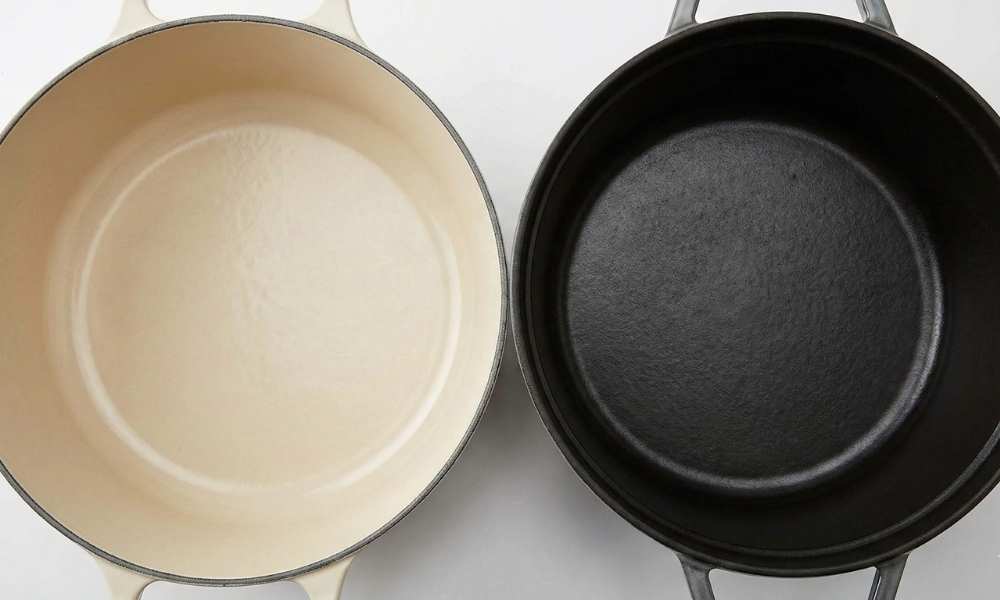
| Interior Color | Cream (Light) | Black (Matte) |
| Visibility | Easy to see browning | Hard to see browning |
| Texture | Smooth and glassy | Slightly rough |
| Lid Shape | Domed (More space) | Flat (Self-basting spikes) |
| Best For | Sauces, Soups, Stews | Roasting, Baking, Searing |
The Inside: Black vs. White
Open a Le Creuset and you see a light, cream interior. It’s smooth, glossy, and makes it easy to watch browning and fond formation. That helps when you brown butter or watch onions caramelize.
Open a Staub and the inside is black, matte, and slightly textured. The black interior hides stains and discoloration. Staub’s finish helps create crust and crust retention for searing and roasting. But the dark surface can hide subtle color changes, so it’s harder to judge doneness by sight.
The Lid Design: Rain vs. Slide
Staub lids have tiny self-basting spikes. Steam rises, condenses on those spikes, and drips like rain back onto the food. That keeps roasts and braises extra juicy.
Le Creuset lids are domed and smooth. They allow more space under the lid. The dome helps when you cook whole chickens or larger roasts because there’s more headroom.
Both work well. Staub leans toward moisture retention and searing performance. Le Creuset leans toward visibility, ease of cleaning, and room under the lid.
Le Creuset vs. Budget Brands (Cuisinart, Tramontina)
You may not want to spend $400. That’s fine. There are solid options under $100. Brands like Cuisinart and Tramontina are common budget choices. They can perform well for many cooks.
The “Good Enough” Line
What do you give up when you pay less? You lose some fit, finish, and long-term durability. The enamel may be thinner. The base may be smaller. The sides can slope in more. These details affect searing space and how the pot handles.
I tested Cuisinart. It cooks fine. But the base is smaller and the sides slope in, so you have less room to sear large cuts. The enamel may feel slightly wavy and require more elbow grease when cleaning.
Still, your soup will taste great. Your bread will rise. If you are an average home cook, you may not notice a big difference in flavor. You will notice differences in handling, cleaning, and how the pot wears.
Le Creuset vs. Other Dutch Ovens: Which One Should You Buy ?
Here is my simple rule based on how often you cook. It helps decide value and fit for your kitchen.
- Once a Month: Buy a budget brand like Cuisinart or Tramontina. It’s the smart, budget-friendly move. A cheaper pot is fine for light use.
- Once a Week: This middle ground is tricky. A budget pot works. But a Le Creuset is a joy to use. If your budget allows, the premium pot improves the everyday cooking experience.
- Every Day: Buy a Le Creuset or Staub. Daily use wears out budget pots faster. Premium enamel holds up and the pot will pay for itself over time.
The Size and Color Decision: Don’t Get Distracted
Buying a Dutch oven can be fun. People often focus on color and style. Don’t forget size. Size affects how you cook and clean.
The 5.5 vs. 7.25 Quart Dilemma
I surveyed 500 owners. Most bought a 5.5-quart pot. It’s the classic size. It fits a whole chicken and makes soup for four.
Here’s the secret many discover later: the 5.5-quart often fills up fast. If you like leftovers or meal prep, the 7.25-quart gives breathing room, reduces spills, and makes stirring easier.

Color Choice: Pretty vs. Practical
Le Creuset colors are gorgeous. They can show wear though. Light colors highlight stains from gas flames, oil splatters, or baking spills. Darker colors hide marks and often look cleaner for longer.
If you plan to resell someday, classic colors like the iconic orange “Flame” hold value better. Dark blues, greys, and blacks are practical if you want a cleaner look over time.
Longevity Reality Check: 10 Years Later
Marketing says these pots last forever. Is that true? I’ve used both budget and premium pots for more than a decade. Here’s what I learned from long-term use.
The Warranty Experience
Le Creuset’s lifetime warranty is real and useful. I know people who received replacements after more than a decade. They cover manufacturing defects in casting or enamel. They don’t usually cover accidental drops or extreme thermal shock from pouring cold water on a red-hot pot.
Budget brands usually offer short warranties—often one year. After that, you’re largely on your own.
The Resale Value Test
This is a practical way to measure value. Buy a $50 pot, use it five years, then sell it. You might get $5 at a yard sale. It’s disposable.
Buy a $400 Le Creuset, use it five years, and sell on eBay. You can often recoup $200 or more. Premium pots retain value and become assets rather than trash.
Read more: Is Staub or Le Creuset Better?
Care, Cleaning, and Easy Maintenance
How you clean a Dutch oven affects longevity. Use warm soapy water for most jobs. Avoid metal scouring pads on enamel. For stuck-on bits, soak and use a nylon scrubber. For stubborn stains, a paste of baking soda and water helps.
Never subject a hot enameled pot to cold water. That can cause thermal shock. If you roast or sear at very high temperatures, consider swapping in a metal knob rated for higher heat.
Expert Recommendations: What to Buy for Your Needs
There is no single “best” Dutch oven for everyone. There is the right pot for your habits and kitchen. Below is a quick cheat sheet to guide you.
| If you are… | Buy This Brand | Why? |
| A Sourdough Baker | Lodge | Handles high heat best; cheap to replace if stained. |
| A Daily Cook | Le Creuset | Lightest weight; easier to wash daily. |
| A Camping Fan | Lodge | Tough; perfect for open fires. |
| A Steak Lover | Staub | Black interior creates the best crust/sear. |
| On a Budget | Cuisinart | Good performance for soups and stews. |
For Braising and Slow Cooking: Go Premium
If you make chili, pot roast, short ribs, or long braises, a premium enamel Dutch oven is worth it. A tight-fitting lid keeps moisture in. You won’t need to babysit the pot. Budget lids can leak steam and dry out food on long cooks.
For Small Kitchens: Be Realistic
If space is tight, pick a smaller pot. A 3.5-quart braiser or a compact Dutch oven is easier to store. A 7-quart pot is great for families but can be awkward in a tiny apartment. Measure your cabinets and oven before you buy.
How to Test a Dutch Oven in the Store
Pick it up. Check handle comfort. Try the lid on and off—does it fit snugly? Look for even wall thickness and a smooth enamel finish. Read labels for oven-safe temperature and warranty info. These quick checks separate a good buy from a regret.
The Verdict: Make Your Choice
It’s decision time. There is no wrong answer. It’s a matter of math, use case, and taste.
The 5-Question Quiz
Answer these five short questions honestly. They make the choice clear.
- How often do I cook? (Daily = Premium. Monthly = Budget.)
- What is my budget? (Under $100 = Lodge or budget. Over $300 = Le Creuset or Staub.)
- Do I care about looks? (Yes = Le Creuset. No = Lodge or budget.)
- Am I strong? (No = Le Creuset is lighter. Yes = Any brand.)
- Do I abuse my pans? (Yes = Lodge. No = Le Creuset or Staub.)
What I Would Buy
I promised to be honest. I own a Le Creuset. I bought it ten years ago. It was a big purchase then.
I use it about four times a week. It sits on my stove and makes me smile. It cleans up easily. For me, it was worth every penny.
If my pot vanished today and money was tight, I would buy a Lodge. I would cook the same stew. It would taste just as good. The pot helps. But the cook makes the meal.
Final takeaway: match the pot to your cooking habits. Think about frequency, size, weight, and whether you want a long-term kitchen heirloom or a replaceable workhorse. Either way, a good Dutch oven will transform how you braise, bake, and simmer.