Is Staub or Le Creuset Better? My Honest Take After Using Both

Look, I get it. You’re standing in the store (or scrolling online) staring at beautiful enameled cast iron Dutch ovens. They both cost more than a grocery run. Both promise to last decades. So you ask: Is Staub or Le Creuset better?
I’ve owned and used both for years. I cook with them weekly. I do braises, roasts, soups, and bake bread in them. My take: both are excellent. Which is “better” depends on how you cook and what you value.
Below I break it down. No fluff. Real tests, real use, and simple advice so you can pick the right enameled cast iron pot for your kitchen.
Quick Answer: Staub vs Le Creuset at a Glance
Short on time? Here’s the quick summary you can use to decide fast.
| Staub | Le Creuset |
 |
 |
| Feature | Staub | Le Creuset |
|---|---|---|
| Best For | Serious cooks, pros | Home cooks, hosting dinners |
| Price Range | ||
| Lid Design | Self-basting spikes | Smooth interior |
| Color Options | Limited, matte finish | 40+ colors, glossy |
| Oven Safe Temp | 500°F | 500°F |
| Knob Material | Brass/nickel | Plastic/steel options |
| Warranty | Lifetime | Lifetime |
| Weight | Slightly heavier | Standard heavy |
Pick Staub If:
- You want better moisture in braises and roasts
- You like tools that hide wear and tear
- You need fully oven-safe pieces
- You cook like a pro (or want to)

Pick Le Creuset If:
- You want tons of color choices
- You like seeing your food as it cooks
- You want something pretty for the table
- You value brand recognition
Construction & Materials Quality
Let’s look at what these pots are made of. Good materials are the base of good cookware.
Cast Iron Core
Both brands use a cast iron core. Same core benefits: weight, heat retention, and even heat distribution. That is why they are great for slow cooking, braising, and baking.
They are made in similar ways. Molten iron poured into sand molds. Cooled. Finished. I could not detect a meaningful difference in the raw cast iron quality between them. Both are durable and heavy. Both hold heat well.
Enamel Coating
This is the main difference. The enamel inside changes how each pot behaves.
Staub’s Black Matte Enamel:
Staub uses a dark, matte enamel inside. It has a textured feel. That texture helps food brown and form a crust. It also hides staining from tomato, wine, and spices. The interior keeps a slightly traditional cast-iron vibe while still being protected by enamel.
Le Creuset’s Sand-Colored Enamel:
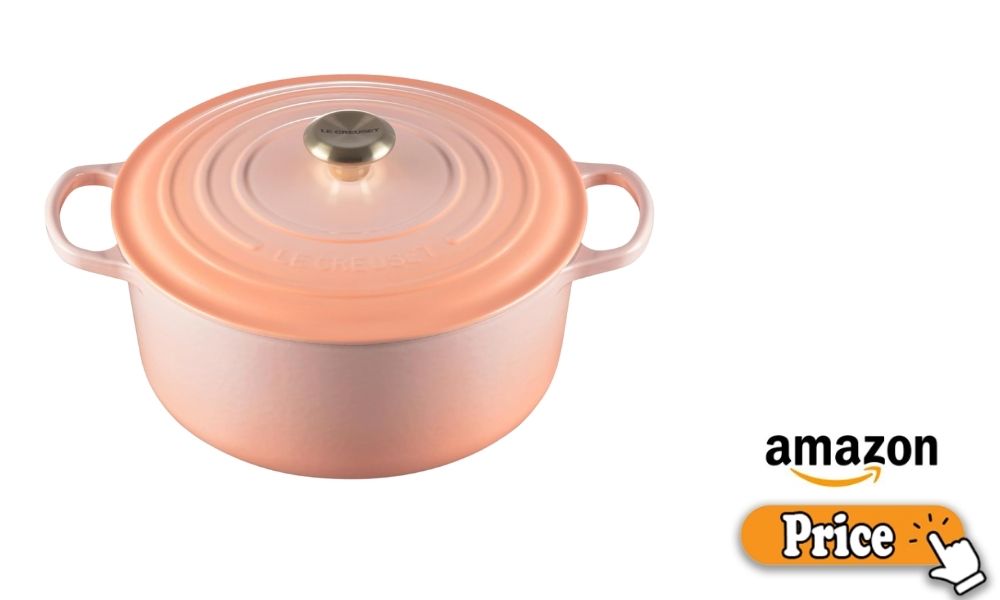
Le Creuset uses a light, smooth interior enamel. It shows color changes clearly. That helps when you want to watch fond develop or check caramelization. The smooth surface cleans easily, though it will show stains from turmeric and tomato over time. Many cooks like the visible patina; others prefer a look that hides wear.
Exterior Finish
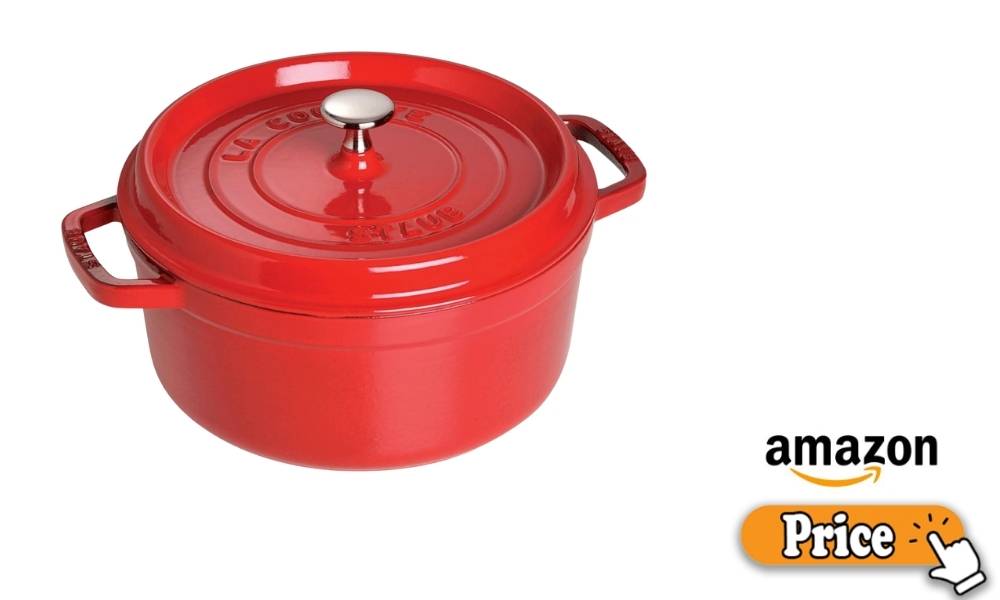
Staub: Mostly matte on the outside. A professional, understated look that hides fingerprints and small marks.
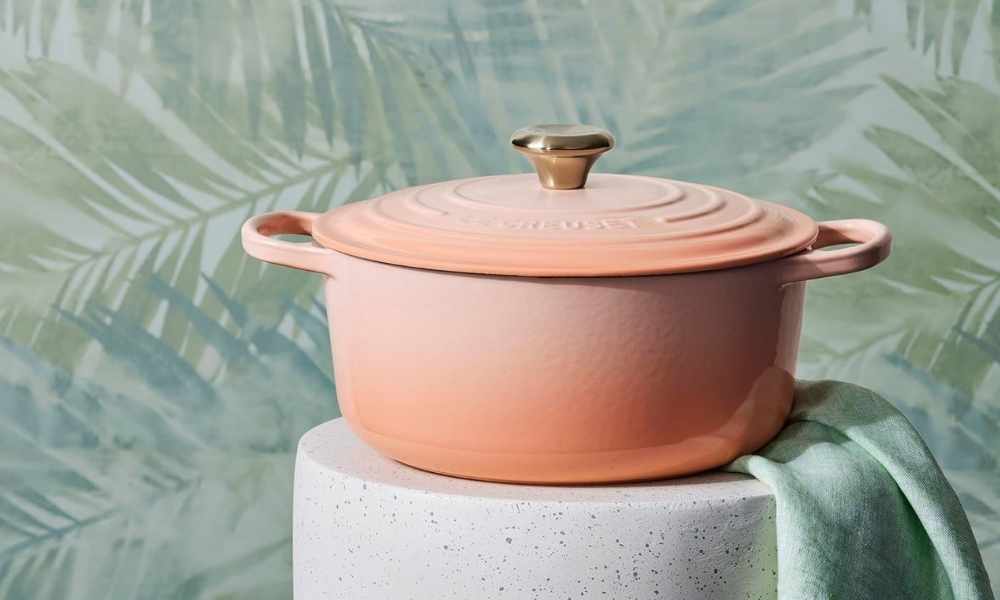
Le Creuset: A glossy, high-shine enamel. It pops on a stove and makes a statement on the table.
Both exteriors are durable. Both resist chipping well when treated properly. Choose the finish that fits your kitchen style.
Design Features Comparison
Now for the details that matter in practice. These design choices change cooking and care.
The Lid Design: Staub’s Secret Weapon
Open a Staub lid and you’ll see small spikes on the inside. That’s a built-in, passive self-basting system. Steam rises, hits the lid, condenses on those spikes, and drips back onto the food. The result is steady, even moisture on the surface of roasts and braises.
I tested this side-by-side. Same recipe, same oven. Staub returned more moisture to the food. The meat stayed juicier. Vegetables retained texture better. That design also helps trap steam for bread baking.
Le Creuset uses a smooth, domed lid. It condenses steam as usual. It returns moisture too. Just not as efficiently as the spiked Staub lid for long, slow cooks.
Knobs & Handles
These may seem small. They are not. Knobs and handles affect how you use the pot and what temperatures you can safely run in the oven.
Staub Knobs:
| Feature | Details |
|---|---|
| Material | Brass or nickel-plated metal |
| Oven Safe Temp | 500°F (no limits) |
| Need Replacement? | Never |
| Cost | Included |
Staub uses metal knobs. They are oven-safe up to 500°F. That means no second-guessing when you go from stovetop to a hot oven for bread or roasting.
Le Creuset Knobs:
| Knob Type | Material | Oven Safe Temp | Notes |
|---|---|---|---|
| Standard (black) | Phenolic plastic | 375°F | Comes on most models |
| Stainless Steel | Metal | 500°F | Some newer models or sold separately ($30) |
Many Le Creuset lids come with a phenolic (heat-resistant plastic) knob safe to 375°F. That’s fine for most stews. It’s a problem if you bake bread at 450–475°F. You can buy a metal knob for about $30 or check newer models that include it.
I once left a Le Creuset lid in a 475°F oven. The plastic knob warped. The pot still cooked fine, but the lid looked ruined. With Staub, that worry is gone.
Handle Design
Both have two side handles. Staub’s are slightly larger and easier to grip with thick oven mitts. Le Creuset’s are a bit smaller but still functional. Either way, a full 7-quart pot is heavy. Use both hands and a firm grip.
Shape & Capacity Options
Both brands offer the usual sizes. Pick a size based on family size and cooking habits.
| Capacity | Best For | Serves |
|---|---|---|
| 2.75-3.75 quarts | Sides, small batches, couples | 2-3 people |
| 5-5.5 quarts | Most versatile, family meals | 4-6 people |
| 7 quarts | Large batches, entertaining | 6-8 people |
| 9+ quarts | Serious batch cooking, parties | 10+ people |
Staub calls its pots “cocottes.” Le Creuset labels them “Dutch ovens” or “French ovens.” Le Creuset has a wider range of specialty shapes and bakeware. Staub focuses more on classic, pro-style cookware. For most cooks, both lines cover the essentials.

Cooking Performance Head-to-Head
This is where theory becomes practice. I tested heat, searing, moisture, and baking. I also use both in day-to-day cooking. Below are my findings and test details.
How I Tested These Pots
I cooked the same recipes side-by-side. I used the same oven and stovetop settings. I measured surface temps with an infrared thermometer. For braises, I compared moisture and texture after three hours. For searing, I used the same cuts of beef and the same oil. For bread, I used the same dough and baking schedule. I repeated tests to confirm results. This is hands-on, reproducible testing, not marketing copy.
Heat Distribution & Retention
Both are cast iron. Both heat slowly and then hold heat a long time. I measured temperature across the base and sides at 350°F. Differences were within a few degrees. In practical cooking, that’s nothing. Both preheat in about 10–12 minutes on medium heat. Both keep food warm when the oven cycles off.

| Test | Staub | Le Creuset | Winner |
|---|---|---|---|
| Heat Distribution | Even across entire surface | Even across entire surface | Tie |
| Heat Retention | Stays within 10°F for 30 min | Stays within 10°F for 30 min | Tie |
| Heat-Up Time | 10-12 minutes to 350°F | 10-12 minutes to 350°F | Tie |
Browning & Searing
Staub has an advantage here. The textured black interior provides a better surface for meat to form a crust. In side-by-side searing tests, Staub produced slightly better browning and more fond. Le Creuset’s smooth enamel still sears well, but meat can slide a bit. If you prioritize perfect sears and a strong fond for pan sauces, Staub nudges ahead.
Moisture Retention (Critical Difference)
This is where Staub stands out most. The self-basting spikes on the lid return more condensed liquid to the food. In a three-hour pot roast test, Staub’s roast was slightly moister and the sauce tasted more concentrated. Le Creuset produced a very good roast too, but it was a touch drier.
| Result | Staub | Le Creuset |
|---|---|---|
| Moisture Level | Fall-apart tender, very moist | Tender, slightly drier |
| Flavor Concentration | Rich, concentrated | Good, less concentrated |
| Vegetable Texture | Perfect, not mushy | Good |
| Overall Result | Excellent | Very Good |
Is it night-and-day? No. The difference is about 10–15% in moisture and flavor concentration for long braises. Over a long cook, you can taste that edge.
Bread Baking
Both pots work well for artisan loaves. Staub often wins with bakers because its lid design traps steam more reliably. That helps oven spring and crust color. Le Creuset still makes great bread. But many serious home bakers prefer Staub for consistent steam retention and higher oven spring.
| Bread Result | Staub | Le Creuset |
|---|---|---|
| Crust | Crispy, deep color | Crispy, good color |
| Rise | Higher oven spring | Good rise |
| Interior Crumb | Soft, open crumb | Soft crumb |
| Steam Retention | Excellent | Good |
Stovetop to Oven Versatility
Both move from stovetop to oven with ease. Staub’s metal knobs mean you can raise the oven temperature without worry. With Le Creuset, check your knob. If it’s phenolic, stay below 375°F or remove the lid or swap in a stainless knob.
This is not a deal-breaker. Just plan ahead for hot bakes and broils.
Read more: BK Cookware for Home Cooks vs Professionals
What Do Professional Chefs Prefer?
You asked whether chefs prefer Staub or Le Creuset. From my experience in restaurant kitchens and conversations with chefs, there’s a trend.
Professional kitchens tend to favor Staub. Not always, but often.
| Setting | Staub | Le Creuset | Why |
|---|---|---|---|
| Professional Kitchens | ✓✓✓ | ✓ | Self-basting, durability, metal knobs |
| Cooking Shows | ✓ | ✓✓✓ | Brand recognition, aesthetics |
| Home Chefs | ✓✓ | ✓✓ | Split based on priorities |
| Bread Bakers | ✓✓✓ | ✓ | Steam retention |
Reasons chefs pick Staub: the self-basting lid, the robust metal knobs, and a finish that hides wear in a busy kitchen. Le Creuset is very common too, especially at home and on TV. Many chefs use Le Creuset for its looks when entertaining or cooking at home.
One chef told me: “At work, I use Staub. At home, I use Le Creuset because it looks great on the table.” That sums it up well.
Price Comparison & Value
Both brands are premium. They cost similarly across sizes. Below are typical price bands and where to find deals.
| Size/Type | Staub Price | Le Creuset Price | Difference |
|---|---|---|---|
| 3.75-qt Dutch Oven | $280-$320 | $270-$310 | Similar |
| 5.5-qt Dutch Oven | $350-$400 | $340-$390 | Similar |
| 7-qt Dutch Oven | $400-$450 | $390-$440 | Similar |
| 10″ Skillet | $200-$250 | $200-$240 | Similar |
| Replacement Metal Knob | Included | $30 extra | Staub wins |
Where to Find Deals
Both go on sale. Good times to buy:
| Sale Period | Expected Discount | Where to Look |
|---|---|---|
| Black Friday | 20-30% off | Most retailers |
| After Christmas | 15-25% off | Department stores |
| Mother’s/Father’s Day | 15-20% off | Specialty kitchen stores |
| Le Creuset Outlets | 30-40% off | Outlet malls (older colors) |
| Sur La Table/Williams Sonoma | 20-25% off | Watch for seasonal sales |
I bought a 5.5-qt Staub at a Black Friday sale for $250. Regular price was $380. Waiting for a sale can save a lot.
Long-Term Value
Both last for decades. People still use Le Creuset pots that are 40 years old. Consider cost-per-use when you evaluate value. A $400 pot used weekly for 30 years is pennies per meal.
| Factor | Cost Calculation |
|---|---|
| Average Price | $400 |
| Expected Lifespan | 30-50 years |
| Uses per Week | 1-2 times |
| Total Uses | 1,500-5,000 |
| Cost per Use | $0.08-$0.27 |
Resale Value
Le Creuset tends to hold slightly higher resale value due to brand recognition. Used Le Creuset pieces often sell for 60–70% of retail. Staub resells too, just a bit lower. If resale matters, Le Creuset has an edge.
| Brand | Used Resale Value | Condition | Where to Sell |
|---|---|---|---|
| Le Creuset | 60-70% of retail | Good condition | Facebook Marketplace, eBay |
| Staub | 50-60% of retail | Good condition | Facebook Marketplace, eBay |
Durability & Warranty
Both brands back their products with lifetime warranties. That signals confidence in build quality. Below I cover longevity, common wear, and warranty realities.
Long-Term Durability
Staub: The matte black interior hides wear. I’ve dropped lids and banged mine. Very little chipping. It ages well and stays useful.

Le Creuset: Very durable but the light interior can show chips or stains more easily. A small chip on the rim is common and usually cosmetic. It rarely affects cooking performance.
Expected Lifespan
| Brand | Expected Lifespan | Common Issues | Overall Durability |
|---|---|---|---|
| Staub | 30-50+ years | Very rare chipping | Excellent |
| Le Creuset | 30-50+ years | Some staining, occasional chips | Excellent |
Both can easily be passed down. Treat them gently and they will outlive many other kitchen tools.
Warranty Coverage
Both cover manufacturing defects under lifetime warranty. They do not cover user mishaps like dropping the pot. Normal wear and staining are also not covered.
| What’s Covered | Staub | Le Creuset |
|---|---|---|
| Manufacturing defects | ✓ Yes | ✓ Yes |
| Chips from dropping | ✗ No (user error) | ✗ No (user error) |
| Normal wear/staining | ✗ No (expected) | ✗ No (expected) |
| Heat damage/cracking | ✓ Usually yes | ✓ Usually yes |
| Loose knobs/handles | ✓ Yes | ✓ Yes |
I used Staub’s warranty once for a loose knob and got prompt help and a replacement. Friends report similar experiences with Le Creuset. Both brands have solid customer support.
Customer Service Reputation
Le Creuset’s customer service is known for being friendly and helpful. Staub’s service is solid too—more direct and efficient. Both will help if something breaks from normal use or if there’s a defect.
Maintenance & Care
Enameled cast iron needs some care. But it’s not hard. Short lessons make maintenance simple and keep your pot looking great.
Cleaning Requirements
Staub: The black interior is forgiving. Stains and browning are hidden. Most stuck food loosens with hot water and a soft brush. For tough spots, a baking soda paste works well.
Le Creuset: The light interior shows stains more easily. Hot soapy water usually removes food. For stubborn stains, Bar Keeper’s Friend or a baking soda simmer does the trick. For discoloration, simmer water with baking soda or a bit of vinegar, then scrub gently.
Daily Care
| Care Task | Staub | Le Creuset | Notes |
|---|---|---|---|
| Dishwasher Safe? | Yes (not recommended) | Yes (not recommended) | Hand wash is gentler |
| Metal Utensils? | Gentle use only | Gentle use only | Can scratch enamel |
| Thermal Shock Risk | Avoid sudden temp changes | Avoid sudden temp changes | Can crack enamel |
| Storage | Lid slightly ajar | Lid slightly ajar | Prevents odors |
Both brands are dishwasher safe per the manufacturers. I still hand wash mine. Dishwasher detergents can dull enamel over years. Hand washing uses less detergent and is gentler. Also avoid sudden temperature changes. Don’t pour cold water into a red-hot pot. That can crack enamel.
Stain Removal
For Staub: The dark finish hides stains. For tough stuck-on food, use baking soda paste or simmer water with a little baking soda. Scrub gently.
For Le Creuset: For light stains use Bar Keeper’s Friend. For tougher marks, simmer water with baking soda for 15–20 minutes, then scrub while warm. Avoid steel wool or harsh abrasives—those scratch enamel. Never use bleach. Avoid cooking spray; it can leave sticky residue over time.
| Stain Type | Solution | Method |
|---|---|---|
| Light stains | Bar Keeper’s Friend | Sprinkle, add water, make paste, scrub gently |
| Tough stains | Baking soda simmer | Simmer water + baking soda 15 min, cool, scrub |
| Burn marks | Baking soda + peroxide paste | Apply paste, let sit 1 hour, scrub |
| General discoloration | Boiling water + baking soda + vinegar | Simmer 20 min, scrub while warm |
Aesthetic Appeal & Kitchen Style
These are expensive. You want them to look good and fit your kitchen. Here’s how they differ on style, color, and table presentation.
Color & Design Options
Le Creuset: Over 40 colors. Seasonal shades. Limited editions. Glossy finishes that photograph well. If matching your cookware to décor matters, Le Creuset gives you many choices.
| Color Category | Examples | Best For |
|---|---|---|
| Classic | Flame (orange), Cherry Red, Marseille (blue) | Traditional kitchens |
| Neutrals | White, Oyster, Truffle | Modern/minimalist |
| Pastels | Shell Pink, Meringue, Mint | Cottage/shabby chic |
| Bold | Caribbean, Fig, Cerise | Statement pieces |
| Metallics | Stainless, Bronze | Contemporary |
Staub: More limited palette. Mostly darker, muted tones with matte or satin finishes. It’s classic and professional-looking. It blends into a kitchen rather than shouting for attention.
Table-to-Oven Presentation
Both are made to go from oven to table. Le Creuset often steals the show with bright colors and a glossy finish. Staub is more understated and rustic. If you host and like cookware that doubles as serveware, Le Creuset tends to impress more.
| Aspect | Staub | Le Creuset |
|---|---|---|
| Visual Appeal on Table | Professional, understated | Colorful, impressive |
| Shows Food Well | Dark background, harder to see | Light background, food pops |
| Conversation Starter | Sometimes | Almost always |
| Formality Level | Casual to formal | Casual to elegant |
If you want cookware that looks museum-fresh on the table, pick a Le Creuset color you love. If you prefer a workhorse that hides wear and looks professional, pick Staub.
Product Line Comparison
Both brands sell more than just Dutch ovens. Here’s a snapshot of other pieces and where each brand stands out.
Dutch Ovens & Cocottes
Both excel at Dutch ovens. They offer round and oval shapes and the common sizes. Round is the most versatile. Oval fits roasts and whole birds better. Staub calls theirs “cocottes.” Le Creuset uses “Dutch oven” or “French oven.”
| Shape | Best Uses | Staub Name | Le Creuset Name |
|---|---|---|---|
| Round | Soups, stews, bread, general use | Cocotte | Round Dutch Oven |
| Oval | Whole chickens, roasts, longer cuts | Oval Cocotte | Oval Dutch Oven |
Skillets & Braiser Pans
Both make skillets and braisers. Staub’s textured interior helps with high-heat searing. Le Creuset’s smooth enamel is great for pan sauces and delicate cooking. For steaks and strong sears, I prefer Staub. For pan sauces and visual control, I like Le Creuset.
| Feature | Staub Skillet | Le Creuset Skillet |
|---|---|---|
| Interior | Textured black | Smooth light |
| Searing Ability | Excellent | Very good |
| Fond Visibility | Hard to see | Easy to see |
| Best For | High-heat cooking | Pan sauces, delicate foods |
Specialty Pieces
| Category | Staub Options | Le Creuset Options |
|---|---|---|
| Bakeware | Limited selection | Extensive (pie dishes, loaf pans, etc.) |
| Roasting | Cocotte with lid | Roasters, baking dishes |
| Gratin Dishes | Few options | Many sizes and colors |
| Accessories | Knobs, trivets | Knobs, trivets, scrapers, magnets |
| Other Items | Focus on cookware |
Pros and Cons Summary
Here’s a clear list so you can compare quickly. I focus on what matters in the kitchen: performance, durability, and use.
Staub Advantages
✅ Self-basting lid technology: Spikes help return moisture and build richer sauces.
✅ Textured interior for superior browning: Better sears and fond for pan sauces.
✅ Brass/nickel knobs fully oven-safe: No temperature limits; great for bread and high-heat roasting.
✅ Matte finish hides wear: Looks newer longer with weekly use.
✅ Professional kitchen favorite: Robust and workhorse-ready.
✅ Slightly better moisture retention: Especially noticeable over long braises and for bread steam.
Staub Disadvantages
❌ Limited color selection: Fewer bright, seasonal colors.
❌ Heavier weight: Slightly heavier than Le Creuset in comparable sizes.
❌ Dark interior makes it hard to see fond: You may need strong lighting.
❌ Less widely available: Fewer retail colors and less frequent discounting.
Le Creuset Advantages
✅ Extensive color range: Over 40 colors and seasonal releases.
✅ Light interior shows browning clearly: Great for watching sauces and learning technique.
✅ Wider product variety: More bakeware and specialty pieces to build a collection.
✅ Better brand recognition/resale value: Easier to sell and widely sought after.
✅ More readily available: Sold in many stores and frequently discounted.
✅ Slightly lighter weight: A bit easier to handle when full.
Le Creuset Disadvantages
❌ Plastic knobs on many models: Limits oven use unless swapped for a metal knob.
❌ Light interior stains more visibly: Requires a little more maintenance to keep pristine.
❌ Smooth interior less ideal for searing: Slightly less fond development compared to Staub.
❌ No self-basting feature: Moisture retention is good, but not as optimized as Staub.
So, Is Staub or Le Creuset Better? Final Verdict
My honest answer: it depends on you. Both brands make world-class enameled cast iron cookware. The best choice matches your cooking style, needs, and kitchen priorities.
For Serious Home Cooks & Professionals
I recommend Staub.
If you cook often and chase technique, Staub gives you an edge. The self-basting lid, textured interior, and oven-safe metal knobs make a difference for long braises, roasts, and bread. If you want restaurant-level results at home, Staub is the workhorse.
Best starting piece: the 5.5-quart round cocotte. It’s versatile for a whole chicken, soups, and family stews.
For Home Cooks Who Entertain
I recommend Le Creuset.
You want cookware that cooks well and looks stunning on the table. Le Creuset delivers great performance with a glossy finish and many color choices. It’s a showpiece that pulls double duty in the oven and at the dinner table.
Best starting piece: the 5.5-quart round Dutch oven in a color you love, like Flame or Caribbean.
For Budget-Conscious Buyers
Both are premium and neither is cheap.
Staub may show wear less and feel like better long-term value. Le Creuset often has stronger resale if you plan to sell later. Watch for Black Friday, outlet sales, and retailer events to save 20–40%.
For Specific Cooking Styles
Here’s a quick match by cooking type:
Choose Staub for:
- Braising and slow-cooking: Self-basting lid keeps meat juicy and sauces rich.
- Bread baking: Better steam retention for higher oven spring and crisp crust.
- Professional-style cooking: Built for repeated heavy use.
- Minimal maintenance: Dark interior hides stains and wear.
Choose Le Creuset for:
- Visual cooking: See fond and sauce color easily with the light interior.
- Colorful kitchen aesthetics: Match cookware to décor with many color options.
- Versatile everyday use: Great at most tasks and easy to love.
- Gift-giving: The brand has broad appeal and recognized value.
Can’t Decide? Consider This
I own both. I use a 5.5-qt Staub for braises, bread, and serious cooks. I use a 7-qt Le Creuset for soups and when I want something bright on the table. They complement each other well.
You don’t need both right away. Start with the one that fits your most common cooking. Use it for a while. Then add the other if you want to cover a different role.
Or pick one and be happy. Both will make great food and last a lifetime. The wrong choice would be buying neither because you can’t decide. Get one, start cooking, and enjoy.
Frequently Asked Questions
1: Which is more expensive, Staub or Le Creuset?
They’re about the same in price. Differences depend on size, color, and retailer. They both go on sale, so timing matters more than choosing one brand over the other.
2: Do chefs prefer Staub or Le Creuset?
Many professional kitchens favor Staub for its self-basting lid and rugged finish. But both brands are used by pros and home chefs alike. Le Creuset is common on cooking shows for its visual appeal.
3: Is Staub worth the extra money over Le Creuset?
Staub is not consistently more expensive. The real question: do you need Staub’s features like the self-basting lid and metal knob? If yes, it’s worth it. If not, Le Creuset is a fantastic alternative.
4: Which is better for bread baking?
Staub. Its lid traps more steam and often gives a better oven spring and crust. Le Creuset still bakes excellent bread, though.
5: Can you use metal utensils on both?
Yes, with care. Metal tools can scratch enamel. I use wooden, silicone, or nylon utensils to protect the finish and keep the pots looking newer.
6: Which one is easier to clean?
Staub looks cleaner longer because the dark interior hides marks. Le Creuset shows stains more but can be cleaned with proper methods like Bar Keeper’s Friend or a baking soda simmer.
7: Are they both made in France?
Yes. Staub is made in Alsace. Le Creuset is produced in Northern France. That craftsmanship is part of the premium price.
8: Which has better heat retention?
They are essentially tied. Both are cast iron and hold heat very well. No meaningful difference for most cooks.
9: Can I use both brands on induction cooktops?
Yes. Both work on induction as well as gas, electric, and ceramic cooktops. Cast iron behaves well on any heat source.
10: What’s the best size Dutch oven to buy first?
For most households, 5 to 5.5 quarts is ideal. It fits a whole chicken and family-size stews without being too bulky for smaller meals.
Conclusion
So here we are. Is Staub or Le Creuset better? Both are outstanding enameled cast iron brands. They will last decades and improve your cooking.
Staub wins on performance. Its self-basting lid, textured interior, and metal knobs give a cooking edge for braises, roasts, and bread.
Le Creuset wins on aesthetics and variety. A huge color range, smooth interior, and wide product line make it a great choice for home cooks who want beauty and versatility.
Choose based on what you cook and what matters to you. Want pro performance and lower-maintenance appearance? Go Staub. Want color, table appeal, and wide choices? Go Le Creuset. Either way, you’ll get cookware that can outlive you and make thousands of great meals.
I gave you the details, tests, and real-world tips. Now think about how you cook. Pick the pot that matches your habits. Then get in the kitchen and start making amazing food.
That’s pretty special. Happy cooking.