Is PTFE Non Stick Coating Safe? My Scary Truth

Standing in the cookware aisle can feel confusing with all those chemical names. If you are wondering, is PTFE non stick coating safe, the short answer is yes — as long as you keep the heat below 500°F. I’ve spent years testing pans and reading safety data so you don’t have to guess. I’ll clear up the myths, show what the science says, and give practical tips so you can cook without worry.
PTFE, PFOA, Teflon, PFAS: Decoding the Alphabet Soup
If you have ever stood in a kitchen aisle staring at a frying pan label, you know the confusion. There are so many acronyms. Is it safe? Is it toxic? It can feel like you need a chemistry degree just to buy a skillet.
I have been there. It is overwhelming. But the answers are simpler than they look. I’ll break the terms down. I’ll also share what to watch for when you buy and use non-stick cookware.
You can also read: Is non stick cookware harmful to health?
What PTFE Actually Is (Chemistry Without the Jargon)
First, let’s talk about PTFE. This stands for polytetrafluoroethylene. That is a mouthful. Think of it as a super-slick plastic surface.
Picture a sheet of ice that never melts. That helps. At a microscopic level, the PTFE surface resists bonding. Food does not stick. That is why your eggs slide right off. It isn’t magic. It’s chemistry designed to repel substances.
The PTFE vs. PFOA Distinction That Changes Everything
This is where most people get scared. And for good reason. But we must separate two different things.
- PTFE is the final coating on your pan. It is the slick surface you cook on.
- PFOA was a liquid chemical used to make that coating.
Think of it like baking a cake. PFOA was like the grease on the baking pan that helped the cake release. It helped make the product but wasn’t meant to be in the final slice you eat.
Here is the good news: PFOA was the main health concern. Major manufacturers phased it out around 2013. If you buy a new pan today, it is almost certainly PFOA-free.
Where PFAS Fits Into This Discussion
You might hear the news talk about “forever chemicals” or PFAS. PFAS is a large family of chemicals — thousands of related compounds. PTFE is a member of that family.
When a pan says “PFOA-free,” that is good. It means the old processing chemical is gone. But it does not mean the pan is “PFAS-free.” The non-stick coating itself is still technically a fluorinated polymer and part of that family.
Here is a quick breakdown to help you keep them straight:
| Acronym | What It Is | Safety Status |
| PTFE | The slippery coating itself. | Safe below 500°F (260°C). |
| PFOA | The old processing chemical. | Phased out (mostly) since 2013 due to health risks. |
| PFAS | The “family name” for these chemicals. | Includes both PTFE and PFOA. |
| Teflon™ | A brand name owned by Chemours. | It is just a brand of PTFE (like Kleenex is a brand of tissue). |
The Science of PTFE Safety: What Research Actually Shows
So, is PTFE non stick coating safe? The short answer is yes, with one big rule: watch the heat.
Let’s look at what the science shows, not just the headlines. I’ll summarize key regulatory findings and real-world test results so you can make an informed choice.
PTFE Stability Under Normal Cooking Conditions
Under normal use, PTFE is stable and safe. It is inert. That means it does not react with food or your body. It simply serves as a slick surface.
Regulatory bodies like the FDA have reviewed PTFE for cookware use. Their conclusion: when used as intended and not overheated, PTFE coatings are safe for food contact. The coating stays intact at typical cooking temperatures below 500°F (260°C).
What Happens When PTFE Overheats (Above 500°F)
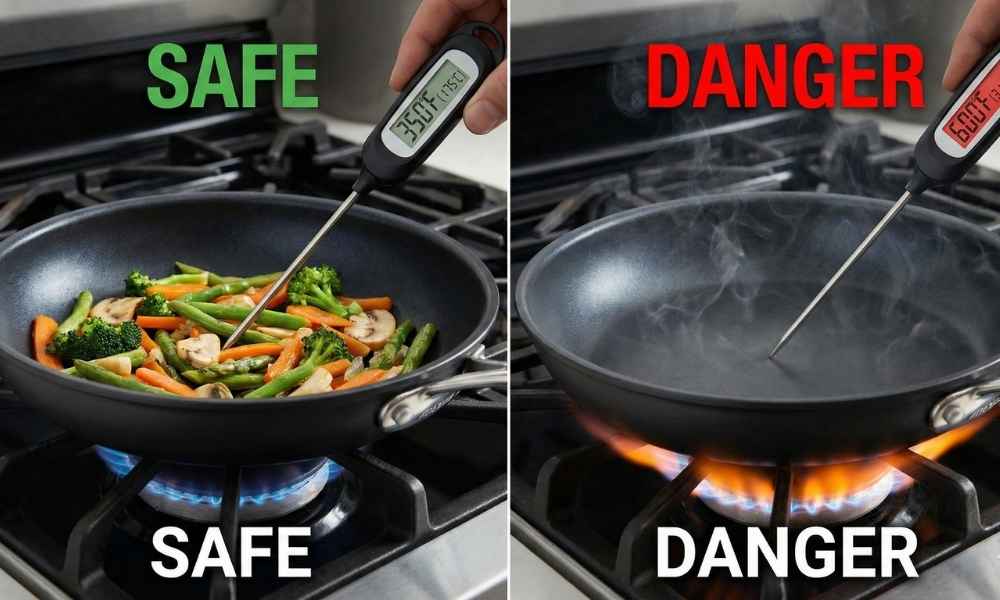
This is the danger zone. If a pan gets too hot, the PTFE starts to break down.
Above about 500°F, chemical bonds begin to degrade. At higher temps — commonly above 600°F — the coating can emit fumes. These fumes are invisible and can cause health symptoms if inhaled in enough quantity.
Breathing these fumes can cause polymer fume fever. It feels like a short flu. Symptoms may include chills, fever, and headache. It usually clears in a day or two. Still, it is best avoided.
You can also read: Best Non-Toxic Cookware for Health
Ingestion of PTFE Particles vs. Inhalation of Fumes
People often ask: “I scratched my pan and ate a flake of coating. Am I going to die?” Take a breath. You are almost certainly fine.
There is a big difference between eating a flake and breathing fumes.
- Ingestion: If you swallow a chip of PTFE, it likely passes through your digestive system unchanged. It is inert and not absorbed.
- Inhalation: This is the real risk. Overheating a pan creates gases. Lungs absorb gases quickly. That can lead to polymer fume fever in humans and serious harm in sensitive animals.
Temperature Thresholds: When Safe Becomes Unsafe
You might think, “Okay, so I just shouldn’t let it get too hot. But what does that mean in practice?”
Most people do not cook with a thermometer. We use knobs. Still, understanding the key temperature points helps you avoid risk.
The Critical 500°F (260°C) Threshold Explained
There is a clear number to remember: 500°F. Below that, the coating is stable. It behaves as designed.
Once you cross 500°F, the coating can begin to break down. It is not instant. Degradation speeds up as temperature rises. By 600°F, fumes are likely.
Real-World Cooking Temperature Analysis
Do typical home cooks reach 500°F often? Not usually. But it can happen during high-heat cooking or mistakes.
| Cooking Method | Typical Temp Range | Safety Verdict |
| Boiling Water | 212°F (100°C) | ✅ Safe |
| Sautéing Veggies | 300°F – 350°F | ✅ Safe |
| Frying an Egg | 300°F – 375°F | ✅ Safe |
| Searing a Steak | 400°F – 500°F+ | ⚠️ Caution Zone |
| Broiler Use | 500°F+ | ❌ Unsafe |
Most daily cooking stays well below the danger zone. If there is food in the pan, it soaks up heat and helps prevent extreme temperatures.
Scenarios That Actually Cause Overheating
So when does a pan actually get hot enough to be a problem? Usually it’s from human error.
The #1 Risk: Preheating an Empty Pan.
We all do it. You put the pan on the burner and walk away. A dry pan on high can pass 500°F in 2 to 5 minutes. Without food to absorb heat, the temperature climbs quickly and can reach 700°F or more.
Special Populations and Heightened Risk Scenarios
General safety rules cover most people. But some groups face more risk and need stricter precautions.
The Canary in the Coal Mine: Why PTFE Kills Pet Birds
This is important. If you own birds, listen closely. Birds are extremely sensitive to fumes.
Bird lungs are different from ours. They absorb air and gases very efficiently. That means fumes you cannot smell can be deadly to a parrot, budgie, or canary in minutes.
If you have a pet bird:
- Keep birds well away from the kitchen.
- Ideally, avoid PTFE cookware entirely.
- Use ceramic, stainless steel, or cast iron instead. It isn’t worth the risk.
Pregnancy, Infants, and Developmental Concerns
The larger developmental concern was tied to PFOA, the processing chemical phased out in 2013. Modern PTFE coatings are considered safe for normal use during pregnancy because the coating itself does not cross the placenta.
If you are concerned, use the precautionary principle. Cook on lower heat. Or switch to an alternative like cast iron while pregnant. That gives extra peace of mind.
Lifespan, Degradation, and When to Replace PTFE Cookware
Here’s a practical truth: Non-stick pans wear out. PTFE is soft. It degrades with use.
Visual and Performance Indicators for Replacement
Don’t guess. Inspect your pan often. A quick look tells you a lot.
- Peeling or Flaking: If bits come off, stop using it. Swallowing a flake is unlikely to hurt you, but flaking shows the coating has failed.
- Discoloration: A dark or brown center suggests repeated overheating. The coating chemistry has changed.
- The “Egg Test”: If an egg sticks and you must scrub hard, the pan has lost its slickness. Time to replace it.
The 3-5 Year Replacement Guideline
If you cook daily, expect a non-stick pan to last 3 to 5 years. If it lasts longer, that’s a win. But don’t keep a tired pan indefinitely. A degraded pan risks more sticking, burning, and possible overheating.
| Condition of Pan | Action Required |
| New / Slick | Keep using safely. |
| Minor Scratches | Use caution; switch to silicone utensils. |
| Deep Scratches | Replace. Performance is compromised. |
| Peeling / Flaking | Replace Immediately. |
| Pre-2013 Manufacture | Throw Away. (Potential PFOA risk). |
Proper Use Protocols to Maximize Safety
If you decide to keep using PTFE (and most of us do), set clear rules. These are simple. They work.
The Never-Preheat-Empty Rule Explained
I can’t stress this enough. Never put an empty non-stick pan on high heat.
- The Fix: Put oil or butter in the pan first. Then turn on the burner. When the oil shimmers or the butter foams, add food. The food acts as a heat sink and keeps the pan below dangerous temps.
Ventilation: The Underrated Safety Factor
Turn the range hood on whenever you cook. Many people only use the fan when something burns. That misses the point.
Good ventilation reduces airborne particles and any low-level fumes. It lowers risk for everyone in the home.
Utensil Selection and Coating Preservation
Metal utensils scratch PTFE. Use tools that protect the surface.
- Use Silicone: Heat-resistant and soft on the coating.
- Use Wood: Gentle and classic for non-stick pans.
How to Clean and Maintain PTFE Pans (Added Practical Guide)
Cleaning matters. A few small habits extend a pan’s life.
- Let the pan cool before washing. Sudden temperature change can stress the coating.
- Hand wash with warm, soapy water. Avoid harsh scouring pads.
- For stuck bits, soak briefly. Use a soft sponge to remove residue.
- Do not use oven cleaners or strong abrasives. They can strip the coating.
PTFE Alternatives: Honest Trade-Off Analysis
Maybe you’re done with PTFE. What else is there? Good question. Marketing can make “green” options sound perfect. They have trade-offs. I’ll walk through the main choices.
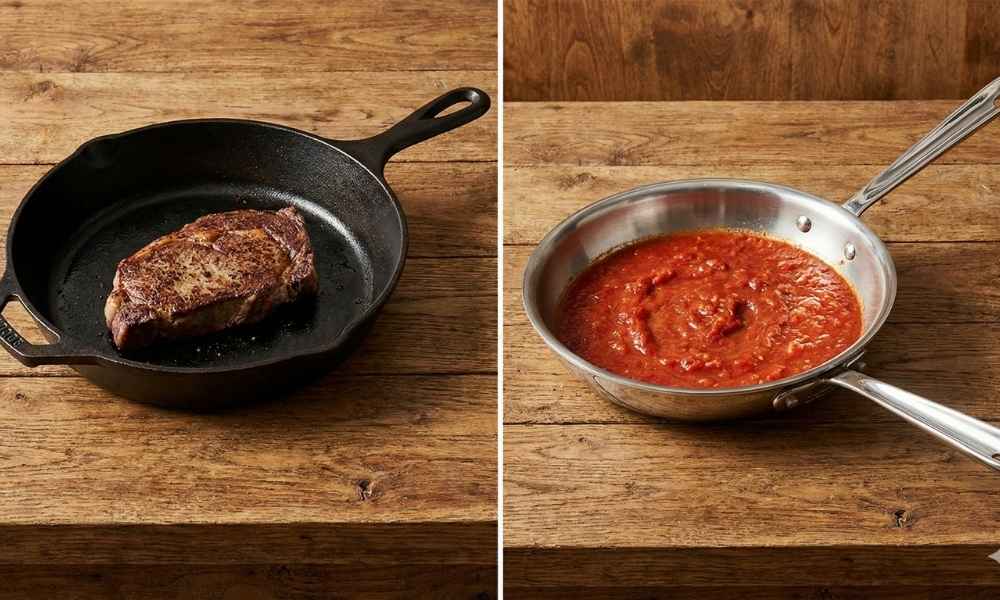
| Material | Best For… | Pros | Cons |
| PTFE (Teflon) | Eggs, Fish, Pancakes | Super slick, easy cleanup. | Can overheat; limited lifespan. |
| Ceramic | Veggies, Sautéing | PTFE-free; harder to overheat. | Loses non-stick ability fast (6-12 months). |
| Cast Iron | Steaks, Burgers, Searing | Lasts forever; high heat safe. | Heavy; requires maintenance (seasoning). |
| Stainless Steel | Sauces, Boiling, Browning | Indestructible; dishwasher safe. | Food sticks; learning curve required. |
The “No Perfect Pan” Reality
There is no one pan that does it all. My advice: build a small toolkit.
- Use PTFE for delicate items on low heat.
- Use cast iron for high-heat searing and oven use.
- Use stainless steel for sauces, deglazing, and general work.
Regulatory Landscape and Industry Standards
You might ask, “If this stuff has risks, why is it still legal?”
The FDA has approved PTFE for cookware for decades. Their view is clear: when used correctly, it is safe for food contact.
European regulators (EFSA) are stricter on some PFAS issues but still allow PTFE for cookware. The major global change was the ban or phase-out of PFOA. That regulatory pressure is why most new pans are PFOA-free. It wasn’t just good PR from companies — it was legal and scientific pressure.
Environmental and Disposal Considerations
We’ve covered personal safety. Now let’s talk about the planet.
PTFE Production Environmental Impact
PTFE manufacturing and fluorochemical production have a history of polluting water near factories. PFAS contamination is a real environmental issue. That is part of the reason many people avoid PFAS-based products for ecological reasons.
End-of-Life PTFE Disposal Issues
PTFE does not biodegrade. A scratched pan in the landfill persists for centuries. If you want to reduce environmental impact, choose materials that last and can be recycled: cast iron and stainless steel are better options. They can be passed on, resold, or recycled.
Tips to Reduce Environmental Footprint (Added Guidance)
You can take steps to lower your impact:
- Buy quality pans and rotate them to extend life.
- Repair handles or lids rather than toss the whole pan.
- Donate or resell usable pans instead of landfilling them.
- Choose recyclable materials when replacing cookware.
Making Your Personal Risk Decision
Where do you stand? Here’s a quick guide to match cookware to your habits and concerns.
- The Daily Egg Fryer: If you cook on low/medium heat, PTFE is fine.
- The High-Heat Searing Fan: Skip PTFE. Use cast iron for searing.
- The Bird Owner: Hard No. Do not use PTFE where birds live.
- The Eco-Conscious: Avoid PTFE because of production pollution and disposal issues rather than direct daily health risk.
Frequently Asked Questions
Is PTFE the same as Teflon?
Yes. PTFE is the chemical name. Teflon™ is a brand name owned by Chemours. It’s similar to “facial tissue” vs. “Kleenex.”
What temperature does PTFE become toxic?
Fumes can start at about 500°F (260°C). Significant decomposition and more harmful emissions occur above roughly 600°F. Keeping temperatures below 500°F avoids those risks.
Is PFOA-free non-stick cookware safe?
Generally, yes. “PFOA-free” means the manufacturing chemical linked to certain health risks was not used. But the coating remains a fluoropolymer (PTFE), so follow heat and use rules.
What happens if you accidentally overheat non-stick cookware?
Open windows and vents. Turn on the fan. Leave the room if you feel sick. Symptoms like chills, headache, and fever may indicate polymer fume fever. It usually passes within 24–48 hours. If symptoms are severe, seek medical help.
Is PTFE banned in any countries?
PTFE itself is not broadly banned. PFOA and some other PFAS chemicals are banned or heavily restricted in the EU, US, and many other nations. Regulations keep evolving.
The Final Verdict
Is PTFE non stick coating safe? Yes, if you treat it with respect.
It is a useful tool when used correctly. Keep heat moderate. Avoid empty-pan preheating. Use soft utensils. Replace pans that show wear. Do that, and you can flip your omelets in peace.
Happy cooking!