How Much Is All-Clad Cookware: Pricing Guide

In the United States, All-Clad cookware usually costs about $100 to $2,000 or more, depending on the line, piece, size, and whether you buy a set. A single stainless-steel pan often costs $150 to $350, while a full set commonly ranges from $500 to $1,800.
Discounts can lower the price. All-Clad cookware often goes on sale during major US shopping periods, including Black Friday, Memorial Day, Labor Day, and holiday gift events. Always compare the sale price with the product’s normal price, since the discount may vary by retailer.

All-Clad cookware price ranges at a glance
The table below gives practical US price ranges for budgeting. These are general planning ranges, not live prices. All-Clad and its retail partners can change prices, product names, sizes, and promotions.
| All-Clad category | Typical price for one piece | Typical price for a set |
|---|---|---|
| D3 stainless steel | $100–$350 | $400–$1,200 |
| D5 stainless steel | $150–$450 | $600–$1,500 |
| Copper Core | $200–$550 | $900–$2,000+ |
| G5 Graphite Core | $200–$500 | $900–$1,800 |
| Nonstick cookware | $60–$250 | $250–$900 |
| Specialty pieces | $150–$600+ | Varies |
A small saucepan or skillet sits near the lower end of these ranges. Large sauté pans, stockpots, fry pans, and specialty pieces cost more because they use more metal and take more labor to make.
What does one All-Clad pan cost?
A single All-Clad pan commonly costs:
- 8-inch skillet: about $100–$250
- 10-inch skillet: about $130–$350
- 12-inch skillet: about $180–$450
- 2-quart saucepan: about $150–$350
- 3- or 4-quart sauté pan: about $250–$500
- 6- to 8-quart stockpot: about $250–$600
The exact price depends on the product line. A D3 skillet is usually less expensive than a D5 or Copper Core skillet of the same size.
What does an All-Clad cookware set cost?
US shoppers can expect these broad set prices:
- Small 5- to 7-piece set: about $400–$800
- Medium 8- to 10-piece set: about $600–$1,300
- Large 12- to 14-piece set: about $900–$1,800
- Premium Copper Core set: often $1,200–$2,000 or more
Cookware set counts can be confusing. A “10-piece set” may contain only seven cooking vessels because lids count as pieces. Check the box contents before comparing two sets.
Why does All-Clad cookware cost so much?
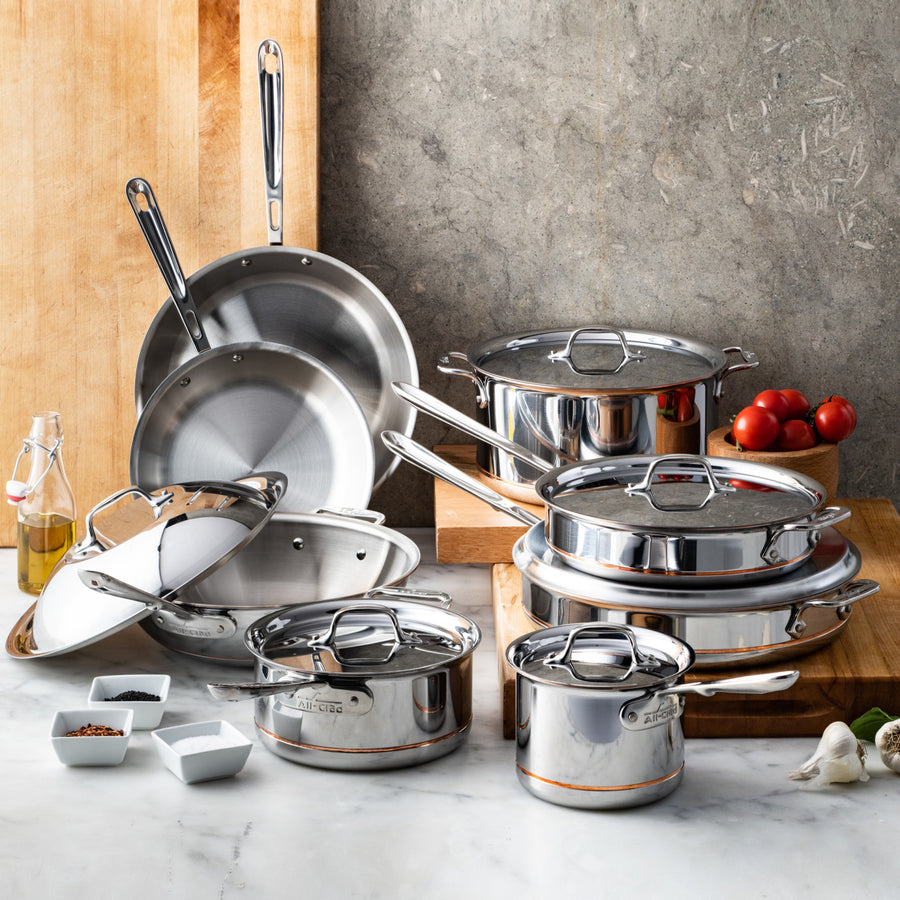
All-Clad prices reflect the metal layers, manufacturing method, size, handles, lids, and product line. The brand’s main stainless collections use bonded layers of metal rather than a single thin sheet.
Bonded cookware joins metals into one piece. In many All-Clad stainless pans, an aluminum core helps spread heat, while stainless steel forms the cooking surface and outer body. Some lines add more layers or copper to change how the pan heats.
That construction raises the cost. It also makes the price different from basic stainless cookware, which may use thinner metal or a simpler base.
The main All-Clad lines
D3 stainless steel
D3 is the usual entry point for All-Clad stainless cookware. It uses a three-layer design and offers the core features many home cooks want:
- Stainless cooking surface
- Aluminum core for heat spread
- Stainless exterior
- Induction compatibility, where listed by the seller
- Oven and broiler use within the maker’s stated limits
d3 is often the best value for shoppers who want All-Clad but do not need the higher-priced lines.
D5 stainless steel
D5 uses five bonded layers. It generally costs more than D3 and tends to feel heavier.
The extra layers do not automatically mean that every cook will notice a major improvement. The benefit may matter more to people who value gradual heat changes, a heavier pan, or the feel of premium cookware.
Copper Core
Copper Core combines stainless steel with a copper layer. Copper transfers heat quickly and responds fast when you change the burner setting.
This line is usually one of the most expensive All-Clad options. It can make sense for cooks who care deeply about heat control, but the added cost may not offer enough benefit for simple daily meals.
G5 Graphite Core
G5 Graphite Core cookware uses graphite as part of its bonded construction. It is designed to reduce weight compared with some traditional multi-layer pans while retaining a layered metal build.
Prices vary by piece and availability. Since product availability can change, check the current US All-Clad catalog before using G5 as the basis for a full set.
All-Clad nonstick
All-Clad also sells nonstick lines, including products made with aluminum bodies and nonstick coatings.
Nonstick All-Clad cookware is often cheaper than the brand’s premium stainless lines. It is useful for eggs, fish, pancakes, and other foods that may stick to uncoated stainless steel.
The coating is a wear item. Even when cared for well, it may not last as long as a stainless cooking surface. Follow the care instructions, avoid overheating, and use tools approved for the coating.

Is an All-Clad set cheaper than buying individual pieces?
A set can cost less per piece, but only if you use most of the pieces. A large set is not a bargain if several pans stay in the cabinet.
To compare a set with individual cookware, use this simple method:
- List every pan, pot, and lid in the set.
- Mark the pieces you would buy on their own.
- Find the current individual prices for those pieces.
- Add the prices together.
- Compare the total with the set price.
- Ignore pieces you would not use.
A hypothetical comparison
Suppose a set costs $900 and includes 10 counted pieces. Two of those pieces are lids, leaving eight cooking vessels.
If you would use six vessels, the useful cost is:
$900 ÷ 6 = $150 per useful vessel
That does not mean each vessel truly costs $150. It is only a way to see whether the set contains too many unwanted pieces.
A set may still be worthwhile if it includes matching lids and sizes you already need. Buying individual pieces is often smarter when you are replacing one damaged pan or building a collection slowly.
When a set is usually a better deal
A set may offer better value when:
- You need several pans at once.
- The set includes useful sizes.
- You want matching lids.
- The set price is clearly below the combined individual prices.
- You have enough storage space.
- You are comfortable with the included product line.
When individual pieces are better
Buy individual pieces when:
- You already own a stockpot or Dutch oven.
- You mainly need one skillet.
- You want to mix stainless and nonstick.
- You do not use small saucepans.
- A set includes duplicate sizes.
- You want to test the brand before spending hundreds of dollars.

What is the cheapest way to buy All-Clad cookware?
The lowest-cost approach is usually to buy fewer pieces, choose D3, and wait for a legitimate sale. You can also compare factory seconds, authorized retailers, and refurbished or open-box offers.
Start with the most useful pieces
Many home kitchens can handle most tasks with three or four pieces:
- 10- or 12-inch skillet
- 2- or 3-quart saucepan
- 3- or 4-quart sauté pan
- 6- to 8-quart stockpot
You do not need every pan shape to cook well. A skillet and saucepan may cover daily breakfasts, sauces, vegetables, meat, and grains.
Look for real discounts
A useful sale is one that lowers the actual price compared with the product’s recent normal price. Before buying, check:
- The price on the official US All-Clad website
- The current price at major authorized retailers
- The exact model and size
- Whether a lid is included
- The return policy
- The warranty terms
- Shipping charges
A product may show a large “percent off” label but still cost more than a similar sale at another retailer.
Consider factory seconds with care
All-Clad factory seconds may have small cosmetic marks. These products can cost less, but the terms may differ from first-quality cookware.
Before buying, confirm:
- Whether the item is sold by an authorized source
- What the warranty covers
- Whether returns are allowed
- Whether the defect is cosmetic or functional
- Whether the base sits flat
- Whether the lid fits correctly
- Whether the cooking surface is intact
Do not buy cookware with a warped base, loose handle, sharp exposed metal, cracked coating, or other defect that could affect safe use.
Is All-Clad worth the price?
All-Clad may be worth the price for cooks who want durable stainless cookware, strong heat control, and a long-term collection. It may not be worth the price for someone who cooks only simple meals, rents a small kitchen, or prefers replacing inexpensive pans as they wear out.
The main question is not whether All-Clad is expensive. It is whether you will use the features enough to justify the cost.
All-Clad may be a good fit if you:
- Cook several times each week
- Want stainless cookware without a separate disk on the bottom
- Like searing and making pan sauces
- Want cookware that can move from stovetop to oven within its stated limits
- Prefer to buy fewer, longer-lasting pieces
- Can maintain stainless steel properly
A less expensive option may be better if you:
- Need a basic pan for occasional use
- Prefer lightweight cookware
- Mainly cook foods that need nonstick surfaces
- Have a limited budget
- Do not want to learn stainless-steel cooking
- Need a complete kitchen immediately at the lowest cost
Stainless steel is not naturally nonstick. Food can stick if the pan is cold, the heat is too high, or the food is moved before it has formed a crust. That learning curve is part of the ownership experience.

How much should you budget for a complete All-Clad kitchen?
A practical budget depends on how many pieces you need.
Basic setup: about $400 to $800
A basic setup might include:
- One skillet
- One saucepan with lid
- One sauté pan or small stockpot
- One larger pot
This approach works well for a new kitchen or a cook who wants core pieces without a large set.
Mid-range setup: about $800 to $1,400
A mid-range collection may include:
- Two skillets
- Two saucepans
- One sauté pan
- One stockpot
- Matching lids
- One nonstick pan
This gives more flexibility for cooking several foods at once.
Premium setup: $1,400 to $2,500 or more
A premium collection may include:
- A larger D5, Copper Core, or G5 collection
- Multiple skillet sizes
- Several saucepans
- A large sauté pan
- A stockpot
- Specialty cookware
- A separate nonstick pan
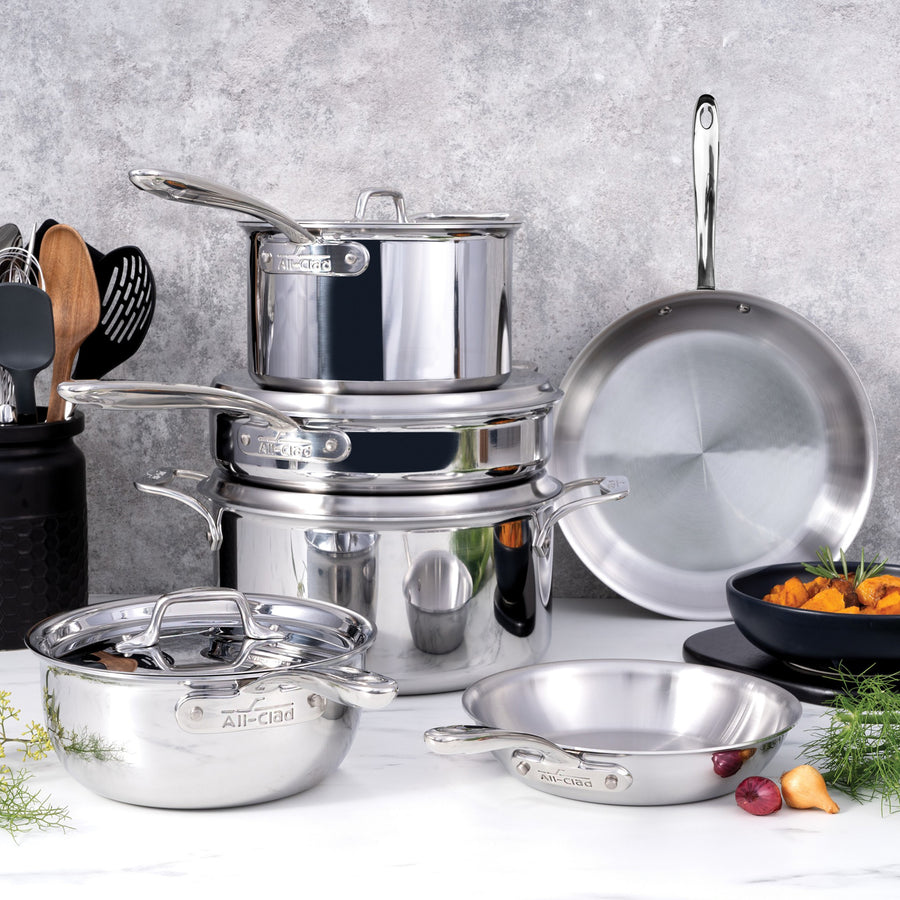
The total can rise quickly when you add specialty items. You do not need this level of cookware for a functional home kitchen.
What affects the final price?
The listed price is only one part of the buying decision. These factors can change the value:
Size
Large pans cost more because they require more raw material. A 12-inch skillet usually costs more than an 8-inch skillet.
Lid inclusion
Some cookware prices include a lid. Others list the lid as part of a set or sell it separately. Check before comparing products.
Finish and design
Polished stainless steel, brushed finishes, decorative handles, and special colors can affect the price without changing the pan’s basic cooking role.
Retailer and location
Prices can differ between the official All-Clad US store, department stores, kitchen retailers, warehouse clubs, and online marketplaces. Shipping, taxes, and return policies also affect the final cost.
Warranty and authenticity
A low price from an unknown marketplace seller may carry more risk. Confirm that the item is genuine and that the seller’s warranty and return terms are clear.
Common mistakes when buying All-Clad cookware
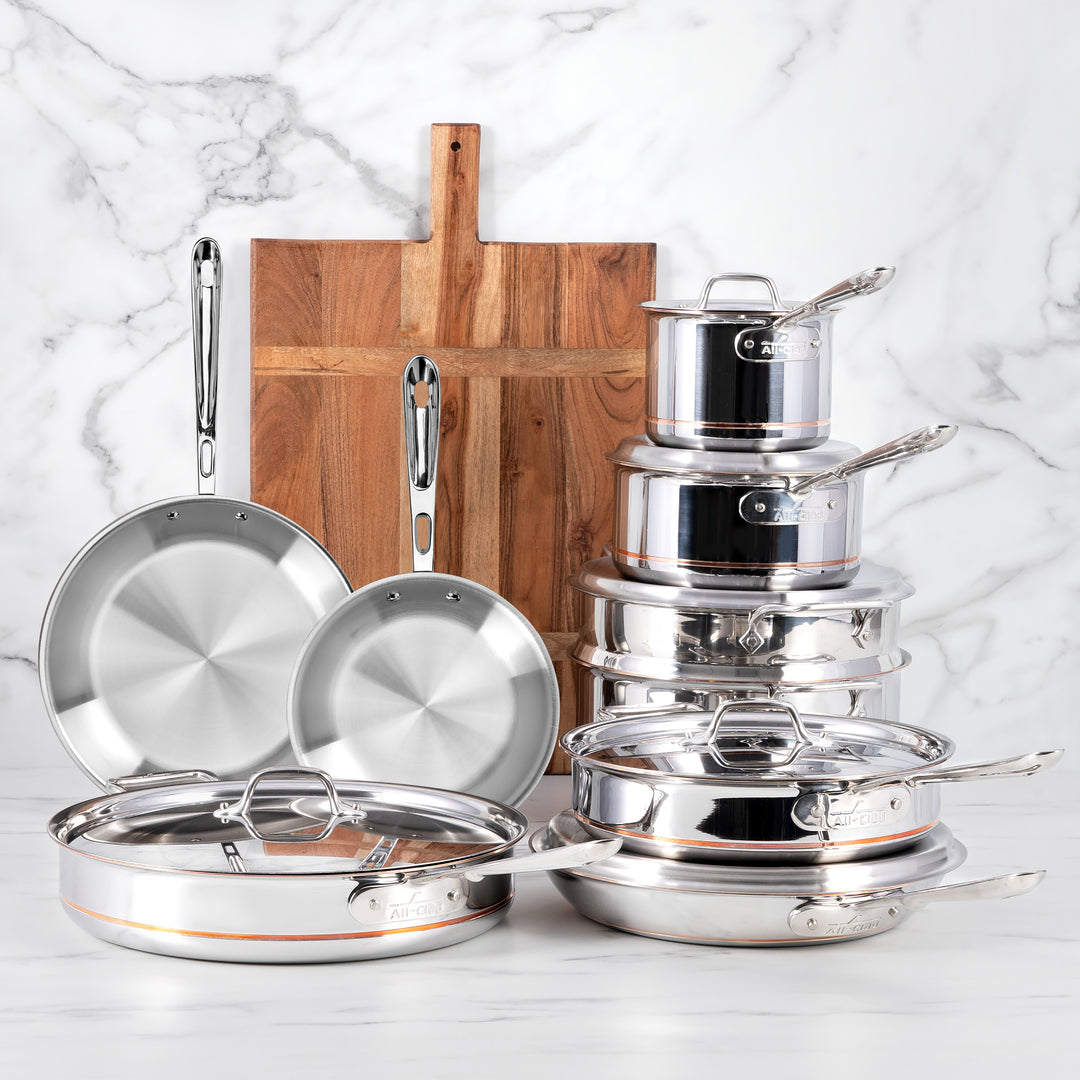
The most common mistake is buying a large set before deciding which pans you actually use.
Other mistakes include:
- Comparing a set with 10 counted pieces to another set with 10 cooking vessels
- Assuming every All-Clad line cooks the same way
- Forgetting that stainless steel needs different heat control than nonstick
- Buying a pan that is too heavy to lift safely
- Ignoring storage space
- Failing to check induction compatibility
- Comparing sale prices without checking size
- Assuming a factory second has the same return terms as first-quality cookware
- Using metal tools on a nonstick coating without checking the care guide
- Placing a hot pan under cold water, which may contribute to warping
For stainless steel, let the pan warm gradually, add oil when appropriate, and avoid extreme heat. For nonstick cookware, use low to medium heat unless the manufacturer gives different instructions.

Frequently asked questions
Is All-Clad cookware made in the USA?
Many well-known All-Clad stainless-steel collections are made in the United States, particularly at the company’s Pennsylvania manufacturing facility. However, All-Clad sells multiple product categories, and manufacturing locations can differ by line. Check the product page or packaging for the exact item.
Does All-Clad ever go on sale?
Yes. All-Clad cookware is often discounted through the official US store and authorized retailers. Sale timing and discount size change, so compare the exact model, size, and included lid rather than relying only on a percentage-off label.
Which All-Clad line is the best value?
D3 is often the most practical value for shoppers who want bonded stainless cookware. D5, Copper Core, and G5 may appeal to cooks who specifically want their different construction or feel. The most expensive line is not automatically the best choice for every kitchen.
Is a $1,000 All-Clad set worth it?
It can be worth it if you use most of the pieces and plan to keep the cookware for many years. It is less appealing if the set includes duplicate pans or cookware you rarely use. Compare the set with the cost of buying only the pieces you need.
Can All-Clad cookware be used on an induction stove?
Many All-Clad stainless-steel products work on induction cooktops, but compatibility depends on the specific product. Check the current product listing or packaging before buying. Do not assume that every All-Clad item, especially every nonstick or specialty product, has the same compatibility.
Bottom line: how much is All-Clad cookware?
For US buyers, plan on $100 to $350 for a common individual pan, $400 to $1,200 for many D3 sets, and $900 to $2,000 or more for larger or premium collections.
The best way to control cost is to buy the pieces you will use, compare the price with current individual listings, and choose D3 unless you have a clear reason to pay more for D5, Copper Core, or another premium line. Start with a skillet, saucepan, and stockpot if your budget is limited. Add specialty pieces only after you know they fill a real need.