Caraway Cookware Storage: Best Ideas For Small Kitchens

Caraway cookware storage works best when each pan has room to rest without rubbing against another pan. For most U.S. kitchens, that means using a rack, shelf, or drawer system that keeps ceramic-coated surfaces from scraping. Store lids upright or on their sides, keep heavy pans on lower shelves, and avoid stacking bare pans when possible.
Caraway cookware has a coated cooking surface. Hard contact with metal, grit, or another pan can cause marks over time. Good storage is not just about saving space. It also helps protect the finish, handles, lids, and your hands.
This guide explains how to store Caraway pots and pans, how to use a Caraway storage organizer, what to do in a small kitchen, and which common storage habits can cause damage.

What Is the Best Way to Store Caraway Cookware?
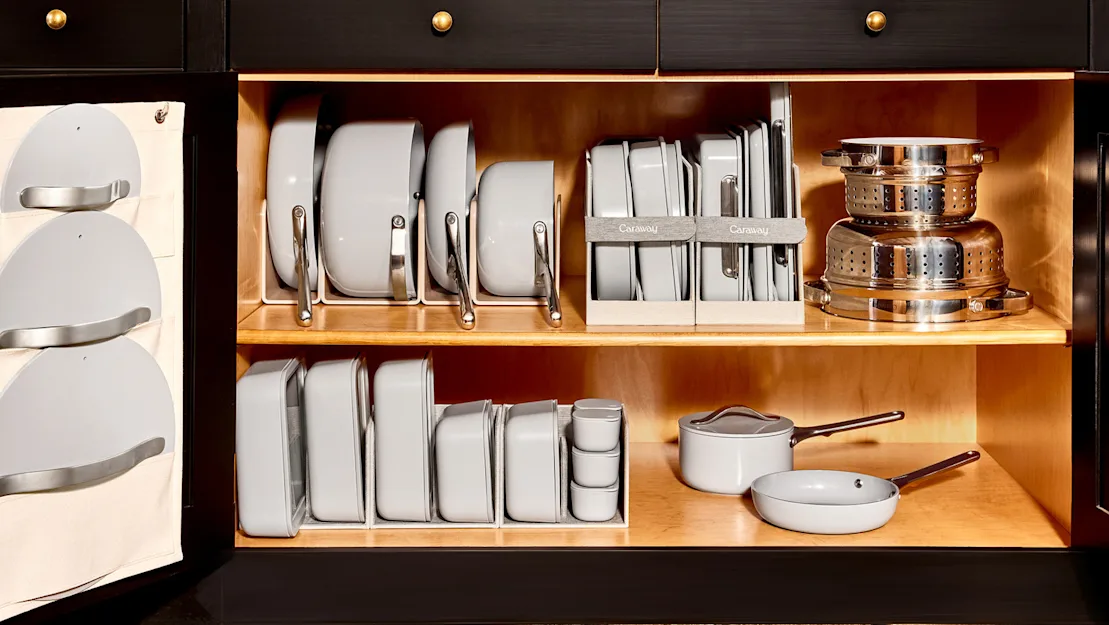
The best method is to separate the pans with a rack, divider, or soft liner. Keep pans upright when possible, and place lids in a holder instead of laying them between pans.
Use this setup as a simple starting point:
- Store frying pans and sauté pans in a vertical rack.
- Place saucepans and Dutch ovens on a low shelf.
- Keep lids in a lid rack or upright divider.
- Add a soft barrier if pans must be stacked.
- Leave enough space to lift each item without scraping it against another.
Caraway storage products are designed to help organize pots, pans, and lids. A rack may be useful if you want a matched look. However, you do not need a Caraway-branded organizer to store the cookware safely. A sturdy rack with smooth, coated, or padded contact points can also work.
The key test is simple: Can you remove one pan without dragging it across another pan? If not, the storage system needs more space or better separation.

Caraway Cookware Storage Options
Different kitchen layouts call for different storage methods. Choose the option that gives the pans support without placing pressure on their cooking surfaces.
1. Vertical pan rack
A vertical rack holds pans on their sides. This is often the easiest option for a cabinet or deep drawer.
It works well for:
- Fry pans
- Sauté pans
- Small saucepans
- Baking sheets
- Cutting boards
Choose a rack with wide, stable slots. Narrow metal wires may create pressure points or rub against the pan. A rack should also have a broad base so it does not tip when you remove one pan.
2. Caraway cookware organizer
A Caraway cookware organizer can provide a coordinated place for pans and lids. The main benefit is not the brand name. It is the separation between pieces.
Before buying one, check:
- The inside width of your cabinet
- The depth of the shelf or drawer
- The height of the organizer
- The weight limit
- The number of pans and lids it holds
- Whether the contact points are smooth
- Whether the organizer can tip when partly filled
Product designs and included parts can change. Check the current Caraway product page for the exact model, size, and included accessories before ordering.
3. Lid holder
Lids often cause the most storage trouble. They are wide, awkward, and easy to scratch when stacked.
A lid holder keeps them upright. You can place it inside a cabinet, on a shelf, or in a deep drawer if the drawer can support the weight.
Keep lids away from loose utensils. Forks, can openers, and other metal tools can scratch a lid or its rim.
4. Drawer dividers
A deep drawer can store cookware well if it has enough height and strong runners. Use dividers to stop pans from sliding into one another.
Do not force a tall pan into a shallow drawer. A drawer that closes against a handle or lid can damage both the drawer and the cookware.
5. Open shelving
Open shelves make cookware easy to reach. They also expose it to dust, grease, and knocks.
If you use open shelving:
- Place heavy items on the lowest shelf.
- Keep pans away from the edge.
- Do not hang cookware where people can bump it.
- Clean dust and grease from the shelf often.
- Use a rack rather than a loose stack.
Open storage can look neat, but it needs more regular cleaning than a closed cabinet.

How to Store Caraway Pots and Pans Without Scratching Them
Clean and dry each piece before storage. Then separate the pans or place the lightest pan on top if stacking is the only option.
Follow these steps:
- Let the cookware cool. Do not move a hot pan into a tight cabinet. Heat can affect nearby items and may make the handle harder to grip.
- Wash the pan with mild soap and a soft sponge. Avoid abrasive pads, steel wool, and harsh cleaners.
- Dry the pan fully. Water left between stacked pans can cause odors and leave mineral marks.
- Inspect the cooking surface. Look for food bits, grit, or trapped grease.
- Choose a separate slot or shelf. Keep the pan from touching sharp tools or rough metal.
- Place the pan gently. Do not drop it into a rack.
- Keep the heaviest pieces low. A Dutch oven or full saucepan can strain a shelf or make a tall stack unstable.
- Store handles in a clear position. Handles should not block the cabinet door or catch on nearby items.
If stacking cannot be avoided, place a soft, clean pan protector between pieces. Use a protector that does not shed fibers or trap dampness. Replace it if it becomes greasy, wet, or gritty.
Do not place a sharp metal lid edge directly on a coated cooking surface. Store the lid separately or use a divider.
Can you stack Caraway pans?
Yes, you can stack pans with care, but separated storage is better. Direct contact may create scuffs, especially when pans are moved often.
If you stack:
- Put the largest pan on the bottom.
- Place a soft separator between each pan.
- Keep the stack low.
- Do not place heavy items on top.
- Lift pans straight up rather than sliding them out.
- Stop using the stack if the coating shows chips, deep scratches, or loose areas.
A short stack is safer and easier to use than a tall one. If you must move three pans to reach the one you need, a vertical rack may save both time and wear.

How to Store Caraway Cookware in a Small Kitchen
Small kitchens need a storage plan that reduces movement. The best layout keeps the most-used pans near the stove and places bulky items in lower cabinets.
Try this order:
- Put the fry pan and saucepan in the easiest-to-reach space.
- Store the sauté pan and Dutch oven in a lower cabinet.
- Use a vertical divider for pans and baking sheets.
- Store lids beside, not inside, the pans when space allows.
- Keep tools in a separate container.
- Leave a small gap around the cookware so it can be removed safely.
A deep drawer may be better than a cabinet for everyday pans. A drawer lets you see the cookware from above and reduces the need to pull one item past another.
For a narrow cabinet, use a two-level shelf riser. Put lighter pans on the upper level and heavier pieces below. Make sure the riser sits flat and does not bend under the load.
For a corner cabinet, avoid placing the most-used pan at the back. A storage system that looks efficient but forces you to move several pans each day will likely lead to rough handling.
Storage ideas for renters
Renters can improve storage without drilling into cabinets or walls:
- Use a freestanding pan rack.
- Add a non-slip shelf liner under a rack.
- Use a countertop lid holder.
- Store lids in a file-style divider.
- Use a rolling kitchen cart for heavy cookware.
- Keep the cart away from heat, water, and walking paths.
Do not mount a rack with weak adhesive if a falling pan could injure someone or damage a floor. Use a secure, weight-rated mounting method when wall storage is necessary.

How to Care for Caraway Cookware While It Is Stored
Storage cannot fix damage caused by poor cleaning or high heat. Caraway’s care guidance should be the first reference for the exact cookware set you own.
General care practices include:
- Wash by hand unless the current care instructions say otherwise.
- Use mild dish soap and a soft sponge.
- Avoid steel wool and abrasive powders.
- Do not use a pan as a container for long-term food storage.
- Dry cookware before putting it away.
- Avoid sudden temperature changes.
- Use low to medium heat for routine cooking unless the product instructions allow more.
- Check the care guide for oven, broiler, and dishwasher limits.
Do not store cookware with food residue. Grease can become sticky and attract dust. Small food particles can also act like grit when another pan is placed on top.
What if the pan has a mark?
First, check whether the mark is food residue, a stain, or damage to the coating. Let the pan cool, then wash it with warm water, mild soap, and a soft sponge.
Do not scrape hard with a knife or metal tool. Do not use an abrasive pad to chase a mark that will not come off.
If the surface is chipped, peeling, or deeply scratched, stop using the pan and contact Caraway support for product-specific guidance. A surface mark is not always a safety failure, but damaged cookware deserves a careful review.
How should you store cookware after washing?
Dry it with a soft towel or let it air-dry fully. Then check the rim, handle joint, and lid area for trapped water.
Do not seal damp cookware in a closed cabinet. This can create odors and leave water marks. Good airflow helps, especially in humid parts of the United States.
Common Caraway Cookware Storage Mistakes
The most common storage mistake is treating coated cookware like bare stainless steel. A pan may look strong, but its cooking surface still needs protection from hard contact.
Avoid these habits:
Stacking pans with no separator
This saves space at first. It can also create repeated rubbing each time you remove a pan.
Sliding one pan out from under another
Sliding creates friction. Lift the upper pan first, then remove the lower one.
Putting utensils inside the pan
Metal tongs, whisks, and can openers can scratch the cooking surface. Store tools in a separate holder.
Storing a heavy item on a lid
A lid may bend, chip, or become hard to fit. Keep lids upright or place them where they will not carry extra weight.
Overloading a shelf
A shelf can bow or fail when loaded with several heavy pans. Check the cabinet hardware and shelf support before adding a full cookware set.
Leaving handles in the walkway
A handle that sticks out can catch clothing or bump into people. Turn handles inward while keeping them easy to grip.
Using a rough shelf liner
Some liners have a coarse texture. Dirt trapped under the liner can also scratch cookware. Choose a smooth, clean liner and replace it when worn.
Storing cookware above the stove
Steam, grease, and heat can build up on cookware stored above a range. If you use that space, clean the pans before cooking and keep them clear of the vent and burners.

Caraway Cookware Storage: Which Setup Should You Choose?
Use the following guide to match your kitchen with a practical storage method.
| Kitchen need | Useful setup | Main benefit | Main limit |
|---|---|---|---|
| Easy daily access | Vertical pan rack | Each pan is visible | Uses shelf or drawer width |
| Very little cabinet space | Short separated stack | Uses vertical space | Requires careful lifting |
| Many lids | Upright lid holder | Stops lid piles | Needs a separate area |
| Deep drawer | Dividers or rack | Easy top-down access | Drawer must support the weight |
| Corner cabinet | Turntable or pull-out shelf | Reduces reaching | May not fit large pans |
| Open shelving | Stable rack | Looks tidy and keeps pans apart | More dust and grease |
| Heavy cookware | Low cabinet shelf | Improves stability | Less convenient to reach |
The best setup is the one you can use without force. If a rack is hard to load, a lid blocks the cabinet, or a pan catches on the shelf, change the layout.
Frequently Asked Questions
Does Caraway cookware need special storage?
It does not need a special brand of storage. It does need careful storage because the coated surface should be protected from hard, rough, or sharp contact.
Can Caraway pans go in a drawer?
Yes, if the drawer is deep enough, strong enough, and free from sharp objects. Use dividers or a soft separator so the pans do not slide into one another.
Should Caraway lids be stored on the pans?
Separate lid storage is usually better. It reduces pressure on the pan and makes both pieces easier to remove.
Can I use a metal pan rack?
You can use one if its contact points are smooth and stable. Add a soft barrier if the metal touches the pan directly or if the rack creates sharp pressure points.
How do I store a Caraway Dutch oven?
Place it on a low, strong shelf. Store its lid separately if the lid makes the stack unstable. Do not put lighter cookware under it.
How often should I clean the storage area?
Wipe the cabinet, drawer, or rack when you see crumbs, grease, or dust. A clean storage area helps prevent grit from rubbing against the cookware.
Final Recommendation
For most U.S. kitchens, a vertical pan rack plus a separate lid holder is the simplest Caraway cookware storage plan. It keeps pans apart, makes daily access easier, and reduces the need to drag one piece across another.
If space is tight, use a short stack with soft separators. Keep heavy cookware low, store every piece dry, and follow the care instructions for your exact Caraway model. The right storage system should make each pan easy to lift, not force you to fight the cabinet.