What Is Considered Medium Heat On An Induction Cooktop: Tips

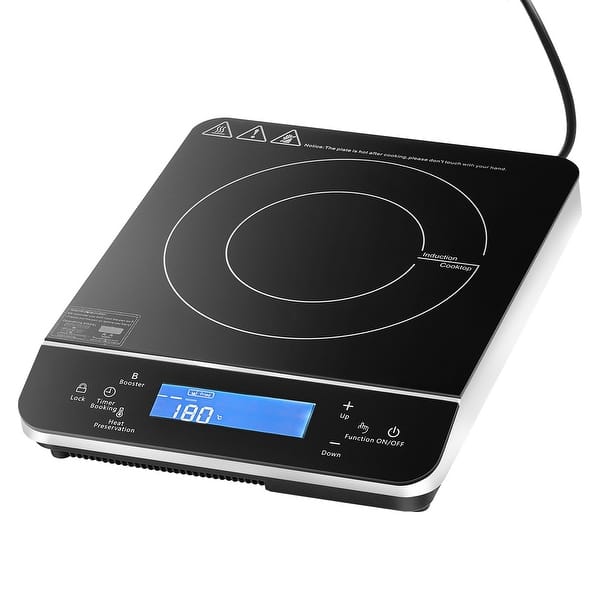
Medium heat on an induction cooktop usually means a middle power setting, often 4 to 6 on a 9-level dial.
Understanding what is considered medium heat on an induction cooktop helps you cook with more control. Unlike gas, induction heats the pan through magnetic energy, so the pan can get hot very fast. The right setting depends on your cooktop, pan, food, and the cooking task. This guide explains the numbers, signs, temperatures, common mistakes, and simple ways to find the perfect heat.
What Is Considered Medium Heat on an Induction Cooktop?
Medium heat on an induction cooktop usually falls between 40% and 60% of the cooktop’s power range. On a cooktop with settings from 1 to 9, medium heat is often level 4, 5, or 6.
On a cooktop with settings from 1 to 10, level 5 or 6 is a good starting point. Some models use power percentages, such as 50%, instead of numbered levels.
The exact setting can vary because induction cooktops do not all use the same power scale. One brand’s level 5 may heat more strongly than another brand’s level 5. For this reason, the number is a guide, not a universal rule.
Medium heat should produce steady cooking without rapid smoking, harsh sizzling, or quick browning. Think of it as a calm, steady flame on a gas stove.
:max_bytes(150000):strip_icc()/sea-primary-portable-induction-cooktops-nsimpson-2095-1-144e9e12d0ea4a379c2215668d62650d.jpeg)
Medium Heat Settings by Cooktop Type
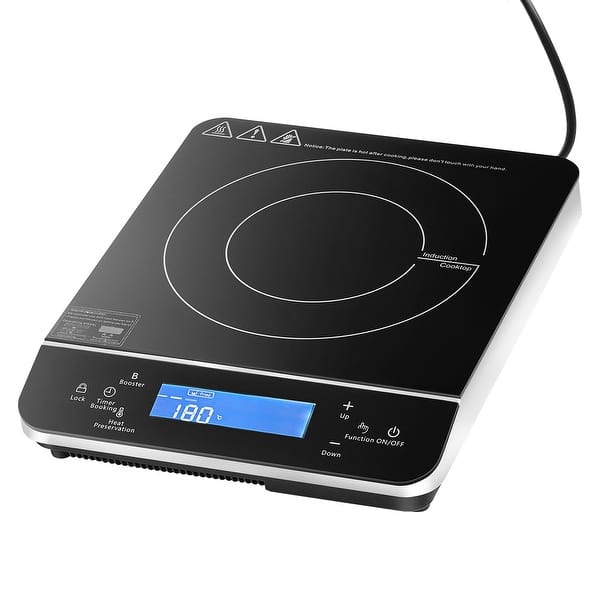
The best medium heat setting depends on how your induction cooktop displays power. Check the owner’s manual when possible, as the manual may list wattage for each level.
Here is a useful starting guide:
| Cooktop setting | Likely heat level | Common uses |
|---|---|---|
| 1 to 2 on a 9-level cooktop | Low | Melting, warming, holding food |
| 3 to 4 on a 9-level cooktop | Low to medium | Gentle cooking and softening |
| 5 on a 9-level cooktop | Medium | Sautéing, eggs, pancakes |
| 6 on a 9-level cooktop | Medium to medium-high | Browning and faster sautéing |
| 7 to 9 on a 9-level cooktop | High | Boiling, searing, rapid cooking |
For a 10-level cooktop, levels 5 and 6 commonly work as medium heat. For a cooktop with 12 levels, try levels 6 and 7.
Some induction cooktops show power in watts. Medium heat may fall near 700 to 1,200 watts for everyday pan cooking, but this range is not exact. Larger burners often have much higher wattage than smaller burners.
Keep these points in mind:
• Use a lower setting with thin pans because they heat quickly.
• Use a slightly higher setting with thick stainless steel or cast iron pans.
• Reduce the heat after the pan becomes hot.
• Treat the Boost setting as high heat, not medium heat.
• Watch the food during the first few minutes and adjust as needed.

Why Induction Heat Feels Different
Induction cooking heats the cookware directly. A magnetic field transfers energy to compatible cookware, which then heats the food. The glass surface may stay cooler than the pan, but the pan itself can become hot very quickly.
This makes medium heat on an induction cooktop more responsive than medium heat on many traditional stoves. A pan can move from warm to overheated in a short time.
Gas and electric burners also behave differently. A gas flame gives visual feedback, while a standard electric coil stays hot after you lower the control. Induction often changes power faster, but the pan still holds heat.
This fast response is helpful, but it can surprise new users. A setting that seems moderate may still brown butter or scorch garlic if the pan was preheated for too long.
The cooking surface also matters. A heavy cast iron pan stores heat like a brick wall. A thin aluminum pan heats and cools more quickly, though it must contain a magnetic layer to work on induction.
How to Tell When You Have Medium Heat
The most useful sign of medium heat is how the food behaves. A correct setting gives steady activity without violent bubbling or instant browning.
Look for these signs:
• Butter melts and begins to foam without turning dark at once.
• Oil moves easily across the pan but does not smoke.
• Chopped vegetables sizzle gently when they touch the pan.
• Pancake batter forms small bubbles after a short time.
• Eggs cook slowly enough to stay tender.
• A simmer shows small, regular bubbles instead of a rolling boil.
A surface thermometer can give extra information, but it is not required for most cooking. Many foods cooked over medium heat use a pan surface around 300°F to 375°F. The ideal temperature changes by recipe and ingredient.
Avoid relying only on sound. A loud sizzle can mean the pan is too hot, while no sound may mean the pan is too cool. Use sight, smell, and cooking speed together.
If oil starts smoking, remove the pan from the burner for a moment and lower the setting. Smoke is a clear warning that the pan or oil has gone beyond the desired heat.
Common Uses for Medium Heat on an Induction Cooktop
Medium heat works well for foods that need steady cooking. It gives the surface time to brown food while allowing the center to cook.
Common uses include:
• Sautéing onions, peppers, mushrooms, and zucchini
• Cooking scrambled eggs and omelets
• Frying pancakes and French toast
• Browning ground meat
• Cooking chicken pieces after an initial sear
• Making grilled cheese sandwiches
• Heating tortillas
• Reducing sauces without rapid scorching
• Simmering soups and stews
• Cooking rice after the liquid reaches a boil
For scrambled eggs, medium-low heat may be better than standard medium heat. Eggs are delicate and can become rubbery if the pan is too hot.
For pancakes, begin around medium heat and adjust after the first one. If the pancake becomes dark before bubbles form on top, lower the setting. If it stays pale and takes too long, raise the setting slightly.
For ground meat, medium heat can help develop browning without burning the fat. Break the meat into small pieces and avoid overcrowding the pan, since too much food can cause steaming.

Medium Heat Versus Medium-High Heat
Medium heat and medium-high heat are close, but they serve different purposes. Medium heat supports steady cooking, while medium-high heat creates faster browning and stronger sizzling.
Medium heat is usually best when:
• The food is delicate.
• The pan contains butter or a low-smoke-point oil.
• You need to cook food through without burning the outside.
• You are reducing a sauce slowly.
• You are cooking for several minutes.
Medium-high heat is often better when:
• You need to sear steak or pork.
• You want fast browning.
• You are stir-frying small batches.
• You need to bring liquid to a boil quickly.
A useful cooking method is to start at medium-high heat, then lower the cooktop to medium once the food has browned. This method works well for chicken, vegetables, and burgers.
The main mistake is leaving the cooktop on high because induction heats so quickly. Start lower than you think, then increase the power in small steps.
How Pan Material Changes Medium Heat
Your pan can change how medium heat feels and performs. The same cooktop setting may produce different results in different cookware.
Induction-compatible cookware usually includes:
• Cast iron
• Enameled cast iron
• Magnetic stainless steel
• Carbon steel
• Stainless steel pans with a magnetic base
A magnet should stick firmly to the bottom of the pan. If it does not, the pan may not work on an induction burner.
Cast iron retains heat for a long time. It may need a lower setting than a thin stainless steel pan. It can also hold enough heat to keep cooking after you reduce the power.
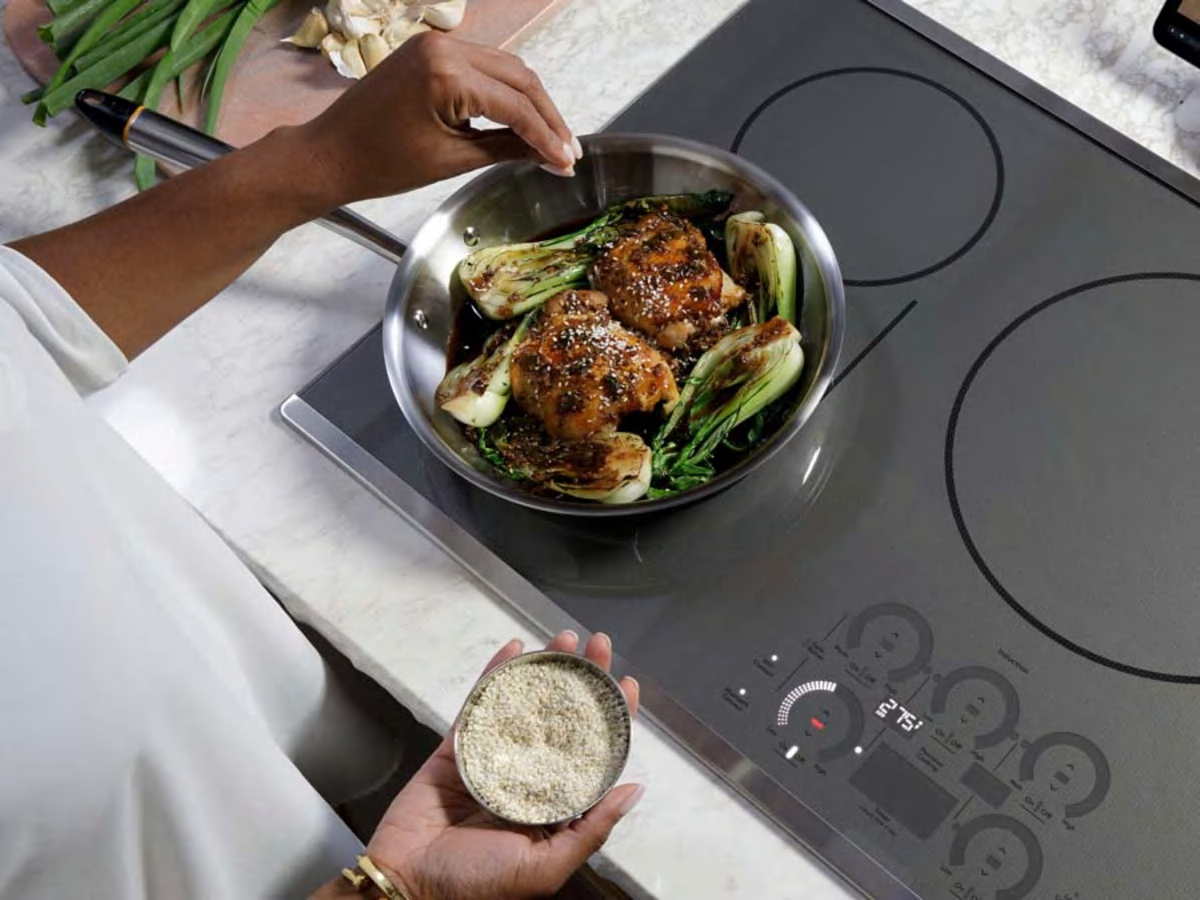
Stainless steel pans often need preheating before you add food. Heat the pan briefly, add oil, and then reduce the setting if the oil spreads quickly or begins to shimmer strongly.
Nonstick pans require extra care. Many manufacturers advise against very high heat because it can damage the coating. Medium or medium-low heat is usually safer for eggs, fish, and other foods cooked in nonstick cookware.
A Simple Method for Finding Medium Heat
If you are using a new induction cooktop, test the heat before cooking an important meal. This takes only a few minutes and can prevent burnt food.
Follow these steps:
-
Place a suitable pan on the burner.
-
Set the cooktop to level 4 or 5.
-
Warm the empty pan for about 30 to 60 seconds.
-
Add a small amount of cooking oil.
-
Watch how the oil moves and smells.
-
Add a small piece of food to test the sizzle.
-
Raise or lower the setting in one-step changes.
Oil should look fluid and lightly shimmer. It should not smoke. A drop of water may dance briefly on a hot stainless steel pan, but do not use this test with a hot pan full of oil.
When testing with food, use a small piece of onion or bread. If it browns slowly and evenly, you are close to medium heat. If it burns within seconds, reduce the power and let the pan cool.
In practical cooking, this small test is more useful than memorizing one number. It teaches you how your cooktop and pan work together.
Mistakes to Avoid With Induction Medium Heat
Many induction cooking problems come from using too much power or changing the setting too late. The following mistakes are common:
• Preheating an empty pan at high power
• Using Boost to heat oil
• Leaving the pan on the same setting after it becomes hot
• Crowding the pan with cold food
• Moving a pan off-center
• Using cookware that is too small or too large for the burner
• Ignoring smoke from oil
• Assuming every cooktop uses the same number scale
A pan that is off-center may heat unevenly. A pan that is smaller than the marked cooking zone may also receive less consistent energy.
Do not slide rough cast iron across a glass induction surface. Lift it carefully to help prevent scratches. Also, wipe moisture from the pan bottom before cooking, since water can interfere with contact and create splatter.
If food burns often, lower the setting before changing the recipe. In many cases, the issue is not the ingredient. It is the combination of a fast burner, a thin pan, and too much heat.

Safety Tips for Medium Heat on an Induction Cooktop
Induction cooktops are generally safe and efficient, but the cookware still becomes very hot. Use oven mitts when handling hot pans, especially cast iron and stainless steel lids.
Keep these safety habits:
• Use cookware labeled for induction.
• Keep the glass surface clean and dry.
• Do not place metal utensils on the active cooking zone.
• Keep paper towels and plastic items away from the burner.
• Do not leave hot oil unattended.
• Use the correct burner size for the pan.
• Turn the control off before removing the pan.
• Allow the surface and cookware to cool before cleaning.
People with implanted medical devices should follow the safety guidance from their doctor and the cooktop manufacturer. Induction fields can vary by model and distance from the cooking zone.
Check the manufacturer’s instructions for cookware limits, cleaning products, and safe use. Product manuals are more reliable than general settings because each model has its own power system.
Energy Use and Cooking Control
Induction cooktops are known for efficient heat transfer because energy goes directly into compatible cookware. The U.S. Department of Energy recognizes induction as an efficient electric cooking method, though actual energy use depends on cooking time, pan size, food quantity, and power level.
Medium heat may use less energy than high heat because it reduces overheating and shortens the need to cool or correct food. However, the lowest setting is not always the fastest or most efficient choice.
A steady medium setting can help you avoid burned food, repeated reheating, and wasted ingredients. It also gives better control when cooking several items at once.
Use a lid when appropriate. A covered pan holds heat and moisture, so you may be able to lower the power. Remove the lid when you want liquid to reduce or food to brown.
The best setting balances power and time. A lower setting used for twice as long is not always more efficient than medium heat used carefully for a shorter period.
Frequently Asked Questions About What Is Considered Medium Heat on an Induction Cooktop
What number is medium heat on an induction cooktop?
On a 9-level induction cooktop, medium heat is often level 4 to 6. On a 10-level cooktop, start with level 5 or 6 and adjust based on the pan and food.
Is medium heat the same on every induction cooktop?
No. Power levels differ by brand, burner size, and control design. Use the number as a starting point, then judge the heat by the food, oil, and cooking speed.
What temperature is medium heat on an induction cooktop?
Medium cooking often produces a pan surface near 300°F to 375°F, but the exact temperature depends on the pan, food, and cooktop. Induction settings control power more directly than a fixed pan temperature.
Can I use medium heat to boil water?
Medium heat can maintain a gentle simmer, but high heat is usually better for bringing a large pot of water to a boil. Once boiling begins, lower the setting to prevent excess bubbling and energy waste.
Why does my pan burn food on medium heat?
Your cooktop may deliver more power at that level, or your pan may be thin and heat very fast. Lower the setting, use less preheating time, and adjust again after adding the food.
Is medium heat safe for nonstick pans?
Medium or medium-low heat is generally a better choice for nonstick cookware than high heat. Follow the pan maker’s instructions and avoid heating an empty nonstick pan for a long time.
Does cast iron need a lower induction setting?
Often, yes. Cast iron stores heat well and may continue cooking after you lower the power. Begin at a lower setting and allow the pan to warm slowly.
Conclusion
Medium heat on an induction cooktop usually means level 4 to 6 on a 9-level control or level 5 to 6 on a 10-level control. The correct setting depends on your cooktop, pan, food, and recipe.
Use the number as a starting point, then watch for gentle sizzling, light oil shimmer, and even browning. Avoid high preheating, smoking oil, and sudden temperature changes. With a little practice, medium heat on an induction cooktop becomes easy to judge and gives you steady, reliable results.
Try the simple oil test during your next meal, then adjust the setting in small steps. Explore your cooktop manual for its exact power guide, and share your best induction cooking tips in the comments.